Synopsis: Canada’s 2025 spouse visa reforms introduce mandatory English tests, expected IELTS/PTE minimum bands of 4.5–5.5, and clarify the controversial 16-month rule. This post breaks down eligibility, likely score thresholds, recent case outcomes, processing timelines, document checklists, and practical steps applicants can take to maximise approval chances, and step-by-step preparation guidance.
Why the Canada Spouse Visa Update Matters in 2025
Canada’s immigration system is entering a new phase of reform, and the spouse visa (often tied to international students and temporary workers) sits at the center of it. The Canadian government has confirmed that English language tests may soon become mandatory for applicants, with a likely rollout by late 2025 .
For many families, this change has raised pressing questions: Who must take the test? What band score is required? How does the so-called 16-month rule actually work? And will refusal rates rise under the new framework?
This blog explores these issues in detail, breaking down the spouse visa rules, the impact of testing, and real-world examples of visa approvals.
Topics Discussed
- English Test Requirement
- Minimum Band Score
- The 16-Month Rule Explained
- Recent Spouse Visa Approvals
- The Broader Policy Shift
- Conclusion

English Test Requirement
One of the most debated changes in Canada’s spouse visa policy is the proposed mandatory English test for applicants.
What is changing?
Historically, spouse visa applicants were not required to demonstrate English or French language proficiency. The government is now signaling that proof of basic communication skills may soon be compulsory. Tests such as IELTS General Training and PTE Core are expected to be accepted, mirroring requirements already used for work permits and other visa categories .
Why introduce a test?
The rationale is simple: ensuring newcomers can communicate effectively in everyday life and the workplace. This aligns with Canada’s broader immigration objectives, emphasizing integration and employability .
The tests would apply across both Open Work Permit (OWP) categories (for spouses of students) and Closed Work Permit categories (for spouses of skilled workers).
Minimum Band Score
Another question fueling anxiety among applicants is: How high will the required score be?
The expected thresholds
Current discussions suggest a minimum band score between 4.5 and 5.5, depending on the test format. To put this in context:
- IELTS 4.5 indicates basic competence.
- IELTS 5.5 demonstrates modest ability to communicate in most situations.
These levels are significantly lower than what is typically demanded for permanent residency pathways or skilled work visas, which often require CLB 7 (IELTS 6.0) or higher .
Why this matters
The spouse visa is not intended to filter skilled workers but to facilitate family unity. By setting a modest threshold, Canada is striking a balance—ensuring functional communication without imposing an undue burden on families.
The 16-Month Rule Explained
Among applicants, perhaps no issue has generated more confusion than the “16-month rule.”
The myth
Rumors suggest that spouses can only apply once the principal applicant (usually a student) has completed at least 16 months of study. This has led many to delay applications unnecessarily.
The reality
The rule applies differently depending on the visa type:
- For study permit holders: No 16-month minimum applies. A student enrolled in a two-year program (equivalent to 16 months of full-time study) can sponsor their spouse at any stage. Even if only 6–12 months of the program are complete, the application remains valid.
- For work permit holders: The principal applicant’s work permit must be valid for at least 16 months at the time of filing. This ensures that the spouse’s visa aligns with the worker’s authorized stay .
Why the confusion?
Much of the misunderstanding stems from social media “advice” and anecdotal cases. But recent clarifications confirm that the 16-month requirement is linked to work permits—not student permits.
Recent Spouse Visa Approvals
To illustrate how the system is functioning in practice, let’s review real-world outcomes from late 2024 and early 2025.
Case examples
- Tapan Tanwar (Himachal Pradesh): Visa granted in 15 days; spouse on a work permit.
- Harshit (Noida): Approved in 18 days after two refusals; spouse on study permit.
- Sharad Kumar (Tamil Nadu): Approved in 46 days despite earlier refusals; spouse on study permit.
- Deepak (Sangrur): Granted within 56 days; spouse on study permit.
- Muninder (Uttar Pradesh): Approved in 50 days; spouse on study permit.
- Amit: Visa granted in 19 days; spouse on study permit.
- Akshay: Approved in 59 days after multiple refusals; spouse on study permit with official study break.
Observed trends
- Applications tied to study permit holders are showing faster and higher approval rates compared to those linked to work permits.
- Even with past refusals, successful reapplications are common when documentation is complete and eligibility is clear.
- Processing times vary from 15 to 60 days, reflecting IRCC’s workload and the applicant’s file quality.
The Broader Policy Shift
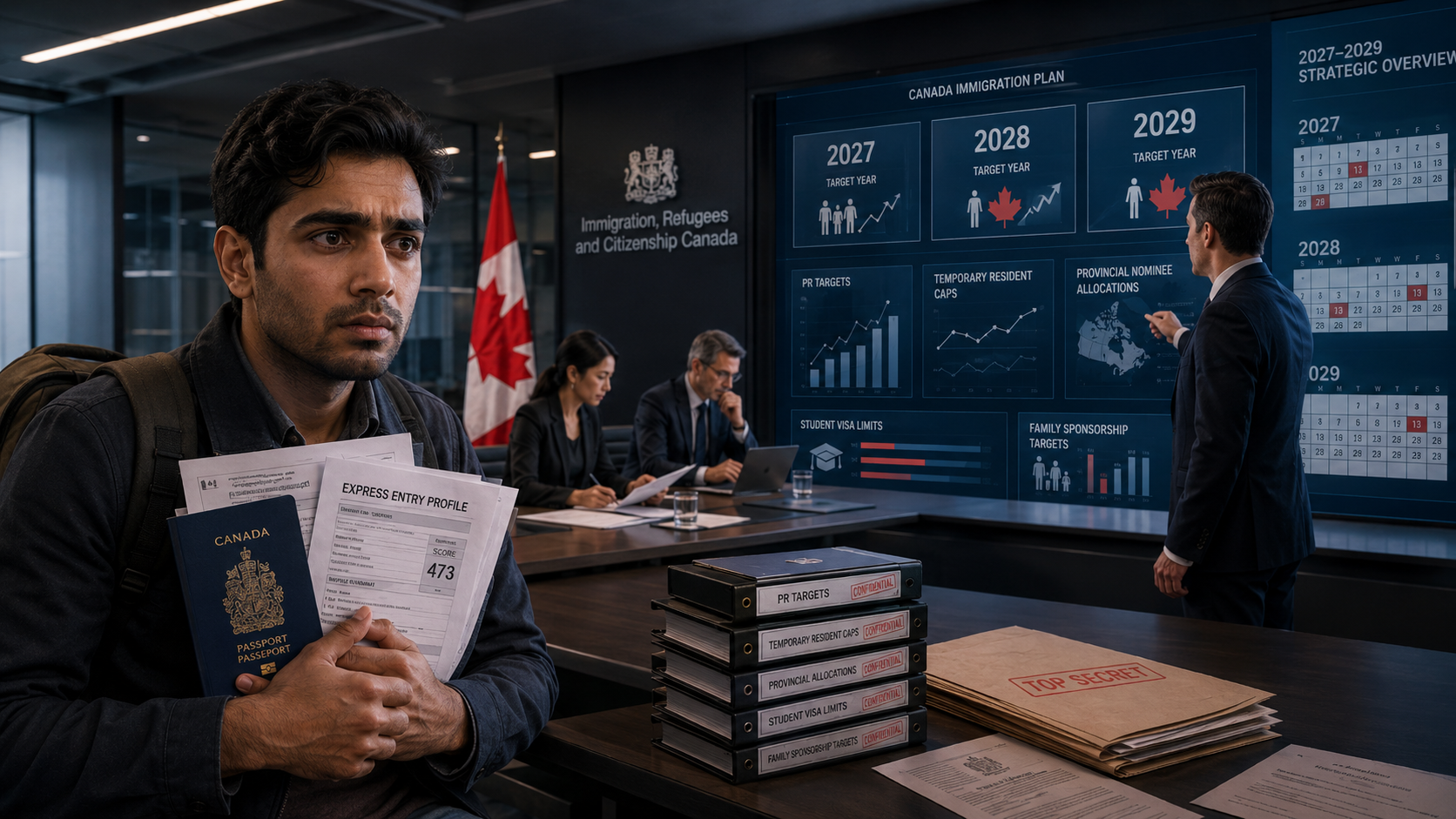
The spouse visa reforms are not occurring in isolation. They are part of a broader immigration overhaul under the Canadian government’s 2025–2028 plan.
Why this shift now?
- Integration challenges: Policymakers want to ensure spouses arriving under temporary visas can adapt quickly.
- Fraud prevention: Introducing a language test may deter fraudulent applications or marriages of convenience.
- Alignment with skilled migration: By harmonizing requirements across work, study, and family pathways, Canada aims for a more consistent immigration framework.
What applicants should prepare for
- Documentation readiness: Strong financial, relationship, and residency evidence remains essential.
- Language preparation: Even if the threshold is modest, taking IELTS or PTE practice tests early is wise.
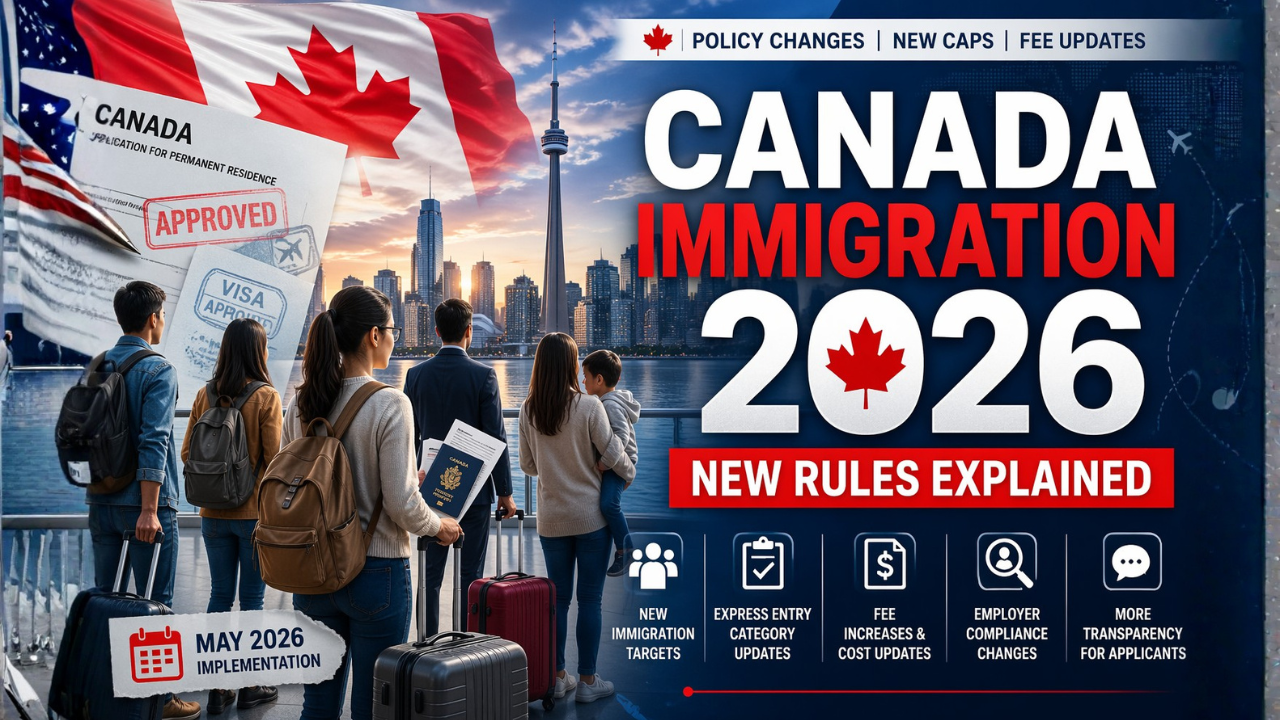
- Timeline awareness: Expect implementation of the English test rule by December 2025 or early 2026, pending IRCC’s official rollout.
Conclusion
The Canada Spouse Visa Update 2025 represents a turning point. While the introduction of a mandatory English test has unsettled many, the expected band scores (4.5–5.5) are achievable for most applicants. More importantly, myths such as the “16-month rule” must be dispelled—study-permit spouses can apply without waiting for 16 months, while work-permit spouses must ensure validity.
Ultimately, these reforms reflect Canada’s effort to balance family reunification with integration goals. For applicants, the message is clear: stay informed, prepare for language testing, and ensure documentation is robust. By doing so, spouses can maximize their chances of success in an evolving immigration landscape.
FAQs on Canada Spouse Visa Update 2025
1. Is the English test mandatory for Canada spouse visa applicants in 2025?
Yes. From late 2025 or early 2026, IRCC is expected to introduce mandatory English tests (IELTS General, CELPIP, or PTE Core) for spouse visa applicants. This ensures basic communication ability for newcomers.
2. What is the minimum IELTS band score for Canada spouse visa in 2025?
The minimum IELTS band score for Canada spouse visa is expected to be 4.5–5.5, significantly lower than the PR or work visa requirements. This score demonstrates basic English communication.
3. Does the 16-month rule apply to spouse visas in Canada?
No. The 16-month rule only applies when the sponsoring spouse holds a work permit. For spouses of international students, there is no 16-month waiting requirement as long as the principal applicant is enrolled in a valid two-year program.
4. Who can apply for a Canada spouse open work permit in 2025?
Spouses of international students with valid study permits and skilled workers with closed or open work permits are eligible to apply for an open work permit in 2025 under Canada’s spouse visa policy.
5. How long does it take to process a spouse visa for Canada in 2025?
Processing times vary but typically range from 15 to 60 days for open work permits tied to spouses on study permits. Applications linked to work permit holders may take longer due to additional eligibility checks.
6. Can I apply for a Canada spouse visa if my partner has just started studying?
Yes. If your spouse is enrolled in a two-year study program, you can apply immediately, regardless of how many months of study are completed. The 16-month rule does not apply to study permits.
7. Are refusals common for Canada spouse visas in 2025?
Refusals occur, especially when relationship proof or financial documents are weak. However, reapplications with stronger files often succeed. Case studies show approvals even after two or three refusals.
8. What documents are required for a Canada spouse visa application in 2025?
Key documents include:
- Valid marriage certificate or proof of relationship
- Sponsor’s valid study or work permit
- Proof of funds and accommodation
- Language test results (once mandatory rule applies)
9. What is the difference between an open spouse work permit and a closed spouse work permit in Canada?
• Open Work Permit (OWP): Allows spouses to work for any employer in Canada.
• Closed Work Permit: Tied to a specific employer; less common for spouse visa applicants.
10. When will Canada officially implement the spouse visa English test rule?
Implementation is expected by December 2025 or early 2026, pending formal IRCC announcements. Applicants planning to apply after this period should prepare for language testing in advance.
{
“@context”: “https://schema.org”,
“@type”: “FAQPage”,
“mainEntity”: [
{
“@type”: “Question”,
“name”: “Is the English test mandatory for Canada spouse visa applicants in 2025?”,
“acceptedAnswer”: {
“@type”: “Answer”,
“text”: “Yes. From late 2025 or early 2026, IRCC is expected to introduce mandatory English tests (IELTS General, CELPIP, or PTE Core) for spouse visa applicants. This ensures basic communication ability for newcomers.”
}
},
{
“@type”: “Question”,
“name”: “What is the minimum IELTS band score for Canada spouse visa in 2025?”,
“acceptedAnswer”: {
“@type”: “Answer”,
“text”: “The minimum IELTS band score for Canada spouse visa is expected to be 4.5–5.5, significantly lower than the PR or work visa requirements. This score demonstrates basic English communication.”
}
},
{
“@type”: “Question”,
“name”: “Does the 16-month rule apply to spouse visas in Canada?”,
“acceptedAnswer”: {
“@type”: “Answer”,
“text”: “No. The 16-month rule only applies when the sponsoring spouse holds a work permit. For spouses of international students, there is no 16-month waiting requirement as long as the principal applicant is enrolled in a valid two-year program.”
}
},
{
“@type”: “Question”,
“name”: “Who can apply for a Canada spouse open work permit in 2025?”,
“acceptedAnswer”: {
“@type”: “Answer”,
“text”: “Spouses of international students with valid study permits and skilled workers with closed or open work permits are eligible to apply for an open work permit in 2025 under Canada’s spouse visa policy.”
}
},
{
“@type”: “Question”,
“name”: “How long does it take to process a spouse visa for Canada in 2025?”,
“acceptedAnswer”: {
“@type”: “Answer”,
“text”: “Processing times vary but typically range from 15 to 60 days for open work permits tied to spouses on study permits. Applications linked to work permit holders may take longer due to additional eligibility checks.”
}
},
{
“@type”: “Question”,
“name”: “Can I apply for a Canada spouse visa if my partner has just started studying?”,
“acceptedAnswer”: {
“@type”: “Answer”,
“text”: “Yes. If your spouse is enrolled in a two-year study program, you can apply immediately, regardless of how many months of study are completed. The 16-month rule does not apply to study permits.”
}
},
{
“@type”: “Question”,
“name”: “Are refusals common for Canada spouse visas in 2025?”,
“acceptedAnswer”: {
“@type”: “Answer”,
“text”: “Refusals occur, especially when relationship proof or financial documents are weak. However, reapplications with stronger files often succeed. Case studies show approvals even after two or three refusals.”
}
},
{
“@type”: “Question”,
“name”: “What documents are required for a Canada spouse visa application in 2025?”,
“acceptedAnswer”: {
“@type”: “Answer”,
“text”: “Key documents include: Valid marriage certificate or proof of relationship; Sponsor’s valid study or work permit; Proof of funds and accommodation; Language test results (once mandatory rule applies).”
}
},
{
“@type”: “Question”,
“name”: “What is the difference between an open spouse work permit and a closed spouse work permit in Canada?”,
“acceptedAnswer”: {
“@type”: “Answer”,
“text”: “Open Work Permit (OWP): Allows spouses to work for any employer in Canada. • Closed Work Permit: Tied to a specific employer; less common for spouse visa applicants.”
}
},
{
“@type”: “Question”,
“name”: “When will Canada officially implement the spouse visa English test rule?”,
“acceptedAnswer”: {
“@type”: “Answer”,
“text”: “Implementation is expected by December 2025 or early 2026, pending formal IRCC announcements. Applicants planning to apply after this period should prepare for language testing in advance.”
}
}
]
}