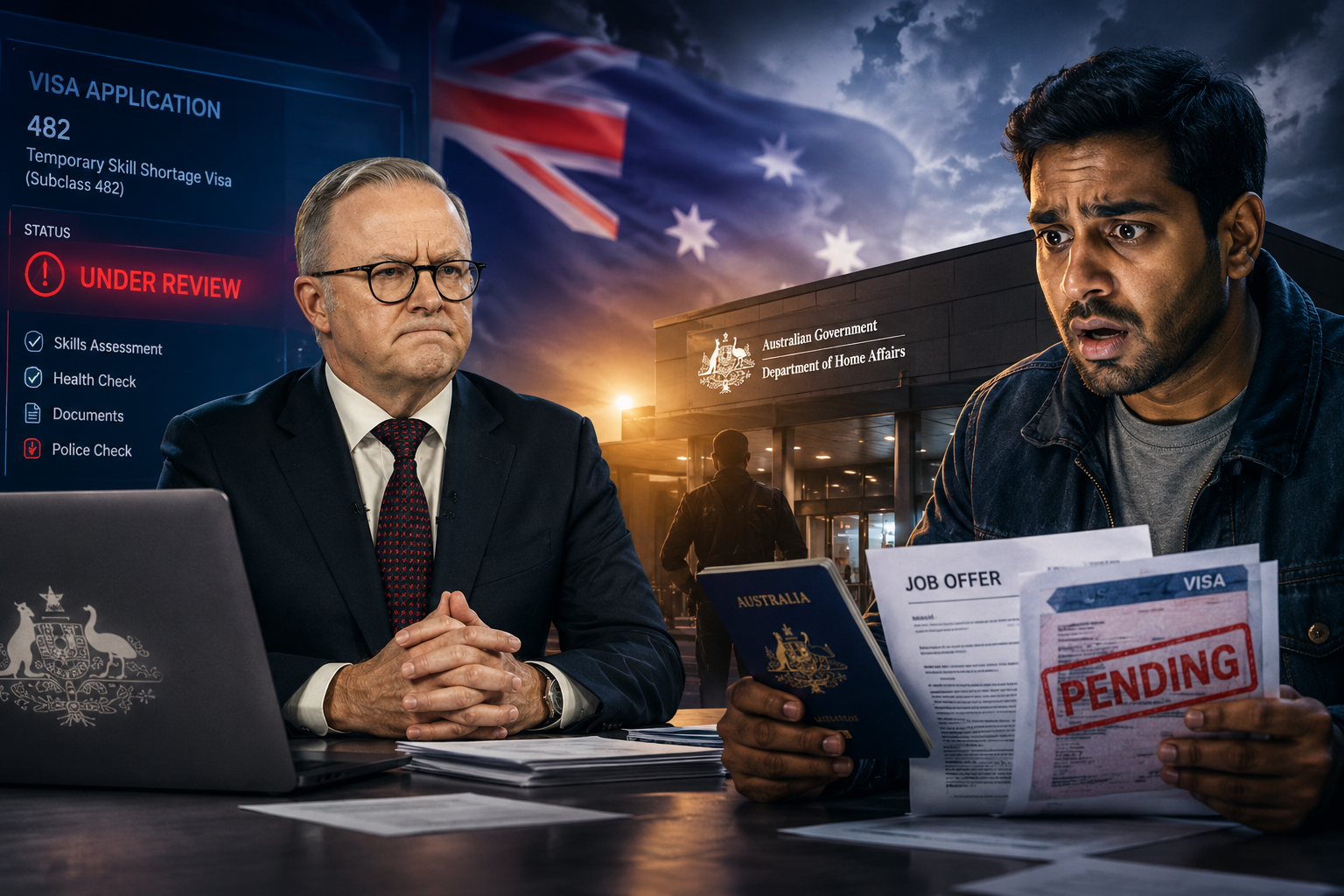
Synopsis: Australia’s new Arrival Control Law marks a major shift for visa holders, making entry permission as critical as visa approval. This regulation forces travellers to anticipate sudden disruptions to accommodation, work, or study plans. The March 2026 temporary restrictions on Iranian Visitor (Subclass 600) visa holders serve as a primary example of how quickly entry can be paused.
Over the years, the most common assumption of temporary visa holders was that they could travel once Australia granted their visa. However, in 2026, all that certainty has come to an end. The new arrival control framework has been introduced in the Migration Amendment (2026 Measures No. 1) Act 2026, enabling the Australian government to temporarily limit the arrival of certain classes of temporary visa holders where there is an increased risk of high levels of migration.
This is a big change for international students, visitor visa holders, temporary visa holders and those who intend to enter Australia on a temporary visa.
 What is the Arrival Control Law?
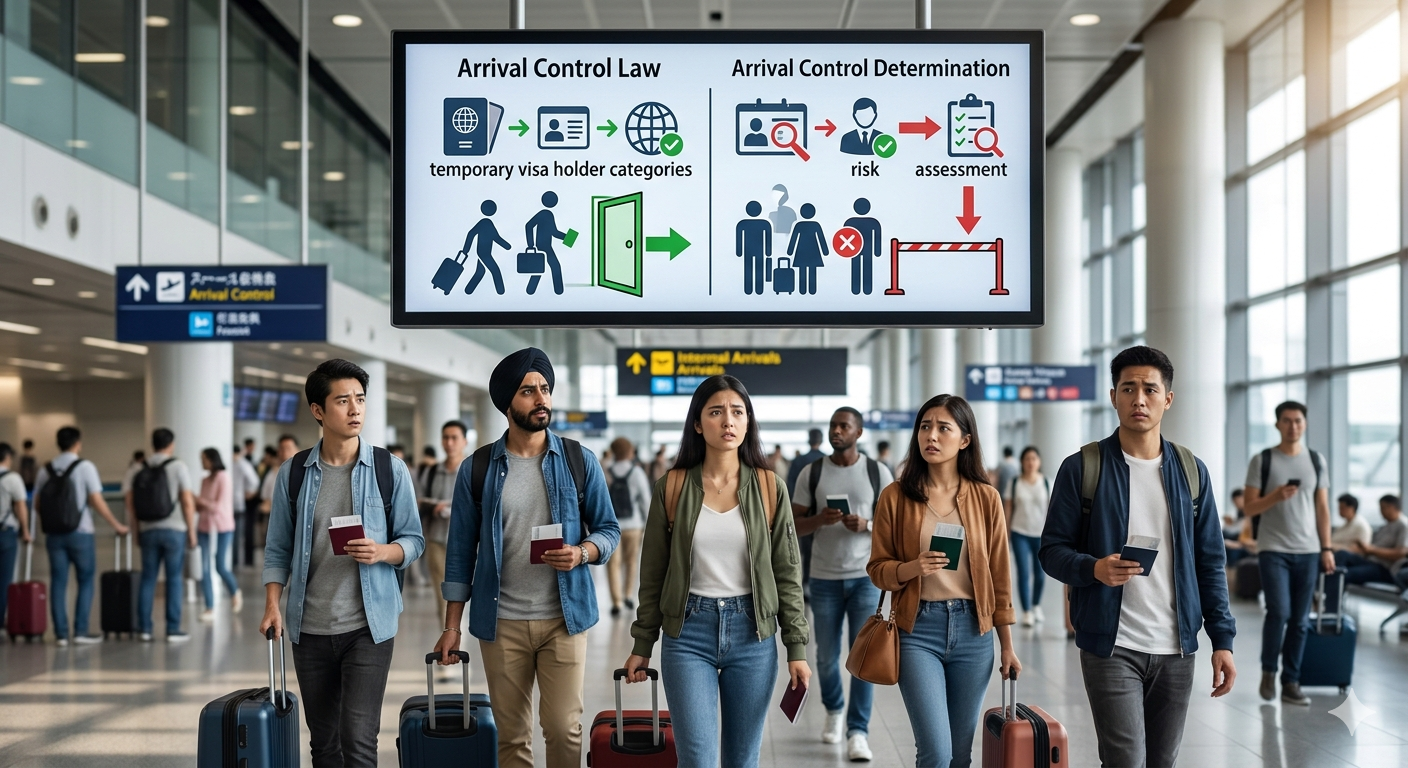
Under the new law, the immigration minister can issue an Arrival Control Determination, allowing the government to temporarily prevent certain groups of temporary visa holders from coming to Australia, regardless of whether their visa is still valid.
According to the Australian Parliament’s bill summary, the law permits the government to set limitations on some people. This happens when events or situations outside of Australia make it more likely that certain temporary visa holders might not leave Australia when their visas run out.
This does not impact all temporary visa holders. But, in certain cases, it does mean that a visa could no longer be the sole solution.
Why This Matters for Visa Holders
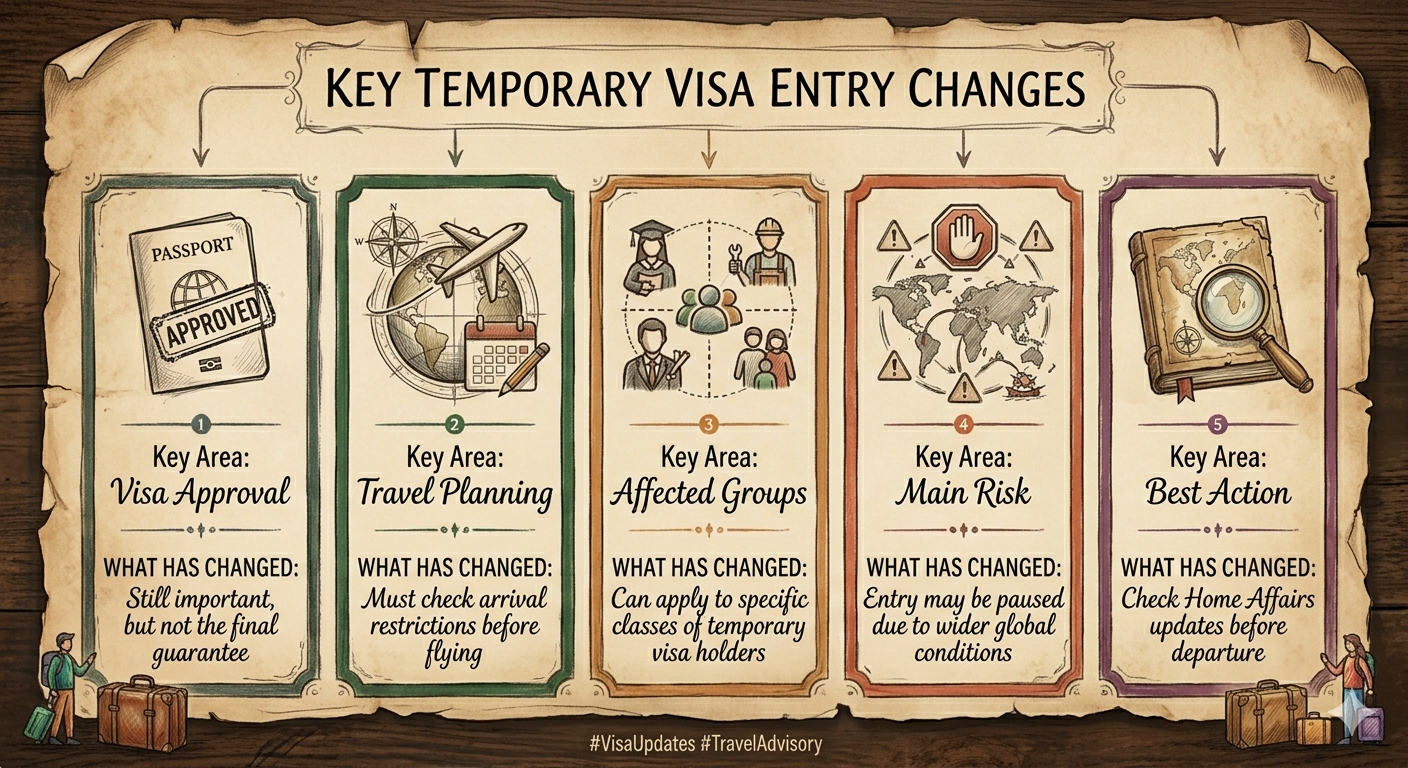
The most important shift is both psychological and practical. In the past, applicants were mainly concerned about securing visa approval. Now, they must also consider whether they will still be allowed to enter Australia even if their visa has been granted.
This is particularly important for those overseas who are making travel plans to Australia, booking accommodation, applying for university places, arranging to start work or visiting family. They may be required to make a sudden change in travel plans if a determination is made for their respective group.
Real Example: Iranian Visitor Visa Holders
The first significant instance occurred when Australia implemented temporary travel restrictions in March 2026 for individuals who had a ‘Visitor’ subclass 600 visa with Iranian citizenship. According to the Home Affairs page, the Arrival Control Determination came into effect on 26 March 2026 and would be in effect for six months.
This demonstrates the impact of the law, not for all temporary visa holders at once, but for a particular visa class and passport group.
Does This Cancel Your Visa?
Simply put, not always. According to immigration advisories, the measure may prevent arrival in Australia without cancelling or altering the visa grant. Even so, being unable to enter the country while the determination applies can have a major impact on travel arrangements.
What Should International Students and Temporary Visa Holders Do?
Before making travel arrangements or departing for Australia, temporary visa holders should:
- Check the official Home Affairs website
- Confirm whether any Arrival Control Determination applies
- Speak with the university, employer, or sponsor if travel is time-sensitive
- Avoid relying only on the visa grant letter
- Monitor updates close to the flight date

Final Thoughts
Australia’s new arrival management authority signifies a substantial change in immigration policy. A valid visa remains important, but in certain circumstances, it might not be the ultimate permission to enter the country.
For those with temporary visas, the message is straightforward: in 2026, don’t just enquire if your visa has been approved. Enquire if your entry is still permitted.