

Synopsis: This article provides an analytical overview of the Immigration Refugee and Citizenship Canada (IRCC) consultations for the 2027–2029 Immigration Levels Plan, which took place between May and June 2026. It breaks down IRCC’s core focus areas—including temporary resident caps, French-speaking immigration, and population balancing. Finally, it offers actionable, search-engine-vetted advice for future permanent residency (PR) applicants on how to boost their Comprehensive Ranking System (CRS) profiles to remain competitive in an increasingly selective system.
Canada has officially begun planning its 2027-2029 Immigration Levels Plan, a policy framework that will help determine the country’s immigration priorities over the next three years.
Even though 2026 is still underway, early planning for upcoming immigration rules has already commenced. Consultations opened on May 12, 2026, and will remain active until June 14, 2026. The final plan is expected to influence admission targets across permanent residence programmes, temporary resident streams, family sponsorship pathways, refugee programmes, and provincial immigration initiatives.
For individuals considering immigration to Canada, the decisions made today may directly impact opportunities available between 2027 and 2029. 
Understanding the Strategic Roadmap: Why It Matters to You
Every autumn, the Canadian government tables a three-year immigration roadmap. The document acts as a master blueprint for the entire immigration ecosystem.
The plan serves as a strategic roadmap that helps determine:
- Annual permanent residence admission targets
- Federal economic immigration allocations
- Provincial Nominee Program (PNP) quotas
- Family sponsorship targets
- Refugee and humanitarian admissions
- Temporary resident management policies
How the Plan Impacts Applicants
The Immigration Levels Plan can significantly influence:
|
Immigration Type |
Potential Impact |
|
Expressway Entry |
Changes in invitation volumes and category-based draws |
|
PNP |
provincial nomination allocations may increase or decrease |
|
Family Sponsorship |
Processing priorities and intake targets may change |
|
Refugee Programs |
Admission targets may be adjusted |
|
Temporary Residence |
New controls or limits may affect permits and pathways |
Key Takeaway: Immigration targets announced today often shape application opportunities several years into the future.
What IRCC is Focusing on During the 2027-2029 Consultations
Early consultation materials suggest that Immigration, Refugees, and Citizenship Canada (IRCC) is focusing on maintaining a balanced approach to immigration growth while addressing economic and social priorities.
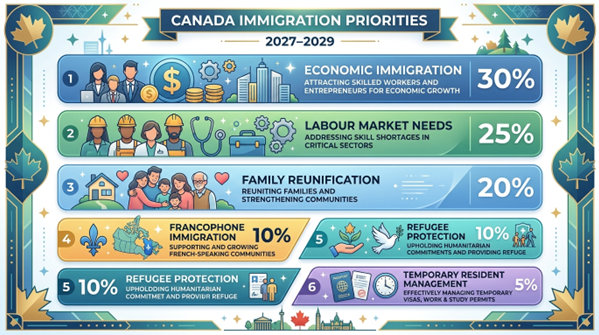
Core IRCC Priority Pillars for 2027-2029
The upcoming cycle pivots away from open-ended growth toward rigid, sustainable population management. The consultations spotlight several core focal points that are designed for:
- Managing Temporary Resident Levels
Recent government policies have emphasised reducing the proportion of temporary residents relative to Canada’s overall population. This reflects concerns surrounding:
- Housing Availability
- Infrastructure Capacity
- Healthcare Resources
- Labour Market Sustainability
- Supporting Economic Growth
Canada continues to rely on immigration to address labour shortages and demographic challenges. Priority sectors may include:
- Healthcare
- Skilled Trades
- Technology
- Engineering
- Transportation
- Construction
- Strengthening Family Reunification
It remains a cornerstone of Canada’s immigration system. Future plans may continue supporting:
- Spousal Sponsorship
- Parent And Grandparent Programs
- Dependent Child Sponsorship Pathways
- Increasing Francophone Immigration Outside Quebec
The federal government has repeatedly highlighted its commitment to increasing French-speaking immigration in provinces and territories outside Quebec. Applicants with French language proficiency could continue benefiting from enhanced immigration opportunities.
- Refugee Protection and Humanitarian Commitments
Canada is expected to maintain its commitment to refugee protection and humanitarian programmes while balancing broader immigration objectives.
Will Canadian PR Become More Competitive in Coming Years?
As IRCC refines its selection models to address specific economic gaps and strict population limits, the selection thresholds will naturally tighten.
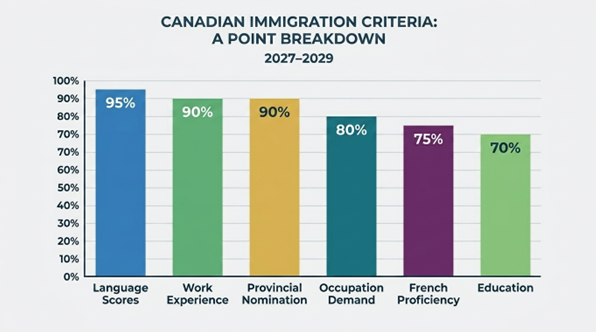
Factors to Consider
| Ranking Factor | Importance |
| Skilled Work Experience | Very High |
| Language Test Scores | Very High |
| Provincial Nomination | Very High |
| Occupation Demand | High |
| Canadian Experience | High |
| French Language Ability | High |
| Education Credentials | Moderate to High |
Future Canada PR candidates can no longer rely on hitting baseline eligibility criteria and securing an Invitation to Apply (ITA) during the 2027-2029 cycle; profile optimisation is mandatory.
Your competitive edge will rest on five distinct pillars:
- High-tier Language Mastery: maximising CLB scores (IELTS or CELPIP)
- Targeted NOC Alignment: Holding experience in sectors with acute labour deficiency
- Bilingualism: Acquiring professional French proficiency to leverage dedicated draws
- Provincial Backing: Actively pursuing targeted Provincial Nominee Programs (PNPs)
- Specialised Experience: Accumulating continuous, verified skilled work experience
What Future Permanent Residence Applicants Should Do Now
Individuals planning to apply between 2027 and 2029 should begin strengthening their immigration profile well before submitting an application
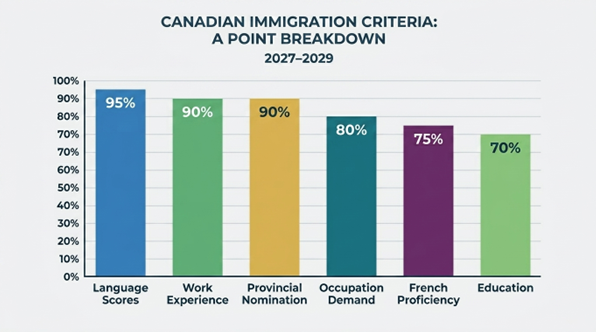
Recommended Preparation Checklist
- Improve IELTS, CELPIP, TEF Canada, or TCF Canada scores
- Verify your occupation under the latest NOC classification
- Explore Provincial Nominee Program opportunities
- Gain additional skilled work experience where possible
- Obtain Educational Credential Assessments (ECAs)
- Monitor Express Entry category-based selection trends
- Develop French language proficiency if feasible
- Follow official IRCC announcements regularly
How to Prepare for 2027-2029 Cycle
Early preparation is the only true differentiation in a restrictive immigration climate. Take these proactive steps immediately to secure your pathways:
Audit and Optimise Your NOC Code: Ensure your current job duties match high-demand National Occupational Classification tiers targeted by IRCC.
Max Out Language Credentials: Don’t settle for good enough scores. Re-sitting language exams to gain a few extra CRS points can push you above a high draw cutoff.
Diversify via PNPs: Look past the Federal Express Entry pool. Track individual provincial streams that align specifically with your region or profession.
Rely Only on Authoritative Data: Base your local and relocation strategy strictly on official IRCC press releases rather than unverified social media speculation.
Frequently Asked Questions
Will Canada increase immigration targets between 2027 and 2029?
The final targets have not yet been announced. Current consultations will help determine future admission levels across permanent residence, temporary residence, family sponsorship, and refugee programmes.
When will Canada release the 2027–2029 Immigration Levels Plan?
The government is conducting consultations until June 14, 2026. The final plan is expected to be released later in 2026.
Could Express Entry become more competitive in 2027?
Potentially. Future selection may place greater emphasis on labour market needs, category-based draws, language ability, and provincial nominations.
Will French-speaking applicants have an advantage?
French-speaking candidates may continue benefiting from federal initiatives designed to increase Francophone immigration outside Quebec.
How can I improve my chances of obtaining Canadian permanent residence?
Improving language scores, gaining skilled work experience, obtaining a provincial nomination, and aligning with in-demand occupations are among the most effective strategies.
Will Provincial Nominee Programs continue after 2026?
Yes. Provincial Nominee Programs remain a key component of Canada’s immigration system and are expected to continue playing an important role under future immigration plans.
Final Thoughts
While the fine details of Canada’s 2027-2029 Immigration Levels Plan are being polished, the underlying trajectory is crystal clear: early preparation is vital. The policies structured today dictate your immigration opportunities tomorrow.
Want to keep a tab on Canada PR options? Bookmark this site and subscribe to our newsletter for real-time, verified IRCC updates and breaking immigration analysis.




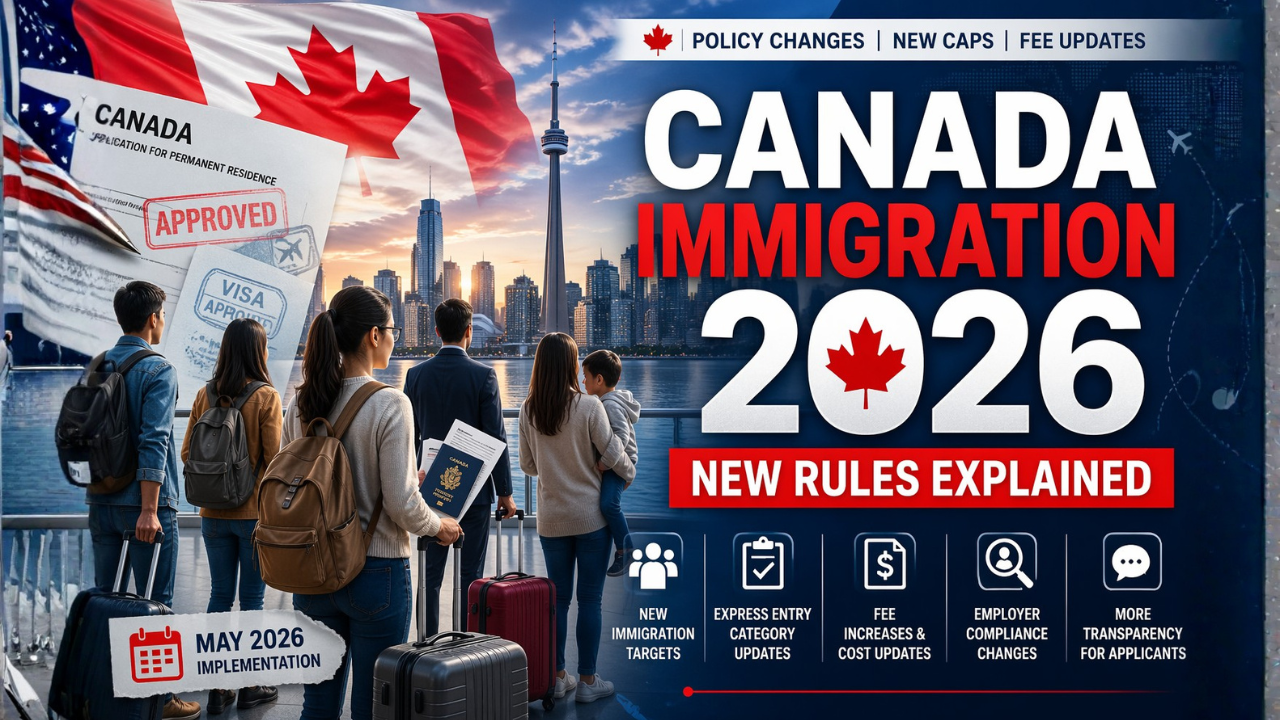






One thought on “Canada Immigration Levels Plan 2027–2029: What Future PR Applicants Should Know”
Give me give me need work visa