
Synopsis: Navigating the UK’s 2026 immigration reforms requires clarity. With the transition from a standard five-year Indefinite Leave to Remain (ILR) route to a new ‘earned settlement’ model, visa holders must understand how earnings, residence, and contribution criteria impact their path to settlement. Stay informed, maintain rigorous documentation, and seek professional guidance to secure your future in the UK.
The biggest question right now for UK migrants is, “Will the Indefinite Leave to Remain route get extended from 5 to 10 years?” This is a question even those who are currently living and working in the country are concerned about.
There is a possibility that there is a change in political thinking. An iNews report referenced by the Skilled Worker Justice Alliance reveals that Andy Burnham is weighing the introduction of tougher rules for migrants who are already in the UK.
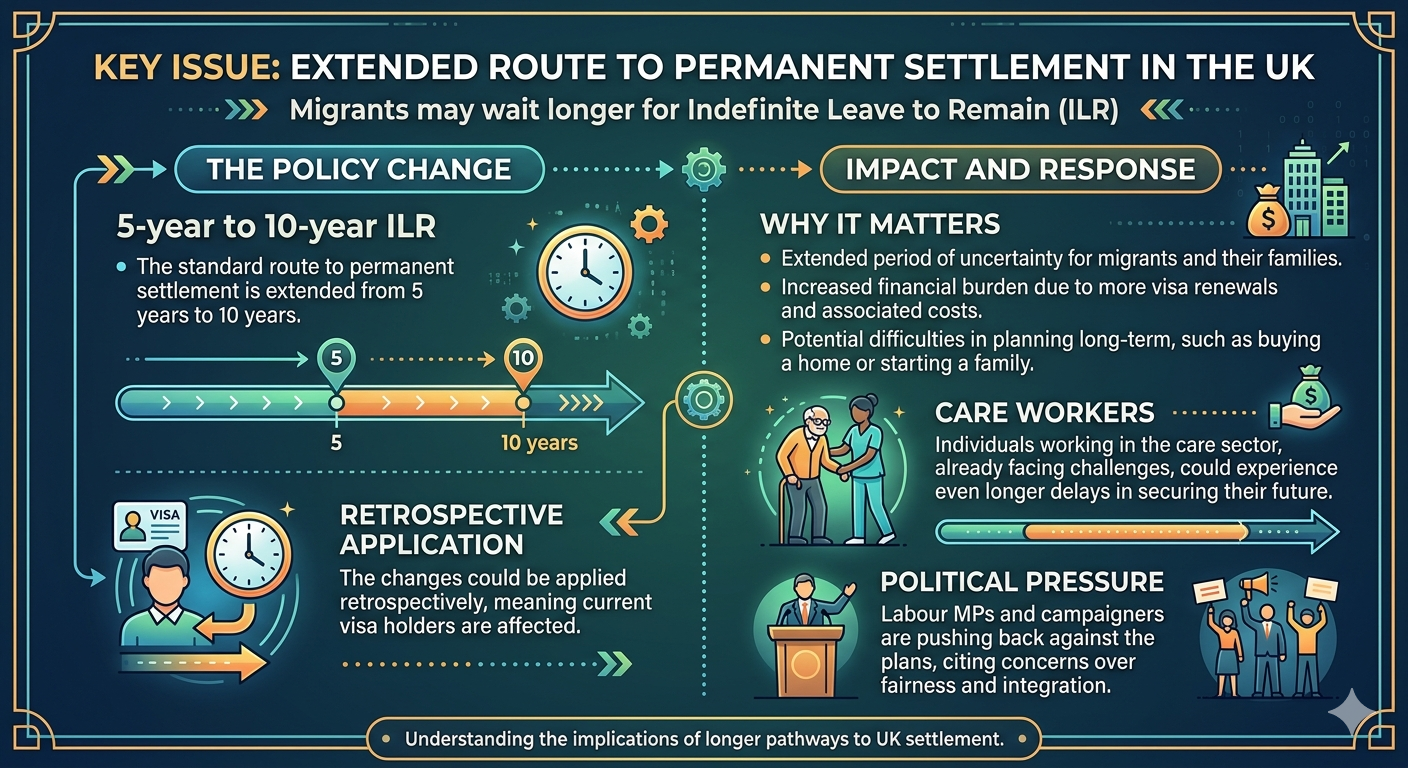
According to the report, the main focus is on retrospective application, which means those entering the UK with one prospect may find themselves facing a longer wait for permanent residence.

What Are the Proposed ILR Changes?
For many migrants, the UK government’s proposed new “earned settlement” model may extend the length of time they need to qualify for settlement from 5 years to 10 years. The Home Office consultation on this significant change was initiated in late 2025 and centred on the idea of “earned” rather than automatic settlement.
The 10-year rule has raised some concerns, but the bigger question is if it will apply to migrants who are already in the UK and have planned their future based on the current 5-year pathway
Why Migrants Are Worried
ILR is not simply forms and formalities for skilled workers, carers, dependants and families. It has an impact on:
- Where your housing
- Your employment
- Your children’s education
- Long-term stability
- Planning for a future in the UK
Campaign groups have also voiced concerns regarding care workers. As reported by The Guardian, the proposals may require some care workers to wait far longer before becoming eligible for permanent residence. Critics say the changes are unfair given the crucial role migrant care workers fulfil within the UK’s social care system.
Is a U-Turn Confirmed?
No. This is quite significant.
As of yet, there is no official word on a final U-turn. It seems that what is going on is a political debate, pressure from MPs, campaigners, and even discussion about the severity of the settlement changes and how they can be softened.
Migrants shouldn’t panic, but they should be alert. The final decision may have significant implications for future ILR planning.

What Should Migrants Do Now?
Migrants should maintain records of the following:
- Their lawful presence
- Employment history
- Payslips
- Tax records
- Absences from the UK
- Visa history
Anyone who is near to being eligible for ILR should also be taking regulated legal advice before making major decisions.
FAQs
Has the 5-year ILR route officially ended?
Not for everyone in a simple blanket way. The proposed changes are still subject to policy decisions and implementation details.
Will migrants already in the UK be affected?
That is the central concern. Reports suggest this part may be reviewed, but nothing final has been confirmed.
Should migrants be hopeful?
There is some political pressure against retrospective changes, so there may be hope. But migrants should wait for official confirmation before relying on it.