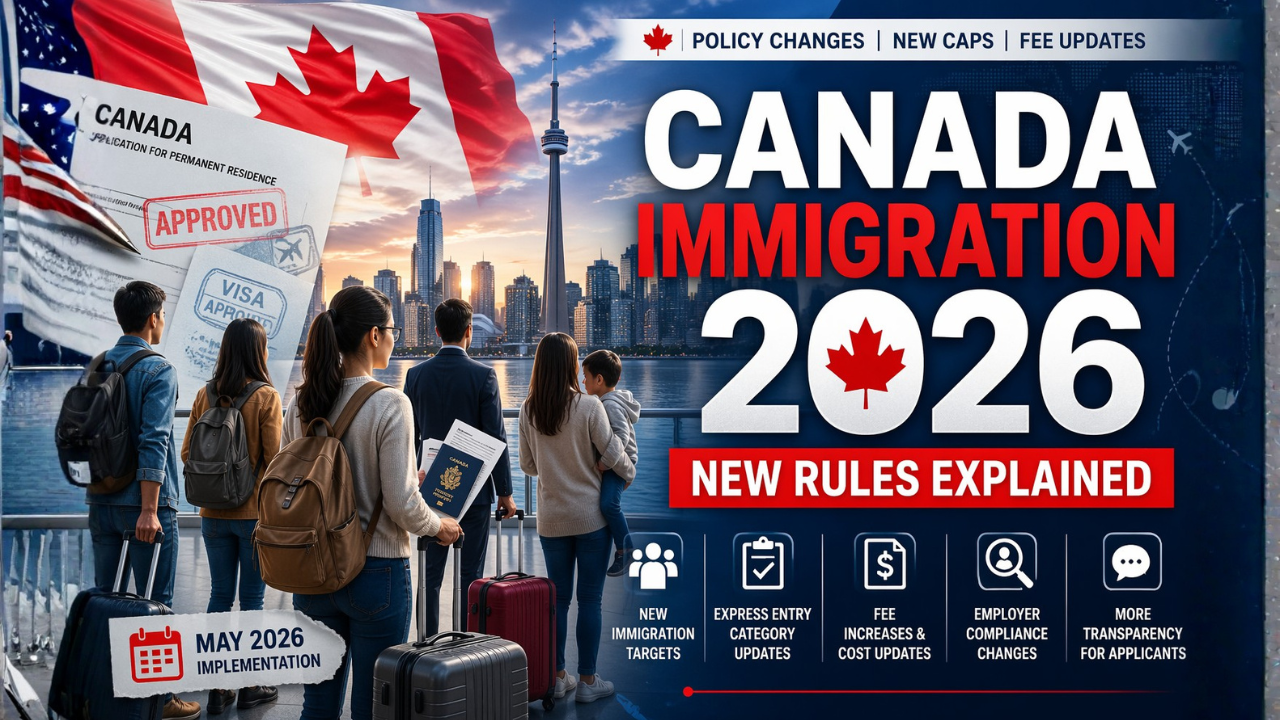
Synopsis: Canada PR rules 2025 shift Express Entry toward category-based draws, prioritizing healthcare, trades and French speakers while tightening spousal open work permit access. Applicants should pursue targeted certifications, French language training and provincial nominee routes. Strategic alignment with in-demand occupations and early family planning significantly improves chances of PR invitations.
Why Canada’s PR Updates in 2025 Matter
Canada’s Permanent Residency (PR) system has long been one of the most attractive in the world. However, 2025 brings critical rule changes that significantly alter the pathways for skilled workers, international students, and foreign employees. From the inclusion of cooks in trade categories to restrictions on Spousal Open Work Permits (SOWPs), the reforms are reshaping opportunities for thousands of applicants.
According to the official Immigration, Refugees and Citizenship Canada (IRCC), Express Entry is increasingly category-based rather than general, meaning that eligibility now hinges more on occupation and national demand than ever before. For individuals in healthcare, trades, and French-speaking communities, this shift can mean faster invitations. For others, however, it can close traditional doors.
In this comprehensive analysis, we will break down the new rules for 2025, highlight the most in-demand occupations, examine Express Entry category draws, explain spousal work permit restrictions, and assess how applicants can maximize their chances of success in this evolving landscape.

The Shift Towards Category-Based Express Entry
General vs. Category-Based Draws
In previous years, general draws invited a wide pool of applicants. In 2025, however, the emphasis is shifting. General draws are becoming less frequent, while category-based invitations dominate the system. This means that instead of waiting for broad invitations, applicants must align themselves with sectors where demand is proven and ongoing.
Canada’s Six Key Categories
Canada initially selected six occupational categories for category-based draws. Yet, not all categories see invitations with the same frequency. Instead, the government prioritizes sectors based on labour shortages.
- Healthcare consistently leads in invitations.
- French language proficiency remains a priority, though draws are less frequent.
- Trades, agriculture, food services, and STEM also remain active, but at varying levels.
This demand-driven model ensures that Canada targets immigrants who can fill pressing economic gaps.
In-Demand Jobs: Opportunities and Openings
Healthcare and Social Assistance (4.1% of all openings)
Healthcare dominates the PR landscape. The demand includes:
- Nurses and practical nurses
- Dentists and dietitians
- Pharmacists (among the highest demand professions)
- Massage therapists and optometrists
- Social workers (NOC 41300)
The latest Express Entry draw focusing on healthcare invited 2,500 applicants with scores as low as 470, marking it as the second-largest draw of the year. Such statistics clearly show where Canada’s labour priorities lie.
Healthcare not only has the highest draw frequency but also enjoys support through provincial programs. Provinces like Ontario and British Columbia continuously sponsor healthcare professionals under the Provincial Nominee Program (PNP).
According to Statistics Canada, over 4% of Canada’s total job vacancies remain in healthcare and social assistance, highlighting sustained demand.
Food and Accommodation Sector (4% of job openings)
The food services and accommodation industry has also emerged as a high-demand field, particularly through agriculture and agri-food categories.
Key roles include:
- Butchers (retail and wholesale) – high demand in processing industries
- Cooks – now included under trades, a significant policy shift
The inclusion of cooks under the trades category (NOC 63200) marks a historic change. Previously, cooks were considered ineligible under Express Entry’s general skilled trades, but this reclassification has opened pathways for thousands. For aspiring immigrants in the food industry, this is a game-changer.
Construction and Trades (3.2% of job openings)
The construction and trades sector remains a strong pillar of Canadian immigration demand.
High-demand occupations include:
- Carpenters and cabinet makers
- Welders (particularly with Canadian certification and licensing)
- Construction managers
- Skilled housing-related trades
For welders, in particular, completing a Canadian course and obtaining a local license can significantly improve employability. Licensed tradespeople find it easier not only to secure jobs but also to qualify for PR under both Express Entry and PNPs.
As per the Canadian Apprenticeship Forum, Canada needs over 300,000 new tradespeople by 2030 to replace retirements and sustain infrastructure projects.
French Language as a Pathway: Why Learning French Matters
Canada continues to prioritize bilingualism. Applicants who achieve NCLC Level 7 in French gain an additional 50 CRS points—an advantage that can transform eligibility across categories.
While learning French requires commitment (typically 5–6 months of intensive study to reach the required level), the payoff is substantial. French speakers not only qualify for separate category-based draws but also enhance their chances in general pools.
This reflects the government’s commitment to strengthening French-speaking communities outside Quebec, as outlined by IRCC’s Francophone Immigration Strategy.
Spousal Open Work Permit (SOWP) Rule Changes in 2025
One of the most restrictive reforms in 2025 relates to spousal open work permits.
What Changed?
Previously, spouses of most temporary foreign workers were eligible for open work permits. Now:
- Eligibility applies only if the primary applicant works in TEER 0 or TEER 1 occupations (managerial and high-skilled roles).
- For TEER 2 and TEER 3, only selected occupations qualify—primarily in healthcare and construction trades.
- Spouses of workers in the food and accommodation sector (cooks, butchers, servers) are not eligible for SOWPs.
Why It Matters
For families hoping to settle in Canada together, this creates significant challenges. Many applicants may need to strategically change jobs or sectors to ensure spousal eligibility.
The official Government of Canada’s spousal work permit guidelines provide full details on which occupations qualify.
Strategic Insights for Applicants
Align with In-Demand Categories
Applicants should assess whether their skills align with healthcare, construction, trades, or French-speaking streams. Where possible, pursuing certifications, licensing, or language training can make the difference between eligibility and rejection.
Monitor Draws Regularly
Canada’s draws are dynamic. Reviewing IRCC’s official Express Entry draw archives helps identify trends in CRS cut-offs and invited occupations.
Plan Family Pathways Early
For those with spouses, it’s crucial to evaluate whether the principal applicant’s occupation supports a spousal work permit. If not, planning job changes or skills upgrades becomes necessary.
Leverage Provincial Nominee Programs (PNPs)
Many provinces run specialized streams that target specific industries. For example, Saskatchewan frequently invites trades and food sector applicants, while Ontario emphasizes healthcare and tech.
According to the Conference Board of Canada, aligning PNPs with federal priorities ensures faster settlement and stronger economic outcomes.
Conclusion: Adapting to Canada’s New PR Reality
The 2025 Canada PR updates are not minor adjustments—they represent a fundamental shift toward labour-market-driven immigration. By prioritizing healthcare, construction, trades, and French-speaking applicants, Canada is tightening its immigration funnel to meet specific economic needs.
For individuals, this means strategic preparation is essential:
- Identify if your occupation falls within an in-demand category.
- Consider upgrading skills or gaining Canadian certification.
- Learn French if possible to maximize CRS points.
- Evaluate spousal work permit implications before applying.
Canada remains one of the most attractive destinations for permanent residency, but success in 2025 requires alignment with new priorities, stricter rules, and category-specific opportunities.
FAQs on Canada PR 2025
1. What are the new Canada PR rules for 2025?
In 2025, Canada PR rules prioritize category-based Express Entry draws, with more invitations for healthcare, trades, and French-speaking candidates. At the same time, spousal open work permit eligibility has been restricted to TEER 0–1 jobs and select TEER 2–3 roles.
2. Are cooks eligible for Canada PR in 2025?
Yes. A major change in 2025 is that cooks (NOC 63200) are now included under the trades category for Express Entry. This opens new opportunities for skilled food industry workers who were previously excluded from PR draws.
3. Which jobs are in-demand for Canada PR in 2025?
The most in-demand jobs include:
- Healthcare professionals (nurses, pharmacists, social workers, dentists)
- Construction trades (carpenters, welders, cabinet makers)
- Food industry roles (butchers, cooks)
These sectors are prioritized in Express Entry category-based draws.
4. What is the CRS cut-off for healthcare draws in Canada 2025?
Recent healthcare-focused draws invited applicants with CRS scores as low as 470, with over 2,500 invitations issued. Cut-offs vary by occupation and category but remain lower for high-demand sectors like healthcare and trades.
5. Who is eligible for a Spousal Open Work Permit (SOWP) in Canada 2025?
Spousal work permits are only available if the main applicant works in:
- TEER 0–1 jobs (managers, high-skilled roles)
- Select TEER 2–3 occupations in healthcare and construction trades
Spouses of cooks, butchers, and other food service workers are not eligible under the new rules.
6. Does learning French improve Canada PR chances in 2025?
Yes. Achieving NCLC Level 7 in French adds 50 CRS points. This can significantly increase eligibility across all categories, making French one of the most powerful ways to boost your CRS score and qualify for PR.
7. Are general Express Entry draws still happening in 2025?
General draws are now rare. Canada focuses mainly on category-based invitations targeting sectors facing labour shortages, such as healthcare, trades, STEM, agriculture, and French-language proficiency.
8. Can international students apply for Canada PR under the new 2025 rules?
International students can transition to PR, but success depends on aligning with in-demand categories. Healthcare graduates, skilled trades students, and those with French language skills have higher chances of receiving invitations.
9. Which provinces are best for Canada PR in 2025?
Provinces like Ontario, Saskatchewan, and British Columbia are actively inviting healthcare and trade workers through PNPs. Saskatchewan is strong for trades and food sector roles, while Ontario prioritizes healthcare professionals and French speakers.
10. How can I prepare for Canada PR with the 2025 immigration changes?
Applicants should:
- Align with in-demand occupations (healthcare, trades, French)
- Gain Canadian certification/licensing in trades
- Learn French for CRS point boosts
- Track Express Entry draws on the IRCC website
- Evaluate spousal work permit eligibility before applying
{
“@context”:”https://schema.org”,
“@type”:”FAQPage”,
“mainEntity”:[
{
“@type”:”Question”,
“name”:”1. What are the new Canada PR rules for 2025?”,
“acceptedAnswer”:{“@type”:”Answer”,”text”:”In 2025, Canada PR rules prioritize category-based Express Entry draws, with more invitations for healthcare, trades, and French-speaking candidates. At the same time, spousal open work permit eligibility has been restricted to TEER 0–1 jobs and select TEER 2–3 roles.”}
},
{
“@type”:”Question”,
“name”:”2. Are cooks eligible for Canada PR in 2025?”,
“acceptedAnswer”:{“@type”:”Answer”,”text”:”Yes. A major change in 2025 is that cooks (NOC 63200) are now included under the trades category for Express Entry. This opens new opportunities for skilled food industry workers who were previously excluded from PR draws.”}
},
{
“@type”:”Question”,
“name”:”3. Which jobs are in-demand for Canada PR in 2025?”,
“acceptedAnswer”:{“@type”:”Answer”,”text”:”The most in-demand jobs include: Healthcare professionals (nurses, pharmacists, social workers, dentists); Construction trades (carpenters, welders, cabinet makers); Food industry roles (butchers, cooks). These sectors are prioritized in Express Entry category-based draws.”}
},
{
“@type”:”Question”,
“name”:”4. What is the CRS cut-off for healthcare draws in Canada 2025?”,
“acceptedAnswer”:{“@type”:”Answer”,”text”:”Recent healthcare-focused draws invited applicants with CRS scores as low as 470, with over 2,500 invitations issued. Cut-offs vary by occupation and category but remain lower for high-demand sectors like healthcare and trades.”}
},
{
“@type”:”Question”,
“name”:”5. Who is eligible for a Spousal Open Work Permit (SOWP) in Canada 2025?”,
“acceptedAnswer”:{“@type”:”Answer”,”text”:”Spousal work permits are only available if the main applicant works in: TEER 0–1 jobs (managers, high-skilled roles); Select TEER 2–3 occupations in healthcare and construction trades. Spouses of cooks, butchers, and other food service workers are not eligible under the new rules.”}
},
{
“@type”:”Question”,
“name”:”6. Does learning French improve Canada PR chances in 2025?”,
“acceptedAnswer”:{“@type”:”Answer”,”text”:”Yes. Achieving NCLC Level 7 in French adds 50 CRS points. This can significantly increase eligibility across all categories, making French one of the most powerful ways to boost your CRS score and qualify for PR.”}
},
{
“@type”:”Question”,
“name”:”7. Are general Express Entry draws still happening in 2025?”,
“acceptedAnswer”:{“@type”:”Answer”,”text”:”General draws are now rare. Canada focuses mainly on category-based invitations targeting sectors facing labour shortages, such as healthcare, trades, STEM, agriculture, and French-language proficiency.”}
},
{
“@type”:”Question”,
“name”:”8. Can international students apply for Canada PR under the new 2025 rules?”,
“acceptedAnswer”:{“@type”:”Answer”,”text”:”International students can transition to PR, but success depends on aligning with in-demand categories. Healthcare graduates, skilled trades students, and those with French language skills have higher chances of receiving invitations.”}
},
{
“@type”:”Question”,
“name”:”9. Which provinces are best for Canada PR in 2025?”,
“acceptedAnswer”:{“@type”:”Answer”,”text”:”Provinces like Ontario, Saskatchewan, and British Columbia are actively inviting healthcare and trade workers through PNPs. Saskatchewan is strong for trades and food sector roles, while Ontario prioritizes healthcare professionals and French speakers.”}
},
{
“@type”:”Question”,
“name”:”10. How can I prepare for Canada PR with the 2025 immigration changes?”,
“acceptedAnswer”:{“@type”:”Answer”,”text”:”Applicants should: Align with in-demand occupations (healthcare, trades, French); Gain Canadian certification/licensing in trades; Learn French for CRS point boosts; Track Express Entry draws on the IRCC website; Evaluate spousal work permit eligibility before applying.”}
}
]
}