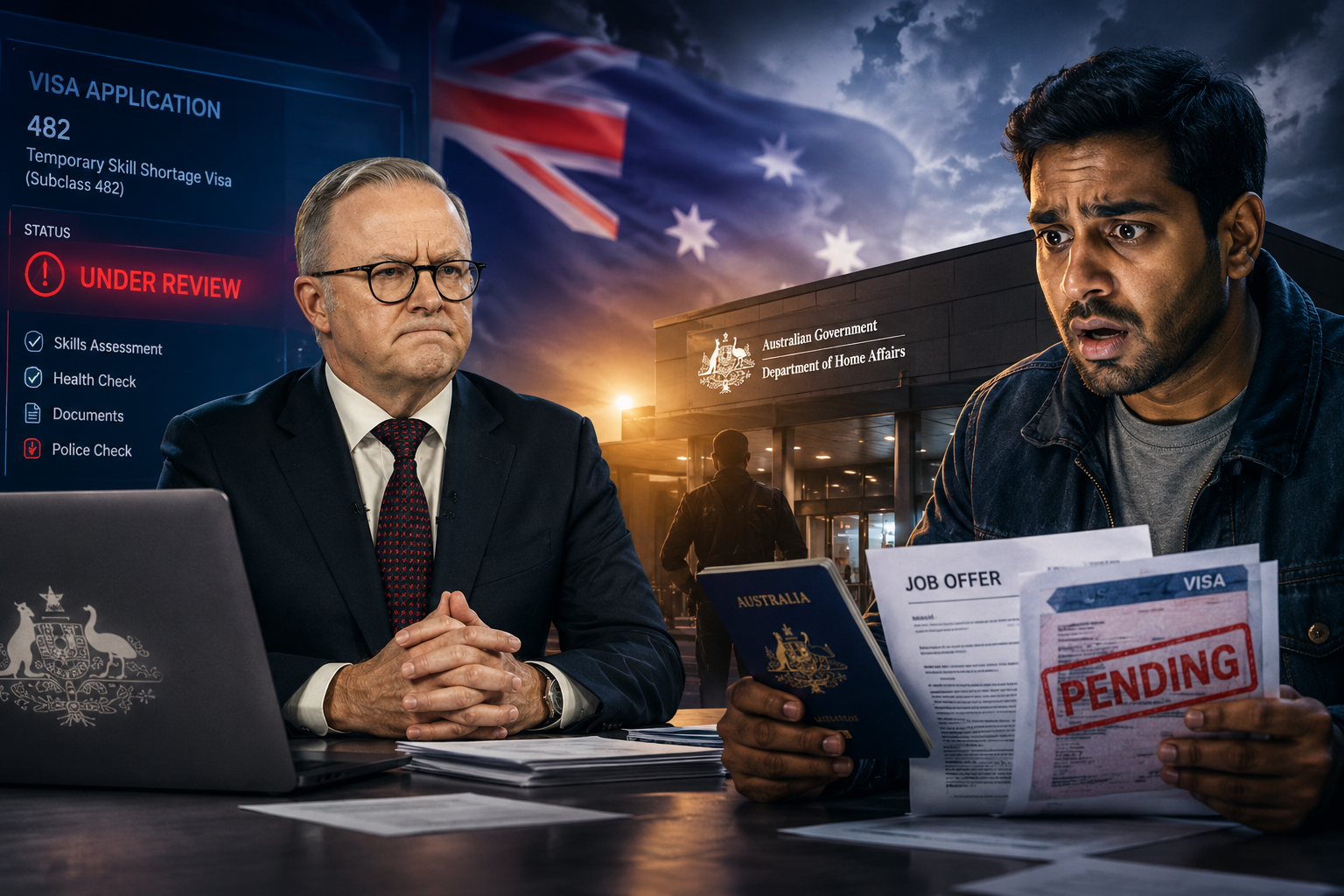
Synopsis: Visa applicants to Australia in July 2025 face erratic wait times across all subclasses, from skilled and partner visas to student and visitor streams. This guide details current processing estimates, examines root causes like policy changes and AI integration, and provides actionable strategies to expedite applications amid ongoing backlog challenges.
Australia’s July 2025 Visa Processing Times: What’s Causing Delays and How to Stay Ahead
Applying for an Australian visa has always been a test of patience—but in July 2025, it’s turning into a psychological thriller. After the government’s 2024 Migration Strategy overhaul, application volumes have surged, systems are overwhelmed, and processing timelines are more chaotic than ever. Whether you’re an international student, skilled migrant, or partner visa applicant, understanding the current landscape is critical.
So why the delays? Is it just bureaucracy, or is something deeper at play? This comprehensive guide explores every major visa subclass, current processing estimates, what’s slowing things down, and most importantly—what you can do to avoid falling into the backlog abyss.

Why Are Australian Visas Delayed in July 2025?
The Post-Pandemic Migration Wave
Australia’s visa system is struggling to balance demand with operational capacity. The pandemic-era restrictions may be long gone, but the hangover remains—especially for immigration systems now facing record applications after years of pent-up demand. According to Home Affairs, visa submissions surged over 30% in the first half of 2025 compared to last year.
Political and Policy Shifts
The 2024–2025 federal budget introduced changes to skilled migration priorities and funding allocations. States were asked to revise nomination quotas and target sectors like healthcare, technology, and education. While well-intentioned, these adjustments led to confusion, inconsistent processing speeds, and administrative backlogs—especially in state-nominated and regional visa streams.
Resource Constraints and AI Integration
The Department of Home Affairs has started integrating AI tools to manage case sorting, but these are still in trial phases and prone to errors. Rather than speeding things up, some applicants report further complications as bots misclassify documents or issue incorrect follow-up requests.
Visa-by-Visa Breakdown: Processing Times in July 2025
Skilled Independent Visa (Subclass 189)
Once known for lightning-fast approvals, the 189 visa is now averaging 6 months—but this can vary widely depending on your profession and points.
- STEM and healthcare applicants are often prioritized.
- Low-demand occupations or borderline EOI scores may see files dormant for longer.
Key Insight:
If your job is on the Core Skills Occupation List (CSOL), and you’re decision-ready, you’re far more likely to receive faster processing.
State Nominated Visa (Subclass 190)
In July 2025, states finally revived their nomination rounds, but processing remains sluggish, averaging 16 to 21 months.
- New South Wales and Victoria are experiencing higher-than-average delays.
- States like South Australia and Tasmania are currently moving faster due to lower volumes and better digital workflows.
Pro Tip:
Applicants from regional states or with critical skills have a better shot at getting through in under 12 months.
Regional Visa (Subclass 491)
This “second-choice” visa has turned into a strategic pathway due to Australia’s renewed push for regional development.
- Current wait times: 18 to 24 months
- Processing speed depends heavily on the nominating region and how well the application aligns with local labor market needs.
Fun Fact:
491 visa holders on the path to PR may enjoy additional points under the General Skilled Migration (GSM) Program.
Partner Visas (Subclasses 820/801, 309/100)
Love may conquer all—but not immigration timelines.
- Onshore (820, 801): 8–27 months
- Offshore (309, 100): 10–25 months
Processing delays are often linked to documentation gaps. Immigration officers demand solid proof of genuine relationships:
- Joint leases and financial statements
- Social proof like photos, travel logs, and statutory declarations
- Evidence of cohabitation and shared responsibilities
Tip:
Ensure all supporting documents are uploaded upfront, not after a request—this prevents bottlenecks.
Student Visa (Subclass 500)
2025 has been turbulent for international students:
- Current processing: 1–9 months, with huge variation
- Students from “high-risk” countries face extra scrutiny under the Genuine Student (GS) requirement.
What changed?
- Australia recently cracked down on non-genuine applicants abusing student visas to gain work rights.
- Expect in-depth assessments of financial capacity, course alignment with past education, and post-study plans.
Temporary Graduate Visa (Subclass 485)
These visas are still relatively fast-moving:
- Current processing: 1–3 months
- Surge in applications due to expiring post-study rights following policy updates
Students with a background in critical sectors—especially STEM and healthcare—are processed more quickly, as they align with Australia’s Migration Strategy priorities.
Visitor Visa (Subclass 600)
Tourist and visitor visas are among the least affected—unless you’re flagged as a high-risk applicant.
- From low-risk countries: as fast as 7 days
- If flagged or incomplete: delays up to 60+ days
Note:
Common delays include missing travel history, poor-quality documents, and travel during peak holiday periods.
Why So Many Delays? Understanding the Bigger Picture
July’s Reset Cycle
July marks the start of Australia’s financial year. With it comes a reset of visa quotas, allocation strategies, and policy refinements. This month is often chaotic behind the scenes as:
- States update nomination rules
- New forms and requirements are implemented
- Staff are redirected to priority applications
The AI Factor: Not Quite the Upgrade We Hoped
The Department of Home Affairs has begun using AI to streamline application sorting. But initial reports suggest glitches in document recognition, flagging errors, and confusion over multi-category cases. While promising long-term, the tech currently lacks human nuance—resulting in additional delays rather than efficiencies.
What Can Applicants Do to Avoid Slowing Down Their Case?
Proactive Preparation
- Upload clear, legible, and right-side-up documents.
- Avoid incomplete files—blurry scans, missing pages, or wrong formats are common rejection triggers.
- Don’t wait for document requests. Preemptively upload police checks, medical exams, and character declarations.
Honesty is Everything
Misrepresenting your background, employment, or travel history can get you banned or refused. Be transparent—Australia’s systems cross-check with multiple databases including Interpol and other national agencies.
Consult a Registered Migration Agent
If your case involves complex elements—previous refusals, medical issues, or tricky timelines—consult a MARA-registered agent. These professionals are licensed and help improve accuracy and case outcomes.
Is It Still Worth It?
Despite the headaches, delays, and costs, Australia remains one of the most attractive destinations for migration.
- Clean environment
- High-quality healthcare and education
- Pathways to Permanent Residency and Citizenship
- Multicultural society and strong worker protections
The system may test your patience, but the rewards on the other side—including Medicare access, local tuition rates, and long-term stability—make it worth the effort for many.
Final Thoughts: July 2025 Applicants, You’re Not Alone
Visa backlogs are real. Delays are frustrating. But you’re not alone in this maze. Thousands are navigating similar challenges—some with success, others learning the hard way.
Here’s your action plan:
- Check your IMMI account weekly, not hourly.
- Stay informed via official updates, not Facebook rumors.
- Reach out to professionals when stuck.
- Prepare for delays, but don’t stop planning.
Patience and strategy go hand in hand for anyone trying to make Australia their new home in 2025.
Frequently Asked Questions (FAQs)
1. Why is my Australian visa taking so long in 2025?
Delays are due to record-high application volumes, July quota resets, AI-driven triage errors, limited staffing at Home Affairs, and a surge of last-minute applications ahead of stricter 2024 migration requirements.
2. What are the current Australia student visa processing times in July 2025?
Subclass 500 processing ranges from 1 to 9 months depending on country of origin, completeness of documents, and Genuine Student test outcomes. Low-risk applicants with decision-ready files see faster decisions; incomplete or GS-failing cases wait longest.
3. How can I speed up my skilled visa (189/190/491) application in 2025?
- Submit a decision-ready application with all required documents
- Target STEM or healthcare priority occupations
- Obtain medical and police checks early
- Consider states with efficient processing (e.g., South Australia, Tasmania)
4. What happens if my visa application is delayed past the average time?
- Use the Home Affairs processing tool for updated estimates
- Contact Home Affairs with supporting evidence
- Lodge a complaint or escalate via ImmiAccount
- Consider judicial review or professional advice for complex cases
5. Is the Australian Department of Home Affairs using AI to process visas in 2025?
Yes. AI is piloted for sorting and pre‑screening applications, but remains error‑prone (misclassifications, false flags). Final decisions are by humans, yet AI can affect queue speed.
6. Do visitor visas (Subclass 600) still get approved quickly in 2025?
Subclass 600 approvals often take 7–15 days for low‑risk holders; high‑risk or previous overstayers may wait 60+ days. Applying off‑peak with a clear itinerary improves speed.
7. Is the 491 visa a good alternative to 189 or 190 in 2025?
The 491 offers regional incentives, a PR pathway after 3 years, and extra GSM points. Processing averages 18–24 months, often quicker in less competitive regions—making it attractive for mobile skilled workers.
8. Can I work while waiting for my Australian visa decision in 2025?
Work rights depend on your bridging visa. Most transitioning applicants receive Bridging Visa A, which permits work under specific conditions. Check your grant letter and consult Home Affairs or a migration agent.
9. How strict is the Genuine Student (GS) requirement in 2025?
The GS filter is stringent: officers assess academic progression, course relevance to prior study, realistic post‑study plans, and financial stability. Vague or weak GS evidence can lead to refusal.
10. What should I do if my visa application is refused in 2025?
- Appeal to the AAT for eligible onshore refusals
- Reapply with a stronger, complete application
- Engage a MARA‑registered agent for strategy and representation
- Address refusal reasons by correcting documentation or eligibility gaps