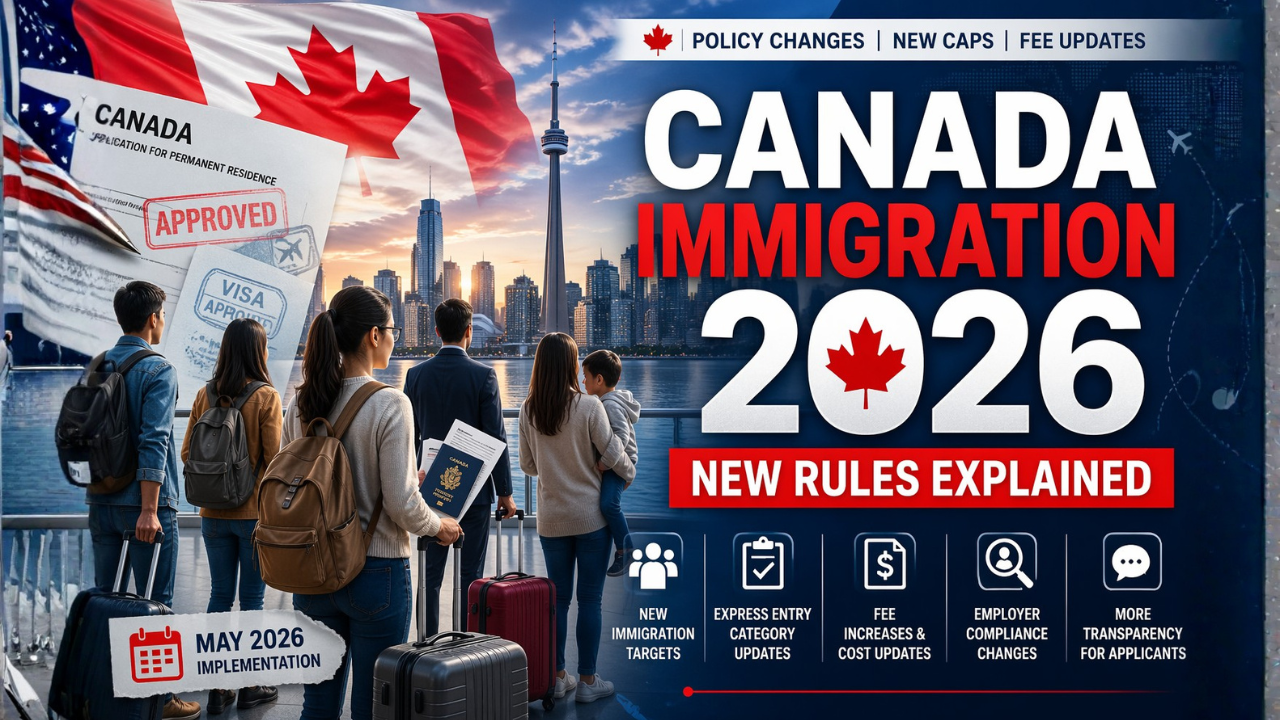
Synopsis: Canada is consulting on 2026 Express Entry categories after 2025 prioritized education, trades, healthcare, STEM, and French. This analysis explains Ottawa’s likely priorities, who benefits, documentation risks, and a six-step tactical roadmap—choose NOCs, build six months’ continuity, strengthen French, and pre-assemble your ITA dossier to be draw-ready before category rounds.
New Express Entry Categories for 2026: What Canada’s Next Big Reset Means for You
Canada’s Express Entry is heading for another major reset in 2026—and this one could reorder who gets picked first. Ottawa has opened formal consultations to shape next year’s categories, building on 2025’s focus on education, trades, healthcare, STEM and strong French. If you’ve ever wondered how to turn shifting policy into a concrete strategy, this guide shows you how—step by step—with clear actions you can take now while the window is open for public input via the official consultation portal. (Government of Canada)
Why this matters now (and why 2026 won’t wait for you)
Canada’s move to category-based selection fundamentally changes Express Entry from a pure CRS footrace into a skills-first competition aligned to national labor needs. In 2025, IRCC doubled down on categories and confirmed that eligibility for these draws requires at least 6 months of continuous work experience in the last 3 years in a single listed occupation (Canada or abroad). That rule sharply shapes planning for 2026; it’s the difference between getting invited—and getting overlooked. (Government of Canada)
At the same time, Ottawa’s levels plan is pushing a clearer, data-led emphasis on Francophone immigration outside Québec—setting specific percentage targets across 2025–2027 and signaling longer-term ambition to 2029. If you’ve been on the fence about French, the policy direction removes any doubt: French stays pivotal. (Government of Canada)
Bottom line: the 2026 categories are being framed now. Your profile should be, too.

The 2026 consultation: what Ottawa is actually asking
Canada is running “2025 consultations on economic priorities for category-based selection” from August 6 to September 3, 2025. The goal: gather evidence on which occupations and attributes most closely match long-term labor shortages and economic priorities. Think of it as the “draft board” meeting where next season’s playbook gets written. (Government of Canada)
Why you should care:
- Consultations often foreshadow next year’s categories.
- Stakeholder feedback (employers, provinces, educators, applicants) can expand or prune occupation lists.
- The process can create new sub-priorities (e.g., leadership/innovation, specific STEM subfields, or education specializations).
Action you can take: review the consultation notice and send a concise, evidence-backed submission tying your occupation to measurable shortage indicators and public-interest outcomes (service delivery, productivity, critical infrastructure). (Government of Canada)
What 2025 tells us about 2026
In 2025, category-based selection emphasized:
- Healthcare and social services occupations
- Trade occupations
- Education occupations
- Strong French-language proficiency
- Agriculture & agri-food (niche but steady)
Crucially, any category’s gate is that 6-month, within-3-years work-experience rule in one eligible occupation—regardless of your “primary NOC” in your profile. That opens doors for tactical career moves and targeted upskilling—so long as you can accumulate six continuous months in the exact occupation code the category lists. (Government of Canada)
What carries forward to 2026?
Based on the consultation’s framing and the levels plan, expect continuity in healthcare, trades, education, STEM, and French, with possible refinements to NOC lists and thresholds. Watch for leadership/innovation style priorities to attract senior specialists—so long as they can be verified with credible management scope and scale. (If your title says “manager” but your evidence shows individual contributor tasks, you’ll face scrutiny.)
The 6-month rule: small number, big consequences
Many candidates underestimate how powerful “6 months in the last 3 years” really is:
- It compresses your eligibility timeline. Six months can be built abroad or in Canada, full-time or an equal part-time equivalent, as long as it’s continuous and within one listed occupation.
- It encourages smart pivots. If your current NOC isn’t favored, you can switch into an in-demand NOC, rack up six months, and immediately qualify for category draws—even if your overall CRS is merely competitive, not stellar. (Government of Canada)
Your to-do: map which category-adjacent NOCs you can credibly enter within 0–3 months, then plan to finish six continuous months well ahead of spring 2026.
French remains a force multiplier
Ottawa’s 2025–2027 levels plan set Francophone immigration targets of 8.5% (2025), 9.5% (2026), and 10% (2027) for admissions outside Québec, and the government has repeatedly signaled ambition to grow Francophone shares further through this decade. For candidates, that translates into more frequent and favorable selection for strong French—and better tie-breaks when other factors are equal. (Government of Canada)
Practical path:
- Set a measurable target (e.g., TEF Canada/TCF Canada scores aligned to CLB 7+).
- Book instruction blocks now; build a 16–20 week prep runway.
- Use French to stack advantages: Francophone draws and tie-breaks; provincial options; employer interest in bilingual roles.
Who is most likely to benefit in 2026?
1) Candidates with verifiable, category-aligned experience
If you can evidence six continuous months in a listed occupation by early 2026 (healthcare, trades, education, agri-food, select STEM), you’re directly in the target lane. (Government of Canada)
2) Candidates adding French
French can tip borderline CRS profiles into selection ranges, and it amplifies your attractiveness to provinces and employers. (Government of Canada)
3) Mid-career professionals who can prove senior scope
If IRCC introduces leadership/innovation-type priorities, the winners will be candidates who can prove manager-of-managers scale (org charts, headcounts, budget, cross-functional impact). Titles alone won’t cut it.
4) New graduates positioned for category NOCs
International students and recent grads who line up six months in education support, early childhood, personal support, or priority trade roles could convert temporary status into category eligibility more quickly than via a pure CRS race. (Government of Canada)
Who faces headwinds?
Profiles built only for a CRS shootout. Category selection lets IRCC invite lower-CRS candidates with the right experience signal, especially when Ottawa wants to hit category targets quickly.
Candidates relying on weak documentation. Category rounds increase scrutiny on NOC fit. If your letter of employment is vague or doesn’t show core duties that match the NOC lead statements, officers can’t credit the work.
Applicants with inconsistent history. Hidden past jobs or degrees omitted from earlier applications (e.g., study permits) can invite procedural fairness letters when reintroduced later. Your best defense is full, consistent disclosure plus clear explanations.
The documentation standard you’ll be judged by
IRCC’s category rules are simple. The evidence standard is not. Expect officers to look for:
- Continuity: no gaps within the six-month stint.
- NOC match: duties that align with the target occupation’s lead statement and main duties.
- Verifiability: letters on official letterhead, with signatory contact, showing title, tenure, hours, salary, and responsibilities.
- Consistency: past applications should not contradict current claims.
Also revisit your core Express Entry document plan (language tests, ECA if needed, work evidence, police certificates, proof of funds where applicable). Your first month after an ITA is not the time to discover a missing letter. (Government of Canada)
Proof of funds: small errors, big consequences
If you’re in FSW or FST (and don’t have an eligible Canadian job offer or CEC eligibility), POF rules still apply. Funds must be unencumbered, available, and on demand, supported by official bank letters with required details. This is easy to get right—and costly to get wrong. (Government of Canada)
Checklist you should pre-solve:
- Six-month average balances support the total.
- Source explanations for recent large deposits.
- Accounts are liquid (volatile investments can be risky).
- If funds are in a joint account, include an affidavit clarifying unrestricted access.
The 2026 timeline (and your critical path)
August–September 2025 — Consultation window. Submit input tying your occupation to shortages, service delivery, and productivity metrics. Cite credible public sources. (Government of Canada)
Q4 2025 — IRCC consolidates consultation results and calibrates 2026 categories in light of the levels plan and temporary resident management.(Government of Canada)
Early 2026 — Category lists and draw cadence emerge. Some categories may run monthly; others quarterly. The six-month experience clock you start now will determine whether you’re eligible when those rounds begin. (Government of Canada)
Strategic playbook: six moves to make before January
1) Choose your lane
Identify two category-eligible NOCs you can credibly enter quickly (primary and backup). Confirm exact lead statements and main duties you will perform and document. (Government of Canada)
2) Lock a compliant contract
Secure an offer letter and job description that mirror the NOC’s duties. Align your actual daily tasks to that description from day one. Keep logs and performance notes.
3) Build the six months (continuously)
Plan backwards from March–April 2026. If you start by September 2025, you can finish your six months by March 2026, entering the earliest category rounds fully eligible. (Government of Canada)
4) Elevate French
Create a study-and-testing plan aimed at CLB 7+ equivalents on TEF/TCF. Book a spring test date and a backup. Track reading/listening progress weekly. The goal is bankable points + draw eligibility for French-priority rounds. (Government of Canada)
5) Tune the rest of your CRS
While categories matter, a higher CRS still helps with tie-breaks and general rounds. Audit your profile for education points (ECA), second official language, spouse factors, and possible provincial pathways.
6) Pre-assemble your ITA dossier
Line up employer letters, pay evidence, police certificates (some take weeks), and proof of funds (if applicable). Keep your file “one click from upload.” (Government of Canada)
A note on ethics and risk
Category-based selection has increased the payoff for tight NOC alignment. It has also increased the risk of missteps:
- Inflated titles (e.g., “senior manager” with no managers reporting) are easily challenged. Expect officers to look for org charts, headcounts, budget authority, and cross-functional impact.
- Omitted history from prior applications (study or work permits) that suddenly reappears at PR stage is a red flag for misrepresentation unless fully and credibly explained.
- Unsupported French claims are being tested more often (interviews) in some streams. Only claim what you can demonstrate on an official test.
When in doubt, document conservatively and tell a consistent story across every application you’ve ever filed.
How provinces fit in
While Express Entry categories run federally, provinces keep shaping outcomes:
- Aligned PNP streams: Some provinces run category-like priorities that dovetail with federal lists (e.g., healthcare, early childhood, trades).
- Employer-led nominations: In less urban regions, employer support (and genuine retention plans) can still trump a middling CRS.
- French: Several provinces outside Québec actively court Francophones; combining French with a category NOC compounds your chances. (Government of Canada)
Tip: Build parallel tracks—one aimed at federal categories and another at 1–2 province streams matched to your occupation and language.
If your profile isn’t obvious—make it obvious
A strong category application reduces officer guesswork. Tactics that help:
- Job title + duty mapping: In your letter of employment, mirror the NOC’s lead statement and core duties.
- Outcome metrics: Add quantifiable outputs (patients per shift, units fabricated, students supported, tickets resolved).
- Third-party corroboration: Include licenses, registrations, or training certificates when relevant (for trades/healthcare).
- Continuity proof: Show pay stubs covering each month of the six-month window without gaps.
What about general (all-program) draws?
Ottawa has indicated that draws for those with experience working in Canada (CEC) will remain an important focus, even alongside categories. Practically, that means you should still bank one full year of Canadian experience (in the last three years) whenever feasible; it gives you optionality if your category’s cadence slows. (Government of Canada)
Data signals to watch through late 2025
- Consultation wrap-up: Any hints on new or trimmed NOCs. (Government of Canada)
- Levels plan execution: Progress toward Francophone shares and how aggressively IRCC uses French draws to hit targets. (Government of Canada)
- Category draw patterns: Frequency and size of rounds by occupation family (watch IRCC’s category page for updates to eligibility language). (Government of Canada)
FAQs on Canada Spouse Visa Update 2025
Q: Do I need my six months to be in my “primary NOC” on the profile?
A: No. For category draws, it must be in one listed occupation within the last 3 years—primary NOC is irrelevant for eligibility to that category. (Government of Canada)
Q: Can the six months be outside Canada?
A: Yes. Canada or abroad—both count, as long as it’s continuous and in a single listed occupation. (Government of Canada)
Q: If I qualify for a category, do I still need proof of funds?
A: If you’re invited under FSW or FST and don’t have an eligible Canadian offer or CEC eligibility, POF rules apply. CEC applicants typically do not need POF. (Government of Canada)
Q: Will French keep mattering?
A: Yes. Ottawa’s plan sets explicit Francophone share targets for 2025–2027, and the policy momentum is to keep growing the share of French-speaking newcomers outside Québec. (Government of Canada)
Your 30-day action plan
Week 1
- Pick two category-eligible NOCs you can realistically perform and document.
- Audit your documentation against IRCC standards (letters, duties, hours, pay).(Government of Canada)
- Draft a consultation submission tying your occupation to shortages, service quality, and productivity.(Government of Canada)
Week 2
- Start the six-month clock in your target NOC (or move into it).
- Book French testing windows; set a study cadence.
Week 3
- Order police certificates that have long processing times.
- Stabilize proof of funds if you’ll need them (liquidity, average balances, source of funds letters).(Government of Canada)
Week 4
- Align your résumé, LinkedIn, and internal HR records to your NOC duties (consistency check).
- Identify two provincial options aligned to your occupation and language.
Final word: don’t wait for the list—become what’s on it
Every reset feels uncertain until the first rounds run. But Express Entry’s direction is clear: targeted categories, measurable experience signals, and a sustained push for French. The winners in 2026 won’t be surprised; they’ll already have six months in a listed occupation, a verifiable evidence trail, and—where possible—French scores that open extra doors.
Use the consultation window to understand the policy logic. Then build the profile that policy is designed to select. That’s how you convert a moving target into a predictable outcome.
{
“@context”: “https://schema.org”,
“@type”: “FAQPage”,
“mainEntity”: [
{
“@type”: “Question”,
“name”: “Do I need my six months to be in my “primary NOC” on the profile?”,
“acceptedAnswer”: {
“@type”: “Answer”,
“text”: “No. For category draws, it must be in one listed occupation within the last 3 years—primary NOC is irrelevant for eligibility to that category. (Government of Canada)”
}
},
{
“@type”: “Question”,
“name”: “Can the six months be outside Canada?”,
“acceptedAnswer”: {
“@type”: “Answer”,
“text”: “Yes. Canada or abroad—both count, as long as it’s continuous and in a single listed occupation. (Government of Canada)”
}
},
{
“@type”: “Question”,
“name”: “If I qualify for a category, do I still need proof of funds?”,
“acceptedAnswer”: {
“@type”: “Answer”,
“text”: “If you’re invited under FSW or FST and don’t have an eligible Canadian offer or CEC eligibility, POF rules apply. CEC applicants typically do not need POF. (Government of Canada)”
}
},
{
“@type”: “Question”,
“name”: “Will French keep mattering?”,
“acceptedAnswer”: {
“@type”: “Answer”,
“text”: “Yes. Ottawa’s plan sets explicit Francophone share targets for 2025–2027, and the policy momentum is to keep growing the share of French-speaking newcomers outside Québec. (Government of Canada)”
}
}
]
}