Synopsis: The UK’s New migration rules are undergoing one of the biggest shake-ups in decades, shifting from a predictable five-year settlement model to a highly conditional ten-year journey with penalties that can stretch to twenty years. Asylum protection becomes temporary and regularly reviewed, and benefit-linked settlement conditions raise the bar for long-term residency. This blog breaks down the political drivers, key reforms, data, and impacts for migrants, students, employers, universities, and communities.
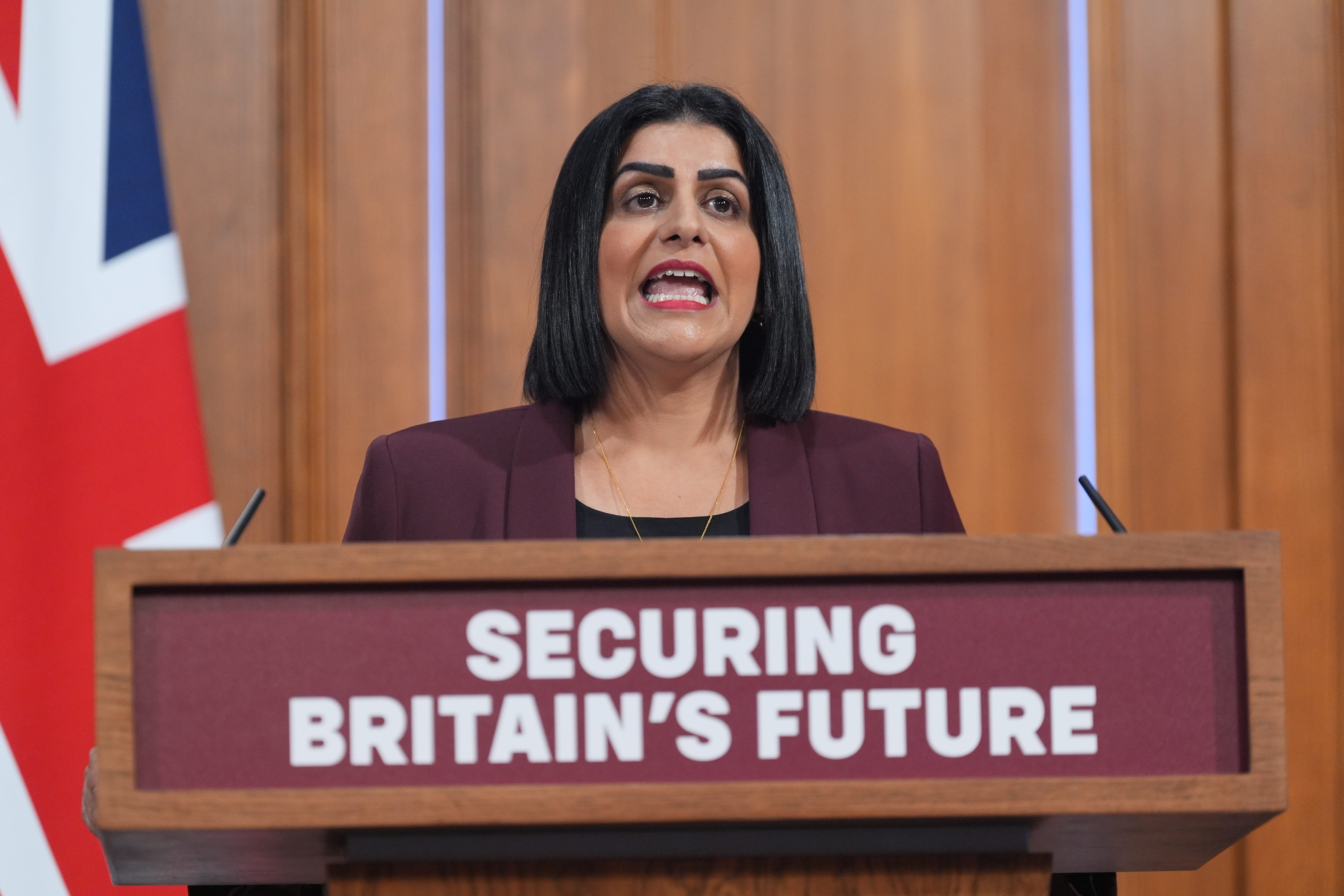
To settle in the UK “forever,” ministers now insist, is no longer a routine outcome of long residence but a privilege that must be earned. In a single week, Home Secretary Shabana Mahmood outlined two far-reaching shifts to the immigration system that go to the heart of who gets to stay – and on what terms – while the government battles intense pressure over net migration and public trust in the system. The direction of travel is clear: a tougher, more conditional model of settlement and asylum, framed as necessary for fairness and social cohesion, and administered by a Home Office that already struggles with complex rules and backlogs, as even official reports from the UK Home Office routinely acknowledge.
These changes matter because the new “earned settlement” proposals alone could affect an estimated 2.6 million people who arrived in the UK after 2021. Combined with changes to asylum – turning refugee protection into a status that is periodically reassessed rather than genuinely secure – the reforms signal a decisive recalibration of the UK’s post-Brexit migration model. For international students, skilled workers, families, and employers, the question is no longer just “Can I get a visa?” but “Will I ever truly be allowed to settle?”

Understanding the Policy/Event
The BBC Newscast episode captures a pivotal turning point: the shift from a relatively linear five-year path to Indefinite Leave to Remain (ILR) towards a multi-tiered, behaviour-dependent journey that can stretch up to two decades. At the same time, asylum is reframed as a more temporary, constantly reviewable form of protection.
Two headline moves define this moment:
- A move from a standard five-year ILR qualifying period to a default ten years, with built-in penalties and incentives.
- A re-engineering of asylum so that every refugee’s right to stay is reassessed roughly every 2.5 years, with deportation on the table if their country is deemed safe.
These are not minor technical changes. They rewrite the expectations of millions who came to the UK believing in a relatively predictable route from temporary status to permanent settlement. They also sit within a wider debate about the so-called “Boris wave” of migration after Covid, the politics of Brexit, and Labour’s determination to prove it is “tougher than the Tories” on immigration.
Why It Is Happening
Why is a centre-left government pushing through some of the toughest migration reforms in recent decades?
Several overlapping drivers emerge from the discussion:
- Political pressure over net migration figures. Record arrivals, partly due to Ukrainians, Hong Kongers, and Covid-related backlogs, have created a public expectation that numbers must fall.
- The “Boris wave” narrative. Right-wing critics framed the post-Covid spike as an uncontrolled “wave.” Mahmood has now adopted the term in parliament.
- Internal Labour Party dynamics. With Reform UK on the right and the Greens on the left, the leadership is trying to reassure voters who fear “loss of control” while keeping progressive MPs on board.
- A Danish template. Ministers openly reference Denmark’s approach, where tougher rules – especially on refugees – are claimed to have cut arrivals by around 40 percent and, crucially, created political space for other progressive policies.
- The racism argument. Mahmood has controversially argued that stricter controls can actually reduce racism by addressing concerns before far-right narratives gain traction.
At root, these reforms are about politics as much as policy. They are designed to send a signal – to voters, to potential migrants, and to restless backbench MPs – that this government is prepared to be uncompromising on who earns the right to stay.
Key Reforms or Changes
The Newscast conversation focuses on two core sets of changes: the recalibration of settlement rules and the redesign of asylum.
- From Five to Ten Years for Settlement
Until now, many migrants could apply for ILR after five years of lawful residence on certain work, family, or protection routes. Under the new proposals:
- The default threshold rises to ten years.
- This applies to an estimated 2.6 million people who have arrived since 2021.
- Settlement becomes explicitly “earned,” with rewards for high contribution and penalties for perceived dependency.
- Benefit-Linked Settlement Penalties
The proposals introduce a sliding scale where benefit use can dramatically extend the settlement journey:
- Less than 12 months of benefits during the 10-year period could push eligibility out to 15 years.
- More than 12 months of benefits could mean waiting 20 years before qualifying.
The implicit message is unmistakable: do not rely on the welfare system if you want to secure long-term status in the UK.
- Fast-Track Settlement for “High-Value” Migrants
Not all migrants are treated equally under the new model. Some groups may see their route shortened:
- NHS workers and health and social care staff.
- Entrepreneurs and investors who create jobs and “economic value”.
- Potentially other strategically important workers in sectors like AI and advanced tech.
In effect, the state is building a matrix of “credits” and “debits” that can speed up or slow down the journey to ILR.
- Asylum Becomes “Temporary by Design”
On asylum, the government is moving towards:
- Time-limited protection, reviewed every 2.5 years.
- A presumption that people can be returned if their home country is later deemed safe.
- A significant increase in administrative workload, with every case revisited repeatedly over many years.
Critics argue this undermines the very idea of refuge as a stable, rights-based status and entrenches permanent insecurity for recognised refugees.
Detailed Breakdown
Look more closely and the architecture of these reforms reveals several key design choices.
First, the earned settlement model operates like a points system without saying so. Instead of transparent scores, it uses:
- Time in the UK.
- Tax and National Insurance contributions.
- Use of benefits.
- Sector-specific work (NHS, social care).
- Possibly broader civic participation.
Second, the benefit penalties are calibrated to send a deterrent message. Very few migrants actually claim long-term benefits, but the threat of a 15- or 20-year wait is symbolically powerful. It tells both domestic voters and potential migrants that economic self-reliance is a condition of long-term belonging.
Third, the asylum changes hard-wire uncertainty into refugee lives. Every 2.5 years, people will face a new decision:
- Is your home country now “safe”?
- Are you still in need of protection?
- Do you still meet the criteria?
This is administratively heavy and, crucially, emotionally exhausting for those affected.
Finally, these reforms sit on top of an already intricate web of existing routes and thresholds. For many migrants and employers, the system risks becoming even more opaque, even as ministers claim to be making it “fairer and clearer.”
Data, Stats, and Trends
The Newscast discussion hints at several important numerical trends, even when it does not spell out every figure.
Key data points include:
- 2.6 million: the number of people who arrived after 2021 and could be affected by the new 10-year settlement rule.
- A projected doubling of the settlement wait for many, from five to ten years.
- A potential extension to 15 or 20 years for those using the benefits system.
- The Danish example, where arrivals reportedly fell by around 40 percent under tougher rules.
- An expected decline in UK net migration from the recent record highs, driven by a mix of policy tightening, the tailing off of humanitarian schemes, and more people leaving the country.
At the same time, other data raise uncomfortable questions:
- UK universities warn that caps on foreign students could push some institutions towards bankruptcy.
- Sectors like social care and hospitality still report severe labour shortages.
- Tech and research communities emphasise that future growth depends on attracting, not deterring, global talent.
What the Numbers Show
Taken together, the figures point in a clear direction. Net migration was always likely to fall from its post-Covid peak as humanitarian schemes wound down and earlier visa restrictions took effect; these reforms will accelerate that trend at the margins. The real story lies elsewhere. The 2.6 million people who came after 2021 now face a much longer, more conditional route to permanence than they expected when they arrived. Benefit-linked penalties are largely symbolic, aimed at reassuring voters that migrants must “pay their way,” while repeated asylum reviews shift refugees from one-off recognition to permanent scrutiny. At the same time, ministers still promote Britain as a magnet for global talent. The numbers therefore reveal a system trying to pull in high-skill workers while projecting toughness to domestic audiences – a balancing act that may prove increasingly hard to maintain.
Impact Assessment
The direct and indirect impacts of these reforms radiate far beyond the Home Office casework system.
- Migrants and Their Families
For migrants already in the UK, especially those who arrived after 2021, the consequences are profound:
- Life plans now stretch across a 10-year horizon, or longer.
- Decisions about buying a home, starting a business, or having children are clouded by uncertainty.
- Families may be split where one member has a faster route (for example, an NHS worker) while others do not.
For asylum seekers and refugees, the impact is even sharper:
- Every 2.5-year review brings the possibility of removal.
- Long-term integration – language learning, career development, mental health recovery – becomes harder when status is temporary.
- Employers and the Labour Market
Employers face mixed signals:
- On the one hand, they are told they can still recruit globally, particularly in priority sectors like health, tech, and research.
- On the other, the political rhetoric suggests that long-term settlement is exceptional and conditional.
This creates several risks:
- Skilled workers may choose countries with clearer routes to permanence.
- Employers may see higher churn as staff leave the UK or shift onto less secure visas.
- Long-term workforce planning becomes more complex, especially in sectors that rely heavily on migrant labour.
- Universities and International Students
Universities sit at the intersection of several policy strands:
- International students are both a major export sector and a political flashpoint.
- Caps on numbers, combined with longer and more conditional settlement routes, may make the UK less attractive than Canada or Australia.
- Institutions outside the big metropolitan centres are particularly exposed to revenue loss.
- Communities and Social Cohesion
The Home Secretary argues that stricter control and clear conditions will improve community cohesion and even reduce racism. But there is a counter-argument:
- Communities may resent seeing neighbours and colleagues live in limbo for a decade or more.
- Refugees under constant review may struggle to feel fully part of local life.
- A “two-tier” system – fast routes for the economically privileged, slower routes for others – can itself fuel grievance.
Social, Economic, and Human Consequences
Taken together, the consequences are multi-layered.
Socially, the reforms risk normalising precarity. A growing share of the population will live for many years with conditional status, regularly reviewed and always potentially reversible. This may discourage civic participation and long-term community investment.
Economically, the UK could face a talent paradox:
- Ministers tout the country as an innovation hub.
- But rivals promote not just jobs, but clearer pathways to permanent residence and citizenship.
- For high-skill migrants with options, these differences matter.
For refugees and asylum seekers, the human cost is particularly acute. Repeated status reviews can exacerbate trauma and anxiety, interrupt education and employment, and make it harder to rebuild a sense of safety.
Ultimately, these consequences raise a core question: is a system built on permanent conditionality compatible with the kind of stable, cohesive, and prosperous society ministers say they want?
Political Background & Stakeholder Reactions
The Newscast episode situates these reforms in a heated political context, both within Labour and across the wider spectrum. Migration is no longer a marginal issue; it sits at the centre of arguments about economic strategy, public services and the future of the government itself.
Within the Labour Party
Several dynamics stand out:
- Senior figures such as Shabana Mahmood have been pushed rapidly to the front of the stage, prompting speculation about future leadership contests.
- Backbench MPs on the party’s left warn that a Denmark-style turn risks alienating core supporters, especially in university cities and diverse urban seats.
- Others fear that appearing cautious or divided would simply gift votes to Reform UK and hard-line Conservative critics.
The leadership’s strategic bet is clear: deliver “tough but fair” reforms that can:
- Neutralise Conservative attacks from the right.
- Limit the appeal of Nigel Farage and similar populist figures.
- Reassure anxious voters enough to create space for wider economic and social reforms.
External Stakeholders
Reactions outside parliament are equally mixed:
- Refugee and migrant advocacy groups warn of rising insecurity and a “permanent probation” model of protection.
- Business groups and universities highlight the risk that uncertainty will deter talent and investment.
- Right-leaning commentators applaud Mahmood for outflanking previous Conservative Home Secretaries.
Government, Opposition & Expert Opinions
Formal scrutiny will run through the committee system and debates in the UK Parliament. Expert opinion already raises three recurring questions: whether the Home Office can administer such a complex earned-settlement matrix; whether repeated asylum reviews are compatible with international protection standards as interpreted by bodies such as the UNHCR; and how these proposals will interact with existing routes overseen by UK Visas and Immigration. Independent researchers at the Migration Observatory and elsewhere warn that layering new conditions onto already intricate rules risks confusion, litigation and unintended exclusion, while opposition parties balance critiques of the human and economic costs against voters’ demands for tighter control.
Global Comparisons
The comparison with Denmark is central to the government’s narrative. Ministers point to a fellow centre-left administration that tightened rules, reduced arrivals and, they claim, took much of the heat out of migration politics.
The Danish Model
Denmark has:
- Tightened access to permanent residence and citizenship.
- Linked long-term status to integration measures, work history and language.
- Reduced certain forms of refugee protection.
Supporters say this cut arrivals and blunted far-right momentum. Critics counter that the human cost has been high and that Denmark’s size, geography and political culture make it a poor template for a larger, more globally connected state such as the UK.
Where This Stands Internationally
Internationally, the UK is not alone in tightening aspects of its migration system. Yet the specific blend of decade-long earned settlement, benefit-linked penalties and time-limited asylum with regular reviews places it towards the restrictive end of the high-income country spectrum, even as the UK continues to brand itself as open, innovative and globally engaged.
Critical Analysis
These reforms invite sharper questions about whether a system built on permanent conditionality can really deliver integration, economic contribution and public confidence.
Any sustainable migration strategy has to be workable in practice, lawful, economically coherent and broadly trusted; critics fear these reforms may deliver short-term reassurance at the expense of those longer-term foundations.
Will It Work?
Will the new earned settlement and asylum model “work” on its own terms?
On the narrow metric of reducing net migration, the answer may well be yes – but largely because numbers were already trending down and because the UK is becoming less competitive in the global race for talent.
On the broader goals of:
- Strengthening social cohesion.
- Maintaining economic dynamism.
- Meeting humanitarian obligations.
the verdict is far less clear.
The earned settlement framework may:
- Encourage some migrants to deepen their economic contribution.
- Deter a smaller number who might otherwise see the UK as an easy route to long-term residence.
But it may also:
- Push globally mobile talent towards countries with clearer, shorter settlement routes.
- Trap families and communities in long periods of uncertainty.
- Fuel a politics of continual “ratcheting up,” where each government feels compelled to be tougher than the last.
Conclusion
The reforms discussed on BBC Newscast mark a pivotal moment in the evolution of the UK’s immigration system. A five-year route to settlement is being transformed into a decade-long, behaviour-dependent journey that can stretch to 20 years for some. Asylum, once understood as a relatively stable refuge, is being recast as a status under constant review.
Supporters see this as overdue realism: a way to align policy with public expectations, discourage dependency, and reassure anxious voters that the system is under control. Critics see something more troubling: a drift towards permanent precarity, in which millions live for years without the security that true settlement provides.
For migrants, employers, students, and communities, the implications will unfold over the next decade and beyond. For policymakers, the challenge is to ensure that today’s tough signals do not become tomorrow’s structural weaknesses – in economic competitiveness, in international reputation, and in the cohesion of an increasingly diverse society. The UK’s migration story has always been one of constant adjustment. The question now is whether this latest chapter will be remembered as a necessary course correction – or a turning point that made belonging harder to attain just when the country could least afford it.