
Synopsis: The UK Home Office is tightening compliance on remote and hybrid work arrangements for Skilled Worker visa holders in 2026. This guide breaks down the new structural reporting requirements, outlining when remote working becomes a visa risk for both sponsors and employees, alongside practical, actionable steps to ensure your flexible working arrangement remains fully compliant.
The UK’s policies on working remotely are evolving, and if you’re on a Skilled Worker visa, then this change is worth keeping an eye on.
The “work from anywhere” days are coming to an end for sponsored workers, according to recent compliance measures introduced by the Home Office. In some cases, remote and hybrid working is still available, but employers are now expected to be more vigilant about working arrangements, ensuring that the rules for sponsorship are being met. 
Why is the UK Tightening Remote Work Rules?
The Skilled Worker route was created to address the UK’s genuine labour shortages. But as remote work became the norm after the pandemic, there had been a growing number of questions about whether some sponsored jobs actually needed workers to live and work within the UK.
Sponsors now must maintain accurate records of work locations of sponsored employees and report major changes as mandated.
What Has Changed?
The most significant change is not a complete ban on remote work; instead, focus has shifted towards closer scrutiny.
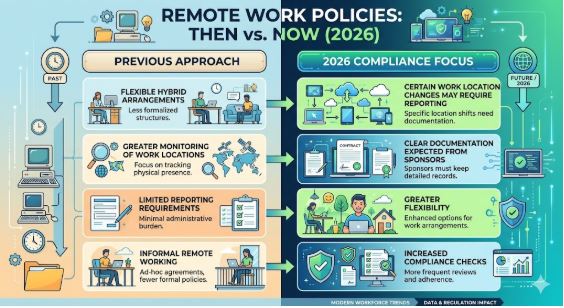
This is a call for employers to have greater evidence proving that sponsored employees continue to meet visa conditions.
When Could Remote Working Become a Risk?
Not all work-from-home jobs result in a compliance concern.
But situations that might warrant more focus are:
- Changes that are planned for the long-term in your primary workplace
- Frequent work from an unapproved site
- Long absences from the UK, but still working
- A major shift in your work routine that is not in line with your sponsor’s expectations
In these circumstances, your employer may need to consider whether reporting obligations apply.
What Should Skilled Worker Visa Holders Do?
If you hold a Skilled Worker visa, then here are some practical steps to consider:
- Before making any permanent changes, discuss your remote or hybrid working arrangements with your employer
- Make your employer aware of your working location
- Do not presume that the previous flexible arrangements are compliant
- Ensure you retain records of all approved hybrid working agreements.
Keep in mind that the employer has compliance obligations too. A reporting failure may impact either the sponsor or the sponsored worker.

Key Takeaway
Skilled Worker visa holders can work remotely. But now it’s no longer something to be taken lightly.
Employers and employees need to collaborate to keep working arrangements consistent with visa requirements, especially with the Home Office’s emphasis on compliance with the requirements of sponsorship.
If you are thinking about changing to a fully remote working position, moving within the UK or undertaking extended overseas work, you should consider discussing the implications with your sponsor prior to changing.
FAQS
Can Skilled Worker visa holders work from home?
Yes. Home working is still considered to be acceptable in those circumstances, if it is consistent with your employer’s policies and sponsorship obligations.
Is fully remote work allowed?
It totally relies on the nature of the role and the sponsorship requirements.
Can remote work affect my visa?
Potentially. If there are substantial changes to your job location or working pattern, this could trigger obligations for your sponsoring employer.