
Synopsis: The UK government is introducing new legal sponsorship routes for eligible refugees while simultaneously tightening deportation and human rights rules. This dual strategy aims to establish clearer legal entry pathways but creates a more stringent environment for unauthorised migrants. The policy represents a significant, highly debated shift balancing humanitarian compassion with strict border control.
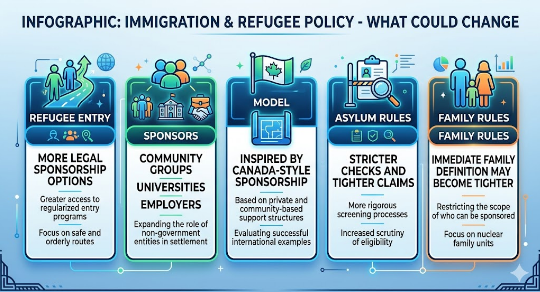
The UK government is changing the way it treats immigration in a big way, promising new safe and legal sponsorship pathways for eligible refugees and new, stricter rules for those who are not. Under the plan, which is spearheaded by Home Secretary Shabana Mahmood, community groups, trusted universities and employers will be able to sponsor refugees to arrive here through regulated legal channels. Inspired by Canada’s community sponsorship model, which has enabled the resettlement of around 400,000 people since 1979, the new routes are expected to begin in autumn, according to ITV News. 
What Are the New Refugee Sponsorship Routes?
According to the scheme, the UK will welcome eligible refugees, with the help of approved organisations, before they reach the country. This may involve community organisations, universities, and employers that have the means to sponsor individuals formally.
The government has made it clear that it is seeking to establish legal methods for “genuine refugees” to come to the UK whilst limiting the number of illegal migrants and risky crossings of the Channel. The purpose is to create legal avenues and close legal loopholes which have been exploited,” stated the Home Secretary.
The proposal comes at a time when the UK asylum debate continues to revolve around small boat crossings, asylum hotels, the burden on public services, and the expense of accommodating asylum seekers. Official sponsorship pathways are intended to offer a regulated alternative to irregular journeys.
Tougher Deportation and Human Rights Rules
This announcement is more than just about opening doors. It also brings in tighter immigration controls.
The new immigration law will seek to make it easier to deport those who are living in the UK illegally, according to reports. The government also wants to ensure that human rights laws are not used for “vexatious claims”. A major change that is proposed is to reduce the definition of family to immediate family members only.
This may impact individuals claiming to be in the UK on the grounds of human rights, particularly in cases where family relations are more extensive or less close. Depending on the final law and its application, it could also make some asylum and immigration applications more difficult.
The important thing for migrants, refugees and families to remember is that the UK is developing many clearer legal entry options, but it’s also preparing a more stringent system for those who are not legally in this country.

Why This is Politically Important
As one of the UK’s most debated political issues, immigration continues to raise questions about border control, refugee protection, human rights law, public spending, and the impact on local housing.
The timing is crucial as well. The announcement follows a period of political uncertainty, with questions over leadership and direction for immigration. This policy could prove to be a key challenge to the UK’s ability to be both compassionate and controlled.
The new routes of sponsorship could offer a more formal pathway to re-establish life in the UK for eligible refugees. For those already in this country without status, the message is far harsher: claims can be given strictures, family arguments can be limited, and deportation powers can be expanded.
Final Takeaway
The UK’s latest refugee sponsorship plan combines humanitarian support with stricter immigration enforcement. While it opens legal routes for selected refugees, it also reinforces action against illegal stayers and introduces tighter measures around the use of human rights protections. The policy signals an important shift in the UK’s immigration strategy.