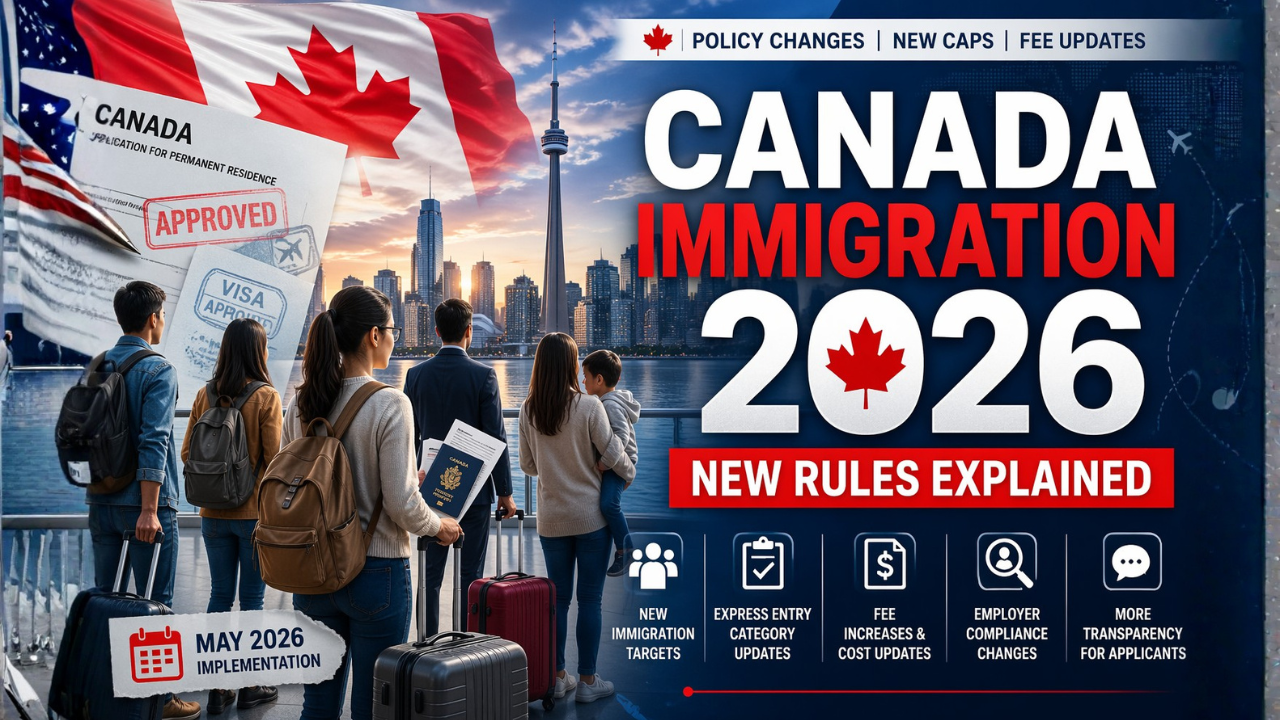
Synopsis: A growing number of international students, especially from Africa, are falling victim to study permit fraud involving fake admission letters. This blog explores the personal tragedies behind these scams, Canada’s systemic vulnerabilities, and what’s being done or not done to protect future students from the same fate.
The High Cost of a Dream: When Higher Education Becomes a Trap
In an increasingly globalized world, Canada’s appeal as a top destination for international students remains strong. Yet, beneath the promise of opportunity lies a rising threat—fraudulent immigration schemes targeting vulnerable individuals, especially from developing nations.
In 2023 alone, Immigration, Refugees and Citizenship Canada (IRCC) revealed that nearly 1,550 study permit applications were tied to fraudulent admission letters. For many, the scam isn’t just financial—it’s a complete upheaval of life, identity, and trust.
This blog uncovers the harrowing stories of Aminata and Fatim, two women from Benin who were promised a future in Canada but were instead abandoned with fake documents and no legal status. Their voices echo a disturbing trend, raising urgent questions about Canada’s safeguards, enforcement, and ethical obligations in the international education landscape.

The Scam: False Promises and Falsified Papers
Aminata’s Journey from Hope to Despair
In 2022, Aminata left Benin with an official-looking admission letter to the Université du Québec à Chicoutimi (UQAC), a Quebec Acceptance Certificate (CAQ), and the belief that her dream of higher education was within reach. She arrived in Canada with only €1,271.45 in hand and a heart full of ambition.
But within days of her arrival, the illusion shattered. The documents she held—painstakingly obtained through a man posing as a consultant—were fake. Her admission had never been approved, and her immigration status was founded on fabricated paperwork. Alone in Chicoutimi and facing deportation, Aminata quickly realized she had been scammed.
“I’m living with the fear that at any time I can get deported. This is not a life,” she shared, still afraid to return home where starting over feels impossible.
A Consultant Who Never Was
The so-called consultant had been introduced by her uncle and had initially quoted €2,542.90. That price soon rose to over €4,450. Aminata handed over her birth certificate, diplomas, and trust. The agent, who had once studied in Chicoutimi himself, seemed legitimate.
He even provided a CAQ—a mandatory document to apply for a Canadian study permit in Quebec. But soon after landing, Aminata was informed her “admission” had been deferred. Her real application was never completed. Her worst fears were confirmed by the university’s administration.
When she confronted the agent, he became aggressive, telling her not to show the documents to the school. Eventually, he stopped answering calls. The number is now deactivated.
A Pattern of Pain: Fatim’s Parallel Tragedy
The Same Consultant, The Same Scam
Fatim, also from Benin, followed a nearly identical path. She came across Aminata’s story in a Radio-Canada report and immediately recognized her own nightmare.
She had also received a fake letter of admission, obtained through the same agent. Like Aminata, she arrived in Canada expecting to attend UQAC. Instead, she was left without a plan, guidance, or legal support.
Her father had sold property to fund her education. When he learned the truth, his health declined rapidly. He passed away in December 2024—Fatim couldn’t return home for the funeral.
Despite the trauma, she remains in Canada, hoping to prove her innocence and rebuild.
“I want another way out of this mess you’ve gotten me into,” she told the consultant, who had suggested she falsely apply for asylum—a route she refused, not wanting to abuse the Canadian system.
Why African Students Are Being Targeted
Structural Gaps and Exploitation
Richard Kurland, a policy analyst and immigration lawyer based in Vancouver, explains that such fraud is now “as common as Vancouver rain.”
Prospective students from developing countries, especially across Africa, are vulnerable due to several factors:
- Limited access to verified information
- Weak internet infrastructure and local intermediaries
- Pressure from families investing life savings
- Cultural trust in intermediaries posing as experts
Some, as Kurland bluntly puts it, “have sold the farm” for a better future. And yet, verification mechanisms on both ends—sending and receiving countries—remain fragile.
UQAC’s Troubling Numbers
Between June and December 2023, UQAC identified 44 fraudulent admission letters. Twelve of those individuals showed up on campus, holding seemingly valid study permits and CAQs.
The university notified Quebec’s Ministry of Immigration, Francization and Integration (MIFI), which has since confirmed that some admission letters featured “irregular elements and inauthentic parts.” The ministry clarified that only recognized consultants are allowed to assist with immigration documentation.
The man who scammed Aminata and Fatim? Not listed in Quebec’s register of certified immigration consultants.
What Canada Is Doing—And Where It Falls Short
IRCC’s Fraud Detection Measures
In response to increasing concerns, IRCC implemented a new letter of acceptance verification system. The tool has already intercepted over 10,000 potentially fake letters.
Still, the damage is done for those already caught in the trap.
In most cases, these students are refused entry or study permits before landing. But when the fraud is only discovered after arrival—as with Aminata and Fatim—legal ambiguity, jurisdictional issues, and lack of resources create a deadlock.
Saguenay police refused to investigate Aminata’s complaint, citing that the fraud occurred overseas.
Legal Limbo for Victims
Without a valid visa, Aminata and Fatim live in the shadows. Though represented by lawyers, their options are limited. As non-status individuals, they risk deportation but remain in Canada hoping to clear their names.
They have reached out to IRCC, local politicians, the Prime Minister, and university authorities. Their efforts have been met with silence or redirection to embassies.
“Nobody is doing anything,” Aminata said. “I still have that little bit of light … hope that things will change.”
Key Lessons and Takeaways for Prospective Students
How to Protect Yourself Against Immigration Fraud
For future applicants—particularly from vulnerable regions—this case underscores a critical message: vigilance is essential.
Here’s what students and families should do before applying:
- Always verify university offers through official portals. Contact the school’s admissions office directly.
- Ensure your consultant is licensed. Check against the College of Immigration and Citizenship Consultants registry.
- Request confirmation of CAQ and study permits through IRCC.
- Avoid paying upfront fees without receipts or contracts.
- Ask for tracking numbers or references for submitted documents.
If in doubt, reach out to the Canadian embassy or a legal aid group in your home country before making any life-altering decisions.
The Broader Picture: What This Scam Tells Us About Canadian Immigration Policy
Canada’s Reliance on International Students
Canada depends heavily on international students, contributing over CAD $22 billion to the national economy. But the system’s integrity is only as strong as its weakest link. When admission verification and consultant oversight are lacking, exploitation thrives.
This scandal has surfaced during a time when Canadian higher education institutions are pushing to attract global talent. Yet, trust can erode quickly when real stories like Aminata’s and Fatim’s go unresolved.
Accountability and Policy Gaps
From fake agents to institutional indifference, the gaps in Canada’s student visa pipeline are glaring. What happens when the fraud is discovered after the student arrives? Who takes responsibility—the foreign consultant, the university, or IRCC?
There are no clear answers, and in this vacuum, vulnerable students suffer the most.
Conclusion: From Victims to Advocates
Aminata and Fatim’s stories are tragic, but they are not isolated. With over 1,500 fraudulent study permit applications detected in just one year, and thousands more intercepted, the scale of the crisis is clear.
But behind every statistic is a life, a family, a dream—derailed.
To rebuild trust, Canada must move beyond detection and invest in cross-border enforcement, transparent communication, and support systems for victims. Institutions must do more than reject fraudulent entries—they must protect those caught in deceit and strengthen global outreach to prevent exploitation at its root.
Aminata and Fatim still hold onto hope. Their resilience is a call to action—for governments, educators, and international students alike.
Frequently Asked Questions
- How do I know if a Canadian university admission letter is authentic?
To verify an admission letter, always contact the university’s official admissions office directly. Canadian schools designated to host international students are listed as Designated Learning Institutions (DLIs) by Immigration, Refugees and Citizenship Canada (IRCC). Cross-check your offer with the DLI number to ensure legitimacy.
- What is a Quebec Acceptance Certificate (CAQ) and who issues it?
The Quebec Acceptance Certificate (CAQ) is issued by Quebec’s Ministry of Immigration, Francisation and Integration (MIFI) and is mandatory for all foreign students applying to study in Quebec. Without a valid CAQ, your study permit application for Quebec will be rejected.
- Can anyone help me apply for a Canadian study permit or university admission?
Only consultants licensed by the College of Immigration and Citizenship Consultants (CICC) are legally allowed to assist with immigration and study permit applications. Before paying anyone, confirm their name in the official public registry maintained by the CICC.
- What should I do if I receive a fake admission letter after arriving in Canada?
Report the fraud immediately to the university, IRCC, and your country’s embassy in Canada. IRCC provides guidance on what to do in such cases and may offer support for victims of immigration fraud, especially when you did not knowingly participate in the deception.
- Is the Canadian government doing anything to prevent fake student visa applications?
In 2023, IRCC introduced a Letter of Acceptance Verification System that allows institutions to validate student letters before permits are issued. The system has intercepted over 10,000 fake offers so far.
- Can I be deported if I was unknowingly involved in a visa scam?
Unfortunately, yes—if your documents are found to be fraudulent, your status may be revoked. However, legal support can help you apply for humanitarian and compassionate (H&C) grounds or other relief pathways, especially if you had no knowledge of the fraud.
- What recourse is available if the scam happened in my home country?
Canadian law enforcement may not have jurisdiction over overseas scams, as noted by Saguenay police in Quebec. Victims are usually referred to their embassies and local police. Legal aid and immigrant advocacy groups may still provide support within Canada.
- Why are African students more vulnerable to immigration scams?
Students from regions with lower digital literacy or limited access to verified information are often targeted. Lack of awareness about proper immigration procedures makes them easy prey for fake consultants. The Canadian government has recognized the need for greater international education integrity, especially in high-risk regions.
- Are fake consultants penalized in Canada?
Only if they operate within Canada or fall under Canadian jurisdiction. Those falsely presenting themselves as immigration professionals can face charges under IRPA, the Immigration and Refugee Protection Act. However, tracking individuals based overseas remains difficult unless they are brought to justice via extradition or international cooperation.
- What is a Designated Learning Institution (DLI) and why does it matter?
A Designated Learning Institution (DLI) is a school approved by a provincial or territorial government to host international students. Study permits are only granted for programs at DLIs. If your school is not on the DLI list, your permit application will be refused—even if you’ve paid tuition or submitted documents.