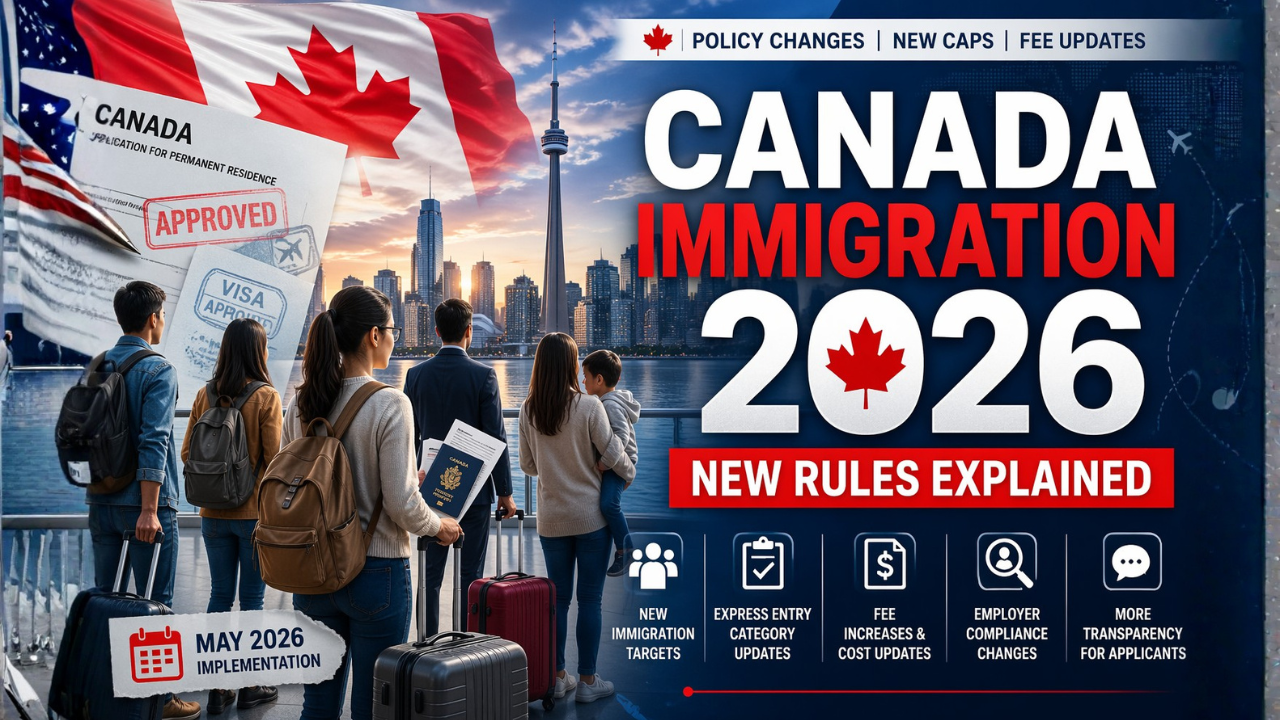
Synopsis: Canada’s immigration rules now allow border officers to cancel study and work permits immediately under specific conditions. The IRCC aims to tighten oversight, reduce misuse of visas, and safeguard national security. This move increases compliance expectations and may significantly impact Indian and international applicants planning to enter Canada in 2025.
In a significant escalation of immigration enforcement, Canada now allows immigration officers to immediately cancel study and work permits under new rules introduced by Immigration, Refugees and Citizenship Canada (IRCC). The regulations, effective January 31, 2025, are published in the Canada Gazette Part II and are intended to preserve the integrity of Canada’s temporary resident system.
With growing concerns about visa abuse and rising scrutiny on temporary residents, this policy change marks a turning point in how international students and workers must engage with Canadian immigration.
Topics Discussed
- New Authority Granted to Canadian Immigration Officers
- What Triggers Immediate Permit Cancellation?
- When Are Study and Work Permits Automatically Revoked?
- Implications for Indian Students and Foreign Workers
- The Policy Shift: From Prevention to Enforcement
- Why Canada Introduced These New Rules
- Previous Limitations and the Need for Change
- Compliance Risks: What Temporary Residents Must Now Avoid
- Broader Immigration Strategy and System Integrity
- What Prospective Applicants Should Do Now

New Authority Granted to Canadian Immigration Officers
Enhanced Power to Cancel Permits on the Spot
Previously, Canadian immigration officers could deny new permit applications, but their power to revoke already issued documents was limited. Under the revised regulations, officers now have the legal authority to cancel the following on the spot:
- Study permits
- Work permits
- Electronic Travel Authorizations (eTAs)
- Temporary Resident Visas (TRVs)
This authority applies to both border agents and immigration officers, providing them expanded tools to enforce compliance and deter fraudulent or non-compliant behaviour.
See IRCC’s updated Operational Manual for enforcement procedures.
What Triggers Immediate Permit Cancellation?
Key Grounds for Revocation
Under the new rules, immigration officers may cancel permits if any of the following conditions are met:
- False or misleading information submitted during application
- Change in personal circumstances that affects permit eligibility
- Criminal record or other admissibility concerns
- Breach of visa conditions or failure to remain eligible
- Misuse of the visa, such as unauthorized work or study
These conditions reflect IRCC’s growing emphasis on active compliance monitoring, especially after numerous high-profile cases of study permit fraud in 2023 and 2024.
Reference Canada’s official guide on inadmissibility and compliance.
When Are Study and Work Permits Automatically Revoked?
System-Generated Cancellations and Exceptional Circumstances
Beyond discretionary cancellation, some scenarios will now trigger automatic revocation of permits:
- If the permit holder becomes a permanent resident
- Upon the death of the permit holder
- If the permit was issued due to administrative error
These rules ensure that Canada’s immigration records remain current and accurate, particularly as the country expands its use of digital identity and e-visa systems.
Implications for Indian Students and Foreign Workers
A Wake-Up Call for the Largest Applicant Pool
India consistently ranks as the top source country for international students and skilled workers in Canada. According to the IRCC 2024 Annual Report:
- Over 188,000 Indian students held active study permits
- Thousands more received post-graduation and skilled work visas
These groups are now more vulnerable to enforcement action, especially if they:
- Fail to meet academic requirements
- Work beyond legal limits
- Misrepresent financial or familial ties
The Policy Shift: From Prevention to Enforcement
Canada Moves to Real-Time Immigration Monitoring
Canada has long maintained a points-based immigration system prioritizing skilled, law-abiding applicants. However, recent lapses—such as fake acceptance letters, visa mills, and overstaying permit holders—have eroded public trust.
The new regulations pivot from passive screening to active intervention, giving officers the tools to act during or after entry, not just at the application stage.
Details on system monitoring tools available through CBSA Enforcement Updates.
Why Canada Introduced These New Rules
Restoring Integrity to the Immigration System
IRCC’s statement accompanying the rule change emphasized its goal to “secure the border and protect Canada’s immigration system.” The reforms come at a time of:
- Increased pressure on housing and healthcare
- Concerns over international student exploitation
- A rising number of asylum claims by temporary residents
As Canada also caps international student permits at 437,000 in 2025, the government seeks to ensure only genuine, qualified individuals are granted entry.
Previous Limitations and the Need for Change
Weak Enforcement Loopholes Now Closed
Until now, officers could only act on:
- New visa applications
- Renewals and extensions
They lacked authority to cancel valid permits unless in rare circumstances—an issue highlighted by the Auditor General’s 2023 review on immigration enforcement inefficiencies.
With the new changes, Canada aims to build a responsive, data-backed enforcement framework aligned with global best practices.
Compliance Risks: What Temporary Residents Must Now Avoid
Red Flags That Could Lead to Permit Cancellation
Permit holders should be especially cautious of:
- Failing to report changes in address, employment, or academic status
- Submitting fraudulent documents or misleading declarations
- Overstaying or engaging in unauthorized employment
- Violating conditions of post-graduate work permits
IRCC’s Compliance Guide for Foreign Nationals provides detailed instructions on how to stay within the rules.
Broader Immigration Strategy and System Integrity
A Push for Sustainable, Transparent Migration
This rule change is part of a broader strategy that includes:
- Caps on temporary resident permits
- Greater oversight of Designated Learning Institutions (DLIs)
- Expansion of AI-driven risk profiling
Canada is aligning immigration with national goals in labour market stability, social integration, and public service efficiency, as outlined in its Strategic Immigration Planning Framework (2025–2030).
What Prospective Applicants Should Do Now
Best Practices to Avoid Risk and Ensure Compliance
If you’re planning to study or work in Canada, follow these key recommendations:
- Use only IRCC-approved consultants or lawyers
- Apply early and prepare strong documentation
- Avoid agents offering shortcuts or guaranteed success
- Stay informed about policy updates on Canada.ca
Being proactive can mean the difference between a successful migration journey and a permit cancellation at the border.
Conclusion: A New Era of Accountability for Temporary Residents in Canada
Canada’s latest rule change empowers immigration officers to cancel study and work permits in real-time, marking a significant shift in enforcement strategy. While designed to uphold the integrity of the immigration system, the policy raises the stakes for international students and foreign workers.
Permit holders must now act not only as temporary residents but also as active stewards of compliance, constantly aware of their obligations and risks. In 2025 and beyond, Canada remains open—but only to those who play by the rules.