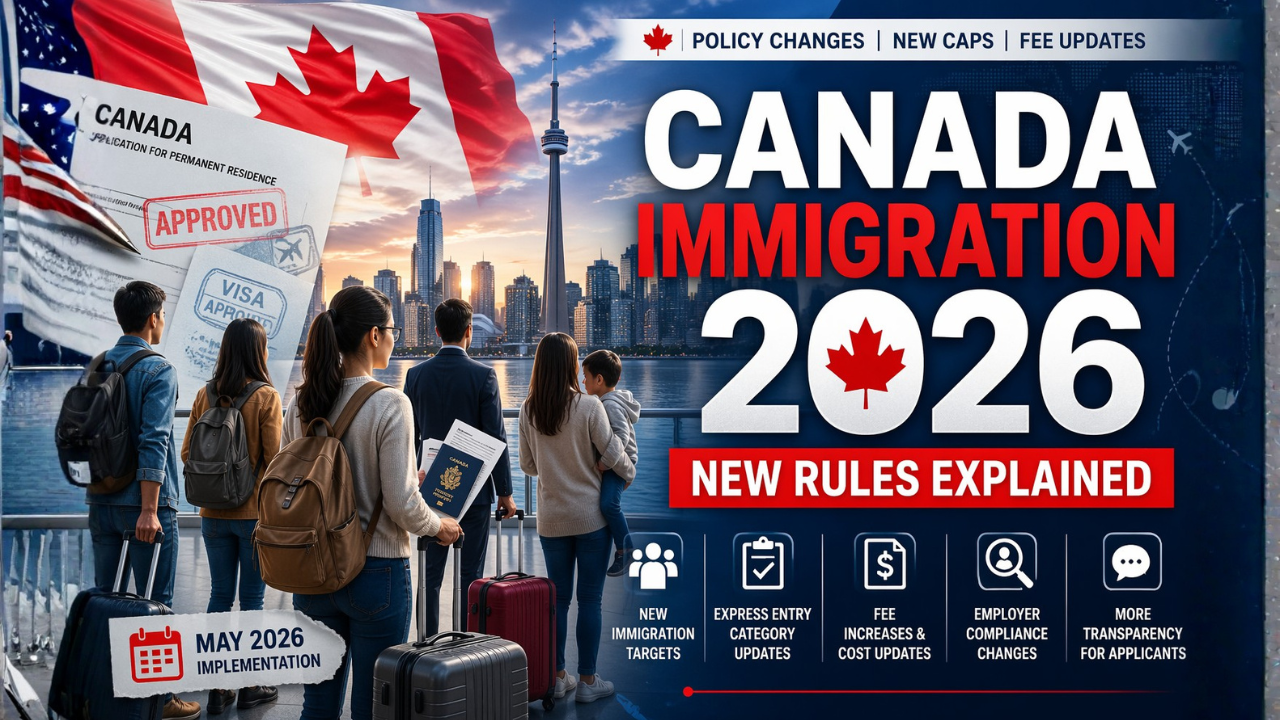
Synopsis: General Express Entry is now out of reach for many applicants. With Canada PR targeted jobs 2025 shaping immigration policy, six categories—healthcare, skilled trades, food services, construction, STEM, and transport—offer lower CRS cut-offs and PNP pathways. This guide explores sector opportunities, career planning, French advantage, and provincial nomination strategies.
Why the PR Dream Is Getting Tougher
For years, thousands of international students and skilled workers have viewed Canada as their ultimate destination for permanent residency. Yet in 2025, the rules of the game have shifted dramatically. Under the Express Entry system, general applicants without French proficiency, Canadian experience, or extremely high CRS scores (510+) now find themselves locked out. According to Immigration, Refugees and Citizenship Canada (IRCC), the government’s focus has decisively shifted to targeted occupations in six categories.
What does this mean for a graduate, a temporary worker, or even a newcomer considering a future in Canada? In short: unless your job falls under one of these priority categories, obtaining PR through Express Entry is now “next to impossible.” This blog unpacks the details, explains which industries are in demand, and outlines how you can align your career choices to improve your chances.

Why General Express Entry Applicants Are Struggling
The CRS Score Challenge
- General draws now set the bar at 510+ CRS points, out of reach for many graduates and entry-level workers.
- Without French language skills, candidates are unable to claim additional CRS points available through the new Francophone immigration emphasis.
- Limited foreign work experience or lower education credentials further weaken general applicants’ profiles.
The Policy Shift Toward Targeted Immigration
Canada’s government has made no secret of its priorities. Since 2023, Ottawa has gradually moved away from mass general draws and leaned heavily into category-based selection. These target specific industries facing chronic labour shortages.
So, who benefits from this shift? Workers in health care, skilled trades, food services, agriculture, STEM, and transport. For these groups, CRS cut-offs are significantly lower than general draws, with frequent invitations issued even to those with mid-level scores.
Understanding Canada’s Six Targeted Express Entry Categories
What Are Category-Based Draws?
IRCC introduced category-based selection in 2023 to address critical labour shortages. Instead of competing with the entire pool, candidates in these targeted fields are grouped separately, allowing lower cut-offs and faster invitations.
The Six Priority Categories (as of 2025)
- Health care
- STEM (science, technology, engineering, mathematics)
- Skilled trades
- Transport
- Agriculture and agri-food
- Francophone immigration
While STEM and transport remain important, the current reality shows three industries dominating vacancies and PR invitations: health care, food/accommodation services, and construction.
Canada’s Top Three In-Demand Sectors in 2025
1. Health Care and Social Assistance
According to Statistics Canada, health care consistently leads in vacancy rates. Between April 2024 and April 2025, vacancies for nurses, pharmacists, and dental professionals exceeded 130,000 nationwide.
High-Demand Roles and NOC Codes
- Pharmacists – NOC 31120
- Pharmacy Technicians – NOC 32124
- Licensed Practical Nurses – NOC 32101
- Dental Hygienists – NOC 32111
- Chiropractors, Massage Therapists, Medical Radiation Technologists
Why Health Care Is a Golden Opportunity
- Frequent category-specific draws: June, July, and August 2025 all saw CRS cut-offs between 470–475, far below general draws.
- Long-term demand is projected to increase as Canada’s aging population requires more care.
- Many health roles lead directly to provincial nominations, further easing PR pathways.
2. Accommodation and Food Services
The food services industry, often overlooked in the past, has now become a priority due to chronic shortages. In 2024, IRCC officially included cooks under the Skilled Trades category—transforming this occupation into a viable PR route.
High-Demand Roles and NOC Codes
- Butchers (Retail & Wholesale) – NOC 63201
- Cooks – NOC 63200
Why This Matters
- For years, cooks had no dedicated category and faced long odds for PR. The inclusion of NOC 63200 changed everything.
- IRCC has announced a target of at least 3,000 ITAs for Skilled Trades candidates by the end of 2025.
- With high turnover in the industry, job offers are easier to secure, making eligibility more realistic for international graduates.
3. Construction and Skilled Trades
Construction is Canada’s backbone for housing and infrastructure—and one of the most understaffed sectors.
High-Demand Roles and NOC Codes
- Carpenters – NOC 72310
- Electricians – NOC 72200
- Plumbers – NOC 72300
- Industrial Electricians – NOC 72201
- Bricklayers, Cabinetmakers, Roofers, Gas Fitters
Benefits of Construction Pathways
- High earning potential compared to entry-level service jobs.
- Trade certifications open doors to self-employment and small business ownership.
- Long-term demand is reinforced by Canada’s housing crisis, with federal plans to build 3.9 million homes by 2031.
Strategic Career Planning for Students and Workers
Choosing the Right Course of Study
If you’re planning to study in Canada in 2025–26, your program selection matters more than ever. Choosing random diplomas or unrelated degrees could limit your chances. Instead:
- Target programs aligned with health care, trades, or food services.
- Opt for public colleges and universities with recognized programs that qualify for PGWP.
- Consider provinces with easier Provincial Nominee Program (PNP) pathways.
Switching Industries for PR Success
Already in Canada but working outside these sectors? It’s not too late to switch. Thousands of international graduates are pivoting careers into targeted industries. For example:
- IT graduates retraining as pharmacy assistants.
- Business majors moving into trades apprenticeships.
- Hospitality students leveraging cook and butcher shortages.
The Role of Provincial Nominee Programs (PNPs)
Why General Express Entry Alone Won’t Work
In 2025, relying solely on federal Express Entry general draws is a losing strategy for most. CRS cut-offs above 510 lock out the majority of candidates.
PNPs as a Lifeline
Each province runs its own nominee streams. For instance:
- Ontario prioritizes nurses and tech workers.
- Saskatchewan targets agriculture and trades.
- Atlantic provinces run programs for food services and health care.
By securing a provincial nomination, you gain an automatic 600 CRS points, virtually guaranteeing an ITA.
Provinces to Avoid for PR Strategy
Interestingly, some provinces are less ideal despite being popular. Ontario and British Columbia, for instance, attract the majority of students, but competition makes their PNPs more restrictive. Meanwhile, regions like Manitoba, Saskatchewan, and Atlantic Canada often present faster PR options.
The Importance of French in PR Planning
Canada has pledged to increase Francophone immigration to 8–10% of annual targets until 2029. Learning French, therefore, is not optional—it’s a career-altering decision.
- Candidates with CLB 7+ in French automatically qualify for category-based draws.
- French proficiency adds up to 50 CRS points in Express Entry.
- Provinces like Ontario and New Brunswick run special Francophone streams.
Even dedicating one hour a day to French lessons during your study years can set you apart.
CRS Cut-Off Trends: A Comparative Look
General vs. Category-Based CRS
- General Draws (2025): 510–515 CRS
- Health Care Draws: 470–475 CRS
- Trades Draws: Expected to range 465–480 CRS
- Francophone Draws: Often as low as 440–460 CRS
The message is clear—if you’re outside these targeted categories, you will be waiting indefinitely.
Long-Term Strategic Advice (2025–2029)
If you’re planning immigration beyond 2025, here are four guiding principles:
- Prioritize Skilled Trades: Long-term demand, better wages, and easier PR.
- Choose Quality Institutions: Avoid low-ranking colleges with poor outcomes.
- Explore Beyond Ontario & BC: Consider Saskatchewan, Manitoba, or Atlantic provinces for easier pathways.
- Invest in French: Even basic proficiency can transform your CRS profile.
Common Mistakes to Avoid
- Relying on random diploma courses without labour market alignment.
- Ignoring provincial nominee programs and focusing only on general Express Entry.
- Waiting until the last year of your PGWP to plan PR strategy.
- Underestimating the role of language—both English proficiency (IELTS/CELPIP) and French.
Data and Projections for 2025–2027
According to CIC News, Canada plans to welcome 485,000 new permanent residents in 2025, but nearly 70% of invitations will be directed through category-based selection. By 2027, the proportion could climb to 80%, leaving general Express Entry as a niche pathway only for ultra-high-scoring candidates.
This means that targeted career planning is no longer optional; it’s the only realistic strategy.
Conclusion: The New Reality of Canada PR
In 2025, the Canadian immigration system has entered a new era. The days when general Express Entry applicants with modest scores could secure PR are over. Success now depends on aligning your career with in-demand industries, leveraging provincial pathways, and—where possible—adding French to your skill set.
If you’re a student choosing your program, a graduate planning your first job, or a worker deciding whether to switch industries, the path is clear: follow Canada’s labour market priorities, or risk being left behind.