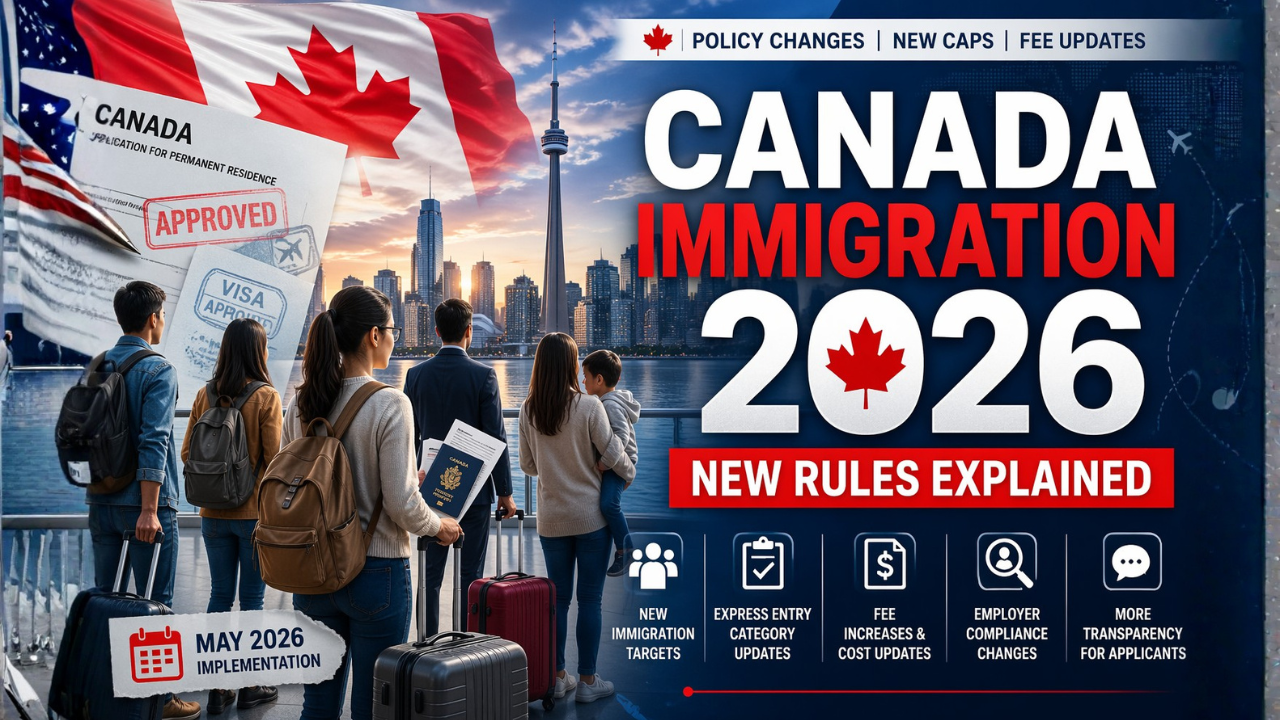
Synopsis: Canada PR 2026 Express Entry changes could redefine immigration priorities. IRCC’s consultations hint at new leadership and innovation categories, rising French-language targets, and a sharper focus on healthcare, trades, and skilled sectors. This guide explains how applicants can align their profiles for maximum success in the evolving PR system.
Why 2026 Could Be a Turning Point for Canada PR
Canada’s immigration landscape is set for another transformation. The Immigration, Refugees and Citizenship Canada (IRCC) has begun public consultations to determine the priority categories for Express Entry in 2026 — a move that could reshape the permanent residence (PR) pathway for thousands of skilled workers worldwide.
The consultation process, running from August 6 to September 3, 2025, invites feedback from stakeholders, provinces, employers, and the public to help identify labour market needs and policy priorities. While these discussions are not yet formal policy, they provide critical insight into the direction Canada’s skilled immigration system may take.
According to the official Government of Canada Express Entry page, category-based draws are now a central feature, allocating nearly half of all invitations to targeted sectors like healthcare, trades, STEM, and French speakers. With the 2026 plans hinting at new leadership and innovation-focused categories, now is the time for prospective applicants to align their profiles with these trends.

The Decline of General Category Invitations: Why Categories Now Dominate
In recent years, the number of general category draws — including Federal Skilled Worker (FSW) invitations — has dropped sharply. Instead, category-based selection has taken center stage, targeting applicants in specific occupational or language groups.
This shift has especially impacted candidates outside Canada, for whom category alignment may now be the only realistic pathway. Inside Canada, applicants can still benefit from Provincial Nominee Programs (PNPs) and in-country draws, but they too are increasingly influenced by the federal category structure.
IRCC’s Departmental Plan: Targets for 2026 and Beyond
The 2025–2027 Departmental Plan outlines federal immigration targets:
- In-Canada Focused Admissions: 75,000 in 2026, 70,000 in 2027.
- Federal Economic Priorities: Rising from 41,700 in 2025 to 47,800 by 2027.
These “economic priorities” cover healthcare, trades, French language skills, and other targeted occupations. Given that nearly 50% of all Express Entry invitations now go to category-based draws, understanding which categories dominate is essential for planning your immigration strategy.
2024 Category Breakdown: Who’s Getting Invited?
In 2024, healthcare emerged as the clear leader:
- Healthcare Occupations: ~11,967 invitations (56% of category-based draws).
- Trades: Strong representation, though fewer draws than expected.
- Education: Newly introduced; only 1,000 invitations so far.
- STEM & Agriculture: Minimal or no draws despite being priority categories.
This demonstrates a gap between declared priorities and actual draw frequency — a reminder that IRCC may adjust categories dynamically based on provincial labour market feedback.
Public Consultations: How IRCC Sets Categories
Every year, IRCC consults with:
- Provinces & Territories through the Forum of Ministers Responsible for Immigration.
- Industry Stakeholders such as employer groups, trade associations, and education providers.
- The Public, via open feedback portals.
These consultations guide the Immigration Levels Plan — a document released each November that finalizes targets and categories for the following year. In 2025, this process is expected to heavily influence the 2026 Express Entry structure.
Rising French-Language Targets: An Ongoing Priority
IRCC is steadily increasing French-speaking immigrant targets outside Quebec:
- 8.5% in 2025
- 9.5% in 2026
- 10% in 2027
- 12% by 2029
For francophone candidates, this trend presents a major opportunity. According to Statistics Canada, francophone immigration supports bilingual service delivery, cultural diversity, and economic integration in minority communities.
Labour Shortages: Trades, Construction, and Healthcare Still in Focus
While 2026 priorities are not finalized, certain sectors are perennial favourites:
- Trades: Electricians, welders, mechanics.
- Construction: Project managers, site supervisors.
- Healthcare: Nurses, physicians, personal support workers.
These areas consistently face shortages, and IRCC uses category-based draws to fill gaps. Provinces also align their PNPs with these federal priorities, multiplying opportunities for qualified candidates.
The New 2026 Twist: Leadership and Innovation
Perhaps the most significant signal from the 2026 consultation is the possible introduction of a new category focused on:
- Senior Managers (NOC TEER 0 triple-zero series, e.g., 00012, 00013).
- Researchers and Scientists in innovation-heavy sectors.
This reflects Canada’s desire to attract high-value talent capable of driving innovation, economic growth, and global competitiveness — similar to programs in the UAE and Saudi Arabia that court elite professionals.
If implemented, this could mean:
- Higher salary thresholds ($45–$150/hour).
- Potential for Labour Market Impact Assessment (LMIA) exemptions.
- Greater weight on leadership experience in CRS scoring.
Possible Shift from STEM to Innovation & Leadership
The STEM category, introduced in 2023, has not produced as many draws as expected. In 2026, IRCC may:
- Reduce its scope to focus on research-intensive roles.
- Merge STEM into a broader “Innovation & Leadership” category.
- Prioritize scientists and senior managers over general tech occupations.
PGWP Implications: Study Choices Matter More Than Ever
IRCC is also considering aligning Post-Graduation Work Permit (PGWP) eligibility with priority sectors. This means:
- International students in in-demand programs (e.g., healthcare, trades, innovation) may have a stronger PR pathway.
- Fields outside these priorities may see reduced PGWP eligibility.
The official PGWP guidelines already list program-specific requirements, but upcoming changes could make sector alignment even more crucial for study permit applicants.
Potential Rule Changes: From 6 Months to 1 Year Experience
Currently, category-based selection requires at least six months of continuous work experience in the targeted occupation within the past three years. Consultations suggest this may be extended to one year to improve program integrity and labour market impact.
How Applicants Should Prepare for 2026
- Identify Your Category Fit
Review NOC codes for potential inclusion in 2026 categories, especially leadership or research roles. - Enhance Language Skills
Consider French-language training to qualify for the growing francophone category. - Gain Relevant Canadian Experience
Work permits and employer connections in target sectors can boost CRS scores and category eligibility. - Monitor Official Updates
Track announcements via the IRCC Newsroom and provincial immigration portals. - Prepare Documentation Early
Ensure work experience letters, educational credentials, and language test results are ready to submit quickly after draw announcements.
The Bottom Line: Strategy Over Guesswork
The 2026 Express Entry categories are still in the consultation phase, but the direction is clear: targeted immigration is here to stay. For those aiming for Canada PR, aligning your profile with these evolving priorities — whether in healthcare, trades, French, or leadership — will be critical.
By the time the 2026 Immigration Levels Plan is tabled in November 2025, the categories will be locked in. Those who prepare now will have a significant advantage when the first draws of 2026 begin.
Frequently Asked Questions (Canada PR Express Entry 2026)
1. What are the new Canada PR categories expected in Express Entry 2026?
IRCC is considering introducing a new “Leadership & Innovation” category targeting senior managers, scientists, and researchers, alongside existing categories such as healthcare, trades, agriculture, education, STEM, and French-language proficiency.
2. How many Express Entry invitations will go to category-based draws in 2026?
Nearly 50% of all Express Entry invitations are expected to be issued through category-based draws, similar to recent years, making category eligibility critical for PR hopefuls.
3. Will the STEM category still exist in 2026?
STEM may be restructured or merged into a broader “Innovation & Leadership” category, prioritizing research-intensive roles over general tech occupations, depending on final IRCC decisions.
4. How will French-speaking applicants benefit from 2026 Express Entry changes?
French-speaking immigration targets outside Quebec will rise to 9.5% in 2026, offering increased opportunities for francophone candidates to secure PR under category-based selection.
5. Will PGWP eligibility be affected by the 2026 Express Entry categories?
Yes. IRCC is exploring aligning PGWP eligibility with priority sectors, meaning students in high-demand fields like healthcare, trades, and innovation could have stronger PR pathways.
6. Is general FSW Express Entry still an option for candidates outside Canada?
While still possible, general category draws have significantly declined. Most candidates outside Canada now rely on category-based draws for higher chances of receiving an invitation.
7. How much work experience is required for category-based selection?
Currently, applicants need at least six months of continuous work experience in the targeted occupation, but IRCC may extend this to one year to strengthen program integrity.
8. Which NOC codes may be prioritized in the new leadership category?
Senior management roles (NOC 00012, 00013, etc.), high-level researchers, and innovation-focused positions may be prioritized, especially those with high salary potential.
9. When will the 2026 Immigration Levels Plan be announced?
The 2026 Immigration Levels Plan is expected to be released in November 2025, finalizing the categories and targets for the upcoming year’s Express Entry draws.
10. How can I prepare my Express Entry profile for 2026 changes?
Identify your NOC alignment, improve language scores (especially in French), gain sector-specific experience, prepare documentation early, and monitor IRCC’s official updates to act quickly when new categories are confirmed.