
Synopsis: The UK asylum system faces a critical test as appeal backlogs reach record highs despite faster initial processing. To combat these delays, the government plans to introduce independent adjudicators, even as official figures face intense scrutiny over the true distinction between forced deportations and voluntary returns.
The UK asylum system is under further strain as new statistics from the Ministry of Justice (MoJ) show that the backlog of asylum appeals climbed to a record high. The UK asylum system is under additional pressure as new figures from the Ministry of Justice (MoJ) indicate that the backlog of asylum appeals has reached record levels. Although fewer people are waiting for the initial decision on asylum, there is now a much bigger backlog of cases in the system that could create a problem for the government.
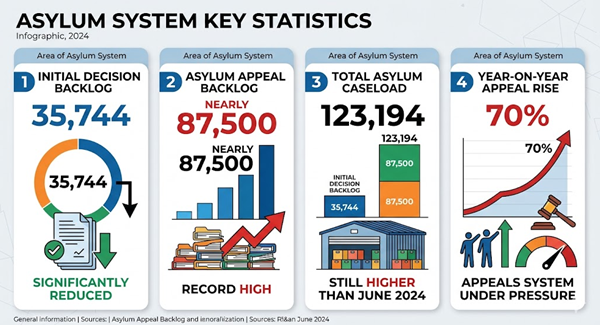
At the end of March 2026, almost 87,500 asylum applications were made by those seeking to overturn negative asylum decisions. That’s up 70% from last year, creating doubt over whether the backlog has actually been lowered or merely shifted to another part of the system. 
Initial Asylum Backlog Falls Sharply
The government has announced that it has been processing asylum claims much more quickly than it did before. The last statistics show that at the end of March 2026, there were 35,744 cases of outstanding asylum requests awaiting initial decision. This marks a significant decrease compared with 85,839 cases in June 2024, just before Labour took office. Recently, Cabinet Minister Hillary Benn stated that the backlogs were dealt with by the government and now asylum claims are being processed efficiently.
According to the Home Office, the number of individuals awaiting an initial decision has reduced by 72% since June 2023, describing this as evidence of progress in addressing the asylum backlog.
However, the bigger picture is more complex.
Appeals Backlog Creates a New Pressure Point
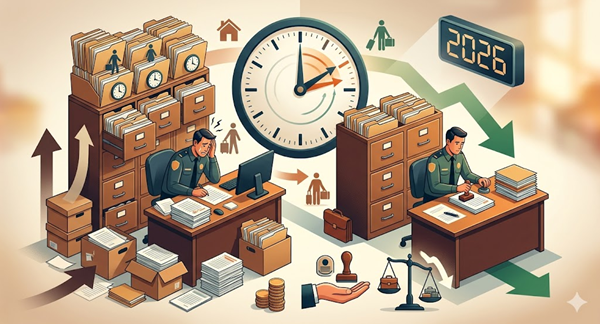
Although fewer people are now waiting for an initial decision, the number of appeals has increased sharply. Many asylum seekers who are turned down for refuge are challenging the asylum decisions and adding to the strain on the appeals and tribunal system.
There are currently 123,194 asylum cases. This is around 4,000 higher than the 119,066 cases outstanding in June 2024, when Labour took office.
Peter Walsh from the University of Oxford’s Migration Observatory says the government seems to be moving one backlog to another. He said that a quicker decision-making process and the reduced grant rate may result in more rejections and that many rejections have the right to appeal.
This is important because not all asylum-seekers are allowed to work in the meantime while awaiting the outcome of their cases. This can then lead to high costs for the government, particularly if individuals rely on state help in the process, as well as costs due to long delays
Government Plans New Appeals System
Labour will implement changes to the asylum appeals system to cut the delays. Some of the proposed appeals would be considered by an independent adjudicator rather than a judge under the system. The government expects that this would help to speed up the process and stop individuals who are not lawfully residing in the UK from delaying their removal by taking an extended legal route.
The government’s claims over removals have also stirred confusion. Hillary Benn had stated that nearly 70,000 people were deported; however, official data reveals another story. It appears in official figures that these are not merely deportations but are all ‘returns’.
Between July 2024 and March 2026, there were 67,188 returns. Out of these, there were 16,476 enforced returns, and voluntary returns added up to 50,712. A deportation is a specific legal category that typically involves foreign nationals who have committed crimes or cases in which removal is deemed to be in the public interest.

What This Means for UK Immigration
New statistics paint a picture of a straining UK asylum system. The appeals backlog is now at record levels, while the decision backlog has decreased. This indicates the government’s next big challenge will be to cut down the number of appeals without sacrificing fairness, legal rights, or the integrity of the immigration system.
For now, the key issue remains clear: the UK may be processing asylum claims more quickly, but the broader backlog problem has not yet fully disappeared.