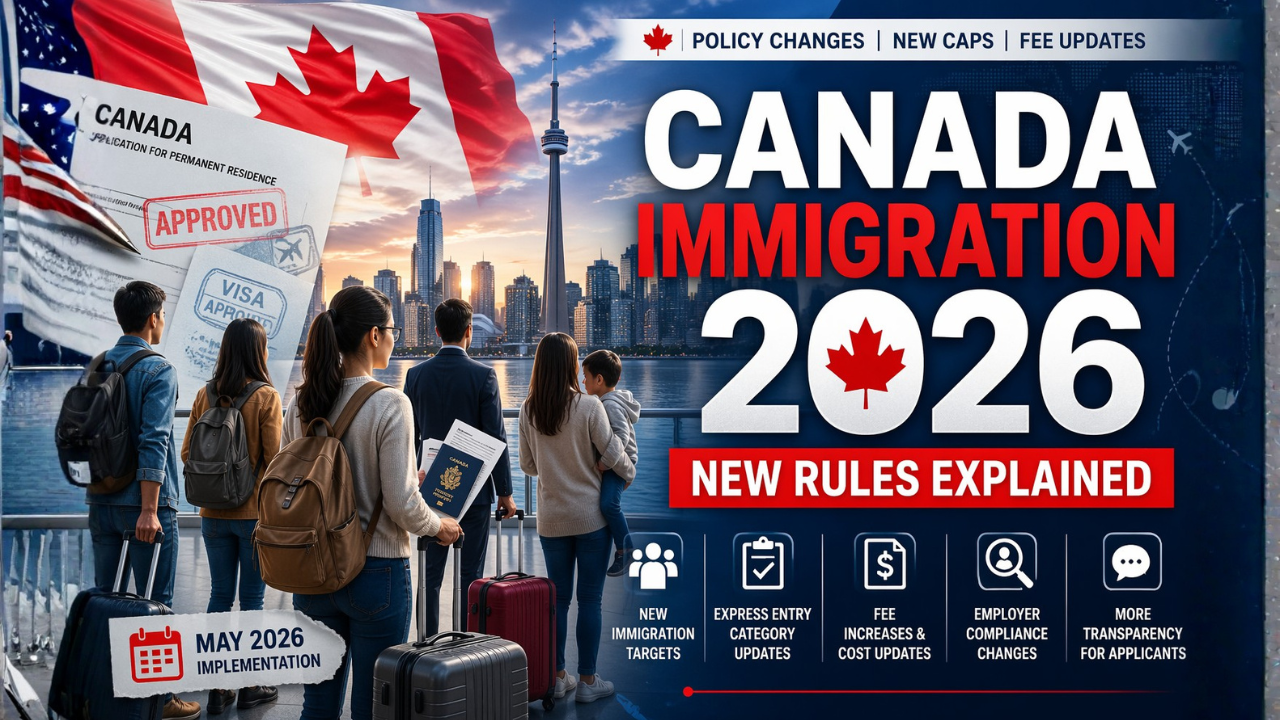
Synopsis: Canada’s 2025 immigration priorities favor specific in-demand occupations. This guide highlights healthcare, food services and construction as top sectors where targeted draws lower CRS thresholds. Learn how students, temporary workers and newcomers can align studies, gain the right experience, use provincial streams and French skills to improve their PR prospects.
Why Targeting In-Demand Jobs is Critical for Canada PR
For many aspiring immigrants, achieving Canadian permanent residency (PR) through the general Express Entry pool is becoming increasingly difficult. The Comprehensive Ranking System (CRS) cut-off scores for general draws often exceed 500 points, leaving thousands of applicants with work or study experience in Canada unable to qualify. According to Immigration, Refugees and Citizenship Canada (IRCC), targeted draws under specific categories offer lower CRS thresholds, creating new opportunities for those aligned with Canada’s labour market needs.
The Government of Canada has made clear that immigration selection in the coming years will heavily prioritize occupations in six key categories. This means that individuals working—or planning to work—in sectors facing critical shortages stand a much greater chance of securing PR, even with lower CRS scores.
But which industries and occupations fall under these priority categories? And how should students, temporary workers, or newcomers plan their careers to take advantage of this shift?
Topics Discussed
- Canada’s immigration focus in 2025
- Top three in-demand sectors
- Healthcare and social assistance jobs
- Food service and accommodation jobs
- Construction and trades jobs
- CRS score comparisons: general vs. targeted draws
- Career planning strategies for international students
- The role of provincial programs and French proficiency
- Long-term career and business opportunities

Canada’s immigration focus in 2025
As of April 2025, Statistics Canada data highlights three industries with the highest job vacancy rates:
- Healthcare and social assistance
- Accommodation and food services
- Construction and skilled trades
These sectors align closely with the Express Entry category-based selection system, where draws for occupations in these industries consistently feature lower CRS cut-offs compared to general rounds. For instance, healthcare draws in mid-2025 invited candidates with CRS scores as low as 470, while general draws were well above 500.
By concentrating on these sectors, newcomers can significantly increase their chances of receiving an Invitation to Apply (ITA) for PR.
Top three in-demand sectors
Healthcare and social assistance jobs
Healthcare remains Canada’s most pressing priority. With an aging population and ongoing strain on the system, demand for skilled healthcare professionals is unprecedented. According to Health Canada, shortages are projected to intensify across nursing, pharmacy, and allied health professions well into the next decade.
High-demand occupations include:
- Chiropractors
- Dental hygienists and dentists
- Massage therapists
- Licensed practical nurses (LPNs)
- Medical radiation technologists
- Pharmacists (NOC 31120)
- Pharmacy technical assistants (NOC 33103)
- Pharmacy technicians (NOC 32124)
The Express Entry healthcare category has seen frequent draws in June, July, and August 2025, with CRS cut-offs ranging from 470–475. These figures are considerably lower than the general category thresholds, demonstrating the clear advantage for candidates aligned with healthcare roles.
Accommodation and Food Services
The food services industry has become another hotspot for in-demand jobs. Traditionally overlooked in immigration policy, this sector has now been integrated into Express Entry’s targeted categories.
Key occupations:
- Butchers (NOC 63201) – falling under Agriculture and Agri-Food
- Cooks (NOC 63200) – recently added under the Skilled Trades category
For cooks, this inclusion is nothing short of a game-changer. Previously, cooks were not recognized under any targeted category, making PR pathways difficult despite widespread demand. In 2025, IRCC announced its aim to issue at least 3,000 Invitations to Apply within the Skilled Trades category before year-end. For international students working part-time in kitchens or recent graduates with culinary experience, this presents a golden opportunity.
Construction and trades jobs
The third pillar of Canada’s labour market priority is construction and trades. As infrastructure projects expand nationwide, and as housing demand accelerates, tradespeople are in short supply.
In-demand roles include:
- Bricklayers
- Cabinetmakers
- Carpenters
- Concrete finishers
- Electricians (including industrial electricians)
- Gas fitters
- Plumbers
- Roofers and shinglers
These occupations fall under the Skilled Trades category in Express Entry, where CRS thresholds are expected to remain significantly lower than general draws. For those willing to undergo certification and apprenticeship processes, trades offer both high wages and faster pathways to PR.
CRS score comparisons: general vs. targeted draws
The advantage of targeting these sectors becomes clear when examining CRS scores:
|
Draw Type |
CRS Cut-off (2025 examples) |
Notes |
|
General Express Entry |
500–510+ |
Highly competitive |
|
Healthcare draw |
470–475 |
Multiple draws in June–August |
|
Skilled Trades draw |
Pending 2025, historically ~480 |
Targeted for cooks, butchers, trades |
Candidates with CRS scores below 500—who would otherwise be ineligible—can still succeed by aligning their careers with priority sectors.
Career planning strategies for international students
For students planning to study in Canada or those already enrolled, aligning education with labour market needs is vital. Here are actionable steps:
- Choose programs linked to in-demand sectors: Nursing, pharmacy, culinary arts, or construction management.
- Plan early: Selecting a relevant program ensures that post-graduation work permits lead to qualifying jobs.
- Switch industries if needed: Students in unrelated fields may consider retraining or moving into sectors with higher PR potential.
- Avoid last-minute panic: Waiting until the end of a PGWP to worry about PR reduces options.
By planning studies and careers around in-demand sectors, students can position themselves for smoother transitions to PR.
The role of provincial programs and French proficiency
While Express Entry remains the central route, Provincial Nominee Programs (PNPs) also target sector-specific labour shortages. For example, Saskatchewan and Manitoba regularly invite healthcare and trades candidates through PNP draws. According to Government of Ontario, Ontario’s Human Capital Priorities stream also aligns with federal occupation targets.
Additionally, French proficiency is an often-overlooked advantage. Canada has set ambitious goals to increase Francophone immigration outside Quebec. Learning French and achieving Canadian Language Benchmark (CLB) 7 or higher can significantly enhance CRS scores and improve chances of receiving an ITA.
Long-term career and business opportunities
Beyond PR, these sectors offer strong long-term prospects:
- Healthcare: Stable demand, licensing leads to high-paying professional roles.
- Food services: Experience as a cook or butcher can lead to entrepreneurship in Canada’s thriving food industry.
- Trades: Certified tradespeople often transition into self-employment, with opportunities to open contracting or construction businesses.
As IRCC’s category-based draws continue, these industries will remain central to Canada’s immigration strategy until at least 2029.
Conclusion
Securing Canadian permanent residency in 2025 is no longer about chasing points in the general Express Entry pool. With CRS cut-offs consistently exceeding 500, the future belongs to candidates who align their careers with Canada’s most pressing labour needs.
Healthcare, food services, and skilled trades represent the clearest pathways forward. Whether you are a student choosing a program, a recent graduate on a PGWP, or a worker considering a career shift, aligning with these sectors can make the difference between years of uncertainty and a successful PR outcome.
By planning strategically—selecting the right courses, gaining targeted work experience, considering PNPs, and even learning French—newcomers can secure their future in Canada. The opportunity is here; the question is whether you will seize it.