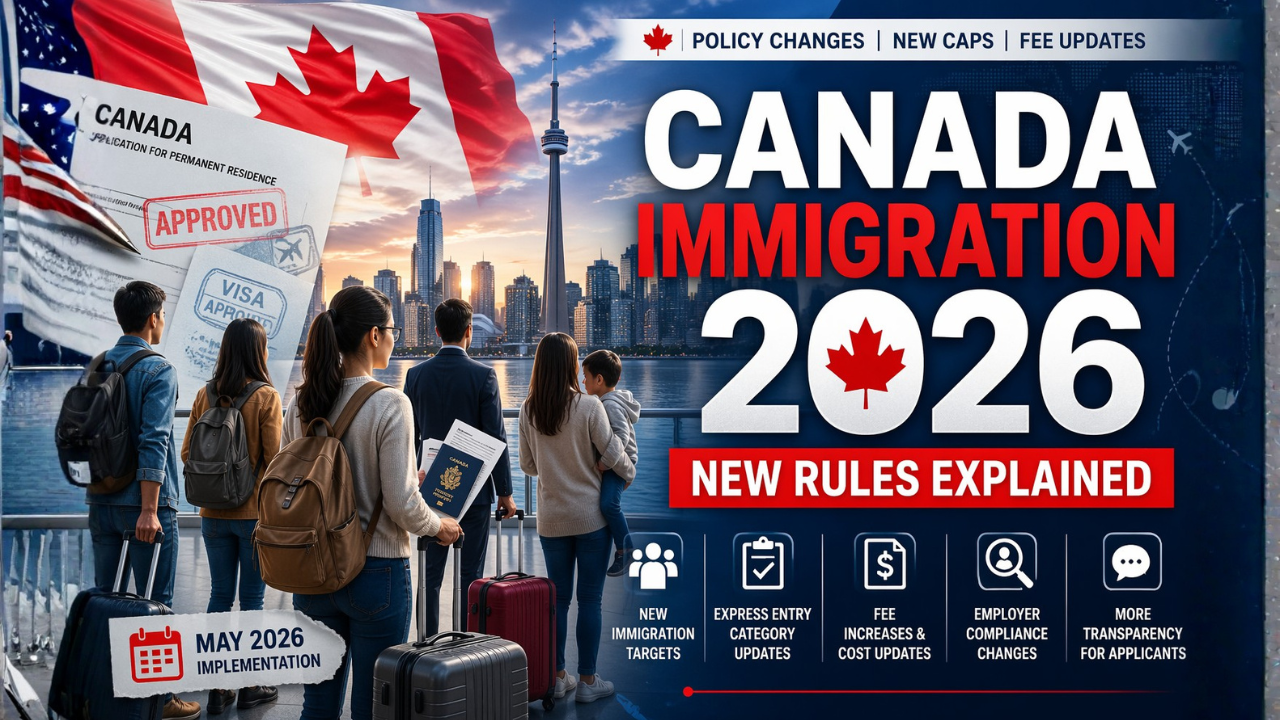
Synopsis: Canada immigration updates September 2025 summarize IRCC policy shifts, study-permit declines, growing Express Entry CRS scores, PNP allocations, and the Startup Visa backlog. The post explains processing delays, program closures, and practical steps for students, skilled workers, employers, and entrepreneurs preparing for the upcoming Immigration Levels Plan. ahead in November.
A Turbulent Week for Canada Immigration
Canada’s immigration system is undergoing some of its most consequential changes in recent years. On September 21, 2025, Prime Minister Mark Carney and Immigration, Refugees and Citizenship Canada (IRCC) introduced a series of updates reshaping pathways for students, skilled workers, and entrepreneurs. These changes arrive just weeks before Canada unveils its new multi-year Immigration Levels Plan in November.
IRCC data shows rising backlogs, declining study permit approvals, and record-high refusal rates. At the same time, the federal government is pledging reforms to the Temporary Foreign Worker Program (TFWP) and introducing more rigorous checks on business immigration streams. For international applicants, families, and employers, these developments demand careful attention and strategic planning. (See Canada’s official immigration portal for reference Government of Canada – IRCC).

Prime Minister Carney’s Immigration Roadmap
A Focus on Reducing Temporary Residents
Prime Minister Carney has signaled a shift towards reducing reliance on temporary residents. The government is tightening controls on study permits, visitor visas, and super visas, aiming to align immigration policy with Canada’s long-term housing and labor market objectives.
The U.S. H-1B Factor and Canada’s Tech Opportunity
Changes in U.S. visa policy, particularly rising costs under revised H-1B visa categories, are pushing skilled workers to explore Canada as an alternative. Could Toronto become the next Silicon Valley? Canada’s Global Talent Stream and reciprocal C20 work permits offer pathways, but processing capacity and program misuse remain challenges.
The Decline in Study Permits
Sharp Drop in International Student Approvals
In the first half of 2025, Canada issued 36,417 study permits—a staggering drop of nearly 90,000 compared to the 125,000 permits issued in the same period in 2024. Application volumes also fell by almost 50%.
Higher Refusals and Officer Decision Notes (ODNs)
IRCC has openly acknowledged stricter refusal policies. Officer Decision Notes now accompany refusals, underscoring the government’s determination to control the temporary resident population.
Global Context of Student Mobility
Despite declining numbers, a survey by ApplyBoard found Canada remains the top destination for international students. Why? The U.S. has reduced visa appointments, the UK faces anti-immigration protests, and Australia has made student visas more restrictive. Canada remains comparatively attractive, though its dominance may reflect weaker competition rather than stronger policy.
(See analysis on student trends from OECD Education at a Glance.)
Provincial Nominee Program (PNP) Updates
Alberta’s Increased Allocations
On September 9, 2025, Alberta Advantage Immigration Program (AAIP) received 1,528 additional spots, raising its annual allocation to 6,437. While a positive step, this remains low compared to historic levels, following earlier 50% cuts to provincial quotas.
Ontario and Manitoba Draws
- Manitoba issued over 911 invitations in its largest September draw.
- Ontario invited more than 1,300 candidates across healthcare and priority occupations earlier in the month.
However, PNPs are becoming increasingly selective, with frequent procedural fairness letters (PFLs) and file cancellations. This signals tougher scrutiny at the provincial level.
Startup Visa Crisis: The 420-Month Wait
Backlogs and Unmanageable Processing Times
The Startup Visa Program is now facing extraordinary delays. New applicants in Q1 and Q2 2025 face estimated processing times of 420 months (35 years). Even existing files are taking more than 53 months to finalize.
Causes: Fraud and Officer Expertise Gaps
IRCC cites widespread misuse by unauthorized consultants and designated organizations producing weak business plans. Additionally, officers require specialized financial training to assess startups, slowing down evaluations.
The Future of Business Immigration
Without reform, the Startup Visa risks collapse. Canada urgently needs a modern entrepreneur PR program, comparable to the U.S. “gold card” or “platinum card” residency pathways. Provinces like Ontario and New Brunswick offer limited entrepreneur streams, but there is no cohesive federal alternative.
(See policy notes on entrepreneurship from Conference Board of Canada).
Express Entry Draws: Rising CRS Scores
Trade Category Draws
On September 18, 2025, IRCC held a trade draw with a CRS cutoff of 505, far higher than the 435 range seen in 2024. Why?
- Expanded NOC codes (from 10 to 23+)
- Smaller draw sizes (1,250 invitations)
A second trade draw is expected, but cutoff scores may remain in the high 490s.
Education and French Category Draws
Recent education draws invited 2,500 candidates at a 462 CRS cutoff. French language draws remain strong, but healthcare cutoffs are staying above 470.
Outlook for Skilled Workers
With only 6–7 draws left in 2025, many candidates with CRS scores under 500 face uncertainty. A few targeted draws for healthcare, STEM, and trades may provide opportunities, but competition remains intense.
(See official updates on Express Entry draws).
IRCC Processing Timelines: Small Gains, Bigger Risks
Temporary Resident Processing
- Work permits inside Canada: down to 191 days (improved by 30 days).
- Visitor visas (TRVs): averaging 15 days.
- Study permits inside Canada: six weeks.
These improvements stem not from efficiency but from high refusal rates, which allow IRCC to clear applications faster.
Permanent Residence Backlogs
Non-Express Entry PR applications now average 20 months, nearly double last year’s timelines. Programs like family reunification, pilot streams, and humanitarian cases are suffering from prolonged delays.
(See IRCC’s processing time tool).
Critical Issues Moving Forward
1. Declining International Student Mobility
Will Canada lose its global edge if refusals continue?
2. Startup Visa Breakdown
Can a 35-year wait be anything other than a de-facto program closure?
3. Express Entry’s High CRS Cutoffs
With trade and healthcare draws pushing cutoffs above 500, are mid-scoring skilled workers being unfairly sidelined?
4. Provincial Discretion and PNP Power
As provinces cancel files and tighten criteria, applicants face uncertainty even after receiving nominations.
5. Federal Policy Realignment in November
All eyes are on the upcoming Immigration Levels Plan 2026–2028, where Canada will decide how many permanent and temporary residents it can realistically accommodate.
Conclusion: A Defining Moment for Canadian Immigration
Canada’s immigration landscape in late 2025 is at a crossroads. From the collapse of the Startup Visa to declining student permits and rising CRS cutoffs, the challenges are mounting. Yet opportunities remain—particularly for those in healthcare, trades, and priority PNP streams.
As November’s Immigration Levels Plan approaches, applicants must prepare for further changes, potentially redefining Canada’s role as a top destination for global talent.
(See additional insights from the Migration Policy Institute).