Synopsis: Australia’s visa system slowed in December 2025 due to seasonal staffing gaps and rising demand. This in-depth analysis explains processing delays, priority changes, skilled migration trends, and policy impacts across student, work, and partner visas, helping applicants and stakeholders understand what is happening and what comes next.
Australia Visa Processing in December 2025: Delays, Priorities, and What Applicants Must Prepare For
As Australia approaches the end of 2025, its immigration system is under renewed pressure. Seasonal slowdowns, policy recalibration, and a surge in applications for early 2026 have combined to extend visa processing times across multiple categories. For applicants, employers, and education providers, these delays are not just administrative inconveniences—they affect careers, business continuity, and long-term settlement plans. According to official guidance from the Australian Department of Home Affairs, December routinely sees slower visa finalisation due to reduced staffing and holiday closures, but the 2025 cycle has exposed deeper structural strains in the system, as outlined by the Department of Home Affairs.
This article examines Australia’s visa processing landscape in December 2025 in detail. It unpacks why delays are occurring, how different visa categories are affected, what policy priorities have shifted, and what these changes mean for migrants from countries such as India, the UK, Canada, and beyond. More importantly, it asks a critical question: are these delays a temporary seasonal issue, or a sign of longer-term systemic adjustment?

Understanding the Policy/Event
December 2025 has emerged as a pressure point for Australia’s migration framework. While end-of-year slowdowns are not new, the scale and spread of delays this year have drawn attention from migration professionals, state governments, and applicants alike.
Australia’s visa processing system operates on a demand-management model. Applications are assessed based on visa category, risk profile, government priorities, and available staffing. In December, this system faces two predictable stressors:
- Reduced departmental capacity due to Christmas and New Year leave periods
- Increased application volumes from individuals targeting January–March 2026 travel, study, or employment
What makes December 2025 notable is that these seasonal factors coincide with broader policy shifts introduced throughout the year. Skilled migration priorities were narrowed, student visa integrity measures were tightened, and state nomination quotas were adjusted downward in several jurisdictions. Together, these changes have reshaped how quickly—and for whom—decisions are made.
Why It Is Happening
Several interlinked factors explain the December 2025 slowdown.
First, staffing constraints remain a persistent issue. Despite post-pandemic recruitment, visa processing units still operate with finite resources. When experienced case officers take annual leave, remaining staff must triage applications, prioritising lower-risk and higher-priority cases.
Second, demand patterns have shifted. Australia continues to attract international students, skilled professionals, and family migrants, particularly from India, Southeast Asia, and parts of Africa. Many applicants deliberately lodge in October and November to secure outcomes before academic or employment start dates in early 2026.
Third, policy-driven prioritisation has altered processing flows. Ministerial Direction 115, introduced in November 2025, explicitly reshaped student visa priorities for offshore applicants, diverting resources toward selected cohorts while slowing others. Similar prioritisation logic applies to skilled and employer-sponsored visas, where occupations linked to healthcare, education, and construction are fast-tracked relative to other fields.
Key Reforms or Changes
December 2025 did not introduce a single headline reform, but it reflected the cumulative effect of several policy decisions taken throughout the year. These changes have practical consequences for applicants navigating the system.
At a high level, reforms and adjustments fall into three categories:
- Visa processing priorities
- Skills assessment tightening
- Allocation and quota management at state level
Each of these has contributed to uneven processing outcomes across visa subclasses.
Detailed Breakdown
Student Visas (Subclass 500)
Student visas remain one of Australia’s largest migration streams. In December 2025, offshore priority student visa applications are averaging between four and eight weeks, while standard cases can extend up to four months. The introduction of Ministerial Direction 115 on 14 November 2025 has been pivotal. It prioritises offshore students linked to lower-risk education providers and courses aligned with workforce needs, while deprioritising higher-risk cohorts.
This has created a two-speed system. Applicants with strong financial evidence, genuine student indicators, and enrolment in priority sectors move faster. Others face longer waits or increased scrutiny, reinforcing the government’s broader student visa integrity agenda discussed by the Australian National Audit Office.
Visitor Visas (Subclass 600)
Visitor visa processing remains relatively efficient, with most tourist stream applications finalised within 30 days. However, December holiday demand has pushed some cases beyond this benchmark, particularly where additional character or financial checks are required.
Skilled Migration (Subclass 189, 190, 491)
Skilled migration continues to experience the longest delays. For Subclass 189 (Skilled Independent), 90% of applications are taking approximately 17 months to finalise. Invitation rounds in November 2025 clearly signalled government priorities, with healthcare, education, and construction occupations dominating invitations.
State-nominated visas (190 and 491) are further affected by quota constraints. While some states received interim allocations late in 2025, others faced reduced numbers, slowing nomination decisions and flow-on visa grants.
Temporary Skill Shortage / Skills in Demand Visa (Subclass 482)
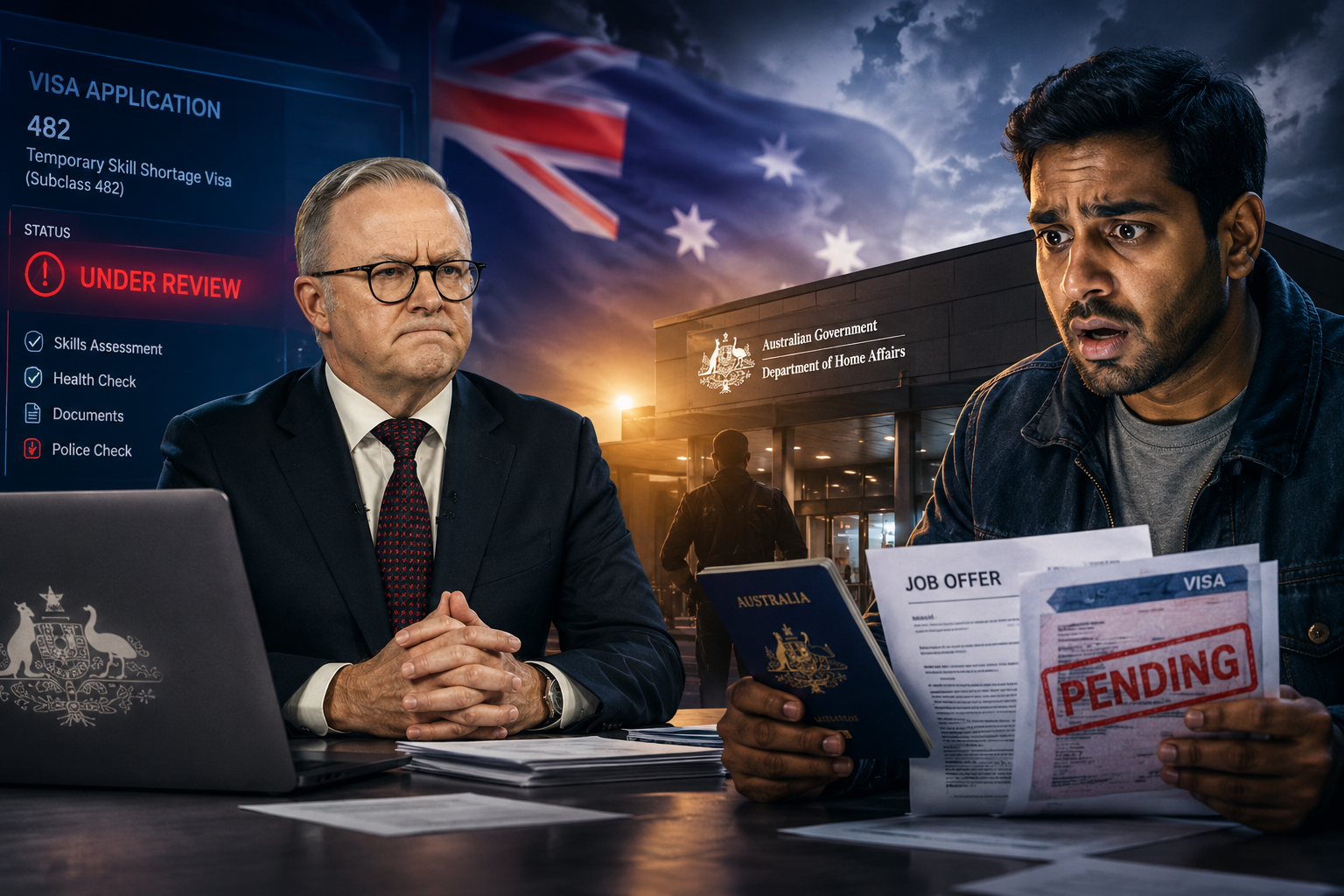
Employer-sponsored visas show the widest variation. Short-term streams are being processed in as little as 19 days, reflecting employer urgency and lower assessment complexity. Medium-term streams, however, can take up to 90 days, particularly where labour market testing or skills verification is required.
Partner Visas (Subclass 309/820)
Partner visas remain the most backlogged category. Many applicants continue to face wait times exceeding 24 months. Despite incremental efficiency gains, demand continues to outpace processing capacity, raising ongoing concerns about family separation and settlement stress.
Data, Stats, and Trends
Visa processing is not just a policy issue—it is a numbers game. Understanding the data behind December 2025 helps clarify why delays persist and where pressure points are most acute.
Australia’s migration program is shaped by planning levels, occupational ceilings, and risk-based triage. When application volumes exceed assumptions, processing times inevitably stretch.
What the Numbers Show
Several key data trends stand out.
- Skilled Independent visas (Subclass 189) show a median processing time of over 16 months, with 90% finalised at around 17 months.
- Partner visas remain among the slowest categories, with well over two years for many offshore applicants.
- Student visa processing varies dramatically depending on provider risk rating and applicant profile.
- Temporary skilled visas demonstrate that prioritisation works when demand aligns with labour shortages.
State nomination figures further complicate the picture. Victoria and South Australia received late confirmation of 2025–26 allocations, limiting their ability to issue timely invitations. Nationally, several states experienced reduced quotas, reflecting a more cautious federal approach to permanent migration planning.
These trends align with broader demographic and economic pressures. Australia’s ageing population and infrastructure constraints have prompted the government to balance migration intake against housing supply, service capacity, and public sentiment—a tension explored by the Migration Council Australia.
Impact Assessment
Delays are not evenly felt. Their impact varies depending on visa type, applicant circumstances, and geographic location. For some, a one- or two-week delay is manageable. For others, it has serious financial, emotional, and professional consequences.
Social, Economic, and Human Consequences
For international students, delayed visas can mean missed orientation weeks, deferred enrolments, or lost accommodation deposits. Education providers face planning uncertainty, while regional institutions—often reliant on offshore students—are particularly vulnerable.
Skilled migrants and employers feel a different strain. Healthcare facilities waiting on overseas nurses, or construction firms relying on sponsored tradespeople, may face staffing gaps that directly affect service delivery and project timelines.
Partner visa applicants experience perhaps the most profound human impact. Extended separation, uncertainty, and mental health stress are recurring themes in case studies and advocacy submissions. While the government emphasises integrity and risk management, the social cost of prolonged processing remains high.
Economically, delays can dampen productivity gains expected from migration. When skilled workers arrive months later than planned, businesses absorb the cost. At a macro level, this can slow growth in sectors already facing labour shortages.
Political Background & Stakeholder Reactions
Visa processing delays do not occur in a political vacuum. They reflect policy choices, public debates, and institutional constraints that shape Australia’s migration agenda.
Government, Opposition & Expert Opinions
The federal government maintains that prioritisation and integrity measures are necessary to protect the migration system. Officials argue that targeted processing ensures visas go to applicants who meet genuine need and national interest criteria.
Opposition figures, while broadly supportive of skilled migration, have criticised backlogs in family visas and the lack of transparency around processing targets. Migration lawyers and industry groups echo these concerns, calling for clearer communication and more consistent service standards.
Experts also highlight structural issues. Technology upgrades have improved lodgement and communication through ImmiAccount, but decision-making remains labour-intensive. Without sustained investment in staffing and training, seasonal delays are likely to persist.
Public sentiment plays a role too. Migration remains a sensitive political topic, particularly in the context of housing affordability and infrastructure pressure. Governments must balance economic need with social cohesion—a balancing act that inevitably affects processing priorities.
Global Comparisons
Australia is not alone in facing visa processing challenges. Comparable immigration countries are grappling with similar pressures as post-pandemic mobility rebounds.
Where This Stands Internationally
In Canada, processing times for permanent residence streams have fluctuated due to intake caps and program redesigns. The UK has introduced stricter sponsorship rules and higher salary thresholds, reshaping employer-sponsored migration. These shifts, documented by organisations such as the OECD, reflect a global trend toward tighter management rather than unrestricted expansion.
Compared to these systems, Australia’s approach remains selective rather than restrictive. It continues to welcome skilled migrants and students, but with sharper prioritisation and greater scrutiny. December 2025 delays, while frustrating, are modest relative to some international counterparts.
Critical Analysis
Seasonal delays are often dismissed as inevitable. But December 2025 raises deeper questions about system design, capacity, and policy coherence.
Are current processing models fit for purpose in an era of high mobility and complex risk management? Can prioritisation coexist with fairness and predictability? And how much uncertainty should applicants reasonably bear?
Will It Work?
In the short term, Australia’s approach may succeed in managing demand and aligning migration with labour needs. Prioritised student and skilled visas demonstrate that targeted processing can deliver faster outcomes where policy objectives are clear.
However, persistent backlogs—particularly in partner visas—and repeated seasonal slowdowns suggest structural limits. Without increased investment in processing capacity and clearer service benchmarks, delays risk becoming normalised rather than exceptional.
For applicants, the lesson is pragmatic rather than philosophical. The system rewards preparation, completeness, and patience. Lodging well-documented applications, monitoring ImmiAccount closely, and avoiding premature travel commitments remain essential strategies.
Conclusion
Australia’s visa processing delays in December 2025 are more than a seasonal inconvenience. They reflect a migration system under recalibration—balancing economic demand, integrity concerns, and political realities. While most delays are measured in weeks rather than months, their cumulative impact is significant.
For students, skilled workers, families, and employers, understanding these dynamics is critical. As Australia moves into 2026, the effectiveness of current policies will be judged not only by who is prioritised, but by whether the system delivers decisions that are timely, transparent, and humane.