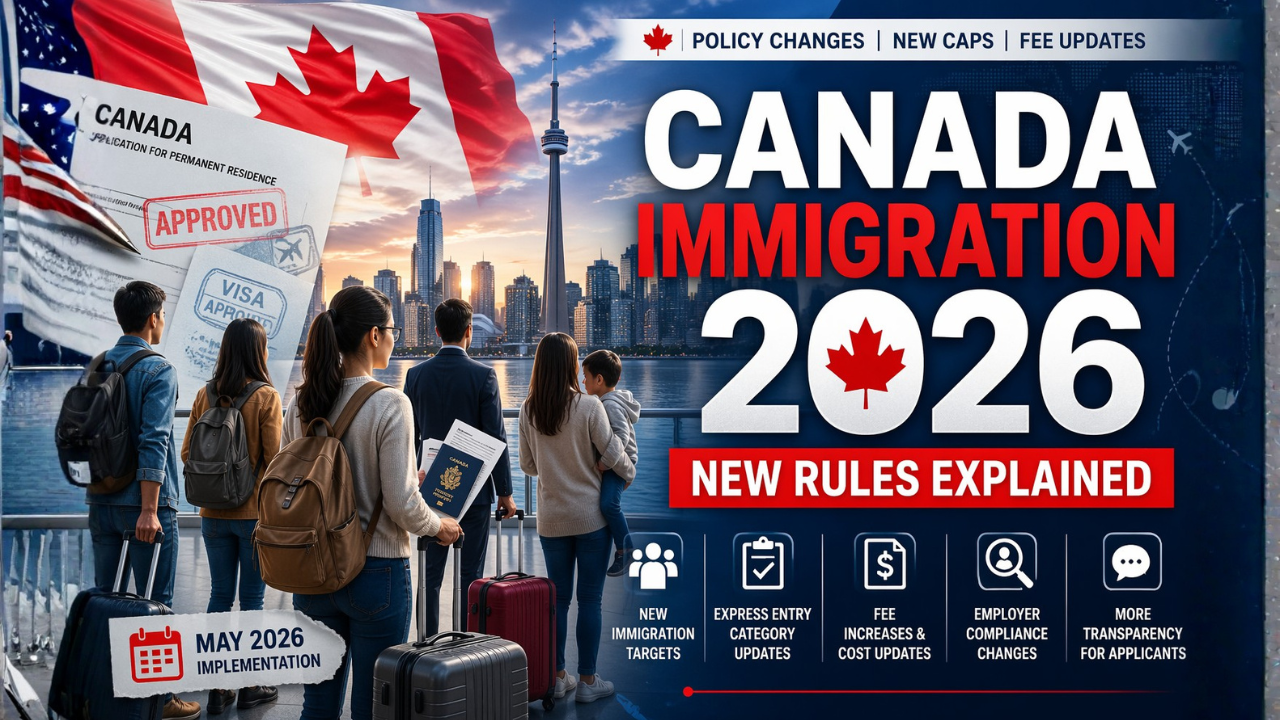
Synopsis: Canada has drastically reduced immigration targets for 2025, prompting fears over population stagnation, labour shortages, and economic slowdown. While the government cites infrastructure strain, experts warn that these cuts may undermine long-term growth, public services, and fiscal stability. This blog explores the data, policy changes, and their profound implications.
Canada’s Population Growth Hits a Historic Low
Canada’s latest Statistics Canada report reveals a startling trend: between January and April 2025, the population grew by just 0.0%. This stagnation hasn’t been seen since the COVID-19 border closures, marking a critical warning sign for policymakers. For the sixth consecutive quarter, population growth has slowed—raising urgent questions about Canada’s long-term demographic health.
So, what’s driving this slowdown? It isn’t falling birth rates alone. It’s immigration—or rather, the lack of it.

Immigration Cuts and Policy Shifts
Permanent Resident (PR) Targets Slashed
In a major policy reversal, Canada cut its 2025 permanent resident intake target from 485,000 to 395,000—a nearly 19% drop. This marks a sharp deviation from the country’s previous pro-immigration stance, which aimed to fuel economic growth and address demographic decline through steady PR inflows.
Temporary Resident Cap Imposed
Temporary residents, including international students and foreign workers, now face stringent caps. The government plans to ensure that by 2026, temporary residents make up no more than 5% of the total population. This cap has directly affected sectors reliant on transient labour and academic influx, threatening their operational sustainability.
Student Visas and Study Permits Tightened
Study permit caps for 2025 have been set at approximately 437,000—a 10% decrease from 2024. Additionally, only around 550,000 applications will be accepted. These changes are part of a broader strategy to regulate educational migration, but they also risk undermining the education sector, one of Canada’s top exports.
Restrictions on Work Permits and LMIA Pathways
Low-wage Labour Market Impact Assessment (LMIA) streams have been severely restricted, especially in regions with unemployment rates above 6%. Moreover, open work permits for spouses are now limited to partners of high-skilled workers and select international students—dramatically shrinking the accessibility of Canadian employment for migrant families.
PGWP Rules Now Stricter Than Ever
The Post-Graduation Work Permit (PGWP) program, once a vital bridge to PR, is now reserved only for graduates from in-demand fields who meet language proficiency benchmarks. This shift marginalizes many international graduates, reducing their pathway to stay and work in Canada.
Canada’s Declining Population and the Numbers That Matter
2.9 Million Non-PRs in April 2025—Down by 611,000 in 3 Months
Canada’s non-permanent resident population shrank significantly—from its peak to just 2.9 million by April 1st, 2025. Ontario and British Columbia were hit the hardest. Ontario saw a reduction of 3,160 student permit holders, while B.C. recorded a dramatic drop of 11,742.
First Quarter 2025 Welcomed Just 114,000 Immigrants
This is the lowest quarterly intake in four years. Such low numbers raise serious concerns, especially considering that Canada’s natural population growth (births minus deaths) was negative—around -5,500 during the same period.
With a national average age of 41.6 years and one of the lowest birth rates among OECD countries, immigration is not a luxury—it’s a necessity.
What’s Driving These Policy Decisions?
The Government’s Argument: Infrastructure Overload
The Canadian government maintains that housing shortages, underfunded public services, and healthcare strain necessitate reduced immigration. Officials argue that post-pandemic population surges overwhelmed existing infrastructure. According to the Canada Mortgage and Housing Corporation (CMHC), the country needs 3.5 million more housing units by 2030—an unattainable goal without population moderation, they claim.
But is that a reason to shrink the workforce altogether?
The Long-Term Risks of Reducing Immigration
Shrinking Tax Base and Fiscal Burden
Immigrants contribute billions in taxes annually, sustaining services like healthcare, education, and pensions. A reduction in working-age immigrants leads to a narrower tax base—creating fiscal strain as Canada’s senior population continues to grow.
Without fresh inflows of taxpayers, who will fund the public services required by an aging population?
Labour Shortages and Economic Bottlenecks
Canada already faces a nationwide labour shortage. Sectors such as healthcare, construction, logistics, and hospitality depend heavily on immigrant workers. With fewer newcomers, supply shrinks—and wages rise, leading to higher production costs. Eventually, these costs are passed down to consumers, driving inflation.
The Business Council of Canada has warned that restricting immigration could throttle GDP growth and delay infrastructure development due to labour scarcities.
Recession May Not Come, But Slowdown Will
While experts don’t foresee a full-blown recession, economic slowdown is inevitable. Oxford Economics recently highlighted that short-term housing market stability may be achieved, but at the cost of long-term growth, labour force expansion, and social stability.
The Youth Gap: Who Will Work, Innovate, and Pay?
Canada’s aging population needs younger workers to fuel innovation, sustain pensions, and drive economic output. By closing doors to immigrants, Canada risks becoming demographically top-heavy—relying on too few workers to support too many retirees.
Here’s what that imbalance could cause:
- Rising pension liabilities
- Overburdened healthcare system
- Fewer entrepreneurs and job creators
- Decreased innovation and startup activity
Immigration brings not just labour but ideas, energy, and long-term commitment to nation-building.
Strategic Immigration: The Need for Balance
Wholesale Cuts vs Quality Filtering
The answer may not lie in slashing numbers but in improving filters. Prioritize high-skilled migrants, ensure civic integration, and enforce fair taxation—but don’t lock out entire demographics. Canada needs welders as much as it needs software developers.
Over-immigration can strain systems, but under-immigration can dismantle them entirely.
Economic Sustainability Must Trump Politics
Whether due to political pressure or shifting public sentiment, the government’s rapid policy changes seem reactionary. With no clear long-term vision beyond short-term appeasement, Canada risks compromising its global competitiveness and socio-economic equilibrium.
Is Canada Undermining Its Own Economic Engine?
This is the central dilemma: are the current immigration policies aimed at fixing real problems, or simply political posturing?
If current trends continue:
- Housing may stabilize temporarily
- Labour shortages will intensify
- Public service delivery will deteriorate
- Long-term economic momentum will stall
The challenge lies in designing an immigration policy that balances population growth with national capacity—without pulling the brakes on Canada’s economic engine.
Conclusion: What Canada Must Do Now
Immigration isn’t just about numbers—it’s about vision. Canada’s demographic realities demand a recalibrated approach that:
- Protects critical infrastructure
- Invests in housing and services
- Welcomes skilled immigrants
- Prevents fiscal deterioration
- Supports an aging society
Drastic cuts and arbitrary caps may win political points, but they risk long-term national decline. Canada’s future depends on its ability to integrate smart immigration with sustainable growth—before it’s too late.
Frequently Asked Questions (FAQs)
1. Why is Canada reducing its immigration targets in 2025?
Canada is lowering immigration targets to address pressures on housing, healthcare, and infrastructure, but critics argue it may harm economic growth and worsen labour shortages in the long term.
2. How many immigrants will Canada accept in 2025?
Canada plans to accept 395,000 new permanent residents in 2025, down from the original target of 485,000 in 2024, reflecting a shift in immigration policy focus.
3. What is the 2025 cap on international student visas in Canada?
For 2025, Canada has capped study permit approvals at 437,000, with a maximum of approximately 550,000 applications accepted, representing a 10% reduction from 2024.
4. Is the Post-Graduation Work Permit (PGWP) still available in 2025?
Yes, but it is now limited to graduates from in-demand fields who meet stricter language proficiency requirements, making it harder for many students to qualify.
5. Will the temporary foreign worker program be affected by these immigration cuts?
Yes. Low-wage LMIA streams are significantly restricted in areas with unemployment over 6%, limiting access to temporary foreign workers across several industries.
6. How are these immigration cuts affecting Canada’s economy?
The cuts risk shrinking the labour force, reducing the tax base, and increasing labour costs—potentially leading to higher consumer prices and slower GDP growth.
7. Which provinces are most affected by the 2025 immigration policy changes?
Ontario and British Columbia are experiencing the steepest declines in international student numbers, as they host the highest proportion of study permit holders.
8. Will fewer immigrants increase wages in Canada?
Yes, a reduced labour supply can raise wages. However, this also increases production costs, which may be passed on to consumers through higher inflation.
9. Is Canada still a good destination for skilled immigrants in 2025?
Yes, but only for those in targeted sectors like healthcare, construction, and engineering. Immigration pathways are narrowing for general applicants and non-priority fields.
10. Can Canada sustain its economy with fewer immigrants?
Most experts say no. Without immigration, Canada’s aging population, shrinking workforce, and growing fiscal obligations will become increasingly unsustainable.