Synopsis: The Trump administration’s abrupt visa renewal directive now forces Australians in the US to return home for brief consular interviews. Once able to renew at nearby consulates, many are stranded, facing higher costs, lost work time and employer uncertainty—exposing broader shifts toward stricter immigration rules and reduced global mobility.
A Sudden Shift with Far-Reaching Impacts
US visa renewal rules for Australians have changed overnight, leaving thousands who planned their lives, work and careers in the United States shocked and scrambling—without warning. That’s exactly what many Australians are experiencing after the Trump administration quietly imposed new restrictions on non-immigrant visa renewals, including the Australia-specific E3 visa.
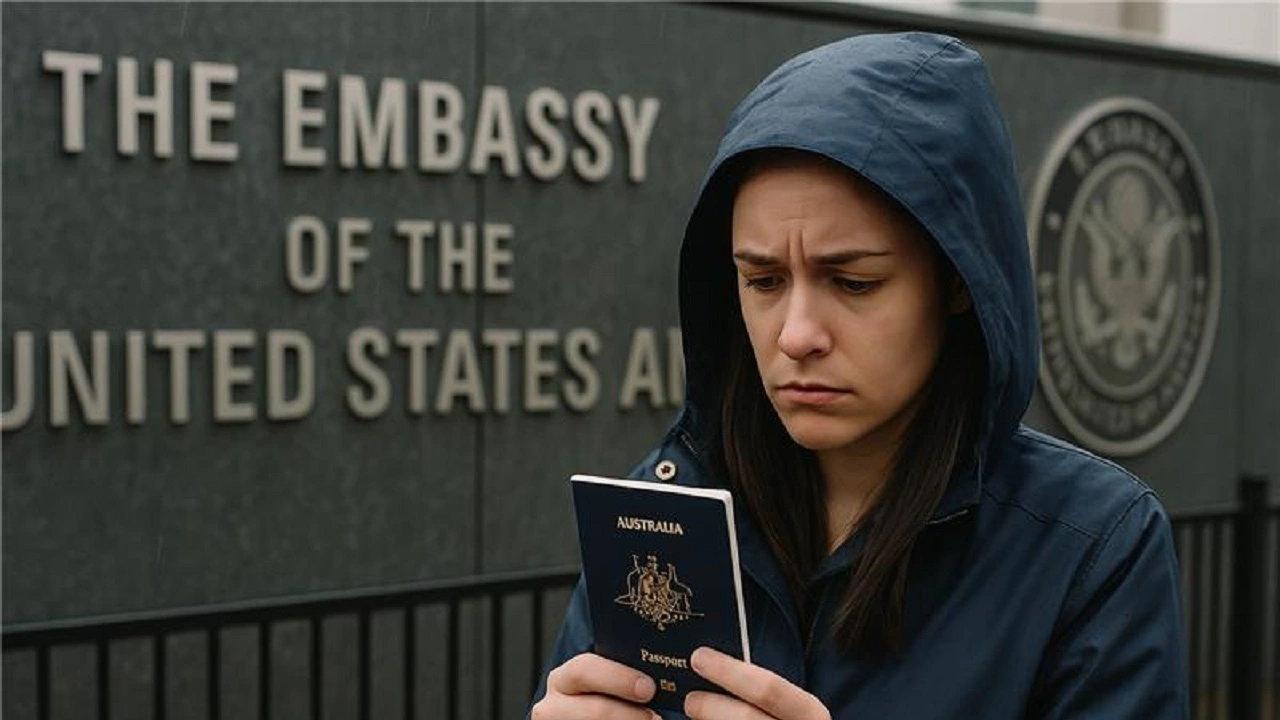
According to the U.S. Department of State, the changes now require Australians on work visas to return to Australia every two years for a brief consular interview. Until recently, many Australians conveniently renewed their visas in closer destinations such as Canada, the UK, or the Caribbean. This sudden shift has already stranded some expats overseas, creating widespread uncertainty and frustration.
Why was this change introduced? Was Australia the target, or are Australians simply collateral damage in a larger U.S. immigration crackdown?

The Background: What Changed and Why It Matters
Previous Renewal Process
For years, Australians working in the US under the E3 visa or other work categories enjoyed relatively straightforward renewal procedures. Many could schedule interviews at U.S. consulates outside the U.S.—London, Toronto, or even Bridgetown in Barbados—saving significant time and costs.
This flexibility was more than convenience; it provided predictability. Employers could plan sponsorship timelines, and employees could maintain legal work status without excessive disruption.
The New Rule
Under the new directive, effective immediately, Australians must now travel back to Australia for visa renewals. This involves:
- Long-haul travel expenses.
- Lost work time.
- Added uncertainty for families and employers.
Immigration lawyer Sherwin Norian described the shift as “a two-to-three-minute interview” that could instead require thousands of dollars in airfare and accommodation.
Who Is Affected?
Australians in the US
The most directly affected group includes Australians holding:
- E3 visas (exclusive to Australian professionals in specialty occupations).
- Other non-immigrant visas requiring renewal.
For these individuals, the once-routine renewal process is now an expensive logistical challenge.
Not Just Australians
While Australians feel the immediate sting, the rule technically applies to most non-immigrant visa holders. As U.S. Citizenship and Immigration Services (USCIS) clarifies, these procedural changes are part of broader tightening under the Trump administration.
The true target seems to be foreign workers at large, not Australians specifically—yet Australians are disproportionately impacted because of their previously streamlined pathways.
Immediate Fallout: Expats Stranded and Employers Uncertain
Stranded Australians
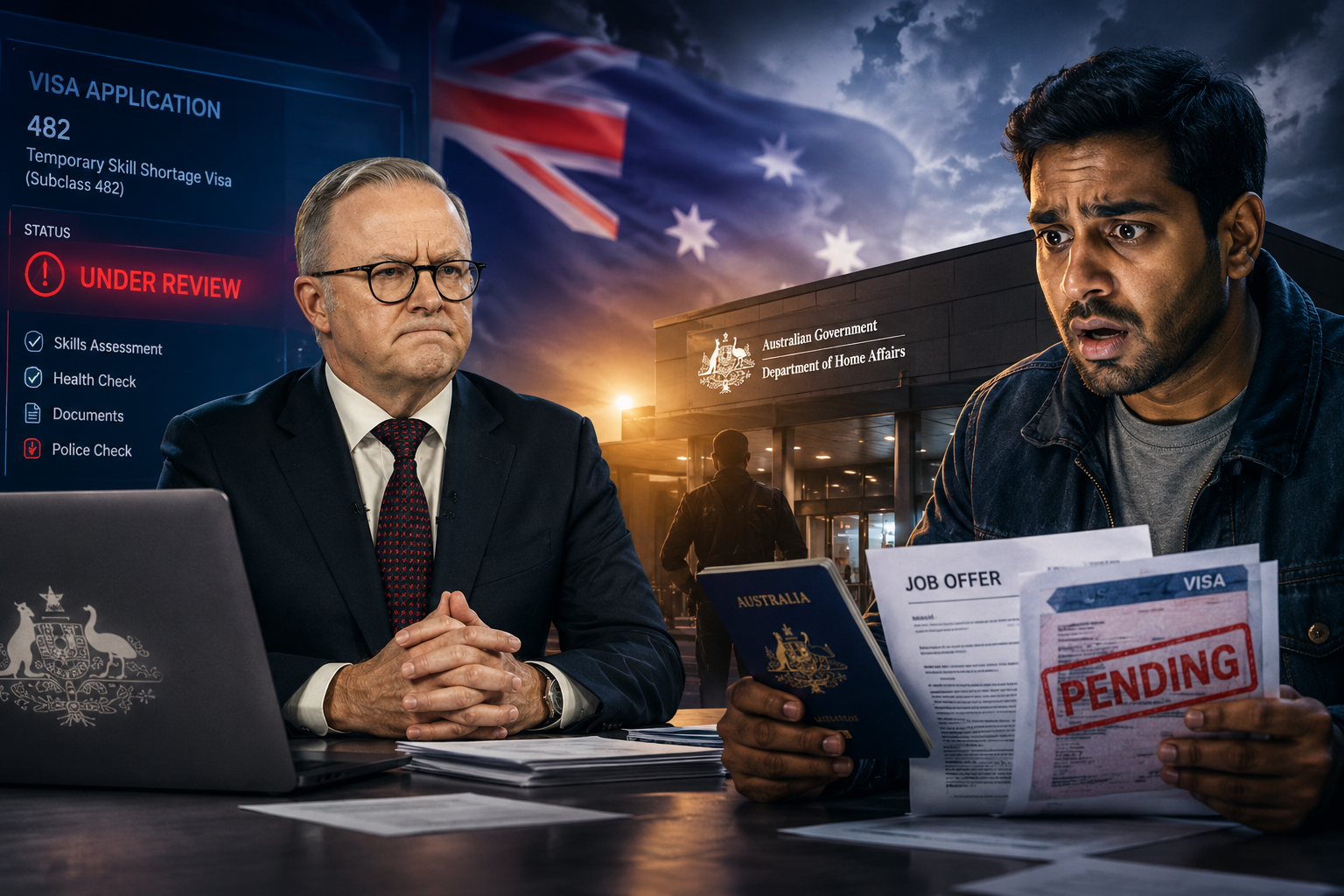
Reports emerged of Australians denied re-entry after attempting renewals in London or Barbados during the weekend the rule took effect. With no grace period, even consular staff appeared uncertain how to handle these applications.
Some applicants were told to mail in passports; others were simply refused. Families and workers found themselves in limbo, unsure if or when they could return to the US.
Employer Concerns
Employers relying on Australian talent face:
- Project delays when workers cannot re-enter the country.
- Financial strain due to travel reimbursement.
- Long-term planning uncertainty in sponsoring foreign professionals.
This could discourage some businesses from hiring Australians altogether, undermining one of the most successful bilateral visa arrangements.
Long-Term Consequences for Australians in the US
Increased Costs and Burden
Flights between the US and Australia can cost thousands of dollars. For workers renewing visas every two years, this expense adds up quickly, not to mention the lost productivity from extended travel.
Potential Decline in E3 Visa Uptake
The E3 visa, created under the 2005 US-Australia Free Trade Agreement, has historically been under-utilized, with thousands of annual spots going unclaimed. But with added hurdles, applications may fall further, eroding opportunities for skilled Australians.
Broader Immigration Tightening
This move is part of a pattern. Under the Trump administration, U.S. immigration policy saw:
- Stricter student visa requirements.
- Increased social media vetting of applicants.
- Higher refusal rates across multiple visa categories.
As the Migration Policy Institute notes, these measures reflect a systemic effort to discourage foreign arrivals. Australians are now swept up in this wider tide.
Policy Intentions: Was Australia the Target?
It is unlikely that Australians were singled out. Instead, the measure appears aimed at foreign workers generally, adding friction to the process of renewing visas.
By increasing costs, time commitments, and uncertainty, the administration likely hopes employers reconsider sponsorships. This fits within broader policies to reduce reliance on foreign labor.
Yet, as Sherwin Norian highlights, Australians are “caught in the crossfire”—a small group disproportionately affected because of their reliance on overseas consulates for renewals.
Historical Context: A Departure from Previous Policy
Under Previous Administrations
Earlier U.S. administrations fostered more flexible visa arrangements. For example:
- Australians could often complete renewals without returning home.
- Consular officers abroad were empowered to approve renewals efficiently.
Under Trump Administration
This directive reflects a broader philosophy: immigration, even legal and skilled, is to be constrained. As the Brookings Institution has documented, these policies were part of a larger framework of “extreme vetting.”
Broader Implications: For the US, Australia, and Global Mobility
Impact on US-Australia Relations
The E3 visa has long symbolized close bilateral ties. If its usability diminishes, the goodwill it generated may erode, affecting perceptions of partnership.
Global Talent Competition
Countries like Canada and the UK continue to actively court skilled workers. If the US becomes less accessible, Australia’s professionals may simply look elsewhere—shifting global talent flows.
Economic Ripple Effects
- Reduced participation of Australians in US labor markets.
- Higher costs for US employers.
- Potential declines in innovation and competitiveness.
As the OECD emphasizes, restrictive visa regimes can harm economies dependent on skilled migration.
What Lies Ahead for Australians in the US?
Possible Adjustments
- Legal challenges may arise against the sudden implementation without notice.
- Diplomatic discussions between Australia and the US could seek carve-outs or easing.
Preparing for Change
Australians working in the US should:
- Plan renewals well in advance.
- Budget for higher travel costs.
- Consult legal experts on evolving requirements.
Employers, too, will need to reconsider sponsorship strategies in light of the added hurdles.
Conclusion: A New Era of Visa Uncertainty
The abrupt change to US visa renewal rules marks a turning point for Australians in America. What was once a straightforward process is now burdened with costs, logistical challenges, and uncertainty. While Australians may not have been the target, they are undeniably among the most affected.
This development underscores a larger reality: immigration policies can shift suddenly, with profound consequences for individuals, families, and economies. For Australians seeking opportunities in the US, careful planning and adaptability will now be essential.