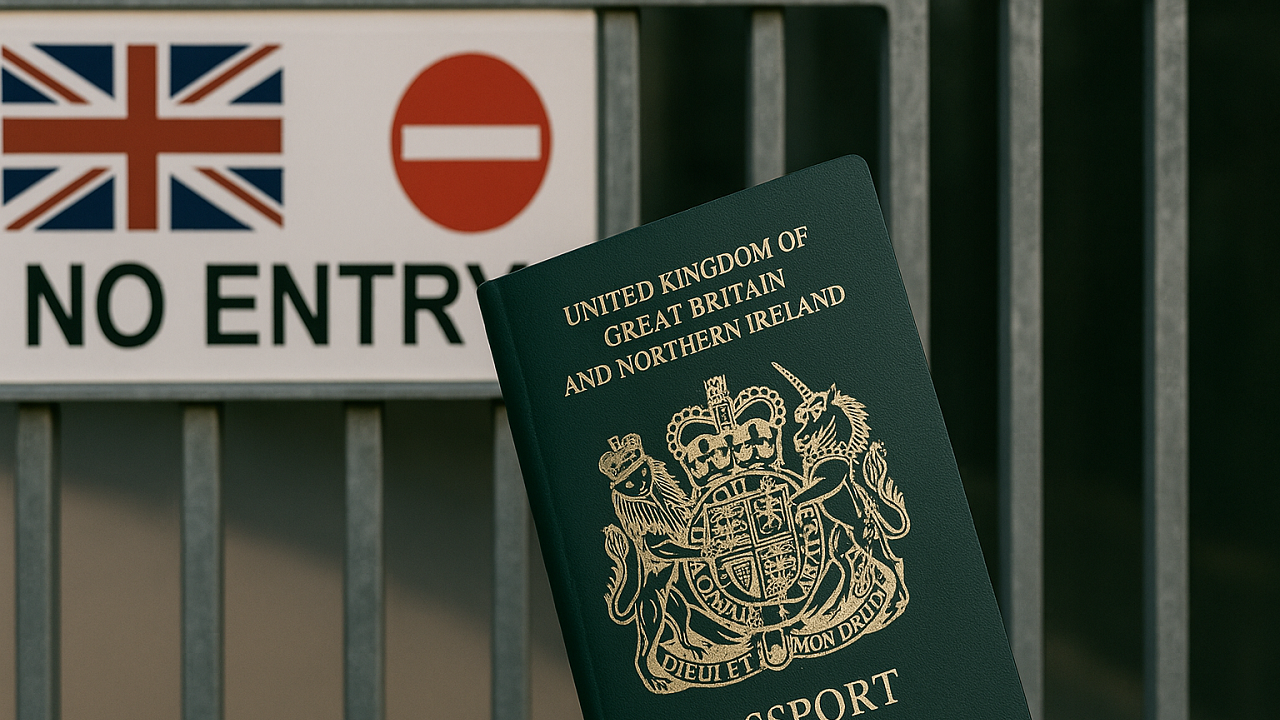
Synopsis: The UK’s July 2025 immigration reforms have sharply reduced Indian visa flows. Skilled Worker applications fell 18%, Health and Care Worker visas collapsed by 93%, and student dependants plunged 86%. This post analyses policy changes, data trends, sectoral impacts and likely diplomatic and economic consequences for India–UK migration and communities.
A Turning Point in UK Immigration
The United Kingdom’s immigration system has entered one of its most restrictive phases in decades. After years of steady inflows from India — which had become the largest single source of skilled workers and students — recent government reforms have caused an unprecedented collapse in visa applications. The July 2025 Statement of Changes has not only raised salary thresholds and skill requirements but also ended overseas recruitment in entire sectors such as care work.
According to official statistics from the UK Home Office, Indian applications for Skilled Worker visas have fallen by almost a fifth, while Health and Care Worker visas have collapsed by more than 90% compared to 2023 levels. For many analysts, this is not simply a policy correction — it signals a reordering of Britain’s labour market priorities, with long-term consequences for healthcare staffing, higher education, and bilateral ties with India.

Skilled Worker Visas: An 18% Decline That Signals Strain
Falling Numbers from India
Until early 2024, India consistently supplied around 6,000 Skilled Worker visa applicants per month. By July 2025, that figure had slipped to 4,900 — an 18% decline. The drop may appear modest compared to the dramatic collapse in care visas, but it underscores a broader cooling in migration appetite.
For dependants, the pattern is equally revealing. In July 2025, 5,300 dependants were recorded alongside Indian Skilled Worker applicants, continuing the downward trend.
A Global Slowdown
The decline is not confined to India. Across all nationalities, Skilled Worker applications fell back after peaking at 10,100 in April 2024. By mid-2025, applications averaged just under 5,000. This indicates that the reforms — particularly higher salary thresholds — have reduced access to the UK for middle-skilled professionals across the board.
Why It Matters
- Recruitment struggles: Sectors like IT and engineering, long reliant on Indian talent, now face hurdles filling vacancies.
- India–UK trade negotiations: Mobility of skilled professionals is a sensitive issue in the ongoing free trade agreement talks between London and New Delhi.
- Regional imbalance: Smaller UK cities that attracted workers under shortage lists may now experience acute staffing gaps.
Health and Care Worker Visas: A 93% Collapse
The Steepest Decline
The Health and Care Worker route has experienced nothing short of a policy-induced collapse.
- In August 2023, Indian applicants peaked at 18,300.
- By July 2025, the figure had crashed to just 1,300 — a staggering 93% decline.
Dependants followed a similar trajectory, falling from 23,300 to 4,900 — nearly 79% lower.
The Policy Drivers
The turning point came in Spring 2024, when the UK introduced stricter compliance checks, reduced eligibility, and eventually announced the end of overseas recruitment for new care workers.
- Only those already in the UK can switch into care roles until July 2028.
- Minimum salary thresholds remain lower for health roles (£28,939.62), but the loss of overseas recruitment channels has rendered this less meaningful.
Systemic Risks
The National Health Service (NHS) has historically depended on foreign staff to fill shortages. According to the NHS Workforce Data, nearly 1 in 7 NHS workers is non-British, with Indians forming one of the largest groups. Cutting off this pipeline raises critical questions:
- Who will care for Britain’s ageing population?
- Can domestic training schemes realistically replace thousands of foreign nurses and care staff within a few years?
- Will private care providers collapse under staffing shortages?
Indian Students: A Sharp Drop in Dependants
Sponsored Study Visas
Indian student applications remain high but show signs of contraction:
- Sponsored study visa applications totalled 428,900 in the year ending July 2025, down 3% year-on-year.
Although a 3% dip seems minor, the impact becomes clearer when dependants are considered.
Dependants Restricted
From December 2023 to July 2025, Indian student dependants plummeted:
- 143,600 → 20,200 (an 86% fall).
This reflects the January 2024 rule banning most international students from bringing family members unless enrolled in postgraduate research programs.
Global Context
Globally, sponsored study visas also fell by 3%, showing a mild cooling in demand. Yet the sharp collapse in dependants demonstrates how the UK’s rules disproportionately affect Indian families, many of whom had viewed the UK as a viable settlement destination.
Universities Under Pressure
According to the Universities UK International, international students contributed £41.9 billion to the UK economy in 2021/22. If Indian students — the largest cohort after Chinese nationals — continue reducing applications, universities may face budget crises, particularly those already financially dependent on foreign enrolments.
Family Visas: Fluctuations with Income Rules
Family visas tell a more nuanced story.
- Applications across all nationalities rose to 12,700 in April 2024, ahead of income threshold increases.
- After the threshold came into effect, numbers plunged to 5,100 in June 2024.
- By July 2025, they recovered somewhat to 8,100.
For Indians, the same pattern is observed: a spike before the rule change, followed by a drop, and then a cautious recovery.
The new minimum income requirement for family sponsorships means many middle-income households in India can no longer qualify. This rule has raised concerns about whether the UK is effectively prioritising wealthier migrants over family unification rights.
Temporary Work Routes: Mixed Outcomes
Youth Mobility Scheme
The Youth Mobility Scheme, which includes the India Young Professionals Scheme launched in 2023, saw a 10% decline, with applications standing at 22,200 in July 2025. The ballot-based system may also discourage wider participation.
Seasonal Worker Visas
In contrast, Seasonal Worker visas rose by 9% to 38,600, constrained only by quotas. These short-term visas remain politically acceptable because they do not allow settlement and address labour shortages in agriculture.
However, for Indian applicants, seasonal work remains less accessible than for Eastern European nationals.
New Immigration Rules: The July 2025 Statement of Changes
The government’s July 22, 2025 Statement of Changes has reshaped the Skilled Worker pathway.
Key Reforms
- Skill level: Jobs must now be at RQF Level 6 (bachelor’s degree level), unless listed on the Immigration Salary List or Temporary Shortage List.
- Salary thresholds: Minimum pay has increased from £44,798.52 to £48,271.28.
- Care workers: Overseas recruitment has ended, though in-country switching is allowed until 2028.
Policy Intent
The reforms align with the government’s pledge to reduce net migration after record highs in 2022–23. Critics argue this is a politically driven strategy designed to appease anti-immigration sentiment rather than respond to genuine labour market needs.
The Migration Advisory Committee, which advises the government, has repeatedly warned that sudden restrictions risk labour shortages and economic disruption (Migration Advisory Committee).
Implications for India–UK Relations
Diplomatic Strains
India has long sought greater mobility provisions in trade negotiations. With the UK tightening access, will this affect the India–UK Free Trade Agreement prospects? The fall in visas undermines India’s leverage, potentially slowing down broader economic cooperation.
Shift to Other Destinations
- Canada and Australia continue to attract Indian workers and students with more flexible migration pathways.
- The UK risks losing its position as a top-tier destination, especially if families remain excluded.
Domestic Consequences in India
The drop in UK-bound migration could redirect aspirants toward domestic skill programmes, but it also risks creating bottlenecks in India’s labour export model, which relies heavily on international placements to absorb a growing workforce.
Conclusion: A Restrictive Era with Long-Term Risks
The data leaves little doubt: Britain’s new immigration system has successfully reduced numbers — but at what cost? Skilled professionals, healthcare workers, students, and families from India, once the backbone of UK migration, are now reconsidering their options.
The reforms may ease short-term political pressures, but they risk deep structural consequences:
- Labour shortages in key sectors
- Financial instability for universities
- Strained diplomatic ties with India
- Loss of competitiveness against Canada, Australia, and the US
The question is no longer whether the UK can reduce migration — it has. The critical question now is: Can the UK sustain its economy and global reputation without the very migrants it has worked so hard to deter?
Top 10 FAQs on UK Visa Crackdown and Indian Migration 2025
1. Why have UK Skilled Worker visa applications from Indians fallen in 2025?
The fall is mainly due to the UK’s July 2025 Statement of Changes, which raised salary thresholds, limited eligible occupations, and ended overseas recruitment for care workers. This has made the Skilled Worker visa less accessible for Indian professionals compared to earlier years.
2. What is the reason for the 93% drop in UK Health and Care Worker visas?
The UK government banned new overseas recruitment for care workers in 2024, citing compliance issues and labour market pressures. As a result, Indian Health and Care Worker visa applications collapsed from 18,300 in 2023 to just 1,300 in July 2025.
3. How do the new UK immigration rules affect Indian students in 2025?
Indian students can still apply for a UK study visa, but from January 2024 dependants are no longer allowed unless enrolled in postgraduate research. This has led to an 86% drop in student dependant visas, significantly reducing family migration routes.
4. What is the new UK Skilled Worker visa salary threshold in 2025?
As of July 2025, the minimum salary threshold for Skilled Worker visas increased from £44,798.52 to £48,271.28. Health and Care Worker roles remain lower, at £28,939.62, but the overseas recruitment ban limits its usefulness.
5. Can Indian care workers still move to the UK after the 2025 immigration crackdown?
No new overseas applications are being accepted. However, care workers already in the UK can continue working and switch visas until July 2028. For fresh applicants from India, this route is effectively closed.
6. How have UK student visa dependant rules changed for Indians?
Since January 2024, international students on most postgraduate taught and undergraduate courses cannot bring dependants. Only PhD and research students are allowed. This has sharply reduced Indian family migration under the student route.
7. How will the UK’s immigration crackdown impact Indian–UK trade relations?
India has consistently pushed for easier worker mobility in the UK–India Free Trade Agreement. The sharp drop in visa approvals undermines this demand and may strain negotiations, as fewer Indian skilled professionals and students are allowed into the UK.
8. Are Indian students choosing Canada or Australia instead of the UK in 2025?
Yes. With the UK tightening visa rules, many Indians are redirecting to Canada’s PGWP and Australia’s student visa pathways, which remain more flexible for work and family settlement. This could weaken the UK’s position as a top destination for Indian students.
9. What alternatives remain for Indians after the UK visa crackdown?
Indian applicants are increasingly considering:
• Canada PR and student visas
• Australia’s Skilled Migration (subclass 189, 190, 491)
• Gulf countries with growing work opportunities
• The US H-1B visa lottery for skilled workers
10. Will the UK immigration crackdown reduce labour shortages or worsen them?
While the government aims to reduce net migration, experts warn that restricting care workers, IT specialists, and students may worsen UK labour shortages. Sectors like healthcare and higher education, heavily reliant on Indian workers and students, face the greatest risks in the coming years.