
Synopsis: This article details the expanding reach of the UK immigration crackdown beyond standard visa applicants. It provides a comprehensive analysis of the upcoming 2027 university traffic-light compliance framework, government measures against groundless post-study asylum claims, and the Isle of Man’s June 2026 alignment with UK salary and dependency standards. The piece offers strategic guidance for international students and overseas workers navigating these heightened regulatory hurdles.
The scope of the UK immigration landscape is shifting towards tighter enforcement, higher accountability, and stricter sponsorship rules. Universities, employers, and migrants are all being pulled into a more regulated system where compliance now determines opportunity. Anyone navigating the UK-linked immigration framework must understand these structural shifts to protect their long-term plans.
Recent policy adjustments reveal that the UK Home Office is stepping up pressure on universities. Institutions risk losing their international recruitment privileges if they fail to meet elevated compliance benchmarks.
Concurrently, the Isle of Man has overhauled its employment visa routes to mirror the restrictive architecture of the mainland UK Skilled Worker visa system. 
Why is the UK Tightening Immigration Rules?
Authorities aim to reduce misuse of legal pathways such as student and work routes for non-compliant purposes. A key area of policy concern involves individuals who enter the UK on student or work visas and claim asylum to extend their stay.
According to the government, high dropout rates, non-completion rates, low enrolments, and high visa refusal rates indicate poor pre-screening by the sponsor.
Core Risk Metric for Sponsors
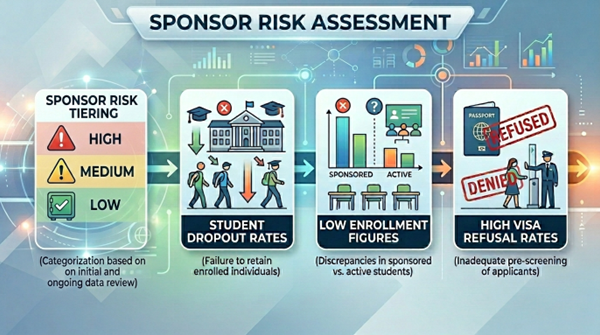
To address this, the Home Office states that it aims to introduce a new compliance framework to classify universities based on performance and reliability. This system is expected to become more visible by summer 2027, reshaping how universities are evaluated as student sponsors.
The 2027 Traffic Light Compliance Framework for UK Universities
One of the most significant policy changes affecting universities that recruit international students is the traffic-light rating system. Institutions now will be held directly accountable for the outcomes of the students they sponsor.
If too many students fail to enrol, drop out, or violate visa conditions, universities may face restrictions on future recruitment. In serious cases, they risk losing their student sponsorship licence entirely.
|
Compliance Tier |
Regulatory |
Operational Impact |
|
Green |
Fully compliant institution |
Full recruitment rights |
|
Amber |
Moderate compliance concerns |
Monitoring and restrictions possible |
|
Red |
High-risk institution |
Recruitment limits or licence loss |
This shift introduces a new reality for higher education providers. International student recruitment, once largely driven by demand and academic reputation, will now also depend heavily on compliance performance.
Navigating the Changes as an International Student
For prospective international students, these developments require a more analytical approach to choosing a school. Selecting an institution should involve looking past campus amenities or basic academic rankings; reviewing a school’s immigration compliance record is now just as critical.
Students are expected to demonstrate genuine intent to study. Enrolling in a course without commitment, dropping out early, or misusing a student visa can have a long-term impact on future immigration eligibility.
Essential Pre-Application Steps
Before applying students should carefully evaluate the following benchmarks:
- Verify Sponsor Status
Double-check that your target institution holds an active unrestricted student sponsor licence on the official government register
- Ensure Academic Continuity
Choose programmes that logically align with your academic and professional history to reduce the risk of visa refusals.
- Commit to Full Attendance
Maintain excellent attendance and engagement records, as universities are required to report missing students promptly to protect their own metrics.
Asylum Claims and Post-Study Pathways
Another major catalyst behind the crackdown is the increasing number of asylum claims linked to individuals who originally entered the UK on student or work visas.
Government authorities have stated that individuals nearing visa expiry have been contacted with warnings about making unfounded asylum claims. These claims are being closely scrutinised, and those without valid grounds may face refusal and removal from the country.
It is important to understand that asylum is a protection mechanism, not a fallback option. Using it as an alternative pathway after visa expiry can create serious immigration consequences.
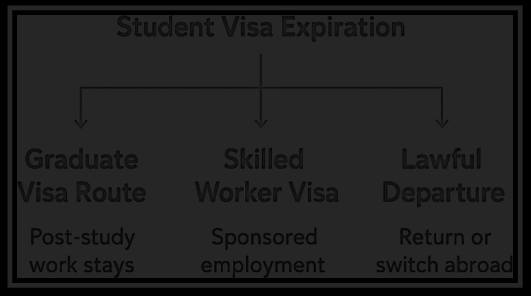
Legitimate Visa Transition
Rather than attempting high-risk, non-meritorious claims, students nearing visa expiration should focus on established, lawful transition:
Isle of Man Aligns with the UK Border Controls/Tightens Employment Visa Rules
The tightening of immigration rules is not limited to the mainland UK system. The Isle of Man, a self-governing British Crown Dependency, has also updated its Worker Migrant route to align more closely with the UK Skilled Worker visa standards.
These changes, effective from June 2026, introduce higher salary thresholds and stricter employer compliance requirements. The policy shift reflects a broader regional alignment toward tighter immigration controls.
Stricter Local Labour Market Protection
The key change is the expectation that employers must first demonstrate efforts to hire locally before recruiting overseas workers. Only when no suitable candidates are available can employers proceed with migrant sponsorship
Open positions must undergo mandatory local advertising, meaning international applicants face a more prolonged hiring process. Overseas candidates must ensure their qualifications and language proficiency are fully documented to pass these rigorous local labour market assessments.
Updated Salary Thresholds and Dependent Eligibility
The June 2026 update introduces elevated salary minimums and limits the ability of workers to bring family members.
- Elevated Salary Floors
Employment offers that meet higher minimum wage thresholds qualify for sponsorship criteria.
- Restricted Dependent Visas
Only higher-skilled and better-paid roles are now more likely to qualify for family migration rights.
This means that even if a worker secures a job offer, it doesn’t automatically guarantee that dependents such as spouses or children can join them.
For many migrants, this introduces a new planning challenge. Immigration decisions now require financial forecasting as well as career assessment, especially for those planning family relocation.
Practical Tips for International Applicants
The most important response to these changes is preparation.
Immigration pathways are becoming more structured. Decisions made early and strict adherence to official rules carry more weight than ever.
Rely Only on Official Sources
Avoid unverified advice on social media platforms. Cross-reference all timelines and policy details directly using government websites or the official Isle of Man portals.
Recognise Shared Compliance Risks
Understand that your legal status is directly tied to the compliance performance of your university or employer. If your sponsor mismanages its responsibilities, your visa could be put at risk.
Enhance Your Professional Profile
For overseas workers, meeting minimum requirements is no longer enough. Focus on securing high-tier professional qualifications and targeting roles that comfortably exceed the newly raised regional salary minimums.
For students, this means selecting universities with strong compliance records, maintaining full academic engagement, and planning post-study pathways well in advance. For skilled workers, it means targeting shortage occupations, strengthening qualifications, and confirming sponsor legitimacy before accepting job offers.
Across all categories, one trend is clear. Immigration outcomes are no longer determined by application alone. They are influenced by institutions, employers, and compliance history.
Final Thoughts
The UK immigration system is entering a phase defined by stricter oversight and higher accountability. Universities are under pressure to maintain recruitment integrity, employers are expected to prove local hiring attempts, and migrants must meet higher standards of compliance.
Opportunities still exist, but the system is becoming more selective. Success now depends on preparation, awareness, and strategic decision-making rather than last-minute applications.
In this evolving environment, staying informed is no longer optional. It is a core part of protecting your long-term immigration future.