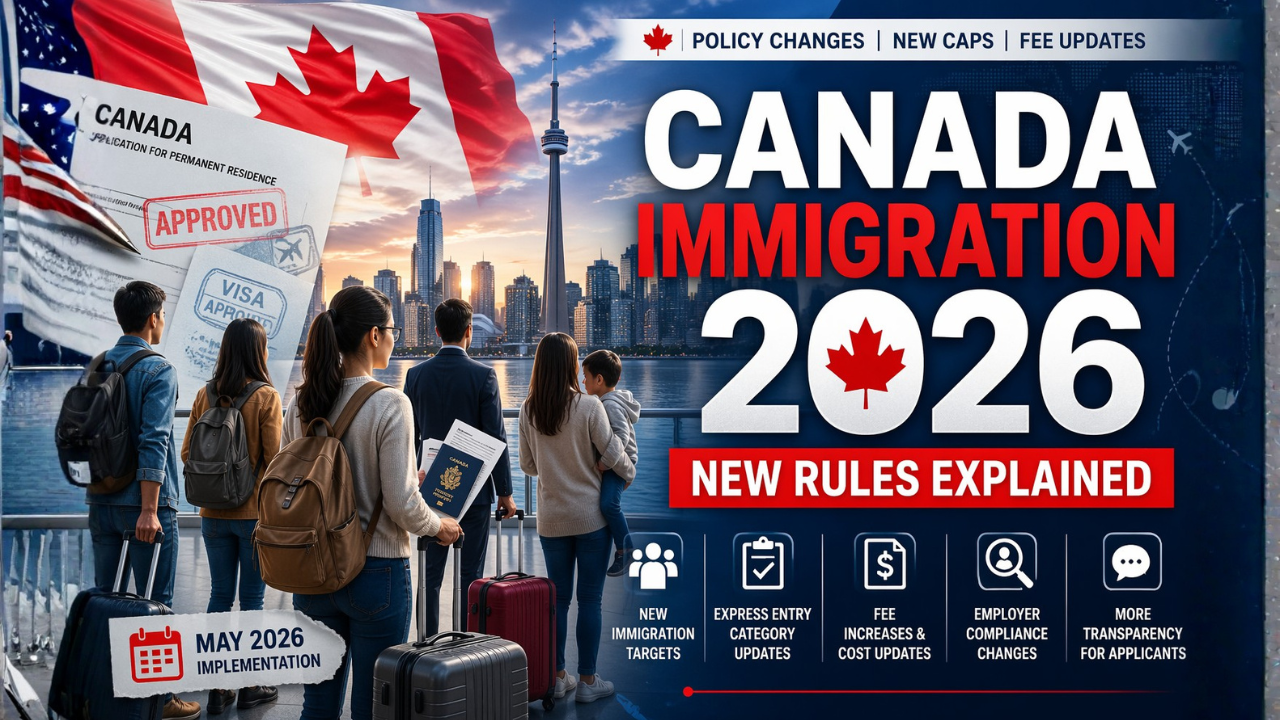
Synopsis: Starting May 2025, Canada will only issue visitor visas for tourism, business, or family visits. The new policy aligns with national immigration goals, tightening oversight and limiting misuse of Temporary Resident Visas (TRVs). This blog outlines the updated categories, eligibility criteria, and documentation needed for successful applications.
Beginning in May 2025, Canada will implement a comprehensive reform to its Temporary Resident Visa (TRV) system. Under this new policy, visitor visas will only be granted for three defined purposes: tourism and travel, business visits, and family or personal visits.
The move, led by Immigration, Refugees and Citizenship Canada (IRCC), aims to enhance immigration oversight and eliminate misuse of TRVs. By limiting approvals to clear, temporary reasons for entry, the government seeks to improve processing transparency and align immigration intake with Canada’s long-term national priorities. The changes are outlined in full detail on the official IRCC website.

Canada’s TRV Reform: What’s Changing in May 2025?
Overview of the New Categories
Under the updated framework, TRVs will only be issued for:
- Tourism and Travel
- Business Visits
- Family and Personal Visits
These changes aim to prevent unauthorized work, study, or long-term caregiving under the guise of visitor entry. The streamlined categories are expected to help reduce fraudulent applications and boost the integrity of Canada’s visitor visa program, as explained on the Visit Canada overview page.
Tourism and Travel
Who It’s For
This category is for travelers visiting Canada for leisure, exploration, or cultural experiences.
Eligibility Criteria
To qualify, applicants must show:
- Clear temporary intent and proof of return
- Financial means to fund their stay
- No plans to work or study
- Medical clearance if required
- Clean immigration record
Full eligibility details can be found on the tourist visa application page.
Permitted Activities
- Sightseeing and exploring provinces
- Attending public festivals or cultural events
- Visiting national parks and museums
- Joining short non-credit leisure courses
Required Documents
- A valid passport with at least six months’ validity
- Travel itinerary and accommodation proof
- Bank statements and employment verification
- Ties to the home country (property, dependents, etc.)
- Completed IMM 5257 form
Business Visits
Who It’s For
Designed for professionals, investors, or entrepreneurs conducting non-paid business activities in Canada.
Eligibility Criteria
- Purpose of visit must be business-related
- Must have business ties abroad
- Invitation from a Canadian company
- Proof of funds and return intent
- No intention to enter the Canadian job market
Detailed guidance is available on the IRCC business visitor section.
Permitted Activities
- Attending trade shows, meetings, or conferences
- Market inspections and partnership discussions
- Contract negotiations
- Participating in business-related training
Required Documents
- Passport and visa application
- Letter of invitation from the Canadian host company
- Company documents and business license
- Proof of travel, accommodation, and sufficient funds
- Documents proving business registration or employment
Family and Personal Visits
Who It’s For
This category is for individuals visiting relatives or close friends in Canada temporarily.
Eligibility Criteria
- Invitation from a Canadian citizen or permanent resident
- Proof of family or personal relationship
- Financial independence or sponsor support
- No plans to work, study, or engage in business
- Intent to return home after visit
More information can be found on IRCC’s family visit guidance page.
Permitted Activities
- Attending family events like weddings or funerals
- Visiting elderly or dependent relatives (unpaid)
- Staying with friends or relatives for short periods
- Participating in religious or cultural gatherings
Required Documents
- Valid passport and completed application
- Invitation letter and relationship proof
- Copy of inviter’s PR card or citizenship certificate
- Accommodation and travel details
- Bank statements or financial support letter from sponsor
Standardized Visitor Visa Application Process
Step-by-Step Guide
The TRV application process is uniform across categories, with full instructions available via the IRCC application portal.
Step 1: Select the Correct Category
Choose tourism, business, or family based on your intended visit and gather documents accordingly.
Step 2: Complete the Application Form
Use the IMM 5257 and include all supporting documents.
Step 3: Submit Biometrics
Schedule an appointment at a Visa Application Centre (VAC) to provide fingerprints and photos.
Step 4: Pay Fees
Pay CAD $100 for the application, plus CAD $85 for biometrics. See the complete IRCC fee schedule.
Step 5: Wait for Processing
Processing times vary—check real-time updates on IRCC’s processing time tool.
Step 6: Receive a Decision
Applicants receive a visa stamp or refusal letter with reasons.
Visa Validity and Extensions
Most TRVs are valid for up to six months, though officers may grant longer stays depending on purpose and travel history. To extend your stay, use the IMM 5708 form and apply at least 30 days before expiry.
Learn more about extension rules from the IRCC’s visitor stay extension guide.
Who Is Not Eligible Under the TRV Program?
Canada’s TRV program explicitly does not permit:
- Paid work or freelance jobs
- Enrolling in full-time education
- Long-term domestic or caregiving roles
- Asylum or refugee claims
- Entry by individuals with past immigration violations or serious criminal records
Review inadmissibility criteria to ensure you are eligible before applying.
Consequences of Misrepresentation
Violating TRV terms can result in:
- Immediate visa cancellation
- Deportation or removal proceedings
- Multi-year bans from Canada
- Permanent exclusion from PR or work permits
The IRCC takes fraud and misrepresentation seriously. Applicants must avoid submitting false documents or concealing facts. More on penalties is available in IRCC’s fraud prevention section.
Key Takeaways
- From May 2025, visitor visas are restricted to tourism, business, or family visits only
- Each visa purpose comes with its own set of eligibility conditions and supporting documentation
- TRVs do not permit study, paid work, or long-term caregiving
- Violating TRV terms may lead to serious immigration penalties
- Travelers must apply early and submit clear, truthful documentation for best results
Final Thought
Canada’s revamped visitor visa policy reflects a growing global trend: temporary immigration access must serve clear, legitimate purposes. While the country remains open to genuine visitors, stricter enforcement ensures the system isn’t misused.
Whether you’re planning a holiday, meeting business partners, or visiting loved ones, it’s critical to understand and follow the updated TRV rules. By doing so, you safeguard your trip—and your future access to one of the world’s most welcoming countries.
Need help preparing your application? Consider working with a Regulated Canadian Immigration Consultant (RCIC) to avoid errors or rejections.