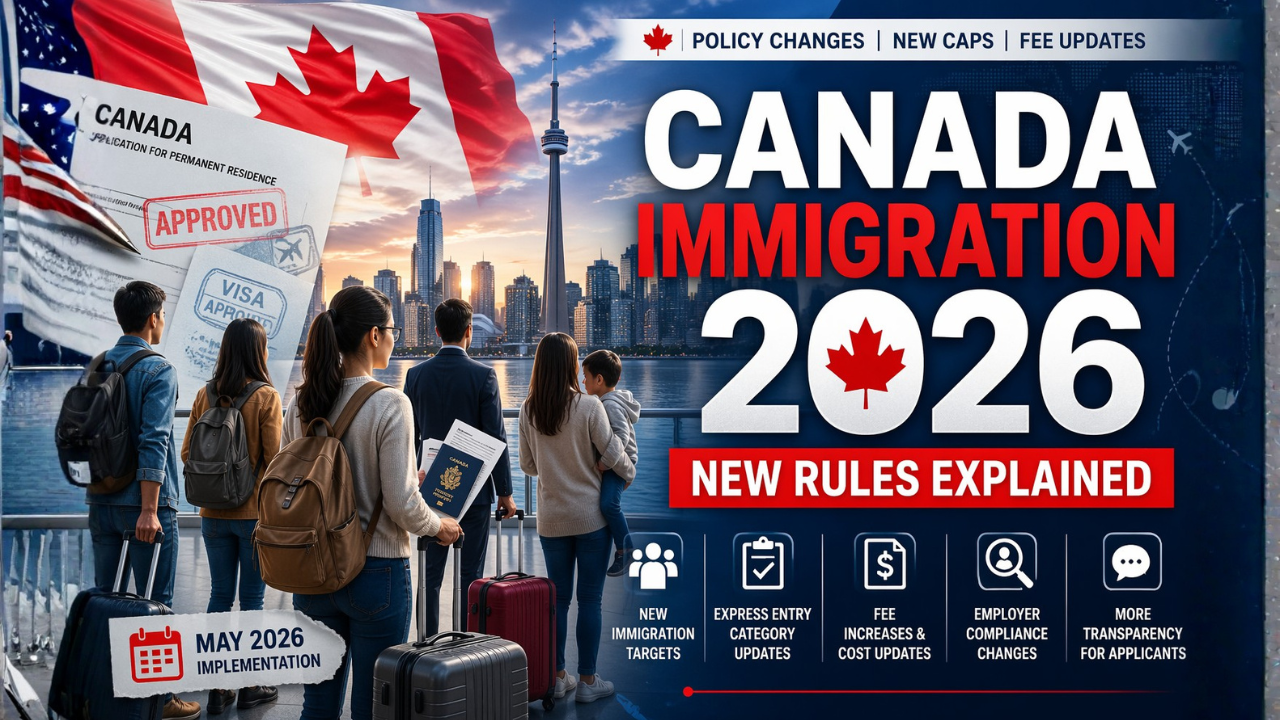
Synopsis: Canada immigration changes 2025 refocus policy toward stability, capped PR targets, tighter student intake, and regional settlement. The plan prioritizes skilled trades, strengthens PNPs, and aligns admissions with housing capacity. Applicants should target in-demand occupations, consider smaller provinces, and prepare finances, credentials, and language scores to improve PR chances. now
Canada’s immigration system is entering a defining phase of recalibration. The federal government has locked in medium-term targets that stabilize permanent resident intake, tighten international student admissions, and focus on regional balance. This shift reflects a growing need to ensure sustainability and public support for immigration, as outlined in the Government of Canada’s Immigration Levels Plan 2025–2027.

Canada’s Immigration Strategy at a Glance: What Changed—and Why
Over the past decade, Ottawa’s approach to immigration was guided by growth: “the more, the better.” In 2025, the message has shifted to “better, not bigger.” This marks a pivotal policy moment as the federal government balances demographic needs with economic, housing, and service capacity.
The Immigration, Refugees and Citizenship Canada (IRCC) is now re-orienting towards stabilization and sustainability, acknowledging three critical challenges:
- Housing affordability: Persistent supply shortages continue to push up rents in key cities like Toronto and Vancouver.
- Labour market precision: Employers increasingly need skilled trades workers rather than general labour or low-skill occupations.
- Public service strain: Healthcare, infrastructure, and education systems require time and resources to absorb population growth.
This new plan shifts focus from volume to value—building a system where immigration supports the nation’s infrastructure, economy, and long-term social cohesion.
New Immigration Level Targets
Steady Growth Instead of Rapid Expansion
The Immigration Levels Plan 2025–2027 projects 485,000 new permanent residents in 2024 and stabilizes annual targets at 500,000 through both 2025 and 2026. Rather than pushing for record-breaking growth, IRCC has chosen predictability—ensuring settlement services, housing, and infrastructure keep pace with population inflow.
Key motivations behind this “soft freeze” include:
- Systemic balance: Prevent backlogs and improve application processing times.
- Public confidence: Address affordability concerns that risk political and social backlash.
- Regional coordination: Give provinces time to expand capacity and update nomination allocations.
This strategic cap demonstrates that sustainable immigration is not about closing doors—it’s about keeping them open responsibly.
Why a Stable Target Benefits Applicants
For prospective immigrants, stability means clarity and planning. Applicants can better predict draw patterns, provincial nominations, and occupation demand. By prioritizing sustainability, the government ensures that immigration continues to drive Canada’s economy—without fueling inequality or housing strain.
Strategic Distribution and Focus on Skilled Trades
Balancing Settlement Across Provinces
One of the biggest policy pivots in 2025 is geographic. The IRCC wants newcomers to move beyond Toronto, Vancouver, and Montréal, promoting population and workforce growth in regions that genuinely need it. The federal government has empowered provinces to play a stronger role through Provincial Nominee Programs (PNPs) and regional pilot initiatives.
These reforms aim to fix a long-standing issue: nearly 60% of newcomers settle in just three cities. By incentivizing regional migration, Ottawa hopes to strengthen smaller economies, improve housing balance, and fill skill gaps in construction, manufacturing, and healthcare.
Category-Based Express Entry: A Precision Tool
Under the Express Entry: Category-Based Selection, IRCC now targets applicants with specific skills critical to Canada’s economy—especially tradespeople. Electricians, welders, mechanics, and construction supervisors are seeing higher invitation rates due to housing and infrastructure demand.
This targeted approach aligns with Canada’s commitment to building 250,000 new homes annually to address affordability. Skilled tradespeople are the backbone of this effort. Moreover, candidates with French-language proficiency are also prioritized to support growth in francophone communities outside Quebec.
Key benefits for trades applicants:
- Faster Invitations to Apply (ITAs) for in-demand occupations.
- Streamlined credential recognition through provincial partnerships.
- Improved long-term employability due to labour shortages in housing and public infrastructure projects.
Encouraging Regional Mobility
Provinces such as Alberta, Nova Scotia, and Manitoba have revamped their PNP streams to attract foreign workers in construction, healthcare, and clean technology. Smaller cities—like Moncton, Regina, and Windsor—are offering enhanced settlement services, affordable living costs, and stronger employer connections to make regional life more appealing.
For applicants, choosing a province strategically is now a decisive advantage for PR success.
Review of the International Student Program
From Volume to Value
The surge in international students—over 1 million study permit holders by late 2023—sparked housing and resource pressures. In response, the federal government began a comprehensive review of the International Student Program to safeguard quality and align enrollment with Canada’s real capacity.
Key updates in 2025 include:
- A national intake cap on new study permits distributed among provinces based on infrastructure and housing capacity.
- Institutional accountability, requiring universities and colleges to provide adequate housing and student services.
- PGWP eligibility reforms, linking post-graduate work permits to high-demand programs rather than generic diplomas.
These reforms shift the program from being a mass entry route to one that ensures genuine students and labour-market-aligned graduates.
What Students Should Know
- Choose recognized Designated Learning Institutions (DLIs) with proven post-graduation pathways.
- Align study programs with priority sectors such as healthcare, construction technology, and advanced manufacturing.
- Expect stronger documentation requirements, including proof of housing and financial stability.
These measures protect both students and Canada’s long-term education reputation.
The Demand-Side Reality: Housing, Services, and Public Support
Housing Pressure and Policy Response
Even with reforms, the housing challenge remains a dominant narrative in Canada’s immigration debate. According to the Canada Mortgage and Housing Corporation’s 2025 Mid-Year Rental Market Update, major urban areas like Toronto and Vancouver still face record-low vacancy rates below 2%. However, mid-tier cities like Calgary and Halifax are showing improvement as federal housing acceleration programs take effect.
To offset pressure, Ottawa and provinces are investing billions in rapid modular housing, construction apprenticeships, and land-release programs. The government’s Housing Accelerator Fund aims to enable municipalities to build faster and densify urban zones without sprawl.
Population Growth Slowing for the Right Reasons
After years of record surges, Statistics Canada’s 2025 population data shows moderated growth—Canada’s slowest since early pandemic years. This slowdown indicates success in controlling temporary resident inflows while maintaining strong permanent immigration levels.
Lower short-term numbers allow the system to “catch its breath.” It eases demand on housing, healthcare, and education infrastructure, ensuring that newcomers integrate successfully rather than struggle in overcrowded markets.
Program-by-Program Impact in 2025
Express Entry
The all-program draw system remains competitive, but category-based draws for trades and French speakers offer more accessible cut-offs. Candidates should focus on language scores, Canadian work experience, and in-demand job offers to increase CRS potential.
Federal Skilled Trades Program (FSTP)
This pathway gains new prominence in 2025 as construction, industrial, and maintenance trades drive the national housing agenda. Applicants should prioritize Red Seal certification or equivalent provincial recognition to stand out in targeted draws.
Provincial Nominee Programs (PNPs)
Expect steady growth in PNP allocations for regions prioritizing healthcare, clean energy, agri-food, and advanced manufacturing. Several provinces have begun offering rural renewal incentives, subsidized housing, and job matching services for newcomers willing to settle outside major cities.
International Students
Intake caps and PGWP reforms mean fewer approvals—but higher post-graduation success rates. Students in STEM, healthcare, and skilled trades programs retain a strong edge for work and PR opportunities.
Housing and Affordability: What Newcomers Need to Know
Housing affordability now ranks as a policy determinant, not just a background issue. In major hubs, rent for a one-bedroom apartment averages $2,600/month in Toronto and $2,700 in Vancouver. Choosing smaller provinces like Saskatchewan, Manitoba, or Nova Scotia can cut living costs by up to 40%.
Applicants are encouraged to demonstrate affordability preparedness in their applications, especially when showing settlement funds or housing arrangements. The CMHC data emphasizes that sustainable immigration requires housing readiness as part of successful integration.
Why a “Pause” Is Really a Re-Alignment
Despite the perception of a slowdown, Canada’s approach is not anti-immigration—it’s pro-efficiency. By stabilizing PR targets and moderating temporary inflows, Ottawa ensures that immigration continues to deliver economic growth without eroding affordability or public trust.
It’s a recalibration designed to make immigration last—politically and practically.
Action Plan for 2025 Applicants
- Align Your Profile with Express Entry Categories
Review IRCC’s category-based draws to target occupations in demand, especially skilled trades. - Be Regionally Strategic
Study PNP priority lists and select provinces matching your professional profile. Regional willingness often equals faster PR pathways. - Plan Your Finances and Housing Early
Use CMHC’s rental data to estimate living costs. Demonstrating realistic settlement planning strengthens applications. - Strengthen Language and Credential Recognition
Enhance IELTS or TEF scores and pursue recognized trade certifications aligned with Canadian standards. - Monitor Policy Bulletins
Follow the IRCC newsroom for official updates—policy timing often determines success.
Conclusion: Canada’s Smarter Immigration Era
Canada’s immigration system is not shrinking—it’s maturing. The 2025 reforms signify a shift from raw expansion to strategic equilibrium. By refining PR targets, emphasizing regional diversity, and rewarding skilled trades, the country is building an immigration model that works for both newcomers and Canadians.
For applicants, the winning approach is no longer speed—it’s alignment. Match your occupation to real needs, be flexible about location, and prepare for sustainable integration. The doors remain open, but success now depends on strategy, not luck.