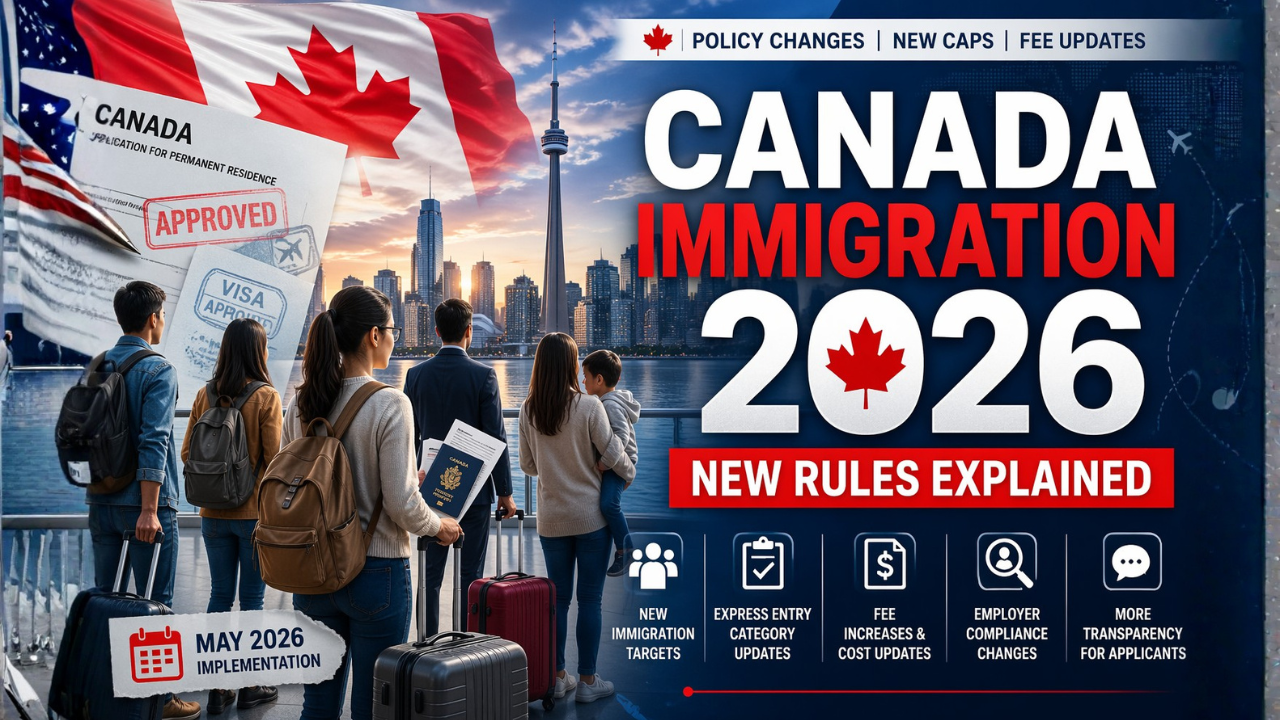
Synopsis: Canada has extended the Economic Mobility Pathways Pilot (EMPP) through 2025 to combat national labour shortages while offering skilled refugees a route to permanent residency. This blog explores the impact, growth, and future of the EMPP in transforming Canada’s workforce and advancing inclusive, humanitarian immigration policy.
Why Canada’s EMPP Extension is a Game Changer for Immigration and Workforce Gaps
In a global climate marked by mounting refugee crises and talent shortages, Canada’s decision to extend its Economic Mobility Pathways Pilot (EMPP) through the end of 2025 could not be more timely. This groundbreaking initiative bridges humanitarian commitment with economic pragmatism—offering displaced professionals an opportunity to legally resettle in Canada while filling vital gaps in the workforce. As of March 2025, over 970 individuals have already been welcomed through this model. With a fresh application cap of 950 set for 2025, the EMPP is not just a pilot—it’s a glimpse into the future of immigration policy.

Understanding the EMPP: Bridging Refugee Resettlement and Labour Market Needs
What is the Economic Mobility Pathways Pilot (EMPP)?
Launched in 2019, the EMPP was designed to enable skilled refugees and other displaced individuals to immigrate to Canada through existing economic immigration pathways. Unlike traditional refugee resettlement, EMPP integrates candidates into skilled labour roles, allowing them to apply for permanent residence from the outset.
This model is not charity—it’s a recognition of talent under adversity. Applicants under EMPP must meet economic immigration criteria, including qualifications, language skills, and job offers, just like any skilled worker program. They are simply offered additional support to overcome barriers tied to their displacement.
For detailed eligibility criteria, refer to IRCC’s EMPP page.
How Is It Different from Traditional Refugee Pathways?
While traditional resettlement programs focus on vulnerable cases and rely heavily on government or private sponsorships, the EMPP allows candidates to leverage their professional skills as a primary immigration criterion.
Key distinctions include:
- Applicants need job offers from Canadian employers.
- EMPP provides document flexibility (e.g., alternative ID proof).
- Refugees apply under economic streams like the Federal Skilled Worker Program or Provincial Nominee Program, with added EMPP support.
This model aligns with Canada’s Global Refugee Sponsorship Initiative (GRSI) and represents a new era in policy innovation.
Sectors Benefitting Most: Where Refugee Skills Meet Canadian Shortages
Healthcare: The Backbone of the EMPP
Healthcare has emerged as the largest beneficiary, with over 30% of EMPP admissions working in this critical sector. Canada’s aging population and post-pandemic medical staffing challenges have created urgent demand for:
- Registered Nurses
- Personal Support Workers
- Laboratory Technicians
- Paramedics
According to Statistics Canada, healthcare job vacancies exceeded 90,000 in early 2025, making refugee talent not just welcome—but essential.
Construction and Skilled Trades
The Canadian Construction Association estimates a shortage of 300,000 workers by 2030. EMPP participants with backgrounds in:
- Electrical work
- Plumbing
- Carpentry
- General contracting
are being matched with employers desperate to maintain infrastructure and housing projects, particularly in fast-growing provinces like Alberta and British Columbia.
Food Services and Hospitality
With tourism rebounding and labour shortages continuing, the food service sector is increasingly turning to EMPP. Refugees trained as chefs, servers, or restaurant managers are finding new starts in:
- Regional hospitality businesses
- Franchise chains in small towns
- Event catering firms
This sector is especially relevant for refugees with transferable soft skills and basic English or French proficiency.
2025 Expansion: What the New Application Cap Means
New Targets, New Opportunities
The recent announcement of a 950-application cap for 2025 marks a significant scale-up from previous years. This quota reflects the federal government’s confidence in the program’s dual benefits—supporting vulnerable populations and boosting the economy.
This change aligns with Canada’s broader Immigration Levels Plan (2023–2025), which forecasts annual intakes of over 465,000 new permanent residents, a significant proportion of whom will come through economic streams.
View the full Immigration Plan at Canada’s official immigration targets.
Simplified Processes for Employers
To encourage participation, Canada has introduced simplified hiring processes for EMPP candidates. Employers now benefit from:
- Reduced documentation requirements
- Streamlined Labour Market Impact Assessment (LMIA) waivers
- Pre-vetted candidate pools
This enables SMEs and rural employers to hire faster and more reliably.
Explore more at IRCC’s Employer Guide to EMPP.
Humanitarian Impact: Beyond Numbers and Resumes
Stories of Transformation
The EMPP is more than a policy—it’s a humanitarian innovation. From Syrian engineers in Nova Scotia to Congolese nurses in Manitoba, the program has allowed hundreds of families to transition from displacement to dignity.
Take, for example, a Yemeni IT specialist placed in Ontario in 2023. With the support of EMPP, he secured a full-time job, moved his family to safety, and is now mentoring other newcomers in the tech sector.
Addressing Global Displacement Responsibly
There are over 35 million refugees worldwide, according to the UNHCR. While humanitarian resettlement remains vital, economic integration offers a scalable, self-sustaining solution.
Canada’s EMPP exemplifies what refugee resettlement 2.0 can look like—one that’s anchored in dignity, mutual benefit, and economic reality.
Challenges and Considerations for EMPP in 2025
Application Bottlenecks
Despite its promise, EMPP applications can be complex. Barriers include:
- Limited access to required documentation (diplomas, passports)
- Language testing costs
- Employer hesitancy due to misconceptions about refugee status
More funding and outreach are required to streamline support across all provinces.
Need for Provincial Coordination
Provinces with aggressive immigration targets like Ontario, Saskatchewan, and Nova Scotia need to align better with federal EMPP strategies to ensure long-term integration support for newcomers.
Housing, community support, and credential recognition must be scaled in tandem with intake targets.
Future Outlook: EMPP as a Blueprint for Global Refugee-Worker Mobility
Can EMPP Be Replicated Globally?
Canada’s model is already influencing discussions at the Global Refugee Forum and among EU migration policymakers. If scaled responsibly, EMPP-style initiatives could be transformative in:
- Rebuilding war-torn economies
- Filling international talent shortages
- Rebalancing the global refugee system from dependence to dignity
Integration with Canada’s 2030 Vision
The EMPP supports Canada’s long-term goals for inclusive growth, population stabilization, and rural revitalization. By empowering displaced workers, the government is investing in:
- Social cohesion
- Economic innovation
- Regional development
These benefits go beyond short-term labour relief—they’re nation-building strategies.
Conclusion: Canada’s EMPP Is Redefining Immigration for a Changing World
The expansion of the Economic Mobility Pathways Pilot through 2025 marks a defining moment in global immigration policy. By uniting humanitarian values with economic strategy, Canada is not only offering skilled refugees a second chance—it is also securing its own future. In a world increasingly marked by displacement and demographic shifts, this model offers a bold, balanced, and replicable framework.
For informed workers, advocates, and policymakers alike, the EMPP is more than an immigration program. It is a statement: that talent can be found anywhere—even in displacement—and opportunity should know no borders.
FAQs
- What is the Economic Mobility Pathways Pilot (EMPP) in Canada?
Answer:
The EMPP is a Canadian immigration initiative that allows skilled refugees and displaced individuals to apply for permanent residence through economic immigration streams. It supports sectors facing labour shortages by matching qualified candidates with Canadian employers. Learn more from IRCC’s EMPP page.
- Who is eligible to apply under Canada’s EMPP program?
Answer:
Applicants must be recognized as refugees or displaced persons and meet the eligibility criteria of one of Canada’s economic immigration programs, such as the Federal Skilled Worker Program or Provincial Nominee Program. They must also have relevant work experience, language proficiency, and a valid job offer from a Canadian employer.
- How does EMPP differ from Canada’s regular refugee resettlement program?
Answer:
Unlike traditional resettlement, which is humanitarian-focused, EMPP enables refugees to immigrate through economic channels by leveraging their professional skills. EMPP applicants are assessed for their ability to contribute to Canada’s workforce rather than solely for vulnerability.
- What types of jobs are available under the EMPP?
Answer:
Most EMPP candidates are placed in high-demand sectors such as:
- Healthcare (e.g., nurses, personal support workers)
- Construction (e.g., electricians, carpenters)
- Food services (e.g., cooks, servers)
These roles align with Canada’s labour market shortages.
- What is the application cap for the EMPP in 2025?
Answer:
As of March 2025, the Government of Canada has increased the job offer stream cap to 950 applications. This allows more skilled refugees to participate in the program and contribute to the Canadian economy.
- Do applicants need a job offer to apply under the EMPP?
Answer:
Yes, a valid job offer from a Canadian employer is a core requirement for EMPP applicants. This offer must align with the eligible occupation list and support the candidate’s application under an economic immigration stream.
- What support does Canada provide to EMPP applicants?
Answer:
Canada offers tailored support for EMPP applicants, including:
- Flexibility in documentation requirements
- LMIA exemptions for employers
- Partner organizations that assist with relocation, credential recognition, and employment matching
- Is there a fee to apply under the EMPP?
Answer:
While Canada does not charge extra for the EMPP itself, applicants must still pay standard fees associated with economic immigration streams, including language tests and credential assessments. Some costs may be subsidized by partner organizations.
- Can EMPP applicants bring their family to Canada?
Answer:
Yes, successful EMPP applicants can include their spouse and dependent children in their application for permanent residence, enabling family reunification as part of the resettlement process.
- How long does it take to process an EMPP application?
Answer:
Processing times vary depending on the economic stream used and the applicant’s specific circumstances. On average, EMPP applications may take 6 to 12 months, but applicants benefit from priority processing compared to regular economic immigration cases.