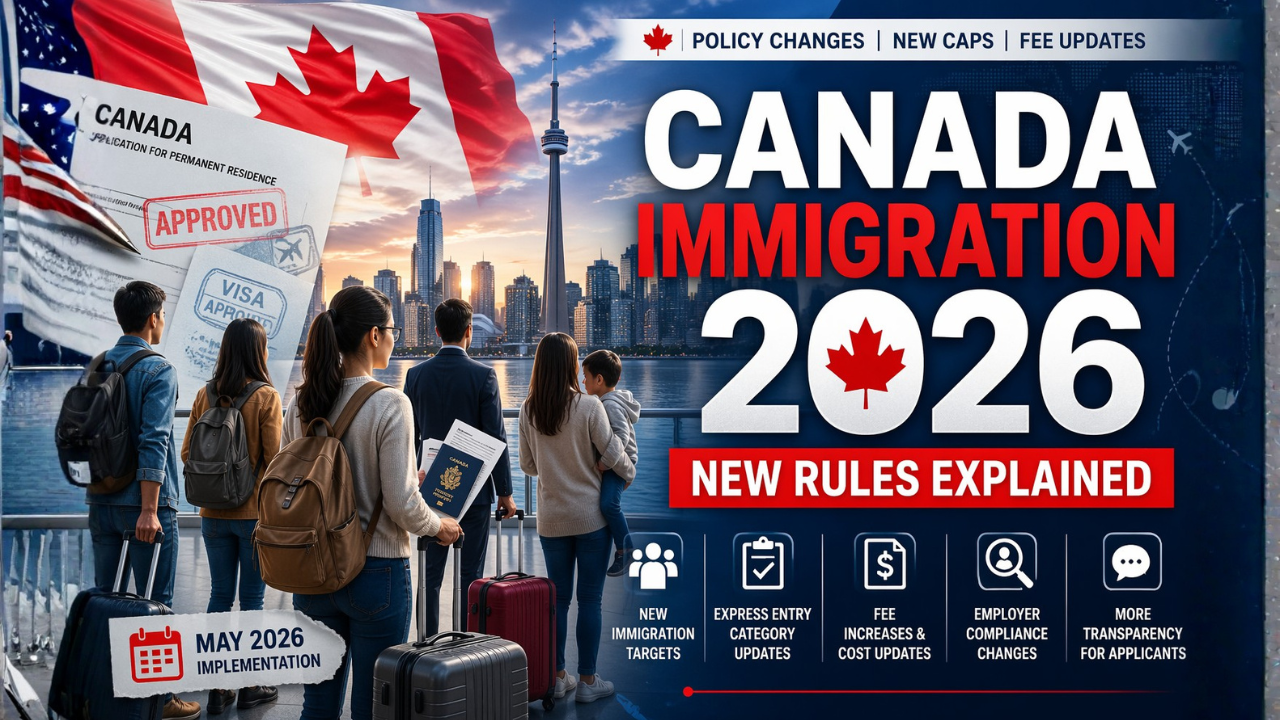
Synopsis: Canada’s 2026 Express Entry reforms propose three new immigration categories: senior managers, scientists and researchers, and allied military personnel. These shifts reflect national priorities in leadership, innovation, and defense. International students, skilled workers, and employers should prepare now as these changes may reshape permanent residency pathways.
Why Canada’s Proposed 2026 Express Entry Changes Matter Now
Canada’s immigration system is once again on the verge of transformation. The federal government is considering three new occupational categories for its flagship Express Entry system in 2026:
- Senior managers and executives
- Scientists and researchers
- Military personnel from allied nations
These proposals—now under public consultation until September 3, 2025—signal a strategic pivot in Canada’s talent acquisition priorities. But why the urgency? In a tightening global race for skilled labour, countries are competing to secure top-tier leadership, research talent, and defense expertise before others do.
The implications extend far beyond these three roles. For international students, skilled workers, and even sectors like healthcare and construction, the 2026 category-based selection will influence which candidates get Invitations to Apply (ITAs) for permanent residence.

Understanding the Proposed 2026 Express Entry Categories
The Immigration, Refugees and Citizenship Canada (IRCC) consultation document outlines three entirely new categories under consideration for 2026. These categories are designed to strengthen Canada’s economic growth, research capabilities, and national security readiness.
Senior Managers – Canada’s Push for Leadership Excellence
Who Qualifies as a Senior Manager?
According to IRCC’s definition, senior managers are highly skilled professionals who oversee company operations, manage strategic objectives, and lead employee teams. These individuals often hold C-suite titles (CEO, CFO, CTO), or senior departmental roles in multinational corporations, SMEs, or public organizations.
Why Canada Wants Them
IRCC argues that bringing in global leadership talent will:
- Introduce new perspectives and global best practices.
- Accelerate digital transformation in Canadian enterprises.
- Enhance organizational productivity and competitiveness.
- Drive economic growth by fostering high-level decision-making capabilities.
This isn’t just about filling vacancies—it’s about reshaping Canada’s economic trajectory by embedding leadership expertise from around the world into its corporate and public sectors.
Scientists and Researchers – Fueling Canada’s Innovation Economy
Potential Scope of the Category
While IRCC has not yet specified which subfields will be included, it is clear that the category will target high-impact research disciplines such as:
- Biotechnology and life sciences
- Artificial intelligence and machine learning
- Climate science and renewable energy
- Aerospace and defense technology
- Advanced manufacturing and materials science
Economic and Strategic Rationale
Canada’s innovation ecosystem relies heavily on research breakthroughs to remain globally competitive. Attracting top research talent will help:
- Stimulate productivity and economic performance.
- Bridge critical skill gaps in STEM and R&D-intensive industries.
- Strengthen Canada’s global reputation as a research hub.
Government data shows that Canada’s R&D spending accounts for just 1.8% of GDP—lower than OECD leaders like South Korea (4.9%) and Israel (5.4%). This category aims to close that gap.
Military Personnel – Supporting National Security and Defence
Who Would Qualify?
This proposed category would target highly skilled military recruits from allied nations, likely focusing on candidates with specialized expertise in areas like cyber defense, logistics, engineering, and intelligence.
Strategic Benefits
The Canadian Armed Forces (CAF) faces persistent recruitment challenges. By attracting foreign military talent, Canada could:
- Strengthen defense readiness in a volatile global security environment.
- Fill critical technical and leadership roles.
- Enhance interoperability with allied military forces.
This proposal also reflects a broader geopolitical reality—Canada is aligning immigration policy with national security objectives.
Continuity from 2025: Categories Likely to Remain in 2026
While the three new categories are headline news, IRCC has indicated it will likely retain certain 2025 categories due to ongoing labour shortages and demographic goals.
Francophone Immigration – Sustaining Canada’s Bilingual Identity
Canada’s 2025–2027 Immigration Levels Plan sets ambitious targets for French-speaking permanent residents outside Quebec:
- 5% in 2025
- 5% in 2026
- 10% in 2027
Maintaining Francophone immigration as a priority category will:
- Strengthen Canada’s linguistic duality.
- Support community vitality in minority French-speaking regions.
- Address bilingual workforce needs in federal and provincial services.
Sectors with Persistent Labour Shortages
Canada’s tight labour market means some sectors will remain priorities in 2026:
- Healthcare – Addressing physician, nurse, and allied health professional shortages.
- Skilled Trades – Especially construction, to help address the housing crisis.
- Education – Filling teacher shortages in K-12 and postsecondary institutions.
- STEM – Supporting innovation, digital infrastructure, and advanced manufacturing.
- Agriculture & Agri-Food – Ensuring food security and export competitiveness.
In 2025, these sectors formed a core part of category-based draws, and IRCC signals no intent to scale them back.
Impact on International Students and PGWP Eligibility
One often-overlooked aspect of category-based selection is its impact on Post-Graduation Work Permit (PGWP) eligibility. Since 2024, Canada has tied PGWP eligibility for graduates of non-exempt postsecondary programs to labour market-aligned fields of study.
- Currently: 119 fields of study are PGWP-eligible.
- Removed in 2025: 178 fields of study deemed misaligned with economic needs.
If the new 2026 Express Entry categories prioritize leadership, research, and defense-related fields, PGWP eligibility could shift again. Bachelor’s, master’s, and doctoral graduates remain exempt from these field requirements, but many diploma and certificate holders could be affected.
The next PGWP-eligible field list is expected early 2026.
How Category-Based Selection Works
Introduced in 2023, category-based selection allows IRCC to hold targeted Express Entry draws for candidates with specific skills, work experience, or language abilities.
In 2025, the official categories were:
- French language proficiency
- Healthcare and social services
- Agriculture and agri-food
- STEM
- Trades
- Education (added in 2025)
In these draws, CRS cut-off scores are often significantly lower than general draws. For example:
- CEC general draw: CRS 534
- Healthcare occupations draw: CRS 475
For eligible candidates, this means a faster and more accessible PR pathway.
What Stakeholders Are Saying
IRCC is actively seeking feedback from:
- Employers in critical sectors
- Labour market economists
- Professional associations
- Immigration lawyers and consultants
A key debate is whether Express Entry should focus more on talent already in Canada (e.g., PGWP holders, TFWs) or recruit directly from overseas.
Some experts argue that domestic talent integration reduces settlement costs, while others say overseas recruitment brings in fresh skillsets and global networks.
Potential Challenges and Criticisms
While the proposed categories have merit, they also raise questions:
- Defining scope – Which scientists or senior managers will qualify?
- Integration readiness – Will foreign military recruits adapt smoothly to CAF culture?
- Equity concerns – Will lower-income skilled workers be disadvantaged?
- Overconcentration risk – Could focusing on high-profile roles overlook other critical shortages?
These issues underscore why the consultation period until September 3, 2025 is crucial.
Next Steps for Skilled Workers and Students
For those aiming to immigrate under the 2026 categories:
- Follow IRCC updates closely through the official consultation page.
- Assess eligibility for senior management, research, or defense-related experience.
- Prepare documentation such as employment references, academic publications, or military service records.
- Track PGWP changes if you are an international student.
- Engage in consultation by submitting feedback before the deadline.
Conclusion – A New Era for Express Entry
Canada’s potential 2026 Express Entry reforms are more than administrative tweaks—they are a recalibration of national priorities. By targeting leaders, innovators, and defense experts, IRCC aims to position Canada as a magnet for high-impact talent in an increasingly competitive global market.
For skilled workers and international graduates, understanding these changes early is key to strategic career planning. The clock is ticking toward September 3, 2025—have your say, and position yourself for the opportunities ahead.
Frequently Asked Questions (Canada — Express Entry proposed categories for 2026)
1. What are the new Express Entry categories Canada is proposing for 2026?
Canada is considering adding three new category-based streams for Express Entry in 2026: Leadership (senior managers), Research & Innovation (scientists and researchers), and National Security & Defence (military personnel from allied countries).
2. Why is Canada proposing these new categories?
These categories are intended to attract high-caliber talent that can bolster economic growth, innovation, and national security. For example, senior managers could help drive digital transformation, researchers fuel R&D productivity, and military professionals support defense capabilities.
3. How will these new categories affect Express Entry eligibility?
Category-based draws allow IRCC to invite candidates who meet specific occupational criteria — on top of the standard Express Entry requirements (like CRS score and program eligibility). The proposed categories would create new targeted draw opportunities for those specific professions.
4. When is Canada accepting public feedback on these proposals?
Public consultation is open until September 3, 2025. IRCC will consider feedback before deciding whether to implement these new categories in 2026.
5. Will existing categories remain in place in 2026?
Yes—IRCC plans to continue prioritizing existing categories, including: Francophone immigration outside Quebec (targets rising), labour-shortage sectors like healthcare, skilled trades, education, STEM, and agriculture & agri-food.
6. How do these proposed changes impact international students?
Express Entry categories influence PGWP eligibility for programs aligned with labour needs. As categories shift, IRCC may adjust which fields of study are eligible for PGWP. The next update is expected in early 2026.
7. Could these new categories lower CRS cutoff scores?
Category-based draws often feature lower CRS cutoffs compared to general or CEC draws. If approved, the new categories may similarly offer faster pathways for eligible professionals.
8. Who is eligible under the new categories?
While IRCC hasn’t finalized the eligibility criteria, the general definitions include: senior managers leading teams and operations; scientists/researchers in high-impact disciplines; and military personnel with specialized skills from allied countries.
9. How can applicants prepare for these potential changes?
Prospective candidates should: monitor IRCC updates and consultation outcomes; confirm if their experience aligns with proposed categories; prepare documentation (e.g., leadership roles, research portfolios, service records); and stay alert to PGWP field changes to adjust career plans accordingly.
10. What’s the timeline for the policy to take effect?
Assuming consultation feedback is addressed, IRCC may implement these new category-based draws in 2026. Exact details—including eligibility criteria, CRS cutoffs, and draw schedules—will likely be announced later in 2025 or early 2026.