Synopsis: Australia’s student visa system is facing unprecedented strain, driven by nearly 50,000 appeals stuck at the ART and the new MD 115 priority model. This article examines the causes, data, institutional impacts, and long-term consequences for students, education providers, and Australia’s global competitiveness.
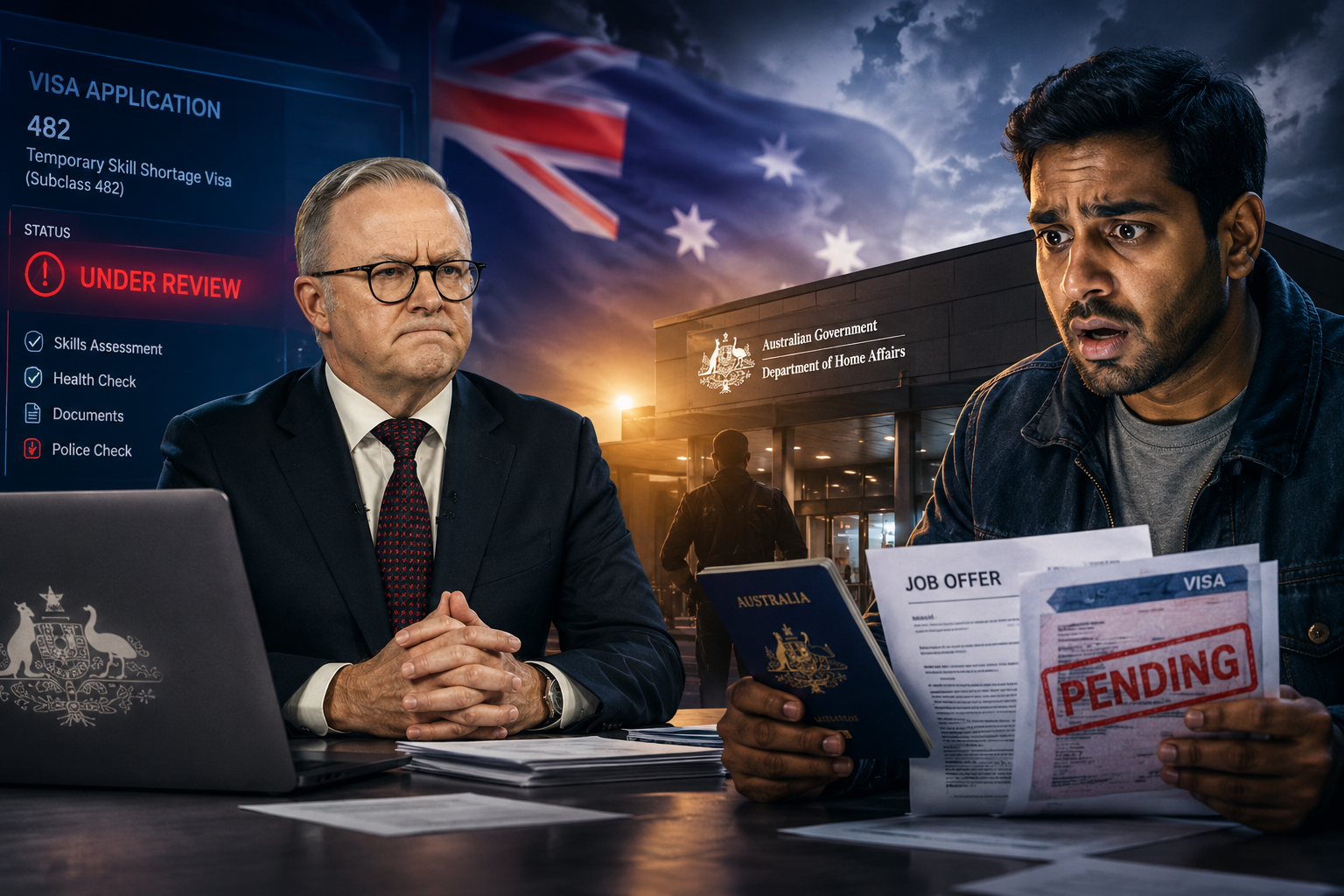
Australia’s student visa system is confronting one of its most significant stress points in recent history. Nearly 50,000 student visa appeals are now stuck in the Administrative Review Tribunal (ART), with many applicants—especially from India—waiting months or even years for a decision. The appeal backlog is growing faster than the system can respond, raising concerns about fairness, economic impact, and Australia’s reputation as a global education destination. According to the Department of Home Affairs, international students contribute billions annually to the Australian economy, yet the very system responsible for processing their visas is under severe pressure.
Beyond the backlog itself, a new reform—Ministerial Direction 115 (MD 115)—has reshaped visa processing priorities, introducing a tier-based model that rewards institutions that stay within enrolment quotas while delaying applications from those that exceed them. The combined effect of structural strain and policy reform has created a challenging environment for migrants, universities, and policymakers alike.
This long-form analysis breaks down the causes, consequences and broader implications of Australia’s student visa crisis—using government data, staffing figures, tribunal evidence and policy context to provide an informed, critical, and comprehensive understanding.

Understanding the Policy/Event
Australia’s student visa system is made up of two core components:
- Primary visa processing by the Department of Home Affairs (DHA)
- Appeals and reviews conducted by the Administrative Review Tribunal (ART)
While primary processing already faces delays, the more serious bottleneck has emerged at the ART—the final recourse for students who challenge a negative visa decision. The ART is legally obligated to review cases independently, but soaring caseloads have dramatically slowed this process.
As of 30 June 2025, the ART reported 46,590 pending student visa decisions, representing 38% of all migration-related matters. These numbers indicate systemic stress beyond ordinary fluctuations in migration flows.
Why It Is Happening
Why has the system reached breaking point? Multiple factors converge:
1. Rising refusal rates
The Department of Home Affairs has tightened scrutiny of Subclass 500 visa applications due to concerns about fraud, misuse of education pathways, and pressure on housing markets. This has led to more refusals—and consequently, more appeals.
2. Shift in migration patterns
Australia’s post-pandemic recovery attracted a surge of international students, particularly from India, Nepal, China, and the Philippines. Universities, vocational colleges and private institutes expanded enrolments rapidly, but many lacked the compliance track record expected by DHA.
3. Resource shortages at the ART
The ART’s leadership has repeatedly highlighted that staffing levels are insufficient. Although the tribunal has budgeted for 430 full-time equivalent roles, it had only 281.2 staff as of 31 October 2025—a shortfall of more than 97 positions.
4. Introduction of MD 115
Ministerial Direction 115 restructured visa processing priorities and created institutional competition for faster timelines. Institutions exceeding their quotas were pushed into lower priority categories, slowing down thousands of applications.
5. Higher volume of migration reviews overall
The ART’s caseload grew by 10% in just three months, rising to 124,000 matters across migration and protection categories. Student visas are now just one part of a much larger systemic overload.
These combined pressures have produced a situation in which both the front end (visa processing) and back end (appeal reviews) are severely delayed.
Key Reforms or Changes
The most consequential policy change in Australia’s student visa landscape is the introduction of Ministerial Direction 115 (MD 115).
Detailed Breakdown
MD 115 replaces the former MD 111 directive and introduces tier-based processing speeds tied directly to institutional behaviour. Under MD 115, the Department of Home Affairs assesses whether education providers are staying within their allocated “New Overseas Student Commencements” for the year.
The tiers:
Priority 1 (Fastest Processing)
- Institutions using less than 80% of their allocated quota
- Considered low-risk
- Strong compliance and manageable intake levels
Priority 2 (Standard Processing)
- Institutions using 80–115% of their quota
- Neutral risk
- Processing times depend on broader demand
Priority 3 (Slowest Processing)
- Institutions exceeding 115%
- Viewed as high-risk
- Applications linked to these institutions may experience severe delays
Why MD 115 Was Introduced
The government implemented MD 115 amid concerns that:
- high student visa numbers were contributing to housing shortages
- education providers were over-enrolling international students
- migration pathways were being misused
- compliance checks were insufficient
- visa fraud cases had increased
The Australian Parliament debated these challenges extensively through Senate Estimates hearings, pressing the DHA and ART for explanations.
How MD 115 Works in Practice
Under the new system:
- DHA examines each institution’s enrolment performance.
- Visa officers apply priority tiers automatically.
- Applications linked to over-enrolled providers move slower.
- Institutions must monitor monthly enrolment performance.
- Students are directly affected by institutional behaviour.
This places a heavy administrative responsibility on universities and colleges—and could reshape the entire international education sector.
Data, Stats, and Trends
Understanding the crisis requires examining the numbers behind it.
What the Numbers Show
1. Student visa matters represent more than 1/3 of ART workload
- 46,590 student visa appeals
- 13,000 cases pending 1–2 years
- Student visas = 38% of migration caseload
2. Overall caseload surge
- Total ART matters: 124,000
- Migration matters: 69,903
- Protection matters: 40,413
- 10% caseload increase in just 3 months
3. Staffing shortages
The ART must process 124,000 cases with only 281 staff—far below the recommended 430 FTE. The Administrative Review Tribunal publicly acknowledged delays due to a lack of triaging resources.
4. High rate of overturned decisions
Between July and October 2025:
- 3,886 finalised cases
- 44% resulted in a changed decision
This suggests significant issues with frontline decision-making at DHA.
5. Government targets
The tribunal plans to complete 71,045 cases by year-end, though feasibility remains uncertain given current staffing levels.
6. International students’ demographic breakdown
According to the Australian Bureau of Statistics, India remains the largest source of international students, followed by China, Nepal, and Vietnam.
7. Housing and employment pressures
The influx of students contributed to rising rental demand in major cities such as Sydney and Melbourne, complicating affordability issues.
8. Processing times fluctuate by institution
MD 115 has created large discrepancies:
- High-ranking universities often remain in Priority 1
- Over-enrolled private colleges fall into Priority 3
- Students tied to Priority 3 institutions face the longest delays
These trends show a system under immense strain, with ripple effects across education, housing, labour markets, and migration pathways.
Impact Assessment
Australia’s student visa backlog is not simply a bureaucratic issue; it deeply affects human lives and national economic interests.
Social, Economic, and Human Consequences
1. Human impact on students
Students waiting up to two years deal with:
- emotional distress
- financial insecurity
- loss of academic opportunities
- difficulty planning travel
- inability to work or access services
- visa expiry risks
This has affected thousands of applicants from India, Nepal, China, Pakistan, and beyond.
2. Institutional impact
Universities and colleges face:
- unpredictable enrolment cycles
- revenue fluctuations
- administrative burdens aligning with MD 115
- reputational risks
- potential non-compliance with DHA expectations
Institutions in Priority 3 risk losing prospective students due to projected delays.
3. Impact on Australia’s economy
International education contributes over $40 billion annually and supports 250,000+ jobs. Delays threaten:
- tuition revenue
- student housing markets
- retail and service industries
- post-study work visa applicants
- migration pathway pipelines (Subclass 485, skilled visas)
4. Impact on government systems
The ART’s overstretch results in:
- slower decision-making
- higher operational costs
- staff burnout
- bottlenecks across migration and protection categories
- reduced public confidence
5. Impact on Australia’s global reputation
Australia competes with the US, UK, and Canada for international students. Long delays weaken competitiveness. The Australian Human Rights Commission has raised concerns about fairness and transparency in visa processing.
6. Communities and housing markets
Rapid growth in student arrivals strained rental markets in Sydney, Melbourne and Brisbane. Slower visa processing may temporarily ease demand, but at the cost of education sector growth.
Political Background & Stakeholder Reactions
Government, Opposition & Expert Opinions
1. Government stance
The Australian government argues MD 115 is necessary to restore integrity to the international education system. Officials highlight:
- misuse of education visas
- fraudulent agents
- pressure on student services
- housing shortages
- need for compliance-based risk management
The DHA has defended the changes as “evidence-driven and essential.”
2. Opposition reaction
Opposition lawmakers criticize:
- excessive delays
- lack of staffing
- inconsistent decision-making
- negative economic impacts
- confusion for institutions
They argue the government should have invested more heavily in ART staffing before implementing new rules.
3. Education sector response
Universities Australia, private colleges and vocational providers express concerns:
- unfair penalization of fast-growing institutions
- unpredictability in MD 115 tier assignment
- loss of international students to competitor countries
- reputational damage
4. Migration experts and lawyers
Migration agents report a surge in clients seeking advice. Concerns include:
- inconsistent refusal reasons
- poor-quality initial decisions
- prolonged review times
- financial losses for students
5. Student associations
National student groups argue that the system treats students as “risk categories” rather than individuals, creating inequality based on educational provider rather than merit.
Global Comparisons
Where This Stands Internationally
1. United Kingdom
The UK also tightened student visa regulations in 2024–25 but maintained faster processing times. Unlike Australia, the UK uses institution-specific credibility assessments but does not impose strict enrolment quotas.
2. Canada
Canada experienced similar backlogs after introducing its international student cap in 2024. Processing slowed significantly, and many cases were sent for further review—mirroring Australia’s ART bottleneck.
3. United States
The US maintains rigorous screening but rarely sees multi-year delays for student visa appeals due to decentralized adjudication and appeals structures.
4. Global competition for international students
Australia’s slowdown may shift students toward:
- Canada (post-cap stabilization)
- UK (more predictable timelines)
- Ireland (stable post-study pathways)
- Germany (low fees and strong graduate pathways)
Australia risks losing market share if systemic delays persist into 2026 and beyond.
Critical Analysis
Will It Work?
Strengths of MD 115
- Encourages responsible enrolment management
- Prioritizes low-risk institutions
- Helps contain housing demand
- Reinforces integrity of student visa pathways
Weaknesses of MD 115
- Punishes students for institutional actions
- Creates unequal access to study opportunities
- Intensifies pressure on the ART
- Delays worsen economic harms
- Creates uncertainty for new applicants
Systemic Risks
If not addressed, Australia may see:
- shrinking international student intake
- reduced labour supply in key industries
- revenue losses for universities
- increasing appeals
- reputational decline in the education sector
Will MD 115 alone fix the system?
Unlikely. MD 115 may help regulate enrolments, but without significant reform—including staffing expansion, improved decision quality, and streamlined appeal processes—the ART backlog will persist.
Conclusion
Australia’s student visa system is experiencing an unprecedented dual challenge: skyrocketing appeal backlogs and a new institutional processing framework under MD 115. While the government aims to restore integrity to the international education sector, the pressure on the Administrative Review Tribunal and the uncertainty for thousands of students cannot be overlooked.
Australia’s long-term global competitiveness depends on reliable processing timelines, transparent decision-making, and a fair review system. Whether the country can stabilize its visa infrastructure before long-term damage occurs remains one of the most important immigration questions heading into 2026.