Synopsis: Australia 2025 visa ban on 10 Asian countries countries represents a major policy pivot. This analysis examines affected nations, legal rationales, and the economic, educational and humanitarian fallout. It assesses impacts on students, workers, industries and bilateral ties, and outlines possible legal challenges, policy responses, and practical steps for those affected.
A Shocking Policy Shift With Global Ripples
Australia has long been viewed as one of the most desirable destinations for international students, skilled workers, and families seeking stability. Over 1.3 million visitors from Asia entered the country in a single year, shaping its universities, workforce, and communities. But a startling policy shift is set to redefine that openness. Australia 2025 visa ban on 10 Asian countries will reshape student recruitment, labour supply and family reunions unless policy exemptions are introduced.
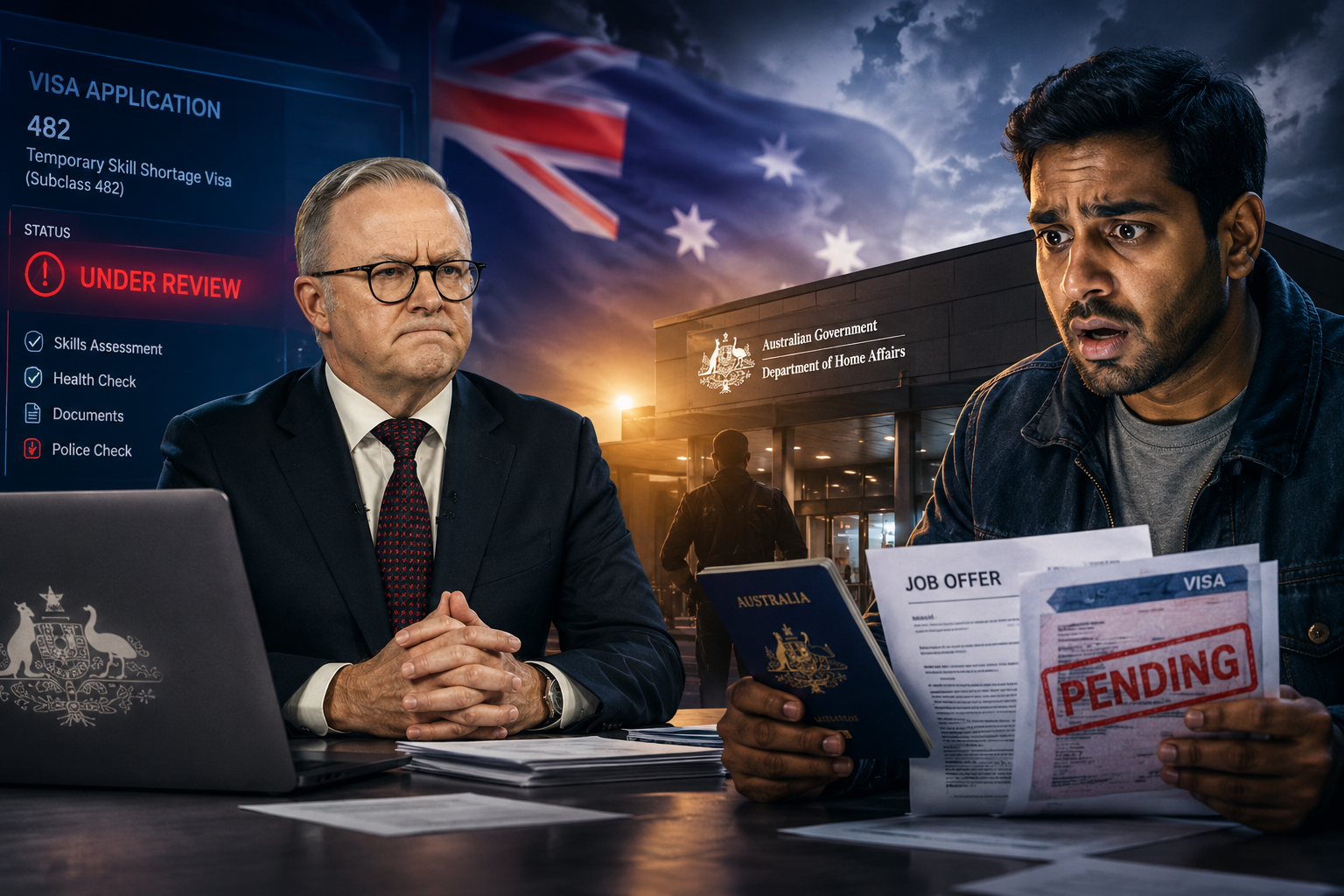
The move has already drawn international attention and controversy. Is this a legitimate step to safeguard national security and economic interests? Or does it mark a troubling trend where wealthy nations tighten borders against vulnerable populations? The Australian Department of Home Affairs insists that stricter controls are necessary to curb fraud and enforce immigration compliance, yet critics argue that it unfairly targets entire populations.
Monitor updates to the Australia 2025 visa ban on 10 Asian countries and consult advisers if you or your family are affected.

Why Australia is Reshaping Its Visa System
Australia’s immigration system is one of the most complex in the world, balancing humanitarian intake, skilled migration, and temporary visas. In recent years, several challenges have strained its visa processing system:
- Visa overstays – tens of thousands remain illegally after temporary visas expire.
- Fraudulent documentation – fake financial statements, falsified transcripts, and sham enrollments.
- National security – geopolitical instability in neighboring regions.
- Economic pressures – debates on whether migration undermines local job markets.
The government’s 2025 policy overhaul represents not just administrative tightening but a paradigm shift. According to the Parliament of Australia migration reports, the aim is to pivot toward a skills-first model, focusing on high-income professionals while deprioritizing low-skilled or vulnerable migrant streams.
But what does this mean in practice? Let’s break it down country by country.
Myanmar: Political Turmoil Meets Closed Borders
Myanmar, long plagued by political unrest, has seen thousands flee persecution and instability. Historically, Australia has been a key destination for humanitarian and student visas. But now, with border control concerns, Myanmar nationals face extended screening, delayed processing, and higher rejection rates.
- Reason for restriction: fears of false asylum claims and overstays.
- Impact: families torn apart, international students deprioritized.
For a country already battling displacement crises, this policy could worsen regional instability and shut the door on legitimate humanitarian needs.
Vietnam: Visa Fraud and Labor Exploitation
Vietnam has become a top source of international students and temporary workers in Australia. Yet reports of undocumented labor and fraudulent visa applications have triggered alarm.
- Agriculture and construction sectors have reportedly seen misuse of tourist/student visas.
- Universities reliant on Vietnamese enrollment may suffer financially.
This reflects a broader shift: Australia is sending a message that low-wage labor migration will no longer be tolerated.
Thailand: From Friendly Ties to Tightened Scrutiny
Thailand, historically a strong tourism partner, is being flagged not for political turmoil but for visa misuse.
- Tourist visas often extended into informal employment.
- Growing reliance on unlicensed agents leading to fraud.
- Informal labor seen as a threat to wage protection in hospitality and caregiving.
The shift shows that even “friendly” travel partners are not immune when visa misuse trends emerge.
Sri Lanka: Economic Crisis Meets Policy Crackdown
Sri Lanka’s ongoing economic struggles have led to increased asylum claims and overstays in Australia. While many are legitimate, authorities argue that false documentation and fraudulent student enrollments are rising.
- Legitimate students face collateral damage through longer processing.
- Families seeking stability may face outright rejection.
The policy raises a humanitarian dilemma: Should economic hardship be a reason for asylum or grounds for rejection?
Nepal: The Student Visa Misuse Dilemma
Nepal is one of the fastest-growing sources of international students in Australia. Yet misuse of education pathways has prompted restrictions.
- Many students abandon studies for low-skilled work.
- Fake documentation and sham enrollments are rising.
- Visa overstays create silent non-compliance risks.
The shift marks Nepal’s move from a “rising star” to a “high-risk” nation in Australia’s migration framework.
Indonesia: Close Neighbors, Closer Scrutiny
Despite deep trade and diplomatic ties, Indonesia faces heightened scrutiny due to visa misuse patterns.
- Tourist and visitor visas often used to enter informal job markets.
- Reliance on fraudulent agents erodes trust.
- Informal labor undermines Australia’s skills-focused migration goals.
The policy could strain bilateral relations, given Indonesia’s economic and geographic proximity.
Bangladesh: Overstays and Forged Documentation
Bangladesh, with its strong diaspora in Australia, is now on the restriction list.
- Visa overstays and asylum claims flagged as problematic.
- Concerns over falsified documents (financial and academic).
- Students and workers face collective punishment despite genuine cases.
This reflects Australia’s hardline stance: tackling systemic abuse even if it penalizes legitimate migrants.
Pakistan: National Security at the Forefront
Pakistan’s inclusion is particularly sensitive due to its strong education and workforce contributions to Australia. Yet concerns dominate:
- Difficulty verifying academic and financial records.
- Rising overstays and unauthorized employment.
- Geopolitical tensions driving higher scrutiny.
Even highly qualified Pakistani applicants now face greater suspicion, reflecting how security considerations can outweigh economic benefit.
Philippines: From Valued Workforce to Restricted Access
Filipinos form one of Australia’s largest migrant communities, particularly in nursing, caregiving, and hospitality. Yet in 2025, even this valued workforce faces restrictions.
- Surge in overstays through vocational education pathways.
- Fake recruitment agents exploiting applicants.
- Australia prioritizing high-income, high-skilled migration over caregiving and semi-skilled roles.
This policy risks disrupting healthcare and caregiving sectors traditionally reliant on Filipino workers.
India: The Biggest Shock
India, Australia’s top source of international students and migrants, now faces the harshest restrictions.
- Rising visa overstays and fraud cases.
- Sheer application volume overwhelms processing.
- Authorities prioritize STEM and healthcare while sidelining lower-tier applicants.
This move may redefine Australia–India relations. Universities dependent on Indian students could lose billions, while families face indefinite delays.
Humanitarian Concerns: Who Pays the Price?
While the government frames the changes as economic and security-driven, the human cost is undeniable. Families are separated, students lose opportunities, and legitimate workers face rejection.
According to UNHCR, blanket restrictions risk undermining humanitarian obligations. Critics argue that punishing entire populations for the misconduct of some is discriminatory and short-sighted.
Economic Implications: Education, Labor, and Growth
Australia’s education sector alone generates over AUD 40 billion annually, much of it from Asian students. The 2025 visa ban could:
- Slash international student enrollments.
- Shrink labor supply in caregiving, construction, and hospitality.
- Undermine bilateral trade relations.
Analysts warn that the economic blow may outweigh short-term political gains.
Global Migration Shift: Is This Just the Beginning?
Is Australia setting a precedent for other wealthy nations? Immigration restrictions are rising across Europe, North America, and Asia. The OECD migration outlook highlights increasing reliance on selective, skills-based migration, with lower tolerance for humanitarian intake.
Australia’s move could be the first domino in a larger trend: a shift from humanitarian responsibility to economic pragmatism in global migration policy.
Conclusion: Borders Redrawn, Futures Delayed
The 2025 visa ban is not merely a bureaucratic update—it is a profound reset of Australia’s migration philosophy. By targeting Myanmar, Vietnam, Thailand, Sri Lanka, Nepal, Indonesia, Bangladesh, Pakistan, the Philippines, and India, the government is signaling a hardline approach: skills first, leniency last.
For policymakers, it’s a strategic pivot. For migrants, it’s a life-altering barrier. For universities, industries, and global partnerships, it’s a potential economic setback.
Australia 2025 Visa Ban on 10 Asian Countries. Will this policy protect borders effectively—or will it deepen divides, strain economies, and erode humanitarian values? One thing is certain: 2025 marks the beginning of a new, more unforgiving era in global migration.