Synopsis: 47,000 international students missing in Canada in 2025 expose systemic failures in reporting, oversight, and labour protections. This post examines causes, exploitation under temporary work schemes, political fallout, and five urgent reforms—audits, integrated databases, worker protections, and tighter oversight—to restore trust in Canada’s education and immigration systems.
When 47,000 Students Disappear — The Breaking Point of Canada’s Immigration System
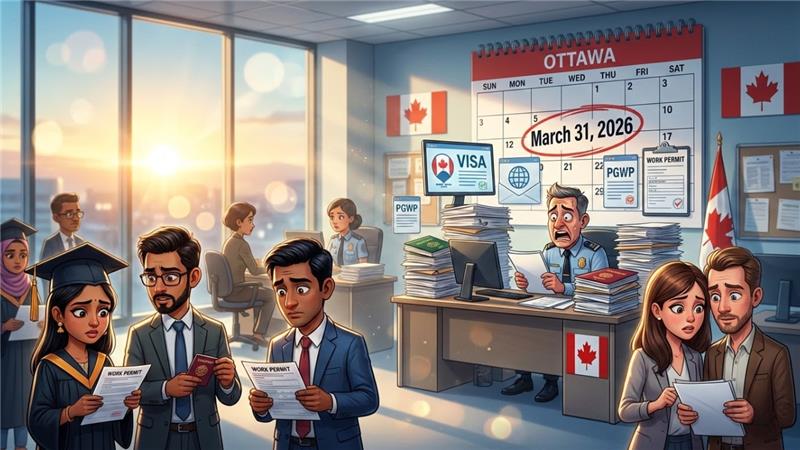
In 2025, Immigration, Refugees and Citizenship Canada revealed that nearly 47,000 international students are “unaccounted for”—a figure that has ignited public outrage and political scrutiny. Many of these students were expected to study at designated institutions, but never showed up, failed to renew their status, or simply vanished from official records.
For a country that once branded itself as a beacon of openness and opportunity, this revelation signals a deep fracture in the system. Canada’s international student boom—once hailed as an economic triumph—has now exposed vulnerabilities in data management, institutional oversight, and policy ethics.
According to official updates published by Immigration, Refugees and Citizenship Canada, this figure represents students who may have overstayed, dropped out, or never attended classes at all. The revelation has prompted urgent calls for audits, with the media describing it as “Canada’s most significant immigration compliance failure in recent memory.”
The shockwaves from this discovery ripple far beyond classrooms—they strike at the heart of Canada’s credibility as a managed migration state.

The Missing 47,000 — Beyond Numbers, A Systemic Crisis
What Does “Missing” Really Mean?
“Missing” doesn’t necessarily imply disappearance in the literal sense. Rather, it refers to non-compliance or data absence within the country’s student immigration tracking systems. These students no longer appear in reporting frameworks and may have either overstayed their visas, changed status, or left without record.
The majority of cases reportedly involve students from India, China, Nigeria, and smaller nations across Asia and Africa. Approximately 19,000 Indian students are among the unaccounted—a staggering indicator of the growing disconnect between Canada’s education exports and immigration enforcement.
A recent analysis by The Economic Times found that these lapses have not only financial implications but also diplomatic consequences, as source countries question Canada’s institutional credibility.
Policy Saturation and Oversight Breakdown
Between 2022 and 2024, the IRCC issued over 230,000 study permits to Indian nationals alone, an increase that far outpaced the government’s regulatory capacity. Universities and private colleges—dependent on international tuition—expanded aggressively, often with minimal oversight.
By 2025, amid housing shortages and public anger, Ottawa moved to reduce international student permits by 10%, targeting approximately 437,000 new entrants for the year. But the tightening came too late—tens of thousands had already fallen through bureaucratic cracks.
As documented by Reuters, the federal cap was framed as an economic stabilization move, but critics argue it’s a belated response to years of unchecked institutional greed and weak enforcement.
How Did So Many Students Vanish?
Loopholes and Lapses in Institutional Reporting
Under Canadian law, Designated Learning Institutions (DLIs) must report active enrolments to maintain compliance. Yet many private colleges failed to do so consistently.
The absence of a unified real-time database means if a student drops out or switches institutions, the IRCC may not know until much later. This has led to an accountability vacuum, where unscrupulous recruiters and ghost colleges exploit both students and the system.
A report by The Globe and Mail highlighted how fragmented databases between provinces and Ottawa allow students to move undetected between programs or into the informal labour market.
From Classroom to Labour Camp — The Economic Incentive to Disappear
Many students who stop studying don’t leave Canada—they start working. The Temporary Foreign Worker Program (TFWP), originally designed to fill skill gaps, has effectively become an economic safety net for undocumented or overstayed students.
The reality is grim: agricultural farms, food processing units, and service-sector employers often prefer migrant labourers for their affordability and pliability. Students—already desperate for income—find themselves in semi-legal employment, often under exploitative conditions.
Amnesty International has long called Canada’s migrant worker framework “inherently exploitative.” In a landmark report published by Amnesty International Canada, investigators documented cases of wage theft, abuse, and coercion under employer-tied permits.
Economic Dependence and the Cheap Labour Paradox
Canada’s dependency on foreign labour has reached addictive proportions. While the TFWP was meant to address temporary shortages, it has instead institutionalized dependence on low-cost, precarious workers.
As noted by Al Jazeera’s investigative report, industries from agriculture to fast food rely so heavily on foreign workers that any sudden policy tightening could cause operational collapse.
This system, critics argue, mirrors the same moral hazard now seen in the student visa chaos: an overreliance on temporary outsiders to sustain permanent economic functions.
Political and Social Fallout — The Blame Game Begins
Opposition Outcry and the Federal Response
Opposition parties swiftly turned the crisis into a political weapon, accusing Prime Minister Mark Carney’s administration of “systemic negligence.” They argue the federal government has prioritized economic gains over human and legal oversight.
In response, Ottawa has pledged new audits, stricter employer verification, and potential revocation of licenses for non-compliant educational institutions. Yet critics say these are reactive, not reformative measures.
According to CBC News, the government’s past attempts to regulate the TFWP and student programs have repeatedly fallen short due to interjurisdictional gaps and lobbying pressure from industries reliant on migrant labour.
Provincial Pushback — Rising Secession Sentiments
The discontent isn’t limited to Parliament. In Alberta and Saskatchewan, where industries rely heavily on migrant workers, politicians are now questioning whether federal immigration policy aligns with their economic realities.
Alberta’s premier recently likened the situation to “a confederation imbalance”, implying that the province gives more to Canada than it gets back—fueling talk of deeper autonomy or even hypothetical U.S. integration.
Such rhetoric, while symbolic, underscores a national identity crisis: how can a country built on migration mismanage it so profoundly?
Winners, Losers, and the Human Cost
The Human Toll — Students and Families
Behind every statistic lies a shattered story. Families who invested life savings into Canadian education now face lost futures and legal limbo. Students who overstayed to survive are now classified as violators, risking deportation and permanent bans.
The Political Winners
The political right gains ammunition to push anti-immigration sentiment, while provincial populists capitalize on local resentment. Meanwhile, private institutions and some employers—who benefited from cheap tuition or labour—escape largely unscathed.
The Losers — Canada’s Global Credibility
Perhaps the biggest casualty is Canada’s reputation. Once marketed as a global education powerhouse, it now faces comparisons with exploitative migration hubs. As international headlines amplify the crisis, competitors like Australia and the UK stand ready to absorb disillusioned students.
A Migration Policy Institute analysis warns that if Canada fails to restore trust, it risks long-term damage to its ability to attract high-quality talent.
The Temporary Foreign Worker Program — A Mirror of Exploitation
From Labour Shortages to Systemic Exploitation
The Temporary Foreign Worker Program began with noble intent—to plug short-term labour shortages—but over time, its closed-permit design fostered dependence and exploitation.
Under current rules, most temporary foreign workers cannot change employers without federal approval, leaving them vulnerable to retaliation and silence in the face of abuse.
A 2025 study from the Canadian Council for Refugees, cited by The Conversation, argues that such restrictions perpetuate “a two-tier labour market that values compliance over contribution.”
Enforcement Efforts and Their Limits
While the federal government introduced new inspection units and public tip lines, enforcement remains patchy. Many victims are unaware of complaint mechanisms or fear deportation if they come forward.
This cycle of dependence—on cheap foreign workers and tuition revenue—has made reform politically difficult, even as abuses become undeniable.
Reforming a Broken Model — What Canada Must Do
Five Immediate Reforms to Restore Credibility
- End Closed Work Permits: Transition to open or sector-based permits to grant workers mobility and protection.
- Audit and Deregister Ghost Institutions: Establish real-time oversight over private colleges and recruitment agents.
- Integrate Education and Immigration Databases: A single digital ecosystem connecting provinces, DLIs, and IRCC to track compliance.
- Strengthen Worker Protections: Create independent ombudsman offices to investigate abuse without risking deportation.
- Refocus Student Intake: Prioritize STEM and healthcare disciplines aligned with national labour needs, not institutional greed.
Learning from Past Mistakes
The lesson is simple yet urgent: sustainability must precede scale. Canada’s immigration success cannot hinge on temporary permit holders filling permanent gaps. Without systemic reform, the country risks turning its once-golden education migration system into a global cautionary tale.
Conclusion — Canada at a Crossroads
The saga of the 47,000 missing international students is not just about missing data—it’s about missing accountability. It exposes a country struggling to reconcile compassion with control, opportunity with oversight, and economic need with ethical governance.
As Canada approaches another election cycle, policymakers face a binary choice:
Continue patching a fractured system that feeds exploitation, or rebuild an immigration framework rooted in transparency, fairness, and integrity.
For now, the world watches the “Land of Maple Syrup” navigate its stickiest dilemma yet—how to restore trust in the very promise that once defined it.