Synopsis: Britain’s Labour government has launched the harshest immigration reforms in decades. This long-form analysis explains why—tracking economic stagnation, Brexit fallout, housing shortages, welfare strain, political backlash, and whether tightening borders can truly fix the UK’s deeper structural problems.
Why the UK Suddenly Declared War on Immigration
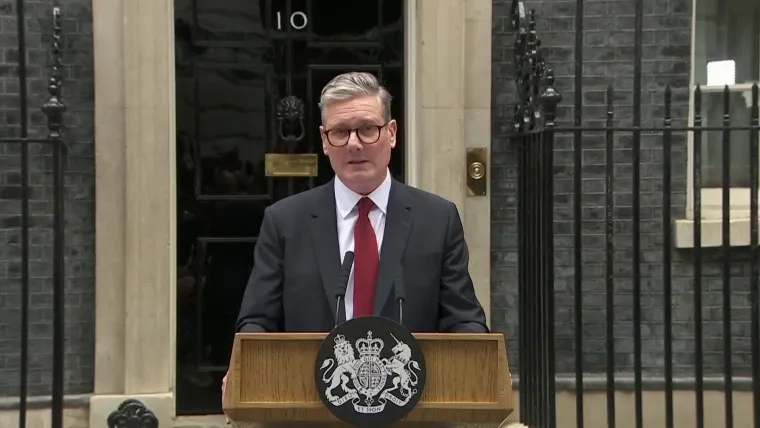
The United Kingdom has entered a decisive and controversial phase in its modern history. In late 2025, the Labour government led by Keir Starmer announced the most sweeping immigration crackdown in half a century—a move that stunned allies and critics alike. For a country that once championed openness and free movement, this was not merely a policy adjustment but a philosophical reversal. According to official government briefings and fiscal assessments published by the UK Office for Budget Responsibility, immigration had become an unsustainable pressure point in a stagnating economy, forcing Labour to abandon long-held orthodoxies (authoritative source:).
This blog rewrites and expands the provided source material into a structured, data-driven analysis, examining why Britain reached this moment, what exactly has changed, and whether this historic turn can realistically deliver the stability voters are demanding.

Understanding the Policy/Event
Britain’s immigration shift is not the result of a single election promise or a sudden ideological conversion. It is the culmination of more than two decades of economic stress, political over-promising, and social fragmentation.
For much of the 1990s and early 2000s, the UK was widely viewed as Europe’s most successful immigration model. Migrants entered the labour market quickly, employment remained high, and serious social unrest was largely avoided. While France, Belgium, and parts of Scandinavia wrestled with identity politics, Britain appeared to have found a workable equilibrium.
That equilibrium began to fracture in 2004 with the European Union’s eastward expansion. Unlike most EU states, the UK opened its labour market immediately, triggering a sharp influx of workers from Poland, Hungary, and the Baltic states. Economic output grew, but so did pressure on housing, schools, and the National Health Service.
The political consequences were slow but corrosive. Promises to reduce net migration to “the tens of thousands” were repeatedly broken. Over time, the gap between rhetoric and reality eroded trust in the state’s ability to manage borders at all.
Why It Is Happening
The Brexit referendum in 2016 crystallised this frustration. For millions of voters, Brexit was not about trade alignment or regulatory autonomy; it was about border control. Leaving the EU was supposed to reduce immigration.
Instead, the opposite occurred.
While EU migration declined sharply after Brexit, total net migration surged. Between 2022 and 2024, Britain recorded the highest net migration figures in its history. Arrivals increasingly came from Africa and the Middle East, often with greater integration and welfare needs. Post-Brexit cooperation on returns collapsed, making removals harder and asylum claims easier to sustain.
By 2024, immigration was no longer an abstract debate—it was a lived experience visible in overcrowded services, rising rents, and stretched local councils.
Key Reforms or Changes
The reforms announced at the end of 2025 represent a fundamental redesign of Britain’s immigration system.
Key measures include:
- Extension of settlement timelines from 5 years to 10–15 years
- Mandatory English language requirements tied to work eligibility
- Near-total exclusion of non-citizens from social housing and most benefits
- Temporary, review-based asylum status renewed every 30 months
- Severe penalties for irregular Channel crossings, including delayed settlement of up to 30 years
These changes signal a clear message: permanent residence in the UK is no longer a passive outcome of time served, but an earned privilege.
Detailed Breakdown
Under the new framework, migrants must demonstrate:
- Continuous employment
- Stable income without reliance on benefits
- Language proficiency
- Evidence of social integration
The asylum system has shifted toward a model similar to Denmark’s, where refugee protection is conditional and revocable if countries of origin are deemed safe (comparative context:).
Crucially, the government has committed to publishing long-withheld data, including the nationality of foreign offenders—an issue that previously fuelled mistrust due to lack of transparency.
Data, Stats, and Trends
Economic stagnation lies at the heart of Britain’s immigration dilemma. Since the 2008 financial crisis, the UK has suffered one of the weakest productivity performances in the OECD.
Between 2008 and 2024:
- Real wages stagnated
- Productivity growth flatlined
- Public debt rose while services aged
The welfare state, however, continued to operate as if growth had never slowed.
What the Numbers Show
According to fiscal modelling by the Office for Budget Responsibility, the net lifetime cost of a low-income migrant arriving at age 25 is approximately:
- £151,000 by retirement age
- Up to £500,000 by age 80
Highly skilled migrants, by contrast, generate net fiscal surpluses. This divergence increasingly shaped Labour’s rhetoric around “quality over quantity” migration.
Labour market dynamics further complicated the picture. Entire sectors—hospitality, logistics, agriculture, and social care—became structurally dependent on low-paid migrant labour, suppressing wages and entrenching a two-tier economy.
Impact Assessment
Immigration pressures intersected with Britain’s most acute domestic crises: housing, healthcare, and social cohesion.
Housing supply lagged demand for over three decades. Population growth accelerated this imbalance, driving rents upward and pushing younger Britons out of city centres. Migrants themselves often faced overcrowded and substandard accommodation, intensifying community tensions.
Social, Economic, and Human Consequences
The National Health Service reached record waiting lists amid staff shortages and rising demand. Schools in high-migration areas struggled with language support and class sizes. Integration, long assumed to be automatic, increasingly failed to materialise.
In some urban districts, parallel communities formed—socially self-contained and culturally distant. While crime data remains sensitive, parliamentary reports and investigative journalism highlighted disproportionate representation of certain groups in arrest and prison statistics, intensifying public concern (contextual analysis:).
Political Background & Stakeholder Reactions
Immigration reshaped Britain’s political landscape faster than any issue since Brexit.
By 2025, dissatisfaction fuelled the rise of Reform UK, transforming it from a fringe movement into a polling leader. Public belief that borders were “out of control” persisted even as net migration began to fall.
Government, Opposition & Expert Opinions
Labour’s electoral collapse forced a reckoning. Approval ratings for Starmer reportedly fell near 30%, with disapproval approaching 70%. Faced with existential political risk, Labour adopted policies once considered incompatible with its values.
Economists, policy analysts, and human-rights groups remain divided. Some argue the reforms restore credibility and fiscal sustainability. Others warn they risk labour shortages, humanitarian breaches, and long-term reputational damage.
Global Comparisons
Britain’s approach is no longer an outlier. Across Europe, governments are tightening asylum systems and recalibrating migration thresholds.
Where This Stands Internationally
- Denmark enforces time-limited refugee permits
- Australia links migration tightly to skills and language
- Canada increasingly prioritises high-skill, high-contribution entrants
Britain’s model now aligns more closely with selective, contribution-based systems rather than open labour markets (global context:).
Critical Analysis
The central question remains uncomfortable: will this work?
Immigration reform alone cannot fix Britain’s productivity crisis, housing shortage, or underfunded public services. Without parallel economic reform, tighter borders may simply redistribute pressure rather than resolve it.
Will It Work?
Several constraints are unavoidable:
- The economy still underperforms
- Labour shortages persist in essential sectors
- Housing supply remains inadequate
- Public services require structural reform
If reforms fail to deliver visible improvements quickly, public frustration may intensify rather than subside.
Conclusion
Britain’s immigration crackdown is not merely about who enters and who leaves. It is the expression of a deeper national anxiety—a desire to regain control after years of economic shocks, political upheaval, and institutional strain.
Whether this historic turn restores stability or opens a new chapter of division remains uncertain. What is clear is that immigration has moved from the margins to the very centre of Britain’s political identity. The outcome will shape the UK’s social contract for a generation to come.