Synopsis: The Home Office’s promised surge in UK asylum hotel closures aims to cut costs and reduce temporary placements. This analysis examines financial savings, political jockeying, legal challenges, community protests, and the human impact, questioning whether closures offer sustainable reform or merely short-term political optics and implications for asylum seekers’ futures.
Why the Debate on Asylum Hotels Matters Now
The UK’s asylum system has once again become a central flashpoint in the political and public debate. The Home Office has promised a “big surge” in asylum hotel closures from early 2025, with at least five hotels expected to close by year-end. Officials argue the closures will reduce reliance on temporary accommodation, which peaked at nearly 400 hotels in 2023, costing taxpayers £9 million per day. Current figures suggest this has fallen to just over 200 hotels at an adjusted cost of £5.5 million per day.
While ministers frame this as a sign of progress, critics question whether closures address the core issues of delayed asylum processing, community safety concerns, and the strain on local councils. According to the UK Home Office, asylum backlogs and enforcement inefficiencies continue to dominate the conversation. The question now is whether hotel closures represent meaningful reform or merely political window-dressing in response to public anger and rising populist pressures.

The Scale of the Asylum Hotel Crisis
How Did Hotels Become Central to the Asylum System?
For years, the UK has relied on hotels as temporary asylum housing due to shortages in dedicated accommodation and long delays in processing claims. This system became especially strained after 2020, with small boat arrivals across the English Channel reaching record levels. By mid-2023, nearly 50,000 asylum seekers were housed in hotels, sparking political outrage and community protests.
The Financial Burden
- 2023 peak costs: £9 million daily (£3.3 billion annually if sustained)
- 2024 reduced costs: £5.5 million daily after 200 hotel closures
- Government claim: £1 billion saved in 2024, with another £1 billion projected for 2025
The National Audit Office has repeatedly warned that reliance on hotels is both unsustainable and wasteful. While closures may signal cost savings, critics argue the government still lacks a long-term housing strategy for asylum seekers.
Political Context: Competing Visions of Border Security
Labour’s Narrative
Angela Eagle, Border Security and Asylum Minister, has positioned the Labour government as the “serious” alternative to years of Conservative “fantasy solutions.” She highlights:
- £1 billion saved in asylum costs last year
- Increased deportations of individuals with no right to remain
- New laws enabling faster removal of sex offenders
Labour’s approach emphasizes international cooperation, pointing to recent treaties with France, Bulgaria, Romania, India, Vietnam, and Iraq to tackle trafficking and speed removals.
Reform UK’s Alternative
Nigel Farage and Reform UK have advanced more radical proposals:
- Mass deportations of asylum seekers arriving by small boats
- Detention in military bases
- Expansion of flights to Rwanda or other host nations
- Withdrawal from the European Convention on Human Rights and replacement with a British Bill of Rights
Farage frames international treaties as “malign influences” frustrating deportations. His message resonates with a public increasingly skeptical of asylum policies, as shown by a YouGov poll revealing 71% of voters— including Labour supporters—believe Keir Starmer is mishandling the hotel crisis.
Hotel Closures and Public Protests
Communities at the Frontline
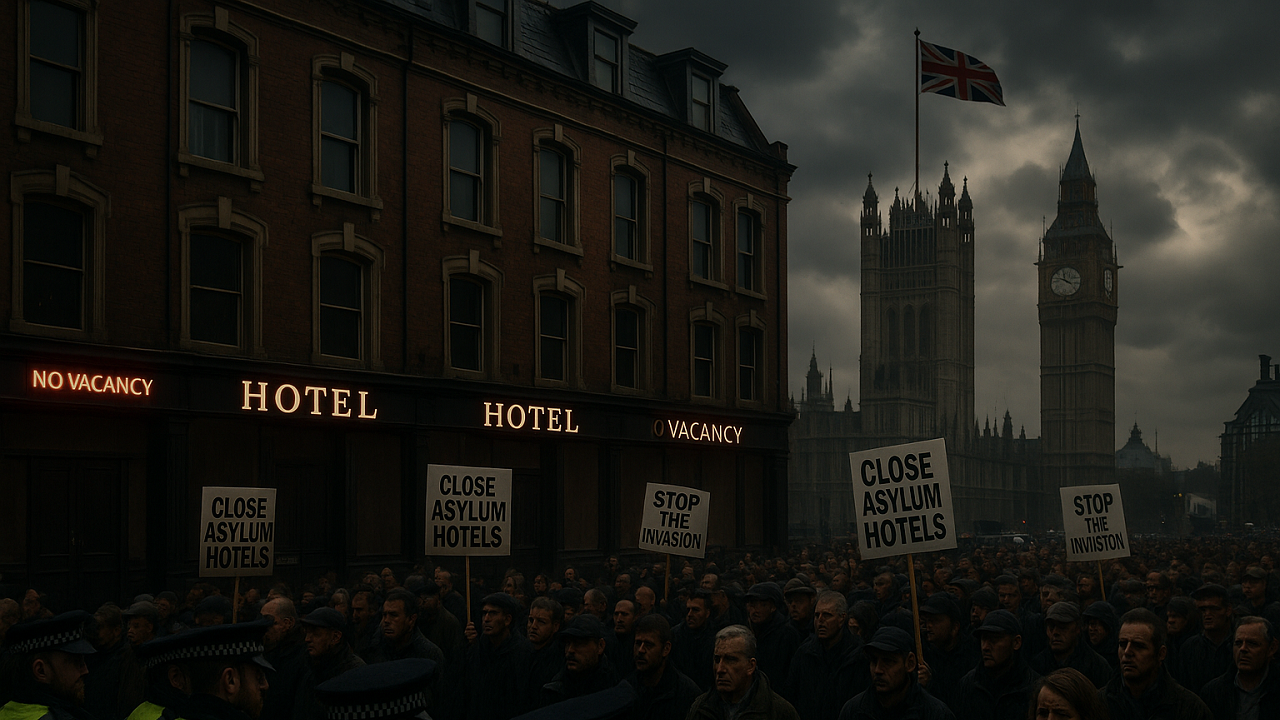
The closure of hotels is not only a financial issue but also a social flashpoint. Local protests have erupted in areas hosting asylum hotels, often fueled by fears of crime and security risks.
- Case example (Scotland, 2023): Russell Findlay, Scottish Conservative leader, defended protests after an Afghan asylum seeker was convicted of raping a 15-year-old girl.
- Case example (Essex, 2024): The High Court ordered the removal of asylum seekers from the Bell Hotel in Epping, following a Conservative-led council challenge.
These incidents have deepened public anger and emboldened local authorities to pursue legal strategies against hotel placements.
Council Resistance and Legal Battles
Conservative councils are now coordinating legal challenges to asylum hotel use. Senior Tory figures, including Kemi Badenoch, James Cleverly, and Chris Philp, are advising councils on strategies to legally force closures. This approach raises critical questions: should local governments hold the power to block asylum housing, and how does this align with national responsibilities under refugee law?
The Human Impact: Beyond Numbers and Politics
Living Conditions for Asylum Seekers
While much of the debate focuses on costs and community safety, asylum seekers themselves often endure difficult conditions:
- Prolonged stays in overcrowded hotels
- Limited access to healthcare, education, and integration services
- Uncertainty due to long waits for asylum claim decisions
The United Nations High Commissioner for Refugees (UNHCR) has repeatedly urged the UK to balance border enforcement with humane treatment, warning that prolonged hotel stays risk violating international refugee protection standards.
Rising Tensions and Safety Concerns
Public anger has been exacerbated by isolated but high-profile criminal cases. However, experts caution against generalizing from individual incidents to entire populations. Academic studies, including those from the Migration Observatory at Oxford University, emphasize the importance of distinguishing between political rhetoric and evidence-based risk assessments.
Alternatives to Hotels: Searching for Sustainable Solutions
Government Plans
Officials insist hotel closures are only part of a broader plan, including:
- Expanding asylum reception centers
- Securing long-term rental contracts for housing
- Implementing the “deport now, appeal later” scheme with 23 countries
- Running 66 charter flights for removals in the past year
Limitations of Current Approaches
- Reception centers: Expansions face local resistance and planning challenges.
- Private housing contracts: The rental market is already under strain due to the UK housing crisis.
- International removals: Dependence on deals with partner countries creates vulnerabilities, especially if geopolitical tensions shift.
Are these measures enough to dismantle the hotel system without simply shifting costs elsewhere? Critics remain unconvinced.
The Political Risks Ahead
Winter Pressures
The winter months will be a critical test for the government. Public patience is wearing thin, and the promise of a “big surge” will need to translate into visible closures. Failure could fuel further support for hardline alternatives.
Populism and Policy Polarization
Farage’s intervention underscores the rise of populist narratives. By framing asylum reform as a choice between “British people’s safety” and “outdated treaties,” Reform UK aims to force Labour into a defensive posture. Whether Labour’s measured, internationally cooperative approach can withstand this rhetorical pressure remains uncertain.
Conclusion: Policy or Political Optics?
The Home Office’s announcement of a “big surge” in asylum hotel closures highlights both progress and persistent challenges. Yes, hotel use has halved, and costs have fallen by billions. Yet systemic backlogs, community resistance, and the lack of sustainable accommodation alternatives mean the crisis is far from resolved.
This debate is not just about hotels—it is about the future direction of UK asylum policy, the balance between international obligations and domestic security, and the growing influence of populist narratives. As 2025 unfolds, the real question is whether hotel closures will mark the beginning of meaningful reform or simply a temporary political strategy to buy time.
FAQs on UK Asylum Hotels and Immigration Policy 2025
1. Why is the UK government closing asylum hotels in 2025?
The UK government says asylum hotels are being closed to cut costs, reduce community tensions, and move people into more sustainable housing. According to the Home Office, the number of hotels has already halved since 2023, saving £1 billion in asylum accommodation costs.
2. How many asylum seekers are currently housed in UK hotels?
As of late 2024, just over 200 hotels still accommodate asylum seekers, compared to nearly 400 at the 2023 peak. The government reports that around 6,000 fewer asylum seekers were in hotels during the first half of 2024, marking a 16% reduction.
3. What alternatives are being offered as hotels close?
The Home Office plans to expand asylum reception centers, rent private housing, and accelerate deportation schemes. However, critics argue the UK rental market is already strained, and reception centers face strong resistance from local councils.
4. How much do asylum hotels cost UK taxpayers?
At their peak in 2023, asylum hotels cost £9 million per day. In 2024, after closures, the cost fell to £5.5 million per day. The Home Office claims overall asylum costs dropped by 11%, delivering £1 billion in savings with another £1 billion expected in 2025.
5. What is Nigel Farage’s asylum and deportation plan?
Nigel Farage and Reform UK propose a mass deportation programme, detaining new arrivals in military bases, expanding flights to Rwanda, and withdrawing from the European Convention on Human Rights. Critics say these plans are legally and practically unworkable.
6. Why are local councils challenging asylum hotels in court?
Several councils argue that housing asylum seekers in hotels undermines local planning laws and public safety. In 2024, the High Court ordered the removal of asylum seekers from the Bell Hotel in Essex after a Conservative-led council’s legal challenge. This ruling has encouraged similar action nationwide.
7. How is the Labour government’s asylum policy different from the Conservatives?
Labour says it inherited a “border security system in tatters.” Its strategy emphasizes international cooperation, tackling traffickers, and cutting costs. Labour ministers highlight deals with France, India, Vietnam, and others to speed deportations, contrasting with Conservative and Reform UK’s focus on deterrence and mass removals.
8. What role do international treaties play in UK asylum policy?
The UK is bound by treaties like the 1951 Refugee Convention and the European Convention on Human Rights, which guarantee protections for asylum seekers. Reform UK wants to withdraw from these treaties, while Labour insists international cooperation is essential for managing migration sustainably.
9. Are asylum seekers linked to rising crime in the UK?
High-profile cases involving asylum seekers have fueled public anger, but research by the Migration Observatory at Oxford University shows no evidence of widespread criminality. Experts warn against generalizing from isolated incidents and stress the need for evidence-based policymaking.
10. What does the future of asylum accommodation look like in the UK?
If hotel closures continue as planned, asylum seekers will be housed in dedicated reception centers or private rentals. Yet, with housing shortages, court challenges, and ongoing backlogs, many experts question whether hotel reliance can truly end in 2025—or if the crisis will simply shift elsewhere.
{
“@context”: “https://schema.org”,
“@type”: “FAQPage”,
“mainEntity”: [
{
“@type”: “Question”,
“name”: “Why is the UK government closing asylum hotels in 2025?”,
“acceptedAnswer”: { “@type”: “Answer”, “text”: “The UK government says asylum hotels are being closed to cut costs, reduce community tensions, and move people into more sustainable housing. According to the Home Office, the number of hotels has already halved since 2023, saving £1 billion in asylum accommodation costs.” }
},
{
“@type”: “Question”,
“name”: “How many asylum seekers are currently housed in UK hotels?”,
“acceptedAnswer”: { “@type”: “Answer”, “text”: “As of late 2024, just over 200 hotels still accommodate asylum seekers, compared to nearly 400 at the 2023 peak. The government reports that around 6,000 fewer asylum seekers were in hotels during the first half of 2024, marking a 16% reduction.” }
},
{
“@type”: “Question”,
“name”: “What alternatives are being offered as hotels close?”,
“acceptedAnswer”: { “@type”: “Answer”, “text”: “The Home Office plans to expand asylum reception centers, rent private housing, and accelerate deportation schemes. However, critics argue the UK rental market is already strained, and reception centers face strong resistance from local councils.” }
},
{
“@type”: “Question”,
“name”: “How much do asylum hotels cost UK taxpayers?”,
“acceptedAnswer”: { “@type”: “Answer”, “text”: “At their peak in 2023, asylum hotels cost £9 million per day. In 2024, after closures, the cost fell to £5.5 million per day. The Home Office claims overall asylum costs dropped by 11%, delivering £1 billion in savings with another £1 billion expected in 2025.” }
},
{
“@type”: “Question”,
“name”: “What is Nigel Farage’s asylum and deportation plan?”,
“acceptedAnswer”: { “@type”: “Answer”, “text”: “Nigel Farage and Reform UK propose a mass deportation programme, detaining new arrivals in military bases, expanding flights to Rwanda, and withdrawing from the European Convention on Human Rights. Critics say these plans are legally and practically unworkable.” }
},
{
“@type”: “Question”,
“name”: “Why are local councils challenging asylum hotels in court?”,
“acceptedAnswer”: { “@type”: “Answer”, “text”: “Several councils argue that housing asylum seekers in hotels undermines local planning laws and public safety. In 2024, the High Court ordered the removal of asylum seekers from the Bell Hotel in Essex after a Conservative-led council’s legal challenge. This ruling has encouraged similar action nationwide.” }
},
{
“@type”: “Question”,
“name”: “How is the Labour government’s asylum policy different from the Conservatives?”,
“acceptedAnswer”: { “@type”: “Answer”, “text”: “Labour says it inherited a “border security system in tatters.” Its strategy emphasizes international cooperation, tackling traffickers, and cutting costs. Labour ministers highlight deals with France, India, Vietnam, and others to speed deportations, contrasting with Conservative and Reform UK’s focus on deterrence and mass removals.” }
},
{
“@type”: “Question”,
“name”: “What role do international treaties play in UK asylum policy?”,
“acceptedAnswer”: { “@type”: “Answer”, “text”: “The UK is bound by treaties like the 1951 Refugee Convention and the European Convention on Human Rights, which guarantee protections for asylum seekers. Reform UK wants to withdraw from these treaties, while Labour insists international cooperation is essential for managing migration sustainably.” }
},
{
“@type”: “Question”,
“name”: “Are asylum seekers linked to rising crime in the UK?”,
“acceptedAnswer”: { “@type”: “Answer”, “text”: “High-profile cases involving asylum seekers have fueled public anger, but research by the Migration Observatory at Oxford University shows no evidence of widespread criminality. Experts warn against generalizing from isolated incidents and stress the need for evidence-based policymaking.” }
},
{
“@type”: “Question”,
“name”: “What does the future of asylum accommodation look like in the UK?”,
“acceptedAnswer”: { “@type”: “Answer”, “text”: “If hotel closures continue as planned, asylum seekers will be housed in dedicated reception centers or private rentals. Yet, with housing shortages, court challenges, and ongoing backlogs, many experts question whether hotel reliance can truly end in 2025—or if the crisis will simply shift elsewhere.” }
}
]
}