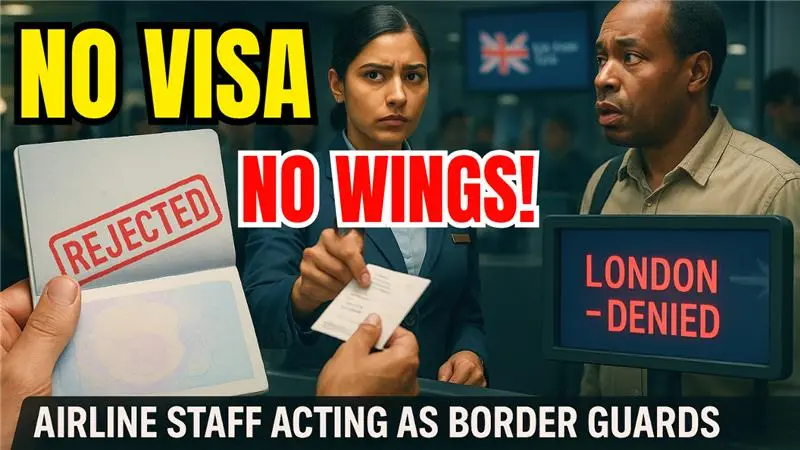
Synopsis: The UK government has deputised thousands of European airline workers to act as frontline immigration enforcers. Through the ETA and eVisa systems, airline staff are now trained to block travelers without valid UK documentation. This blog critically explores the policy’s implications, enforcement rationale, and the concerns it raises.
Airlines Turned Border Guards—UK’s New Immigration Line of Defence
In an unprecedented shift in global immigration control, the United Kingdom has begun outsourcing critical border enforcement tasks to foreign airline staff across Europe. As part of a sweeping initiative under Labour’s immigration policy framework, over 9,000 airline workers have now been trained to verify visa compliance before passengers even board a plane. According to UK government sources, the rollout of the Electronic Travel Authorisation (ETA) and eVisa systems represents a digital leap forward—but critics argue it may come at a cost to civil liberties and procedural fairness.
This blog takes an in-depth look at this controversial shift, its stated benefits, implementation strategy, and the broader implications for travellers, asylum seekers, and airline operators.

Topics Discussed:
- What Is the UK ETA and eVisa System?
- Airline Staff Training: Who, Where, and Why?
- Why the Labour Government Is Prioritising Border Enforcement
- Civil Liberties Concerns and the Risk of Outsourcing Immigration Decisions
- Impact on Airlines, Travellers, and International Perception
What Is the UK ETA and eVisa System?
Replacing Passports With Digital Profiles
The Electronic Travel Authorisation (ETA) and eVisa systems are part of the UK’s broader digital transformation of its immigration infrastructure. Under the ETA scheme, nationals from previously visa-exempt countries—primarily EU member states—must now obtain digital permission before travel.
Unlike the traditional visa process, ETA functions similarly to the US ESTA, requiring online registration, background checks, and real-time data linking. The UK’s eVisa platform replaces physical visa documents with digital records that can be checked by government departments, employers, landlords, and—now—airline staff.
This modernisation is intended to streamline border checks, improve internal enforcement, and enhance data tracking. The Home Office claims it will also “close the loopholes” used by irregular migrants and overstayers.
Airline Staff Training: Who, Where, and Why?
Turning Gate Agents Into Immigration Enforcers
In partnership with the Foreign Office, the UK Home Office has launched training programs for more than 9,000 airline personnel from carriers such as Wizz Air, Jet2, Lufthansa, and British Airways. These employees, stationed across 39 countries, are now tasked with checking visa documentation at boarding gates.
Key training locations include Greece, Malta, Albania, and Italy—nations often used as transit points by asylum seekers and irregular migrants. The UK government views these measures as part of a “cooperative deterrence model,” preventing visa-less individuals from even boarding a plane bound for British soil.
British Airways praised the training’s effectiveness, stating their staff now feel “more confident and prepared” in applying the ETA and eVisa system at check-in and departure points. The carriers, essentially, act as the UK’s proxy border force abroad.
Why the Labour Government Is Prioritising Border Enforcement
Political Pressure and Public Perception
Prime Minister Keir Starmer’s Labour government has adopted a firm stance on border control, seeking to outflank right-wing challengers like Reform UK. With public anxiety surrounding immigration still a top concern among British voters, Labour has positioned itself as both progressive and tough on illegal migration.
Foreign Secretary David Lammy recently described the airline staff training as part of a broader strategy to make UK borders “more secure, more digital and more effective.” He added that “cooperation across borders and industries” is essential to blocking irregular migration pathways.
Recent Home Office data shows that 30,000 individuals have already been removed under existing policies, with a 23% rise in enforced returns and a 14% increase in foreign offender deportations since the 2024 general election.
The government argues that the ETA and airline enforcement strategy will boost these numbers while signalling to the world that UK entry requires strict compliance.
Civil Liberties Concerns and the Risk of Outsourcing Immigration Decisions
Who Holds the Power to Say “No”?
While the scheme may improve border control efficiency, human rights advocates are raising alarms about its consequences for fairness and accountability.
When private airline workers are tasked with determining whether a traveller has sufficient documentation, what safeguards exist to ensure they make the right call? Mistaken denials—particularly of asylum seekers or individuals with complex immigration statuses—could lead to serious consequences.
Critics argue that delegating immigration enforcement to commercial carriers risks turning customer service staff into de facto judges of international law. Moreover, affected individuals may lack immediate recourse if unjustly barred from boarding, raising questions about procedural fairness.
As reported by groups like Liberty, such “pre-emptive policing” by non-government actors creates a dangerous precedent where migration decisions are both decentralised and depersonalised.
Impact on Airlines, Travellers, and International Perception
Operational Gains vs Reputational Risks
Airlines like British Airways have welcomed the clarity offered by the UK’s digital immigration upgrades. By training staff early, they claim the system becomes smoother, more predictable, and less prone to last-minute surprises or passenger disputes.
However, airlines now face operational and reputational risks. Incorrect denials, data breaches, or inconsistent enforcement across countries could prompt legal challenges or negative publicity.
For passengers—especially from EU countries not previously subject to visa-like checks—the process could feel intrusive or discriminatory. Travellers must now pre-register via ETA platforms, ensure their documentation is digitally verifiable, and hope their boarding staff are sufficiently trained to understand nuanced immigration criteria.
Diplomatic efforts have already begun. UK envoys are actively promoting the ETA system across European capitals, while public awareness campaigns are being launched to pre-empt confusion among frequent flyers and tourists.
Conclusion: A Digital Border, but at What Human Cost?
The UK’s new policy of deputising airline workers as frontline immigration enforcers signals a landmark shift in global border governance. While the Labour government frames it as a necessary step toward smarter, more secure entry protocols, it raises unresolved concerns about fairness, transparency, and the outsourcing of governmental authority.
By blending digital enforcement tools with private-sector implementation, Britain is advancing a hybrid model of migration control—one that may improve efficiency but risks sidelining human rights in the process.
As the ETA and eVisa systems continue to roll out, it remains essential for watchdog groups, legal experts, and the travelling public to remain vigilant. The promise of streamlined borders must not eclipse the need for accountability, accuracy, and dignity in immigration policy.
Frequently Asked Questions (FAQs)
What is the UK Electronic Travel Authorisation (ETA) system?
The UK ETA system is a digital pre-approval mechanism that requires visa-exempt travelers (including many EU citizens) to obtain authorisation before entering the UK. It allows the government to screen individuals before travel and track immigration status in real time.
Who needs to apply for an ETA before travelling to the UK?
Initially, nationals from Qatar were required to apply, but by the end of 2024, most non-visa nationals (including citizens from EU/EEA countries) will need an ETA. Travellers should check the official ETA eligibility list for the most updated requirements.
Why are airline staff being trained to verify UK visas and ETAs?
Over 9,000 airline employees across Europe are being trained to ensure that only passengers with valid UK travel authorisations are allowed to board. This measure helps reduce the number of people arriving in the UK without proper documentation.
Which countries are part of this airline training initiative?
Airline staff in 39 countries, including transit-heavy nations like Greece, Malta, Italy, and Albania, have received training. These locations were selected due to their use as common transit routes for irregular migration into the UK.
What role do airlines play in UK immigration enforcement now?
Under this policy, airline carriers act as the UK’s first line of defense by checking ETA and visa compliance at departure gates. If a passenger lacks valid documentation, boarding may be denied even before reaching UK soil.
What happens if someone is wrongly denied boarding by airline staff?
If denied boarding due to an error in document verification, passengers may face delays or financial losses. While airlines can offer support, the accountability structure is still under scrutiny, and there’s limited recourse at the departure point.
Is the eVisa system replacing physical visa documents in the UK?
Yes. The UK is transitioning toward a fully digital immigration system, where visas are stored electronically and verified online by landlords, employers, and service providers through the UK Visa View system.
How does this policy impact asylum seekers and refugees?
Human rights groups have expressed concern that pre-departure visa checks could prevent legitimate asylum seekers from reaching the UK to lodge claims, potentially violating international obligations under the 1951 Refugee Convention.
What safeguards are in place to prevent misuse or abuse by airline staff?
While airline staff receive structured training, there are concerns about inconsistency, misjudgment, and lack of oversight. The UK government maintains that the training includes guidance on legal and procedural standards, but civil liberties groups are urging for independent monitoring.
How can travellers ensure they meet the new UK entry requirements?
Travellers should apply for an ETA (if eligible), verify their documentation online, and stay informed via official government resources such as www.gov.uk. It’s recommended to apply several days before travel to avoid delays or complications.