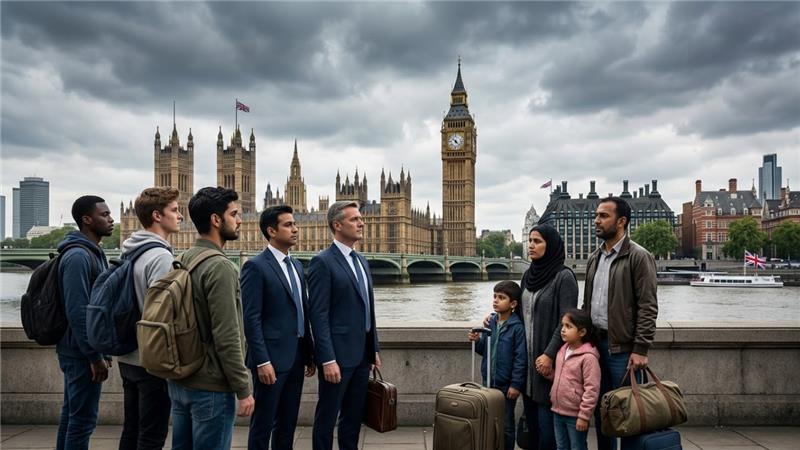
Synopsis: The UK government is pressing forward with sweeping immigration reforms, including a proposed 10-year pathway to Indefinite Leave to Remain and new temporary asylum protections. These measures could reshape settlement prospects for migrants while sparking political debate about fairness, economic impact, and the long-term direction of Britain’s immigration system.
The United Kingdom’s immigration system may be entering one of its most consequential periods of reform in decades. From extending the timeline to permanent settlement to redesigning asylum protections, policymakers are attempting to reshape how migrants live, work, and integrate into British society. These changes are already generating intense debate among migrants, employers, policymakers, and immigration experts.
At the center of the current conversation is a proposal to extend the pathway to Indefinite Leave to Remain (ILR) from five years to ten years for many migrants, with some categories potentially facing even longer settlement routes. At the same time, the government has begun implementing new asylum rules that introduce temporary protection for refugees, subject to regular review. According to the UK Home Office immigration policy framework, these reforms aim to create a more controlled and sustainable immigration system while ensuring that migrants contribute economically and socially.
For migrants already living in the UK—or those considering moving there—the implications could be significant. Settlement timelines may lengthen, integration requirements could become stricter, and asylum protections may no longer provide the same long-term security they once did.
Why is the government moving forward with these reforms despite political pressure and criticism? How will these policies affect international students, skilled workers, families, and refugees? And could these changes alter the UK’s reputation as a destination for global talent?
To answer these questions, it is necessary to examine the policies themselves, the political motivations behind them, and the broader economic and global migration trends influencing the debate. 
Understanding the Policy/Event
The UK’s latest immigration developments revolve around two major policy shifts. First is the proposed extension of the settlement pathway for migrants. Second is the introduction of a new model of temporary refugee protection.
These changes reflect a broader shift toward a system where settlement is no longer based primarily on time spent in the country, but rather on measurable integration and economic contribution.
Why It Is Happening
Several interconnected factors explain why the UK government is pursuing these immigration reforms.
Rising migration levels
Migration levels have increased significantly in recent years, placing immigration policy at the center of national political debate. Data published in the UK Office for National Statistics migration report shows that net migration to the UK has reached historically high levels, surpassing 600,000 in recent estimates.
These figures have intensified public and political pressure on the government to introduce stricter immigration controls.
Political competition and electoral pressures
Immigration has long been one of the most sensitive political issues in the UK. Parties frequently compete to demonstrate that they can manage borders effectively while maintaining economic growth.
Recent political developments, including by-election results where Labour lost a previously secure seat, have heightened scrutiny over the government’s immigration policies.
Despite these pressures, officials have indicated they will continue pushing forward with reforms aimed at tightening settlement and asylum rules.
Pressure on the asylum system
The UK asylum system has faced growing strain in recent years due to rising applications, accommodation challenges, and processing delays.
Global displacement trends are a major contributing factor. According to the UNHCR Global Trends Report, more than 100 million people worldwide are currently displaced due to conflict, persecution, and environmental crises.
While the UK does not receive the highest number of asylum claims in Europe, immigration debates often focus on the perception of increasing pressure on the system.
European policy influence
The UK government has also studied immigration approaches used by other European countries. Denmark, in particular, has been cited as an example of a country that has successfully reduced asylum claims through stricter policies.
Officials have suggested that elements of Denmark’s asylum model could influence future UK policy decisions.
Focus on economic contribution
Another key driver behind these reforms is the belief that immigration should primarily benefit the national economy.
Under proposed reforms, migrants seeking permanent residence may need to demonstrate measurable contributions through employment, income levels, language proficiency, and community integration.
Key Reforms or Changes
The proposed immigration reforms encompass several significant changes across the UK immigration system.
Detailed Breakdown
Extension of the settlement timeline
Currently, many migrants in the UK can apply for ILR after five years of lawful residence under specific visa categories.
Under the proposed reforms:
- Settlement could require 10 years of residence
- Some migrants could face 15-year pathways to settlement
This change would affect workers, dependants, and other migrants hoping to obtain permanent residence.
Possible retrospective application
One of the most controversial aspects of the proposal is the possibility that the rule could apply to migrants already living in the UK.
If implemented retrospectively, individuals who moved to the UK expecting a five-year pathway to settlement could suddenly face a ten-year wait.
Critics argue that such a change would effectively shift the goalposts for migrants who made long-term life decisions based on existing rules.
Temporary refugee protection
A major asylum reform has already been introduced.
Under the new system:
- Refugee protection is granted for 30 months
- Protection is subject to periodic review
- Individuals may need to reapply or switch visa categories
Previously, refugees typically received five years of protection followed by eligibility for settlement.
Periodic asylum case reviews
Under the updated policy framework, the government will regularly review refugee cases.
If conditions in a refugee’s home country improve significantly, authorities may determine that it is safe for the individual to return.
Integration and contribution requirements
Settlement decisions may increasingly depend on additional criteria, including:
- Employment status
- Salary level
- English language proficiency
- Evidence of social and economic integration
This reflects the government’s broader focus on ensuring migrants contribute meaningfully to the UK economy and society.
New legal migration pathways
Officials have also indicated that refugees with valuable skills may transition into other immigration routes such as work visas or study visas.
This approach is intended to encourage economic participation while reducing reliance on long-term asylum protection.
Data, Stats, and Trends
Understanding immigration reforms requires examining the broader statistical trends shaping policy decisions.
What the Numbers Show
Several key statistics highlight the scale of the immigration challenge facing the UK.
Migration levels
Net migration to the UK has reached record levels in recent years.
Important figures include:
- Net migration exceeding 600,000 in recent estimates
- Tens of thousands of asylum applications annually
- Increasing demand for housing, healthcare, and public services
These figures have become central to political discussions about immigration policy.
Labour market dependence on migrant workers
Migrants play a vital role in the UK labour market, particularly in sectors facing labour shortages.
Key industries that rely heavily on migrant workers include:
- Healthcare
- Construction
- Hospitality
- Technology
Research highlighted in the OECD Migration Policy Analysis shows that migrants contribute significantly to economic productivity across developed economies.
Global migration pressures
The global migration landscape continues to evolve rapidly.
Conflicts, climate change, and economic instability are driving large-scale displacement and migration worldwide. These pressures inevitably affect immigration systems in destination countries such as the UK.
Economic contributions of migrants
Migrants often contribute to national economies through:
- Tax payments
- Entrepreneurship
- Innovation
- Workforce participation
Studies cited in the Migration Policy Institute research database indicate that migrants frequently help address labour shortages and support aging populations in developed economies.
Impact Assessment
Immigration reforms rarely affect only policymakers. Their real impact is felt by migrants, employers, communities, and economies.
Social, Economic, and Human Consequences
Impact on migrants
For migrants currently living in the UK, extending the settlement timeline could create significant uncertainty.
Potential consequences include:
- Longer periods on temporary visas
- Increased immigration costs over time
- Delayed access to permanent rights
For families planning long-term stability, the difference between five and ten years could be substantial.
Impact on international students
International students often transition from study visas to work visas and eventually settlement.
Longer settlement timelines may discourage some graduates from choosing the UK as a long-term destination.
Impact on employers
Employers that depend on international talent may face additional challenges.
Businesses could experience:
- Reduced worker retention
- Recruitment difficulties
- Increased administrative complexity
Impact on asylum seekers
Temporary refugee protection may create ongoing uncertainty for those seeking safety.
Regular reviews may lead to:
- Anxiety about losing protection
- Pressure to integrate rapidly
- Potential return to unstable environments
Economic implications
Immigration policy also influences economic growth.
Restrictive immigration policies could reduce labour supply in industries already struggling with worker shortages.
Political Background & Stakeholder Reactions
Immigration policy reforms are rarely implemented without controversy.
Government, Opposition & Expert Opinions
Government perspective
Government officials argue that the reforms are necessary to restore public confidence in the immigration system.
Their objectives include:
- Reducing irregular migration
- Strengthening border control
- Encouraging economic contribution from migrants
Opposition criticism
Opposition politicians and advocacy groups have raised concerns about fairness.
Many critics argue that retrospective policy changes could unfairly impact migrants who entered the UK under different expectations.
Academic and policy perspectives
Immigration scholars often emphasize the importance of stability and predictability in immigration systems.
Sudden policy changes can influence global migration patterns and affect where international talent chooses to settle.
Global Comparisons
Immigration policy debates are taking place across many developed countries.
Where This Stands Internationally
Canada
Canada continues to operate one of the world’s most structured immigration systems, offering clear pathways to permanent residence for skilled migrants.
Australia
Australia maintains strong skilled migration programs while tightening certain visa requirements.
European Union
Several EU countries have strengthened asylum policies while expanding legal migration pathways.
United States
Immigration remains a politically divisive issue in the United States, with ongoing debates over border security and legal migration reform.
Compared with these systems, the UK appears to be moving toward stricter settlement rules while maintaining targeted skilled migration pathways.
Critical Analysis
The proposed immigration reforms raise several important questions.
Will It Work?
Supporters argue that these reforms could:
- Reduce abuse of the asylum system
- Encourage economic participation among migrants
- Strengthen public confidence in immigration policies
However, critics warn that the reforms may produce unintended consequences.
Possible risks include:
- Labour shortages in key sectors
- Reduced attractiveness for international talent
- Increased bureaucratic complexity
Another key issue is fairness. If settlement rules change mid-process, migrants may feel that the system is unpredictable.
Policy stability is one of the most important factors influencing migration decisions.
Conclusion
The UK immigration system is entering a period of significant transformation. Proposed reforms—including a potential ten-year pathway to settlement and temporary refugee protection—reflect the government’s attempt to balance border control with economic and humanitarian considerations.
For migrants, employers, and policymakers alike, the coming months will be crucial. Final decisions on these reforms are expected later this year, and they could redefine the future of migration in Britain.
What remains clear is that immigration will continue to shape political debates, economic strategies, and social policies across the UK for years to come.