Synopsis: Over 100,000 people gathered in London for a 2025 anti-immigration protest led by Tommy Robinson. The rally exposed deep national divisions, intensified debates about Channel crossings and border control, and pressured the Starmer government to balance enforcement with economic needs while guarding against the normalization of extremist tactics and policy.
Why This Protest Matters Now
Immigration has once again surged to the forefront of Britain’s political battleground. London recently saw over 100,000 people flood the streets in one of the largest anti-immigration rallies in modern UK history. Led by far-right activist Tommy Robinson, the protest carried chants of “send them back”, waved British flags, and even featured demonstrators donning U.S.-inspired “MAGA” hats. The rally was not an isolated act of street anger but a reflection of deep-seated frustrations, divisions, and policy failures surrounding migration.
The UK has grappled with migration debates for decades, but in 2025 the issue has escalated, overtaking even the economy in some polls as Britain’s most divisive political concern. Channel crossings have reached record levels, inflaming public discourse, stretching border control resources, and fueling campaigns from both anti-immigration groups and pro-refugee activists. According to the UK Home Office, more than 29,000 people crossed the English Channel irregularly in 2024 alone, adding further pressure on the government to act decisively.
Against this backdrop, the London protest reveals far more than public anger—it exposes the fractures in British society, the struggle of the government to balance humanitarian commitments with public security concerns, and the broader European trend of rising nationalist politics.

The Protest: Scale, Leadership, and Slogans
Tommy Robinson’s Role in Mobilization
At the center of the demonstration stood Tommy Robinson, a polarizing figure with a long history of far-right activism. His call for action resonated with thousands who believe migration has eroded Britain’s identity, economy, and safety. Robinson’s leadership not only galvanized a massive turnout but also reignited debates on the dangers of mainstreaming extremist rhetoric.
Symbols, Flags, and Chants
The protest scene was marked by symbolism—Union Jacks waved across Trafalgar Square, chants against Prime Minister Keir Starmer echoed through the air, and signs carried blunt slogans demanding migrants “go home.” The imagery underscored how immigration has become not just a policy issue, but a battleground for cultural and national identity.
Counter-Protesters and Clashes
Yet, the demonstration did not go unchallenged. Groups like Stand Up to Racism organized counter-protests, confronting Robinson’s supporters and sparking physical clashes. Over 1,600 police officers were deployed to control the situation, with scuffles breaking out at multiple points. These confrontations highlighted the growing polarization: Britain is split not just on how many migrants to welcome, but on whether migration should be embraced at all.
Why Immigration Dominates UK Politics in 2025
Public Perception and Fear
Polls consistently show that immigration has overtaken the economy as the number one political concern for many Britons. According to YouGov data, over 40% of respondents list immigration as their top worry, far ahead of inflation or healthcare. But why?
- Channel crossings: Thousands arriving by boat create an image of a government unable to secure borders.
- Housing shortages: With rising rents and a cost-of-living crisis, migrants are often scapegoated for limited resources.
- Cultural anxiety: For some, immigration symbolizes the erosion of “Britishness” and traditional identity.
The Economics of Migration
Critics argue that the protests ignore a more nuanced truth: migrants contribute significantly to Britain’s workforce, especially in healthcare, construction, and hospitality. The Office for National Statistics (ONS) reports that nearly 17% of NHS staff are foreign nationals, a vital backbone during post-pandemic recovery. Without immigration, key sectors would struggle to function.
Government Stance and Policy Failures
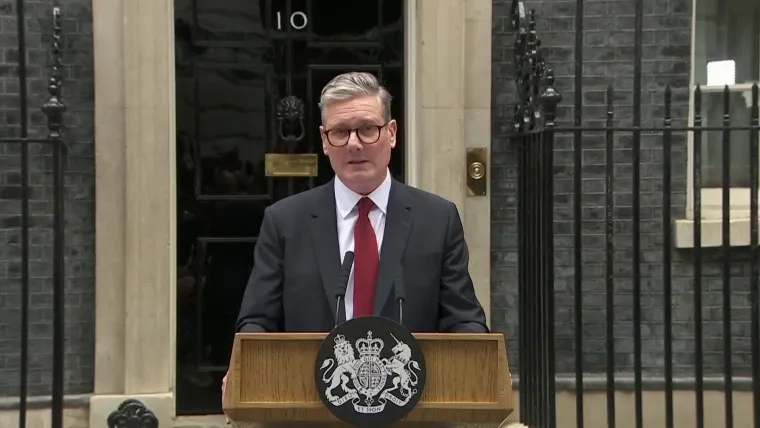
The Labour government under Keir Starmer has promised to “regain control” of immigration while upholding humanitarian obligations. Yet, record crossings, rising asylum backlogs, and policy U-turns have fueled perceptions of weakness. This failure of policy execution explains why far-right groups like Robinson’s find fertile ground.
Voices from the Ground: Supporters vs. Opponents
Supporters of the Rally
Many protesters framed their participation as a defense of family, safety, and cultural continuity. A grandfather in the crowd declared he was marching for his grandchildren’s safety, while others insisted illegal migration posed threats to jobs and public services.
Opposing Voices
Counter-demonstrators, however, painted a different picture. They rejected Robinson as a “racist thug,” arguing that migrants are scapegoated for broader systemic failures—underfunded public services, corporate tax evasion, and housing crises. They pointed out that blaming refugees diverts attention from wealth inequality and governance failures.
Britain’s Immigration Reality vs. Rhetoric
Illegal vs. Legal Immigration
One critical nuance often lost in protest rhetoric is the distinction between illegal and legal immigration. While asylum seekers crossing the Channel dominate headlines, the UK simultaneously depends heavily on legal migration for economic stability.
- Skilled Worker Visas: Thousands of foreign professionals enter legally each year under government programs.
- Student Visas: International students contribute billions annually in tuition fees and living costs.
- Seasonal Workers: Agriculture relies on migrant workers for harvests that would otherwise fail.
The rhetoric of “send them back” collapses these categories, portraying all migrants as threats rather than differentiating between irregular crossings and lawful contributions.
European and Global Comparisons
The UK is not alone in facing such debates. Across Europe, far-right parties have gained momentum by capitalizing on anti-immigration sentiments. France, Germany, and Italy have seen parallel protests, while the U.S. remains deeply divided over border policies. According to the Migration Policy Institute, such tensions reflect global patterns: economic uncertainty often fuels hostility toward migrants, regardless of their actual contributions.
Historical Parallels and Lessons
Britain’s immigration tensions are not new. From the arrival of the Windrush generation to heated debates over Eastern European migration post-2004, each wave of newcomers has sparked both resistance and eventual integration. The difference today lies in scale, media amplification, and the geopolitical backdrop of global displacement crises.
Looking back at history shows that while immigration initially triggers anxiety, it often becomes an engine of cultural richness and economic resilience. The protests in London, therefore, may one day be remembered less as a turning point against migration and more as a reflection of transitional anxieties in a changing world.
Political Fallout: What’s Next for the UK?
Pressure on the Labour Government
Prime Minister Keir Starmer faces mounting pressure to tighten border controls while avoiding accusations of xenophobia. His government must strike a delicate balance: appease public frustration, uphold international asylum obligations, and prevent extremist narratives from dominating the political stage.
Electoral Implications
Anti-immigration protests may bolster right-wing parties in upcoming elections. With populist leaders already gaining traction in Europe, the UK could see similar trends. Will Britain follow the path of countries like Italy, where nationalist politics now dominate governance?
Social Cohesion at Risk
Perhaps the most dangerous fallout lies beyond politics. Rising hostility risks further dividing communities, emboldening extremist violence, and weakening Britain’s multicultural fabric. As clashes in London show, the danger is not just rhetorical—it is physical, immediate, and deeply destabilizing.
Conclusion: Beyond the Protest – Britain at a Crossroads
The London protest was not just a march; it was a symptom of deeper national unrest. Immigration, once a technical policy issue, has become the emotional epicenter of Britain’s political crisis. The sheer scale of the demonstration reveals how raw and urgent the issue has become.
Yet, history, statistics, and expert analysis show a complex picture: migrants are both essential contributors and contested figures, simultaneously sustaining the NHS and straining public patience. As Britain navigates this crossroads, the choice is stark: will it allow extremist narratives to dictate its policies, or will it forge a balanced, humane, and economically sound path forward?
The outcome will shape not just immigration law, but the very identity of Britain in the decades to come.