Synopsis: Australia has officially banned Kanye West (Ye) from entering the country, revoking his tourist visa under Section 501 for hate speech after he released the anti‑Semitic song “Heil Hitler.” This move underscores Australia’s firm legal and moral stance against importing bigotry and upholding national values.
Kanye West Banned from Australia: A Wake-Up Call on Immigration, Hate Speech, and National Values
Kanye West, the globally recognized musician now legally known as Ye, has been officially banned from entering Australia. The Australian government made this decision following the release of a deeply offensive song titled Heil Hitler in May 2025. Despite being married to an Australian citizen, Bianca Censori, and holding a tourist visa valid for up to 12 months, Ye’s right to enter the country was revoked under strict immigration and character grounds. The decision brings to light Australia’s legal framework for visa cancellations on character grounds, sparking vital discussions around free speech, hate speech, and the values nations are willing to uphold or reject. Australia’s Department of Home Affairs outlines clear laws that allow visa refusals or cancellations when applicants fail the “character test” — a clause now used to block Ye’s entry.
Topics Discussed:
- Visa Cancellation and Australia’s Character Test
- Tony Burke’s Statement and Legal Justification
- Public Safety vs Free Speech: Where Does Australia Stand?
- The Role of Anti-Semitism in Immigration Decisions
- Impact on Australian Society and Youth Culture

Visa Cancellation and Australia’s Character Test
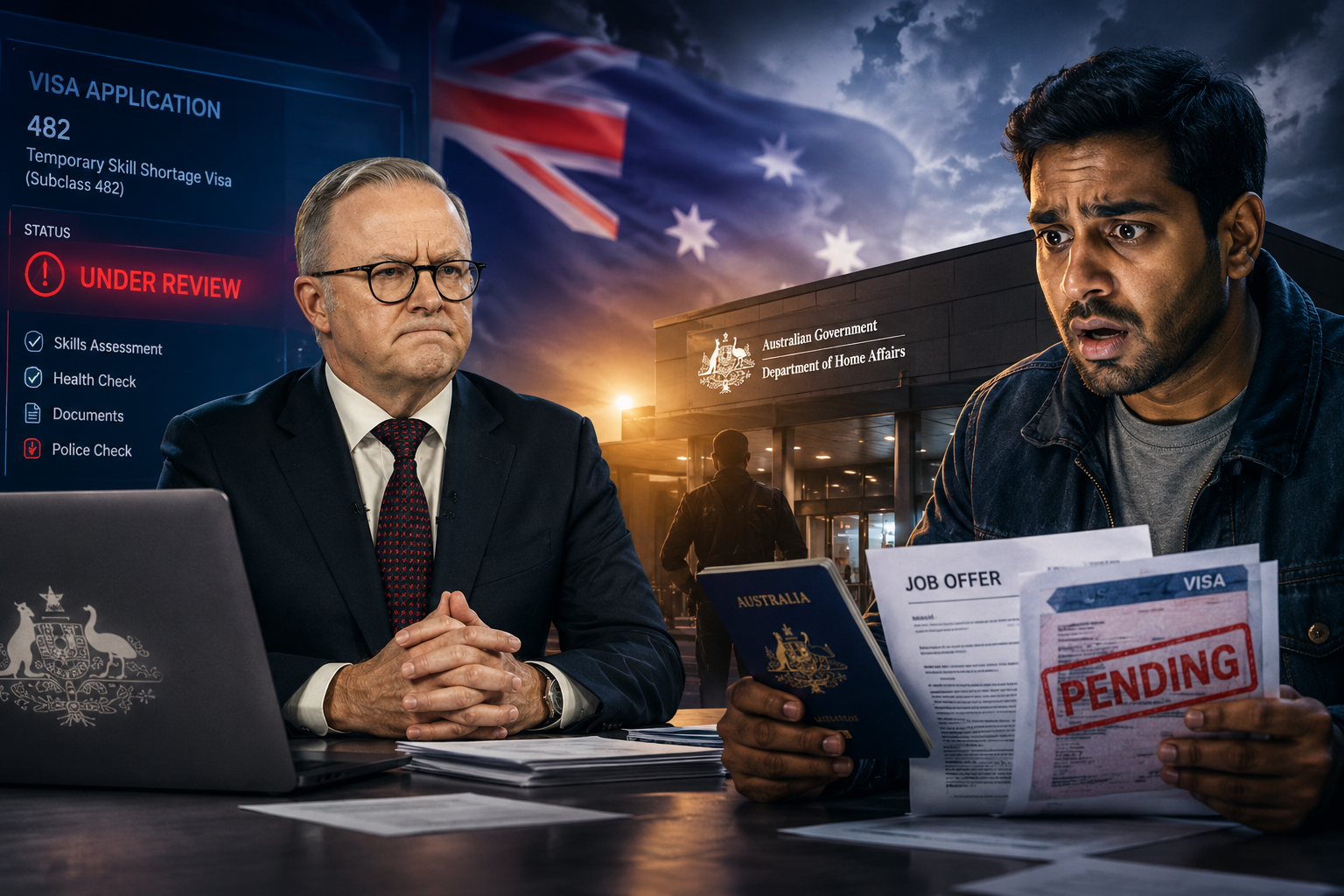
Australia’s Migration Act 1958 gives sweeping powers to the Minister for Immigration to cancel visas on character grounds. Section 501 of the Act allows for visa cancellation if the applicant poses a risk to the Australian community due to past or current behaviour. Kanye West’s case falls precisely under these provisions. His song Heil Hitler, along with previous statements glorifying Adolf Hitler and using anti-Semitic tropes, directly contradicts Australia’s national values and multicultural ethos.
While some critics argue the cancellation may infringe on freedom of speech, Australia’s immigration laws make it clear that non-citizens do not enjoy absolute rights under the Australian Constitution. In this case, the balance tilted in favour of national interest and societal harmony. The cancellation also follows previous actions taken against controversial figures, reinforcing consistency in application of the law.
Tony Burke’s Statement and Legal Justification
Home Affairs Minister Tony Burke confirmed the visa cancellation during a media appearance, stating that despite Ye holding a tourist visa not intended for concerts or professional activity, his recent behaviour warranted review.
“He’s been coming to Australia for a long time and he’s made a lot of offensive comments,” Burke said. “But once he released the Heil Hitler song, he no longer has a valid visa in Australia.”
Minister Burke clarified that while Australians enjoy freedom of speech, importing hatred is unacceptable. “We have enough problems in this country already without deliberately importing bigotry,” he added, referencing Australia’s robust hate speech laws and historical stance against neo-Nazi ideologies. This response aligns with Australia’s Racial Discrimination Act 1975, which criminalizes actions and speech that incite hatred based on race, ethnicity, or religion.
Public Safety vs Free Speech: Where Does Australia Stand?
The case raises fundamental questions: How far should a country go to protect itself from hate speech? Where is the line between freedom of expression and public safety?
Australia has long emphasized that freedom of speech is not absolute. In particular, non-citizens seeking entry must adhere to a higher standard of conduct. As immigration is a privilege, not a right, the government reserves the discretion to deny entry if an individual’s views or actions are deemed dangerous or harmful.
Globally, similar stances have been taken. The UK Home Office has previously banned controversial figures for promoting extremism, as has Canada. This reflects a growing global consensus: while countries uphold democratic rights, they are not obligated to extend those rights to foreign nationals.
The Role of Anti-Semitism in Immigration Decisions
Ye’s anti-Semitic rhetoric has a documented history. From praising Hitler in interviews with far-right media to threatening Jewish communities via social media, his behaviour has been widely condemned. His recent song was the tipping point.
The Australian Jewish Association had earlier urged the government to ban Ye, calling him a “lightning rod” for extremists. David Adler, the association’s president, warned that Ye inspires youth to normalize dangerous ideologies. “He uses terms like going DEFCON 3 on the Jewish people. He’s a significant risk,” Adler said.
In 2023, Ye made headlines globally after telling far-right commentator Alex Jones: “I like Hitler… I love Jewish people, but I also love Nazis.” Such rhetoric carries real-world consequences. Studies show that celebrity endorsement of hate speech can embolden extremist groups and incite real-life violence.
Australia’s response reflects a proactive policy to counter rising global antisemitism, which has seen an uptick in recent years. According to the Anti-Defamation Commission, antisemitic incidents in Australia rose by 35% in 2024 alone.
Impact on Australian Society and Youth Culture
One of the key concerns raised by critics is the influence Ye holds over young Australians. As a major global icon with millions of followers, his messages reach far beyond entertainment. In an era where youth culture is deeply shaped by celebrity behavior, platforming dangerous ideologies — even indirectly — can result in normalization of bigotry and intolerance.
The Australian government’s decisive action sends a strong message: celebrity status does not shield one from consequences. This move may serve as a precedent for future visa assessments involving high-profile individuals with extremist views.
There is also a broader societal implication. Australia has faced its own reckoning with extremism, from far-right protests to acts of racial violence. Cutting off platforms that promote hate aligns with national efforts to combat radicalization and preserve social cohesion. The decision also reinforces Australia’s alignment with international norms regarding hate speech and immigration, such as those upheld by the United Nations Human Rights Council.
Conclusion
Australia’s cancellation of Kanye West’s visa is more than a response to one offensive song — it is a clear assertion of national values in the face of rising global hate speech. The move reflects a legal, moral, and political stance: bigotry will not be imported, regardless of fame or influence.
By enforcing its immigration laws strictly and transparently, Australia reaffirms its commitment to multiculturalism, tolerance, and public safety. This case should serve as a reminder to all foreign nationals — visa privilege carries the weight of responsibility. For governments worldwide, the message is also clear: guarding against ideological threats requires more than border control; it requires moral clarity.
As societies globally wrestle with the tension between speech and safety, Australia has drawn a firm line — one that many democracies may soon be compelled to follow.
Frequently Asked Questions (FAQs)
Why was Kanye West banned from entering Australia in 2025?
Kanye West, legally known as Ye, was banned after releasing an anti-Semitic song titled Heil Hitler. The Australian government deemed his actions to violate the country’s immigration laws on character grounds and rejected his tourist visa.
What law did Australia use to cancel Kanye West’s visa?
Australia applied Section 501 of the Migration Act 1958, which allows visa cancellations if a person fails the “character test”—including promoting hate speech or posing a risk to community safety.
Is freedom of speech a valid defense for Kanye West’s ban from Australia?
No. While Australians enjoy freedom of speech, non-citizens like Kanye are subject to stricter rules. Immigration law prioritizes national interest over individual expression for foreign nationals.
What did Kanye West say that caused his visa to be cancelled?
Kanye West praised Adolf Hitler, made multiple anti-Semitic statements, and released a song called Heil Hitler in May 2025. These actions triggered widespread condemnation and legal action.
Has Australia banned other celebrities in the past for similar reasons?
Yes. Australia has denied visas to individuals with criminal records, hate speech allegations, or extremist affiliations. The country takes a strict stance on character requirements for entry.
Is Kanye West’s wife, Bianca Censori, allowed to enter Australia?
Yes. Bianca Censori, an Australian citizen from Melbourne, retains her right to enter the country. However, her husband Kanye West is now officially prohibited from accompanying her.
Can Kanye West appeal the visa ban from Australia?
While visa cancellations can sometimes be appealed, decisions made under public interest and national security grounds—like Ye’s case—are often final and hard to overturn.
How did Australia’s Jewish community respond to Kanye West’s statements?
The Australian Jewish Association strongly condemned Ye’s actions and formally requested the government to deny him entry, citing risks of radicalization and community harm.
What is the impact of Kanye West’s ban on his global reputation?
The ban adds to Ye’s growing list of controversies, potentially affecting future international tours, endorsements, and public opinion—especially in countries with strict anti-hate laws.
Where can I read the official laws about visa cancellation in Australia?
You can read the legal framework under Section 501 of the Migration Act 1958 via the official Australian Government legislation website.