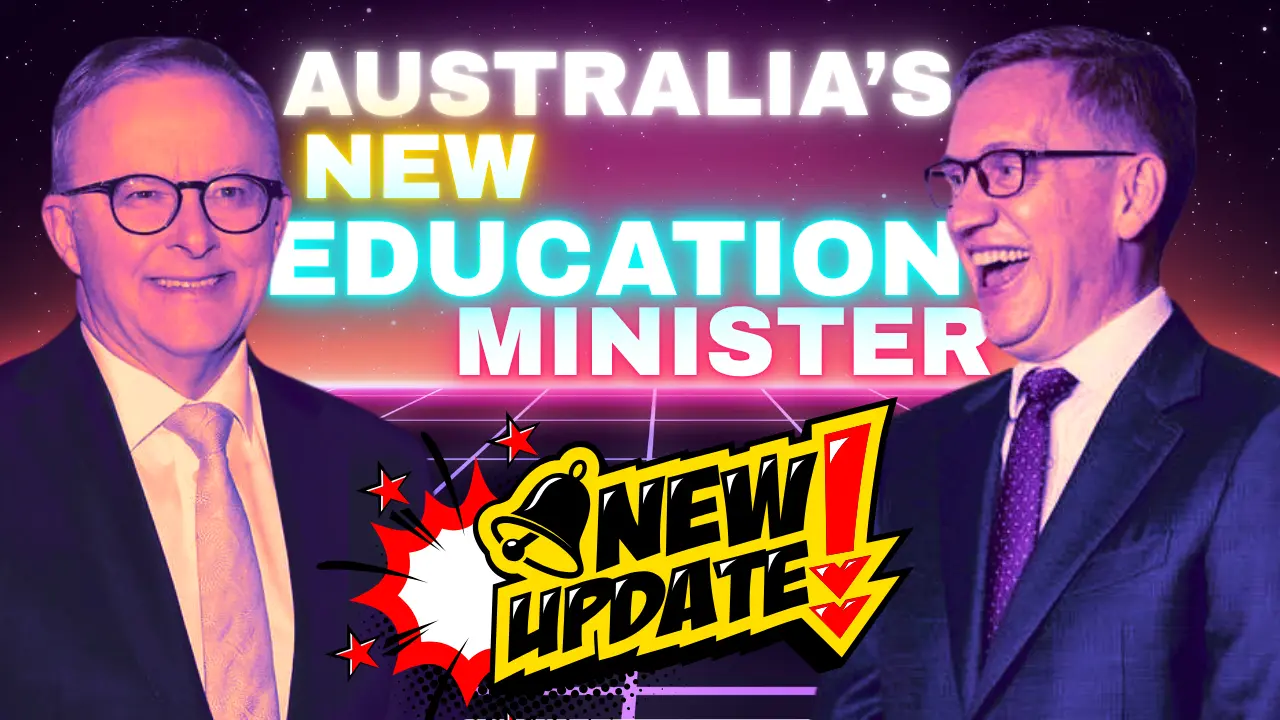
Synopsis: Following Labor’s re-election in May 2025, PM Anthony Albanese appointed Julian Hill as Australia’s first assistant minister for international education. The new role signals a renewed focus on education quality, oversight, and sustainability in one of Australia’s most valuable export sectors amid proposed visa reforms and industry scrutiny.
Australia’s international education sector—a multibillion-dollar industry and the country’s fourth-largest export—enters a new era of reform and renewed oversight. With the re-election of the Labor government in May 2025, Prime Minister Anthony Albanese unveiled a reshuffled cabinet featuring a dedicated role for international education. Victorian MP Julian Hill was appointed as assistant minister for international education, a new portfolio designed to spearhead policy, quality control, and international engagement in a sector facing growing scrutiny.

This strategic appointment arrives at a time when the industry is grappling with reputational concerns, tighter immigration policies, and an urgent need to recalibrate standards. As Hill assumes his new post, stakeholders across the globe are watching closely to see whether Australia can re-establish its leadership in global education while preserving quality, integrity, and competitiveness.

What Is the Policy/Issue?
 The appointment of a dedicated assistant minister for international education marks a significant policy shift in how Australia governs its education export sector. Previously, responsibilities for international education were shared across multiple portfolios, leading to fragmented oversight.
Core Objectives of the New Appointment:
- Improve education quality standards for international students
- Strengthen student experience and support
- Monitor and address inappropriate activity or exploitation
- Foster global ties through alumni networks and institutional collaboration
- Coordinate with immigration and skills portfolios to ensure policy cohesion
In recent years, the sector has faced criticism over questionable providers, student welfare gaps, and its use as a backdoor to immigration. The Albanese government’s creation of this ministerial role—entrusted to an experienced advocate like Julian Hill—is a policy response to restore balance, integrity, and sustainability.
Why Now? (Causes, Pressures, Manifesto Pledges, etc.)
 Post-COVID Recovery Meets Political Pressure
International education is rebounding post-pandemic, with over 700,000 international students expected to study in Australia in 2025 (Australian Government Education Data). However, growing student numbers have sparked fears of overcrowding, pressure on infrastructure, and immigration loopholes.
Election Commitments and Sector Backlash
Labor’s 2025 election platform included controversial proposals, such as raising student visa fees and imposing caps on enrolments—measures fiercely opposed by universities and education providers.
Source: The Guardian Australia – Visa Fee Hikes
Quality and Compliance Concerns
A wave of compliance investigations revealed that some private colleges offered subpar courses and exploitative conditions. The government has faced calls for more transparent regulation and enforcement of TEQSA and ASQA standards.
Source: Tertiary Education Quality and Standards Agency (TEQSA)
Long-Term Sustainability
Julian Hill has repeatedly argued that Australia must prioritize long-term sustainability over short-term gains, with student experience and academic quality at the forefront.
Who Will Be Affected?

International Students
- Face increased visa costs, with fees expected to rise from AUD 650 to over AUD 1,000
- Could see fewer enrolment spots due to proposed institutional caps
- May benefit from stronger student protection policies and a focus on mental health, housing, and academic standards
Education Providers
- Must comply with tighter quality control measures
- Institutions may be required to demonstrate value beyond visa sponsorship
- May need to invest more in academic rigor, student support services, and post-graduation outcomes
Recruitment Agencies
- Subject to stricter licensing and audit checks
- Greater accountability in marketing, enrollment, and immigration-linked promises
Australian Economy
- Affected by changes in international student intake, which contributed over AUD 48 billion to the economy in 2023, including tuition fees, accommodation, and living expenses (Austrade)
Alumni and Global Networks
- Hill’s appointment signals intent to leverage alumni diplomacy, strengthening Australia’s global partnerships through student connections—particularly in key markets like India, China, and Southeast Asia
Expert Opinions (Legal, Economic, Educational, etc.)

Legal Experts
Immigration lawyers from Migration Institute of Australia emphasize the importance of clear policy distinction between genuine students and economic migrants, warning that overlapping immigration and education goals can lead to exploitation and legal gray zones.
Economists
According to Deloitte Access Economics, the international education sector supports over 250,000 Australian jobs. However, they warn that unchecked growth could lead to public backlash and loss of global trust if standards are not maintained.
Source: Deloitte – International Education Impact Report
University Sector
Universities Australia welcomed Hill’s appointment but urged the government to ensure visa policies remain competitive. CEO Catriona Jackson noted: “We must not discourage bright, motivated students from choosing Australia by layering on financial and policy barriers.”
Source: Universities Australia
Student Advocates
Student unions, including the Council of International Students Australia (CISA), have long called for better mental health services, housing support, and protection from exploitation. They hope Hill’s role will prioritize these demands.
International Comparison

Canada
Canada’s International Education Strategy emphasizes post-graduation pathways and employment rights, with coordinated oversight by federal and provincial bodies. Its Post-Graduation Work Permit Program (PGWPP) is a major draw for students.
United Kingdom
UK international education policy emphasizes graduate retention and recently launched a Graduate Route allowing two years of post-study work. However, recent visa tightening under Rishi Sunak’s government has created uncertainty.
United States
The U.S. offers world-class institutions but remains bureaucratically complex. F-1 visa holders face strict work limitations and delays in green card pathways, making Australia comparatively attractive.
New Zealand
NZ emphasizes pastoral care and has a Code of Practice that all providers must adhere to, ensuring student welfare is protected across academic and living environments.
Australia’s move to appoint a dedicated assistant minister aligns it with global best practices, enhancing policy cohesion and student experience.
Better Policy Alternatives

To ensure the sector thrives while maintaining high standards, several policy refinements are recommended:
1. Outcome-Based Regulation
Shift from compliance-driven metrics to student outcomes—including employment rates, academic progression, and student satisfaction.
2. Tiered Institutional Accreditation
Implement a tiered system where high-performing institutions gain streamlined visa processing and incentives, while underperformers face stricter audits.
3. Integrate Skills and Education Policies
Ensure coherence between skills demand (Jobs and Skills Australia) and student intakes by aligning course offerings with national labour market needs.
4. Support for Smaller Institutions
Provide targeted funding and regulatory guidance for smaller education providers, helping them comply with quality standards without excessive financial burden.
5. Transparent Data Sharing
Publish quarterly reports on student visa approval rates, provider performance, and student welfare issues to enhance transparency and trust.
Key Takeaways

- PM Albanese’s re-election has led to the creation of a new assistant minister for international education, signaling strategic reform.
- Julian Hill, a long-time advocate for education quality and student welfare, has been appointed to the role.
- The sector is under pressure to balance growth, quality, and sustainability amid rising enrolments and global scrutiny.
- Higher visa fees, tighter caps, and compliance audits are expected as part of upcoming reforms.
- Stakeholders, from universities to student groups, cautiously welcome the appointment but call for measured and student-centric implementation.
- International comparisons suggest that integrated oversight, transparent metrics, and student rights protections are vital for sustainable success.
Final Thought

Julian Hill’s appointment as Australia’s first assistant minister for international education marks a pivotal shift in how the nation perceives and governs one of its most critical export sectors. Beyond revenue, this role recognizes that students are people—not just numbers in a budget line.
For too long, policy has oscillated between treating international education as a visa lever or a cash cow. Hill’s task will be to reframe it as a nation-building initiative—a soft power tool, an economic pillar, and a vehicle for global connection.
If executed wisely, this portfolio could cement Australia’s reputation as a beacon of world-class education and ethical governance. But if mishandled—with kneejerk restrictions or neglect of student welfare—it could unravel the very trust that built this sector.
The choice, and the challenge, now lies with Canberra.