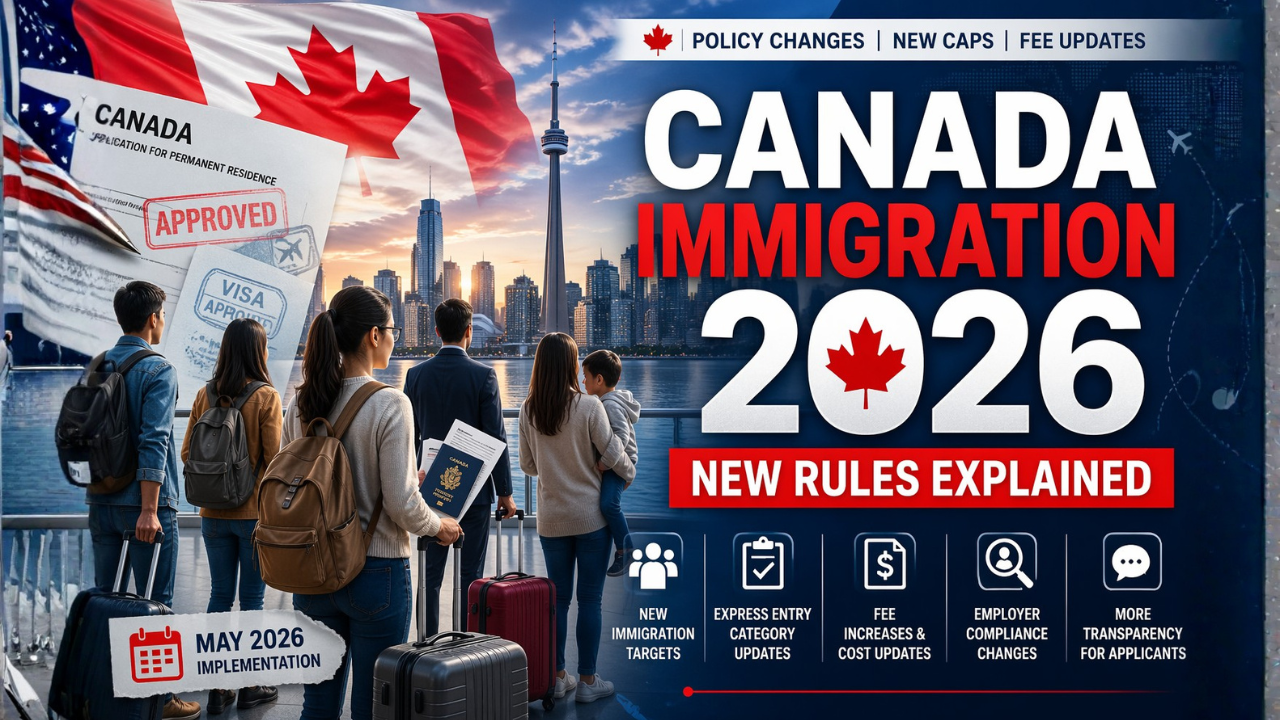
Synopsis: Canada’s new Prime Minister, Mark Carney, is tightening immigration, capping PRs at under 1% and cutting temporary residents to 5% by 2028. Stricter rules will impact students and workers, while francophone and skilled immigration get priority. Canada’s doors remain open—but only for the highly aligned and qualified.
Introduction: Tipping the Balance on Temporary Migration
Can Canada sustain record-breaking immigration while managing its housing crisis and strained public services? Prime Minister Mark Carney believes not—and has moved swiftly to act. Within days of securing a minority mandate in April 2025, his government unveiled sweeping immigration reforms that promise to reshape how Canada admits foreign students and temporary workers.
At the core of the plan: a controversial population-based cap. Temporary residents—international students, foreign workers, and others—will be limited to 5% of Canada’s total population by 2028, down from the current 7.3%.
The shift has sparked a flurry of responses, with some calling it necessary course correction and others warning of economic self-sabotage. So, is Canada protecting public interests or jeopardizing its global talent pipeline?

What Is the New Policy?
Key Elements of Canada’s Immigration Reset
At a May 3, 2025 press conference, Carney reaffirmed a plan to:
- Cap temporary residents (including international students and workers) to 5% of the national population by 2028.
- Limit permanent resident admissions to below 1% of the population annually after 2027:
- 395,000 in 2025
- 380,000 in 2026
- 365,000 in 2027
- Restrict Post-Graduation Work Permits (PGWPs) and Spousal Open Work Permits (SOWPs) eligibility.
- Tighten application processing for study permits.
- Increase francophone immigration outside Quebec to support linguistic diversity.
- Expand the Global Skills Strategy for high-demand talent with fast-track visas.
Full policy details are expected in the updated Immigration Levels Plan 2025–2027.
Why Now? Political and Economic Pressures
A Reaction to Surging Temporary Residents
According to IRCC data, as of January 2025, Canada had over 3.02 million temporary residents, about 7.25% of its 41.5 million population. This represents a massive increase from pre-pandemic numbers.
Housing shortages, overwhelmed healthcare systems, and lagging infrastructure are fuelling dissatisfaction. Carney criticized the Trudeau government for failing to anticipate the post-pandemic immigration surge:
“We have not lived up to the bargain with new immigrants.”
His government now aims to stabilize growth and ensure communities can support newcomers.
Manifesto Commitments
Carney’s Liberal Party campaign committed to “sustainable immigration.” The 5% cap is framed as temporary—lasting until housing supply and immigration processing catch up.
Who Will Be Most Affected?
International Students and Post-Grad Workers
Canada’s world-class education sector could be hit hard:
- Over 1 million international students were in Canada by 2024 (CBIE), contributing CAD 22 billion to the economy.
- Many students rely on PGWPs and SOWPs to stay and work after graduation.
- Stricter criteria may deter students from choosing Canada.
Temporary Foreign Workers
The Temporary Foreign Worker Program (TFWP) will likely see:
- Reduced intake
- Re-prioritized labour market assessments
- A shift toward domestic upskilling initiatives
Carney emphasized Indigenous and local workforce development:
“We must build more houses using Canadian skilled workers and Indigenous people.”
Expert Views: Balanced Reform or Economic Gamble?
Immigration Analysts Weigh In
Darshan Maharaja, a Canada-based immigration writer, told Business Standard:
“The indications are that [Carney] would not be making significant changes to the existing policies in this regard.”
Stephen Warren Green, managing partner at Green and Spiegel LLP, said:
“The immigration policy would be totally reviewed… geared towards specific industries and education pathways.”
He added that stronger India-Canada ties could offset some policy risks.
Education Leaders Respond
Universities Canada has warned that sudden caps could harm schools reliant on foreign enrolment. Similar policies in Australia led to a 19% drop in enrolment in 2024.
International Comparison
Australia
In 2024, Australia introduced student visa caps and limited post-study work rights. Result: a sharp decline in international student inflows.
United Kingdom
The UK increased its skilled visa salary threshold and barred foreign students from bringing dependents—leading to a 37% drop in visa applications by 2025.
United States
The U.S. has avoided caps but uses strict visa vetting and employer sponsorship systems, which restrict spontaneous entry while protecting high-skill pathways.
Better Policy Alternatives
Rather than blanket caps, experts suggest:
- Regional caps to match local housing and job capacity
- Priority sectors for PGWPs and TFWs aligned with national skill needs
- Partnerships with post-secondary institutions to ensure students are well-supported
- Exit-tracking systems for better temporary resident monitoring
- Co-investment in housing and infrastructure tied to immigration flows
These measures would preserve economic benefits while improving oversight.
Key Takeaways
- Canada will cap temporary residents at 5% of the population by 2028.
- Study permit approvals, work visa pathways, and family permits will be restricted.
- Permanent resident admissions to fall below 1% annually post-2027.
- Francophone immigration, global talent, and skilled migration remain prioritized.
- Education and business sectors worry about long-term impacts.
Final Thought
Canada’s immigration reset aims to align numbers with national capacity—but must avoid throwing the baby out with the bathwater. A thriving economy depends on talent, innovation, and diversity. Policymakers should refine—not restrict—the system, ensuring immigration remains a tool for national strength, not a scapegoat for domestic policy failures.