Synopsis: Canada’s international student model, heavily reliant on Indian enrolments, is facing a crisis. Violence, unaffordable housing, political tensions, and weak enforcement have combined to undermine student safety. This in-depth analysis examines how systemic failures are turning a once-promising pathway into a high-risk gamble.
Why Canada’s Student Visa Pathway Is Becoming Riskier for Indian Students
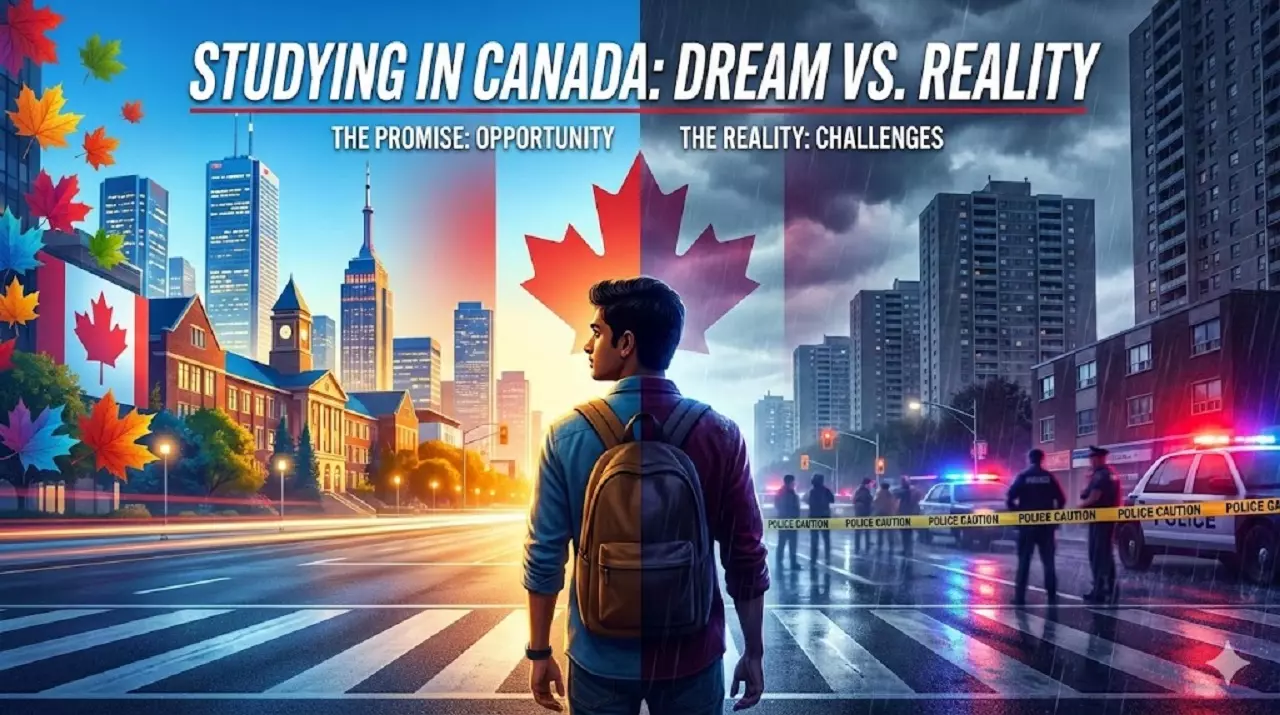
For decades, Canada marketed itself as one of the world’s safest and most welcoming destinations for international students. That image is now under severe strain. A growing number of violent deaths, disappearances, and exploitation cases involving Indian students have exposed uncomfortable truths about Canada’s student immigration model. According to official immigration data published by Immigration, Refugees and Citizenship Canada, Indian nationals now form the backbone of Canada’s international education system—yet the institutions meant to protect them are failing. What was sold as a secure investment in education and permanent residency is increasingly viewed as a dangerous and financially ruinous gamble.
This blog critically examines how Canada’s student visa framework, urban planning failures, rising crime, and political inertia have converged to place Indian students at unprecedented risk.

Understanding the Policy/Event
Canada’s international student program expanded aggressively over the past decade, driven by economic incentives rather than long-term settlement planning. Universities, private colleges, and provincial governments relied heavily on international tuition to offset funding gaps, while federal immigration policy framed students as “ideal migrants” who would transition smoothly into the workforce and permanent residency.
Indian students became central to this strategy. By 2023, they accounted for roughly 37–41% of all international study permits issued, a dominance unmatched by any other nationality. The promise was simple and powerful: study in Canada, obtain a post-graduation work permit (PGWP), gain Canadian work experience, and eventually qualify for permanent residency.
Why It Is Happening
Several forces drove this rapid expansion:
- Chronic underfunding of Canadian post-secondary institutions
- Federal immigration targets prioritising temporary residents
- Labour shortages in low-wage and semi-skilled sectors
- Political consensus that international students boost GDP without immediate social costs
What policymakers underestimated was scale. Hundreds of thousands of students arrived in cities already suffering from housing shortages, strained policing resources, and limited social integration services. The result was a fragile ecosystem where students were economically essential but socially expendable.
Key Reforms or Changes
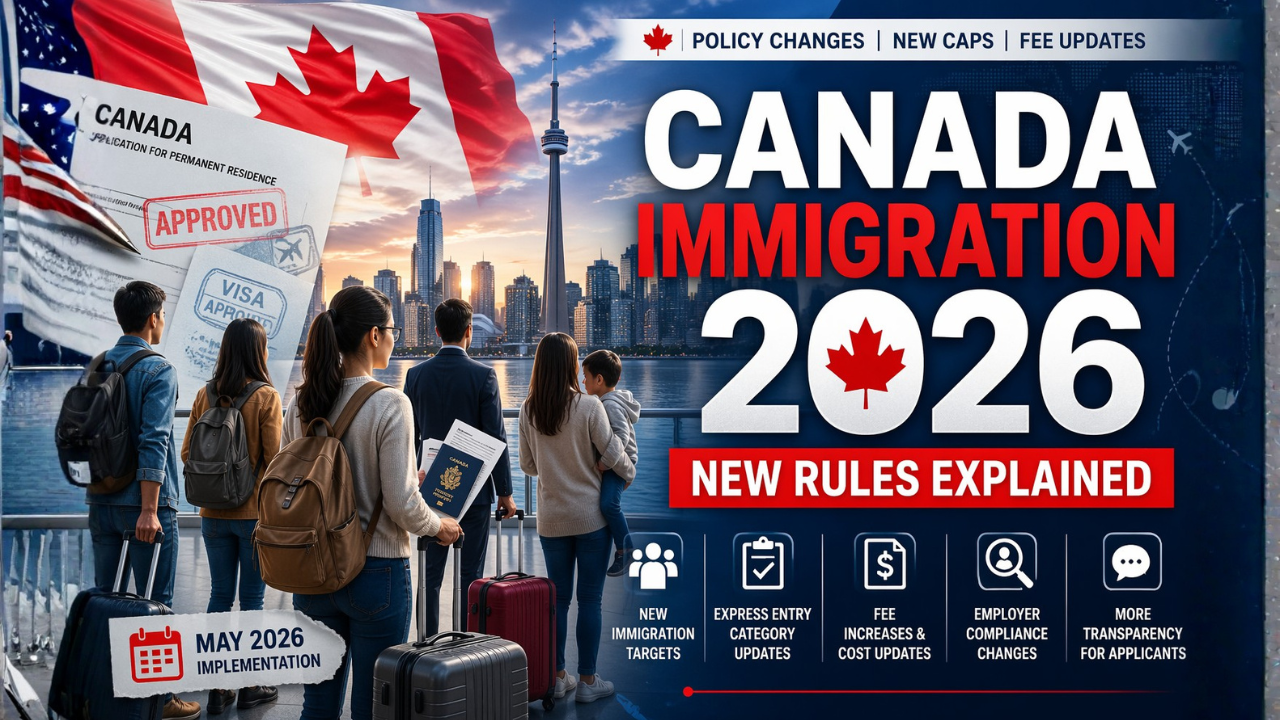
As warning signs emerged, Canada introduced piecemeal adjustments rather than structural reform. These included tighter scrutiny of private colleges, proposed caps on international student numbers, and modest increases to financial requirement thresholds. However, these measures failed to address core vulnerabilities.
Detailed Breakdown
Key policy gaps remain unresolved:
- Housing supply: Student intake expanded without parallel investment in affordable housing.
- Enforcement imbalance: Immigration compliance is strictly enforced, while student safety is weakly protected.
- Labour exploitation: Work-hour limits push students into informal employment.
- Policing failures: Hate crimes and extortion cases are often downgraded or delayed.
Instead of recalibrating intake to match infrastructure capacity, Canada continued promoting itself globally as a low-risk study destination.
Data, Stats, and Trends
The numbers tell a stark story. Indian students are not a marginal group; they are the system.
In 2023 alone, approximately 278,000 Indian nationals held valid Canadian study permits. International education now generates over CAD 10 billion annually in tuition revenue, according to national economic estimates. Yet student outcomes are deteriorating.
What the Numbers Show
Several trends stand out:
- Housing costs: Data from Statistics Canada shows rental inflation consistently outpacing wage growth in student-heavy cities.
- Dropouts: In 2024, nearly 20,000 Indian students vanished from institutional records, not through emigration but economic collapse.
- Urban rent levels: A one-bedroom apartment in Brampton now averages CAD 2,100 per month, while studios in Surrey approach CAD 1,700.
- Debt exposure: Many students carry education loans exceeding INR 40–60 lakh, making withdrawal financially catastrophic.
These pressures push students out of classrooms and into the informal economy, where legal protections vanish.
Impact Assessment
The consequences of this systemic failure extend far beyond policy metrics. They affect lives, families, and communities across continents.
Indian students who fall out of legal status do not disappear—they adapt. They work overnight delivery routes, staff isolated industrial sites, and take cash-in-hand jobs to survive. This invisibility creates ideal conditions for exploitation.
Social, Economic, and Human Consequences
The impact manifests in multiple ways:
- Physical danger: Violent deaths in cities like Hamilton and Toronto are no longer isolated anomalies.
- Extortion networks: Criminal groups target students who fear police and deportation.
- Mental health collapse: Isolation, debt anxiety, and racial hostility contribute to rising distress.
- Family devastation: Parents who sold land or mortgaged homes face irreversible loss.
Housing shortages documented by the Canada Mortgage and Housing Corporation further intensify overcrowding, forcing students into unsafe and illegal living arrangements.
Political Background & Stakeholder Reactions
Canada’s political response has been cautious to the point of paralysis. Federal and provincial leaders acknowledge “pressures” but avoid framing the crisis as a failure of governance.
Diplomatic tensions between India and Canada—particularly surrounding Khalistan-related activism—have complicated the narrative. While political speech is protected, its spillover into community hostility has been inadequately addressed.
Government, Opposition & Expert Opinions
Key reactions include:
- Government stance: Emphasis on freedom of expression and gradual policy tweaks.
- Opposition criticism: Claims that immigration targets outpaced infrastructure capacity.
- Community warnings: Indian authorities have repeatedly raised concerns about criminal infiltration and student safety, echoed in advisories reported by The Globe and Mail.
Law enforcement responses to hate crimes and extortion are frequently described as slow, procedural, and dismissive, reinforcing perceptions of second-class protection.
Global Comparisons
Canada is not alone in relying on international students, but its risk exposure is uniquely high due to scale and concentration.
Where This Stands Internationally
Compared with peer destinations:
- Australia has tightened work-hour compliance while expanding purpose-built student housing.
- The UK has reduced dependent visas and limited post-study work duration, lowering intake pressure.
- The US enforces stricter enrolment compliance but offers stronger campus-based security frameworks.
Canada, by contrast, expanded intake without equivalent safeguards, creating a mismatch between promise and protection.
Critical Analysis
At its core, this crisis reflects a structural contradiction. Canada treats international students as both economic assets and temporary guests, denying them full protection while extracting maximum value.
Students are encouraged to integrate economically but discouraged from seeking institutional support. Policing hesitancy, political caution, and administrative fragmentation leave gaps that criminal actors exploit.
Will It Work?
Without fundamental reform, the model is unsustainable. Cosmetic policy changes will not restore confidence. Effective solutions require:
- Aligning student intake with housing and enforcement capacity
- Strengthening hate crime and extortion investigations
- Decoupling education policy from short-term fiscal dependence
- Transparent risk communication to prospective students
By late 2025, declining and unstable enrolment signals that families are reassessing the “Canadian dream.”
Conclusion
Canada’s international student system was built on trust—trust that safety, opportunity, and fairness would follow compliance and sacrifice. For many Indian students, that trust has been broken. Rising violence, unaffordable living costs, and weak institutional protection have transformed a once-attractive pathway into a high-risk undertaking.
Until Canada confronts these systemic failures honestly, the promise of education and permanent residency will continue to mask a dangerous reality. For students and families alike, informed caution is no longer optional—it is essential.