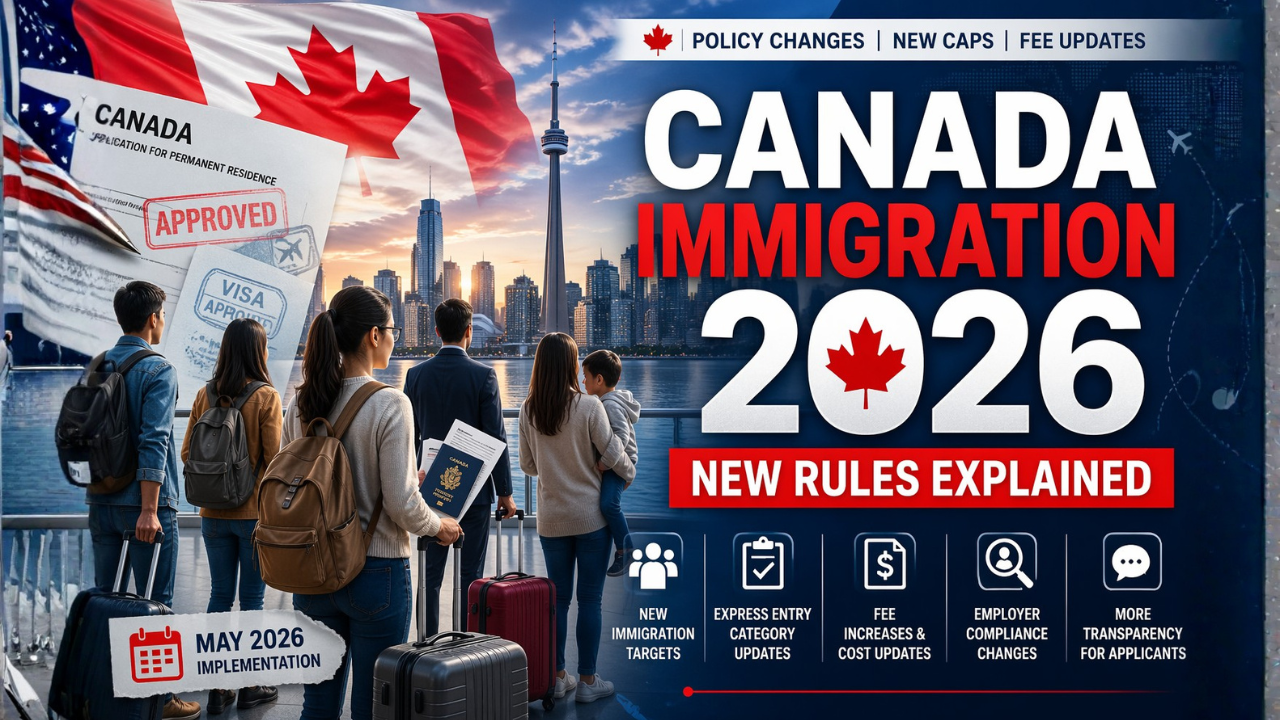
Synopsis: Canada immigration changes 2025 increase financial scrutiny and raise refusal rates. Applicants should submit CA net-worth reports, property valuation certificates, consistent bank histories, employment proofs, and clear home-country ties. This guide outlines practical documentation steps and strategies to strengthen applications, reduce refusal risk, and navigate longer processing times effectively. confidently.
Canada Immigration Update 2025: Financial Scrutiny, Rising Refusals, and the Critical Role of Home-Country Ties
Applicants across the world are expressing concern as the Canadian visa process becomes increasingly detail-driven in 2025. Processing times remain inconsistent, document verification is being tightened, and refusal rates have increased across multiple categories. According to the official IRCC processing time reports , the timelines for study permits, spouse open work permits, and visitor visas have recently fluctuated, reflecting heightened administrative scrutiny.
If you are planning to apply, are awaiting a decision, or have submitted new documents through a webform, understanding these changes is critical. This article provides a factual, structured overview of current trends and, importantly, explains how to build strong financial credibility to avoid refusals—especially those citing insufficient ties or doubts regarding your intent to return after your authorized stay.

The Changing Landscape of Canada Immigration Applications in 2025
As Canada continues to adjust its immigration policy to economic, labor market, and compliance pressures, the visa review system has become more attentive to document authenticity and applicant intent. While Canada remains open to skilled professionals, international students, and families, the evaluation standards applied to individual applications have tightened.
Why Processing Times Feel Longer
Applicants frequently report that their files remain “in progress” for months without visible movement. This is not always a sign of rejection risk—it can simply mean that:
- Security and background checks take longer than expected
- Documents are being verified with third-party institutions
- Additional internal consideration is being given to financial reliability
- Embassy workloads differ by region and season
At times, IRCC also adjusts processing speed based on policy direction. For example, when addressing backlogs, certain programs may be prioritized temporarily, while others slow down. Applicants often misunderstand this as negligence; however, it reflects operational decisions that vary week to week.
The Importance of Staying Aligned With Embassy Trends
Immigration firms, consultants, and legal teams monitor daily shifts in what visa officers request during review. These trends matter because decisions are not purely rule-based—case officers must evaluate credibility holistically.
Applicants who rely solely on outdated 2022–2023 checklists risk submitting incomplete or poorly structured files, leading to unnecessary refusals.
Update 1 — Embassy Requests for Updated Financial Documentation
One of the most significant trends of early 2025 is embassy requests for updated financial proof. Even applicants who initially submitted complete bank statements and balance certificates are receiving follow-up document requests.
Why Are Updated Financial Statements Being Requested?
Embassies want to verify that the applicant’s financial standing is current, genuine, and stable—not artificially inflated for application purposes. The IRCC financial support criteria clarifies that applicants must demonstrate realistic, ongoing funds, not temporary deposits.
This means:
- Showing recent transactions
- Avoiding sudden large deposits just before applying
- Keeping required funds untouched until after arrival in Canada
If funds were withdrawn after application submission and the embassy requests updated statements, the applicant risks a refusal due to “insufficient financial capacity” or “inability to support stay.”
A Critical Rule Applicants Often Overlook
Do not withdraw your shown funds until:
- Visa is approved
- You have traveled to Canada
- You have cleared immigration and exited the arrival terminal
Many applicants mistakenly withdraw funds after receiving a biometric request or eligibility review update. This creates financial inconsistencies that trigger document reviews or refusals.
Update 2 — Spouse Open Work Permit Applicants Face Increased Pay-Slip and Employment Verification
Applicants in the spouse open work permit (SOWP) category now face additional verification. Officers are requesting:
- Recent pay-slips from the spouse in Canada
- Employment contracts and tax records
- Employer confirmation letters
These documents help verify whether the sponsoring spouse is genuinely employed and capable of supporting the applicant. The Temporary Work Permit eligibility guidelines emphasize the need for clear financial stability and lawful work status in Canada.
Applicants whose spouses are working cash jobs, are in probation periods, or do not have documented earnings may encounter difficulties demonstrating eligibility.
Rising Refusals in Visitor Visa and Study Permit Categories
Many applicants are reporting refusal reasons that seem contradictory, such as:
- “Insufficient financial resources,” despite showing large sums
- “Purpose of visit not justified,” even with detailed travel plans
- “You will not leave Canada after your stay,” despite strong home ties
Why Are Applicants Being Refused Even With Funds?
In reality, bank balance alone does not establish financial credibility. Officers assess:
- Consistency of financial history
- Legitimacy of income sources
- Asset ownership and long-term stability
- Life commitments that encourage returning home
A person who shows ₹10–20 lakh in a bank statement but does not provide audited proof of assets, real property, investments, business ownership, or long-term employment ties risks being perceived as someone who may not return.
The “You Will Not Leave Canada” Clause
Under the Immigration and Refugee Protection Act, officers must assess “temporary intent” for most categories. If evidence does not clearly demonstrate return motivation, refusal is likely—even when financial capacity is adequate.
The Most Overlooked Yet Critical Documents: CA Report and Property Valuation Report
One of the strongest ways to prove long-term home-country ties is through Chartered Accountant (CA) Net Worth Reports and Property Valuation Certificates. Yet many applicants ignore these documents because the embassy does not explicitly request them in standard checklists.
Why These Reports Matter
A CA Net Worth Report consolidates your:
- Land and real estate value
- House ownership
- Business ownership and partnership stakes
- Vehicles and gold assets
- Fixed deposits and investments
A Property Valuation Report verifies the present market value of your land or home.
Together, these reports show:
- Your deep economic ties to your home country
- Your financial stability beyond just cash savings
- A compelling reason for you to return after your stay
How Visa Officers Interpret These Reports
Visa officers evaluate whether you have more to lose by staying illegally in Canada than by returning home.
When the net worth shown in the CA report runs into crores, it strengthens the officer’s confidence that:
- The applicant is established
- The applicant has stable life commitments
- The applicant has no incentive to overstay
These factors directly counter the refusal clause, “I am not satisfied you will leave Canada after your stay.”
Linking Financial Strength to Travel Intent
The Canada Border Services Agency (CBSA) also assesses intent during arrival examinations, focusing on proof of temporary stay and lawful purpose. Their enforcement guidance highlights that officers may question applicants whose financial or travel story appears inconsistent.
Building a consistent narrative across:
- Bank statements
- Income and tax records
- CA and property valuation reports
- Travel purpose explanation
- Return-to-home commitments
…is essential for approval.
Practical Steps to Strengthen Your 2025 Application
Below is a clear, actionable checklist applicants can follow:
For All Applicants
- Maintain funds in your account until after arrival in Canada
- Submit updated statements when requested
- Ensure funds match your income profile and lifestyle
For Study Permit Applicants
- Provide a clear academic purpose and logical education progression
- Attach CA Net Worth Report & Property Valuation
- Demonstrate realistic post-study plans in home country
For Spouse Open Work Permit Applicants
- Include spouse’s valid employment letter + pay-slips (last 3–6 months)
- Add tax filing proof and job stability documents
- Avoid any employment gaps unless explained
For Visitor Visa Applicants
- Provide strong home commitments (job, business, property, family)
- Clearly explain the temporary purpose of the visit
Why Many Applicants Fail — The Core Issue
Most refusals stem from incomplete evidence, not weak profiles.
Many applicants assume:
“If the embassy did not explicitly ask for CA report, we do not need to include it.”
This is a misunderstanding.
Visa checklists provide the minimum, not the optimal.
Submitting only minimum documentation leads to maximum refusal risk.
Conclusion: The Path Forward for Applicants in 2025
Canada continues to welcome students, skilled workers, families, and visitors. However, the approval standards are now more aligned with financial authenticity and evidence-based intent than ever before. Applicants who proactively strengthen documentation—especially CA and property valuation reports—stand a significantly higher chance of success.
Whether your application is pending or being prepared, now is the time to update financial records, maintain transparent funds, present strong asset documentation, and ensure consistent ties to your home country.
Success in 2025 is achievable—but only for those who prepare strategically.