Synopsis: With rising protests and a broken social contract, Britain’s migration crisis exposes deep public discontent. Can political leaders restore trust, or is the nation nearing a tipping point?
Introduction
Britain stands at a crossroads. Thousands of protesters have taken to the streets, demanding decisive action against illegal migration. The rallying cry—“Enough is enough”—reflects a growing sentiment that the government has failed to address public concerns over uncontrolled immigration.
As Sky News contributor Hersi Ali Ayan recently noted, “There is a sense that the social contract between those who govern and those who are governed is breaking down.”
The frustration is palpable, and the political fallout could be seismic.
This blog delves into the roots of Britain’s migration crisis, the failure of policy responses, and what the future holds for a nation grappling with division and distrust.

The Protests: A Nation’s Frustration Erupts
What Sparked the Latest Demonstrations?
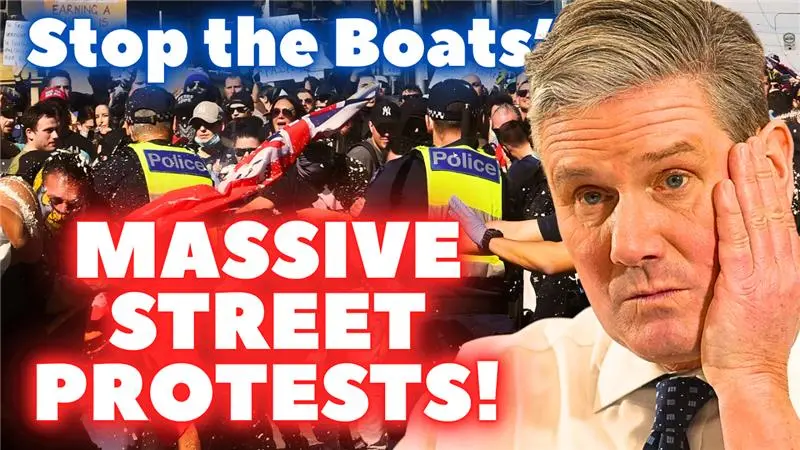
In recent weeks, over a thousand protesters descended on government buildings, demanding stricter controls on illegal migration. Organizers insist this is not a fringe movement but a reflection of widespread public anger.
“This wasn’t a racist or right-wing protest,” one organizer stated. “This was just ordinary people saying enough is enough.”
Public Sentiment: A Tinderbox Ready to Ignite
Ayan’s warning is stark: “Britain is now a tinderbox.” Decades of unaddressed concerns have led to a collapse in trust. Despite repeated promises to curb migration, net migration hit a record 745,000 in 2022 (Office for National Statistics).
- 67% of Britons believe immigration is too high (YouGov).
- 52% say the government has “lost control” of borders (Ipsos MORI).
The disconnect between public demand and political action fuels unrest.
Why Can’t Britain Stop the Boats?
The Legal and Political Roadblocks
Critics argue that Britain remains shackled by international agreements:
- European Court of Human Rights (ECHR): Blocks deportations, including the stalled Rwanda plan.
- Dublin Regulation Loopholes: Even post-Brexit, legal challenges hinder returns.
Ayan argues: “It’s not a question of being unable—it’s unwilling. The government could exit these treaties if it had the political will.”
Australia’s Success vs. Britain’s Failure
Australia’s conservative government successfully implemented offshore processing and deterrence policies, reducing boat arrivals by over 90%.
“If Australia can stop the boats, why can’t Britain?” critics ask. The answer lies in political hesitation and bureaucratic inertia.
The Broken Social Contract
A Crisis of Trust
For years, voters have demanded stricter controls—yet migration continues to rise.
- 1997-2010 (Labour): Net migration tripled.
- 2010-2024 (Conservative): Promises to reduce numbers were unmet.
“People feel their vote doesn’t matter anymore,” says Ayan.
This disillusionment risks fueling extremism.
The COVID Parallel
During the pandemic, the UK government swiftly enacted border closures. Critics ask: If borders could be locked down for COVID, why not for migration?
What’s Next for Britain?
Policy Options on the Table
- Leave the ECHR: A growing faction within the Tory party advocates withdrawal.
- Strengthen Offshore Processing: Following Australia’s model.
- Fast-Track Deportations: Reducing legal delays.
The Risk of Escalation
Without meaningful reform, protests could intensify. History shows that unchecked public frustration leads to political upheaval—Brexit itself was a revolt against elite consensus.
Conclusion: A Nation at a Crossroads
Britain’s migration crisis is more than a policy failure—it’s a democratic crisis. The government must either act decisively or face a backlash that could reshape the political landscape.
As Ayan warns: “When people believe their leaders won’t listen, they find other ways to be heard.”
The question now is whether Britain’s leaders will heed the warning before it’s too late.
Key Takeaways:
- Public anger over migration is reaching a boiling point.
- Legal and political hurdles hinder effective action.
- Without reform, trust in democracy will erode further.
Final Thought:
Will Britain follow Australia’s lead, or will the tinderbox ignite? The answer lies in the hands of its leaders—and time is running out.