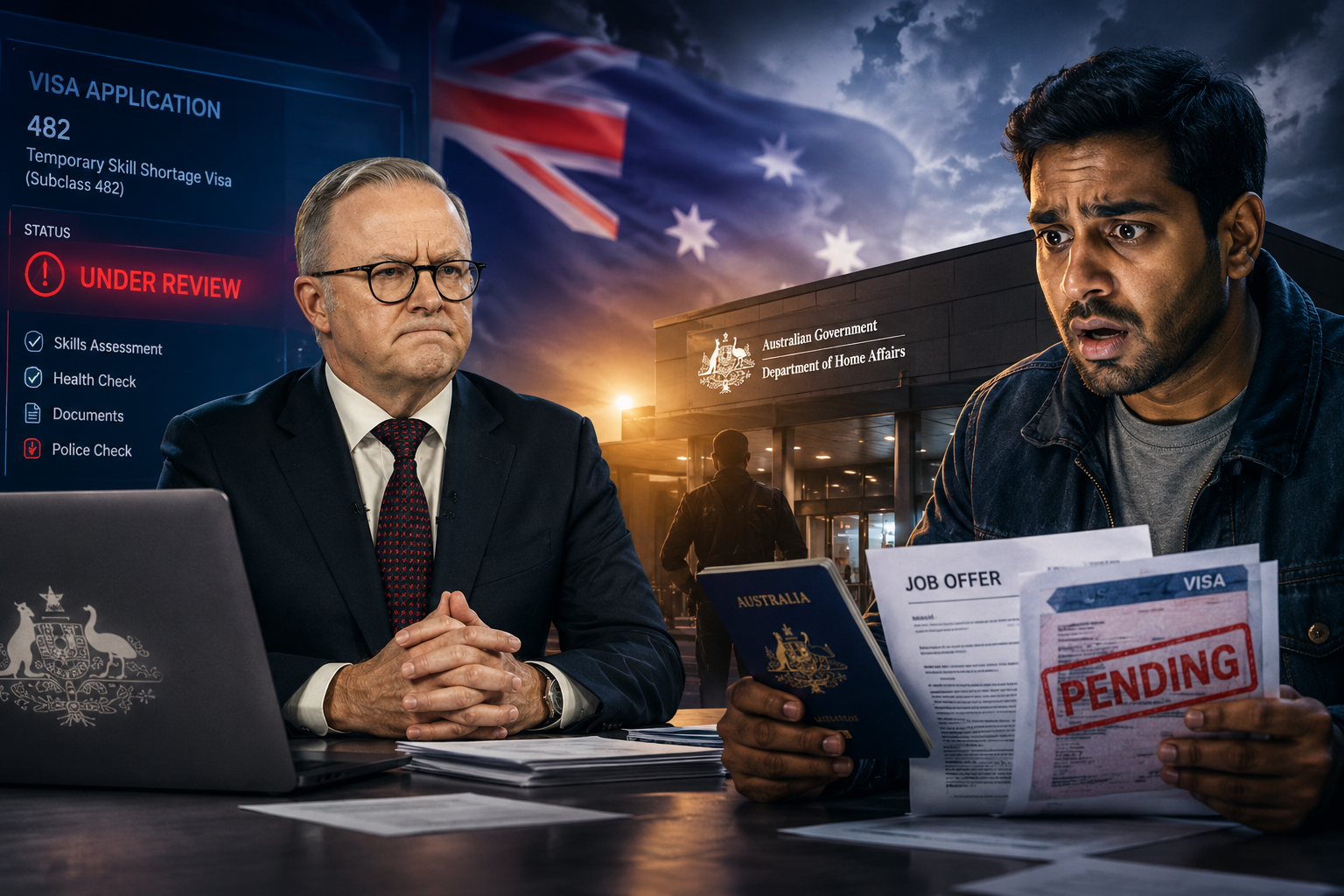
Synopsis: Amid election tensions, Australia’s international students face visa uncertainty as Peter Dutton proposes slashing migration and ending the 485 graduate visa. Accused of fueling rent hikes, migrants are scapegoated while billions in education revenue hang in the balance. The future of Australia’s immigration and values is now at stake.
Introduction: From Global Education Leader to Political Battleground
Once hailed as a beacon for international education, Australia is now witnessing an immigration reckoning. With an election on the horizon, political leaders are pointing fingers—and international students are in the crosshairs. Once embraced as future skilled workers, students are now portrayed as scapegoats for soaring rents, housing shortages, and job market strain.
At the heart of the storm is the 485 Graduate Visa, once a launchpad for global careers, now framed as a loophole for permanent residency. With migration cuts, visa cancellations, and policy U-turns, the very promise of studying in Australia is under threat.
“The system is being abused, and young Australians are paying the price,” declared Opposition Leader Peter Dutton, igniting a nationwide debate.
But behind the stats and soundbites are real people—students investing their futures, families banking on hope, and universities bracing for economic fallout. Is Australia turning its back on global talent?
Topics Discussed:
- Accusations of Overcrowding and Rent Inflation
- Peter Dutton’s Plan to Slash Migration
- The 485 Graduate Visa in Jeopardy
- Policy Reversals and Student Impact
- Economic Consequences for the Education Sector
- Public Response and Political Fallout
- Global Reputation at Stake
- Conclusion: The Battle for Australia’s Immigration Future

Accusations of Overcrowding and Rent Inflation
In early 2025, Peter Dutton accused the Labor government of opening the floodgates to unchecked migration, particularly targeting international students.
Key Accusation:
“Labor has overseen a 65% increase in international student numbers, fueling the housing crisis and locking Australians out of their own future.” — Peter Dutton, Liberal Party Leader
Supporting Data:
| Metric | 2022 | 2024 | % Increase |
| International Student Intake | 440,000 | 726,000 | 65% |
| Median Rent in Sydney (AUD) | $580/week | $720/week | 24% |
Real estate groups and tenant unions note that rental demand has indeed surged in university zones—but economists warn against over-simplification.
“Migration may contribute, but blaming students for systemic housing underinvestment is disingenuous,” said economist Dr. Emma McGill of ANU.
Peter Dutton’s Plan to Slash Migration
The Liberal Party has proposed a drastic migration reset, central to which is cutting net overseas migration by 100,000 people annually.
Dutton’s Proposal Highlights:
| Proposed Change | Description |
| 100,000 Cut in Net Migration | To be phased over 2 years, targeting student and temporary workers |
| Abolition of the 485 Graduate Visa | Framed as a “backdoor PR route” abused by education agents |
| Reclassification of Student Visas | Stricter definitions, restrictions on part-time work |
| Tougher Vetting of Colleges | Focus on weeding out “ghost” colleges used for migration rorts |
“The system has been gamed. We must reset the balance and restore integrity,” Dutton said in his Canberra address.
The 485 Graduate Visa in Jeopardy
The Temporary Graduate (subclass 485) visa allows international students to remain in Australia for 2–4 years after graduation, gaining work experience. But under Dutton’s plan, this visa is on the chopping block.
Current 485 Visa Snapshot (2024):
| Stream | Duration | Eligibility |
| Post-Study Work | 2–4 years | Bachelor’s, Master’s, or PhD |
| Graduate Work | 18 months | Diploma holders in specific fields |
| Extension (select fields) | +2 years | STEM, regional university graduates |
Planned Revisions:
- Complete phase-out of Graduate Work stream
- Ban on renewals of expired 485 visas
- Mandatory job offer or employer sponsorship within 6 months
“The 485 visa was a stepping stone. Now it’s seen as a loophole,” said immigration lawyer Alina Mahindra.
Policy Reversals and Student Impact
From 2019 to 2023, Australia liberalized student pathways to fuel post-COVID recovery. Work hour caps were relaxed, application backlogs cleared, and regional programs expanded.
In 2025, the pendulum has swung back.
| Policy | 2021–2023 (COVID Recovery) | 2025 Status |
| Work Hours Cap | Lifted temporarily | Reinstated (48 hours/fortnight) |
| PSW Visa Extension | Up to 6 years (STEM + regions) | Being phased out |
| Visa Approval Rate | ~90% | Dropped to ~70% in some countries |
| Processing Time | 3–5 weeks | 8–12 weeks average |
Human Impact: Lives in Limbo
Behind every visa is a story—and in 2025, more stories are ending in heartbreak.
Rejection Statistics (2024–2025)
| Country | Student Visa Rejection Rate (2024) | Rejection Rate (Q1 2025) |
| India | 15% | 32% |
| Nepal | 10% | 28% |
| Pakistan | 18% | 34% |
| Nigeria | 25% | 45% |
More than 7,000 rejections were reported in the first quarter alone, many citing vague or changing eligibility requirements.
“We sold everything for my son’s future. Now we’re stranded,” said Rukhsana Iqbal, mother of a rejected Pakistani applicant.
Economic Consequences for the Education Sector
Australia’s education sector, once worth $40 billion/year, is now facing serious tremors.
Economic Forecast:
| Year | Projected Sector Revenue | Forecasted Loss Due to Policy |
| 2024 | AUD 42 Billion | — |
| 2025 | AUD 38 Billion | AUD 4 Billion loss |
| 2026 | AUD 35 Billion (est.) | AUD 7 Billion cumulative loss |
Universities, especially regional ones, are preparing for enrollment nosedives.
“We built programs around this visa model. Sudden reversals are disastrous,” said Dr. Fiona Lewis, Vice-Chancellor of a regional NSW university.
Public Response and Political Fallout
Student Protests & Community Outcry
Major cities have seen protests organized by student unions and diaspora groups.
- Sydney: 10,000+ marched on George Street
- Melbourne: Sit-in at Parliament steps
- Brisbane: “Don’t Deport My Future” rally
“This is not about numbers. It’s about our right to dream,” said protestor and Master’s student Divya Narayan.
Political Division
- Labor Party: Denies crisis narrative, blames underinvestment in housing
- Liberal Party: Capitalizing on voter frustration over housing, wages
- Greens: Called the reforms “xenophobic and economically short-sighted”
Global Reputation at Stake
Australia, once a top-three education destination, now risks being seen as unreliable and unwelcoming.
| Destination | Global Student Growth Rate | Visa Stability Rating |
| Canada | +8% (2024–2025) | High |
| UK | +3% | Medium |
| Australia | -7% | Low |
| USA | +5% | Medium-High |
Agents report growing demand for Canada and the UK among students previously considering Australia.
Conclusion: The Future in Question
Australia’s international education model is undergoing a seismic shift. In a climate of blame, fear, and politics, students—once welcomed as ambassadors of global engagement—now feel like burdens.
The 485 Graduate Visa, once a pillar of post-study opportunity, is now a flashpoint. If these reforms become law, it could mark the end of Australia’s open education era.
More is at stake than numbers.
Australia’s values—fairness, diversity, global connection—are on trial.
“You can’t say you’re open to the world while closing your doors,” said an editorial in The Age.
Whether the dream collapses or adapts will be decided not just by policy—but by public voice and political will.