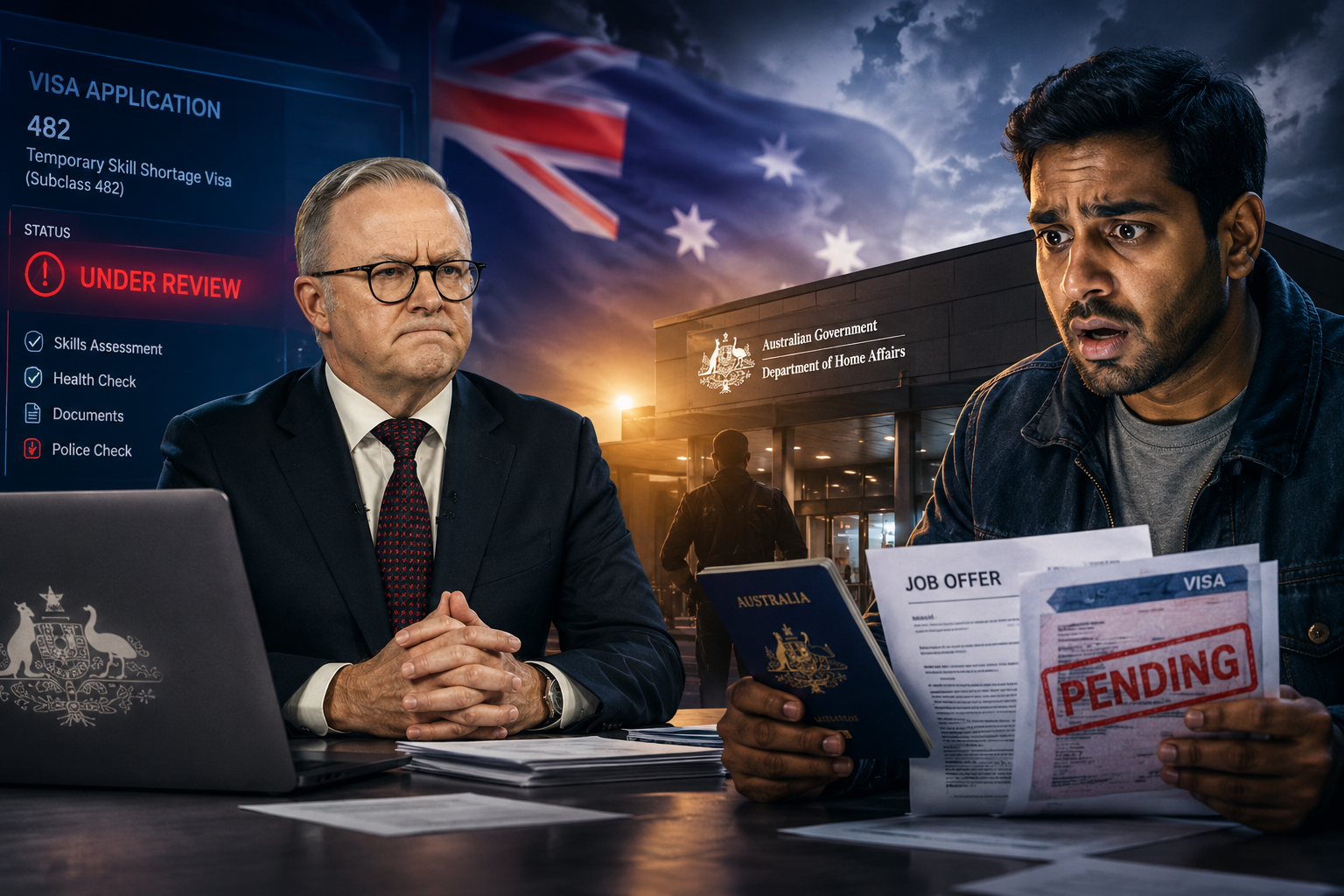
Synopsis: Australia’s Proposed Cuts to Skilled Migration outlines a major shift in national policy as the Liberal Party considers reducing skilled migrant numbers and international student intake. This blog explores the political pressures, housing and infrastructure constraints, economic risks, and sector-wide consequences of a reduction-focused migration strategy. It also places Australia’s debate within global trends, assessing whether these cuts will address capacity challenges or harm long-term competitiveness.
Australia is entering one of its most consequential migration debates in over a decade, as the Liberal Party signals a dramatic shift toward reducing skilled migration and international student arrivals. This comes at a time when policymakers, economists, and industry leaders warn that immigration levels must align with the nation’s capacity to build homes, expand infrastructure, and maintain essential services. The first signs of this shift emerged through parliamentary testimony, media statements, and internal party debates, as reflected in reporting and public commentary. According to the Australian Department of Home Affairs, migration remains a central pillar of national economic planning, yet concerns over housing supply and infrastructure strain have pushed immigration to the forefront of the political agenda.
This blog provides a detailed, data-driven exploration of the Coalition’s emerging proposals, the arguments for and against cutting skilled migration and international student numbers, and the broader political and social context shaping these decisions. It also examines the risks, consequences, and global implications of Australia pursuing a “reduction first” migration strategy at a time when advanced economies are competing aggressively for talent.

Understanding the Policy/Event
The central policy debate revolves around whether Australia should significantly cut immigration places—particularly skilled migration and international student intake—to reduce pressure on public services and address voter concerns about infrastructure stress and housing affordability. Liberal MPs have voiced a growing belief that Australia must reduce overseas arrivals to more sustainable levels, even if it means restricting categories historically linked to economic growth.
Ahead of the next federal election, the Coalition is working to finalise a migration policy that appeals to both conservative and moderate factions. This is proving challenging, as some MPs call for drastic reductions while others warn against policies that could alienate multicultural communities and international partners.
Why It Is Happening
Multiple factors have converged, prompting the Liberal Party to consider large-scale migration cuts:
1. Australia’s Housing Shortage
With housing supply lagging far behind demand, senior Liberals argue that reducing migration is essential to easing pressure. This aligns with public debate as Australia experiences record housing unaffordability and rising rental prices.
2. Infrastructure and Public Services
Shadow ministers have suggested tying migration levels to:
- Home construction capacity
- Health system funding
- Education sector resources
By linking migration to these indicators, policymakers hope to adopt a more “practical and sustainable” approach.
3. Internal Party Politics
Opposition Leader Sussan Ley faces pressure from both moderates and conservatives. Factional splits are emerging, with some MPs urging caution regarding multicultural sensitivities and others demanding swift, bold cuts.
4. Rising Populism and Voter Pressure
Parties such as One Nation are influencing migration debates by attracting voters concerned about cultural change, job competition, and population growth. Liberal strategists fear losing more voters unless they adopt a firmer stance.
5. Economic Considerations
The Productivity Commission and other research bodies have pointed to long-term structural challenges in productivity, wages, and skill mismatches. Some argue lower migration may help address these issues, while others warn the opposite.
Key Reforms or Changes
The emerging proposal focuses on two primary areas: reducing skilled migration and limiting international student places. While final policy settings are still being debated, statements from MPs indicate a clear direction.
Detailed Breakdown
- Cuts to Skilled Migration
NSW Liberal Jess Collins has made it clear that skilled migration will be the “first cut.” Her key concerns include:
- Unions limiting the entry of skilled tradespeople
- Migrants with “surplus” skills entering the workforce
- A need to re-evaluate the skills list
The proposal may involve:
- Narrowing the skilled occupation list
- Reducing intake quotas
- Increasing assessment requirements
- Prioritising Australian workers through higher training incentives
- Restrictions on International Students
Several Liberals support stricter controls on foreign student numbers as a population management tool.
Senator Leah Blyth suggested:
- Cutting international student enrolments
- Reinstating caps to ensure domestic students remain the majority
- Ensuring universities do not rely excessively on foreign student revenue
Past proposals included a limit of 25% foreign students per institution, which may re-enter the debate.
- Stronger Link Between Migration and Infrastructure
Shadow ministers want migration linked directly to:
- Housing construction output
- Hospital and primary care availability
- School capacity and teacher workforce numbers
- Temporary Migration Pauses or Program Freezes
Some backbenchers, including Jacinta Nampijinpa Price, support temporarily freezing parts of the migration program.
- Target Ranges Under Consideration
Historical comparisons provide insight:
- Former PM Tony Abbott suggests 100,000 migrants per year
- Bank leadership suggests 180,000 migrants per year
- Current NOM is 315,900 (March 2025)
Final numbers are expected closer to the election.
Data, Stats, and Trends
Migration patterns show Australia is facing one of the highest population growth periods in decades. The debate on intake levels must be viewed within this statistical context.
What the Numbers Show
Net Overseas Migration (NOM)
- Year ending March 2025: 315,900
- Treasury forecast for 2024–25: 260,000
- Forecast for next three years: 225,000 annually
These numbers remain significantly higher than historical averages.
Permanent Migration
- Current permanent intake: 185,000 individuals annually
International Education Sector
- International students contribute billions annually
- Universities depend heavily on foreign tuition revenue
- International education remains one of Australia’s top exports
Cuts could:
- Reduce university funding
- Trigger higher domestic student fees
- Reduce regional campus viability
Skilled Migration Data
Australian Bureau of Statistics data shows:
- A large share of recent migrants are skilled professionals
- Migrants contribute significantly to GDP growth
- Several industries face acute labour shortages, including:
- Construction
- Healthcare
- Engineering
- ICT
- Aged care
Housing Supply
Despite high migration numbers, experts emphasise:
- Housing shortages stem from low construction capacity
- Regulatory delays and rising building costs
- Land-release bottlenecks and labour shortages in construction
These factors weaken claims that simply reducing migration will solve housing pressures.
Impact Assessment
Cutting skilled migration and foreign student numbers would have complex and wide-ranging effects. Understanding these impacts is essential for informed policymaking.
Social, Economic, and Human Consequences
1. Economic Impacts
Potential consequences include:
- Reduced labour supply
- Lower GDP growth
- Slower recovery in construction and healthcare
- University sector revenue shortfalls
A smaller skilled workforce may worsen existing shortages.
2. Social & Community Impacts
- Slower multicultural growth
- Reduced global connectivity
- Increased difficulty attracting international talent
- Risks of social division if policies appear exclusionary
3. Impact on Housing
While reducing migration may marginally ease demand, experts argue the core issue remains:
- Construction capacity
- Building workforce shortages
- Planning regulations
- Supply chain issues
4. International Relations
Countries sending students or skilled workers may perceive cuts negatively, affecting diplomatic ties.
5. Human Impacts
- Fewer opportunities for global mobility
- Increased visa processing constraints
- Reduced family reunification options
Political Background & Stakeholder Reactions
Migration policy is inherently political, and the current debate reflects deeper tensions within the Liberal Party and the broader Australian landscape.
Government, Opposition & Expert Opinions
1. Liberal Party Divisions
- Moderates warn against stigmatising migrants
- Conservatives push for rapid cuts
- Leadership tensions between Ley and Angus Taylor influence debate
2. Labor Government
Labor maintains the current permanent intake of 185,000 and accuses the Coalition of political manoeuvring rather than evidence-based policymaking.
3. Industry & Academic Experts
Think tanks and university researchers, including those at the Australian National University, warn that:
- Skilled migration cuts may harm economic growth
- Student reductions could devastate university finances
4. Financial Sector
The Commonwealth Bank CEO argues lower migration would:
- Improve infrastructure planning
- Ease pressure on housing
5. Public Sentiment
Public opinion remains highly divided:
- Some support cuts to relieve housing stress
- Others value migration for cultural and economic benefits
Global Comparisons
Australia’s migration debate mirrors global trends, as many advanced economies reassess immigration levels in light of housing pressures, labour shortages, and political populism.
Where This Stands Internationally
United Kingdom
The UK is tightening migration rules, particularly for family and worker visas.
Canada
Canada is slowing international student intake and revising post-study work rights.
United States
The US maintains strict immigration limits despite tech-sector lobbying for increased skilled visas.
New Zealand
New Zealand has introduced selective visa restrictions and tightened student pathways.
Australia’s shift aligns with this global reassessment but risks harming competitiveness if cuts exceed other countries’ reductions.
Critical Analysis
The key question: Will the proposed cuts achieve their intended goals?
Will It Work?
Housing
Cutting migration alone will not fix the housing crisis. As the Productivity Commission notes, structural issues such as construction workforce shortages and planning delays are far more influential.
Skills Shortages
Reducing skilled migration may worsen shortages, affecting:
- Healthcare wait times
- Construction output
- Aged care staffing
- Technology and engineering sectors
Universities
Limiting international students would:
- Reduce billions in revenue
- Force fee hikes
- Affect regional education access
Economic Growth
The Australian Bureau of Statistics links migration to strong labour force growth and business activity.
Policy Feasibility
A sudden sharp reduction could destabilise multiple sectors, although a gradual adjustment combined with capacity building may be viable.
Conclusion
Australia stands at a pivotal crossroads in its migration policy. The Liberal Party’s proposal to cut skilled migration and international student numbers reflects growing pressures around housing, infrastructure, and voter sentiment. However, the economic and social consequences of such cuts could reshape the nation for decades. The challenge for policymakers is to balance sustainability with competitiveness, ensuring Australia remains open, prosperous, and globally connected while addressing infrastructure constraints and public concerns.
A thoughtful, data-driven approach—guided by evidence rather than political momentum—will ultimately determine whether these reforms strengthen or weaken Australia’s future.