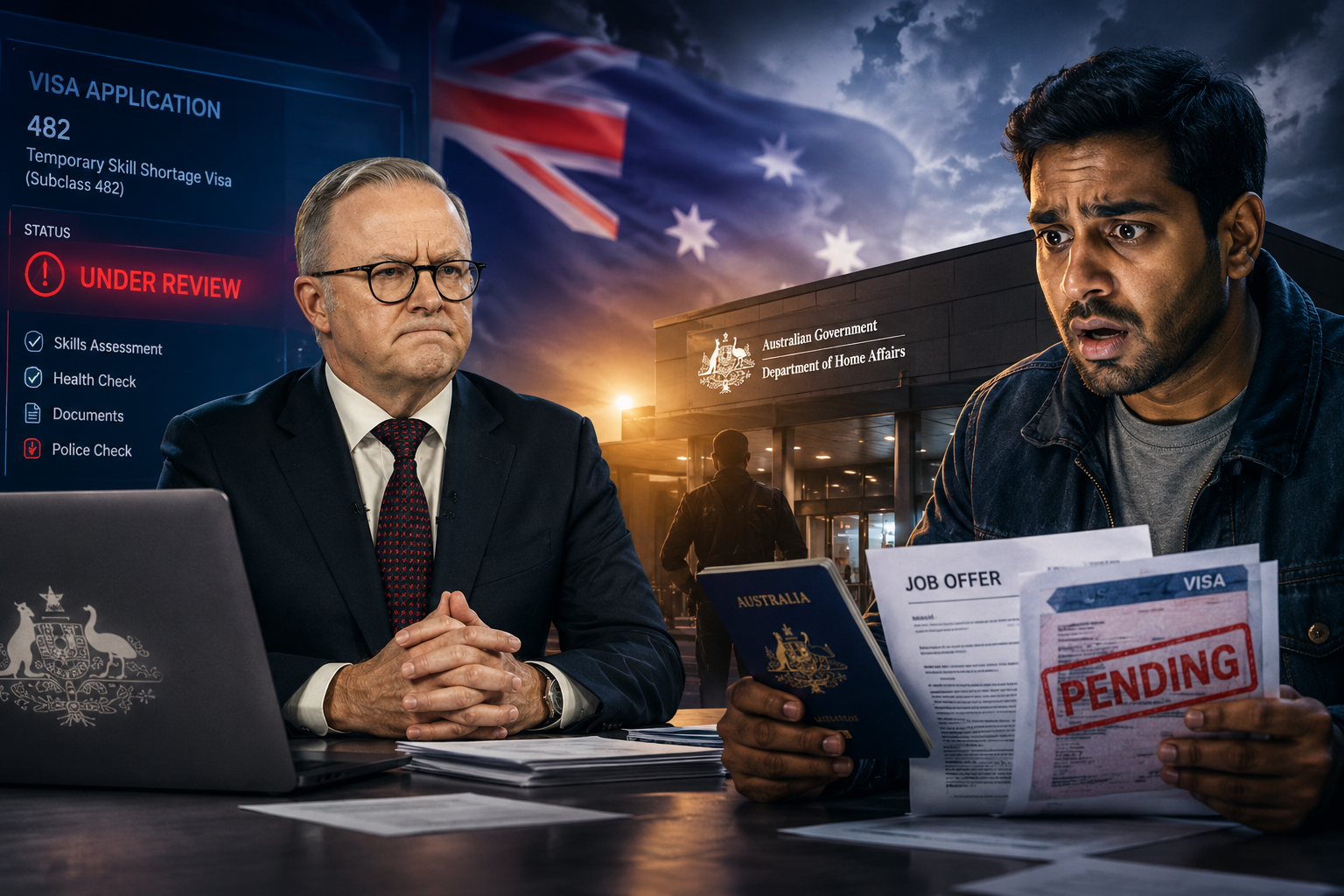
Synopsis: Australia’s Labor government has announced plans to increase international student visa fees to AUD$2,000 if re-elected in May 2025, intensifying sector concerns over affordability and global competitiveness. The move follows last year’s sharp fee hike and comes amid rising political and economic pressures on international education.
Introduction
Australia’s international education sector-long celebrated as a “golden goose” for its economic contributions-is again at the center of political and policy debate. On April 28, 2025, the governing Labor Party announced that, if re-elected in the May 3 federal election, it will raise the student visa application fee to AUD$2,000. This follows a dramatic 125% increase in July 2024, when the fee jumped from AUD$710 to AUD$1,600, already making Australia the most expensive major study destination for student visa applicants145.
The announcement comes as both major parties-the Labor Party and the opposition Liberal/National Coalition-compete for votes with competing promises on international education policy, migration, and fiscal responsibility. The implications for students, universities, and Australia’s global standing are profound.
Key Details of the Proposed Fee Increase
- Current fee (April 2025): AUD$1,808 (recently raised from AUD$1,600)
- Proposed fee (Labor, if re-elected): AUD$2,000
- Proposed fee (Coalition, if elected): AUD$2,500 for most, AUD$5,000 for Group of Eight universities23457
- Exemptions: Citizens of East Timor and Pacific Island nations5
“We think that’s a sensible measure that really prizes, I think, the value of studying here in Australia.”
Context: Election Politics and Policy Rationale
Both major parties are using student visa fees as a tool for election costings and migration management. Labor’s Treasurer Jim Chalmers and Finance Minister Katy Gallagher announced the increase as part of a broader AUD$1 billion in pre-election savings, aiming to fund campaign promises and manage Australia’s record net migration1341012.
The opposition Coalition, led by Peter Dutton, has promised even steeper increases, especially for applicants to the prestigious Group of Eight universities, and has floated a lower cap on new international student arrivals (240,000, compared to Labor’s 270,000)34812.
Australia’s Student Visa Fees in Global Perspective
Australia’s student visa fee is already the highest among major English-speaking study destinations. Here’s how it compares:
| Country | Student Visa Fee (2025) | Equivalent in AUD |
| Australia | AUD$1,808–2,000 | AUD$1,808–2,000 |
| United States | USD$185 | ~AUD$299 |
| Canada | CAD$150 | ~AUD$172 |
| United Kingdom | GBP£524 | ~AUD$932 |
| New Zealand | NZD$750 | ~AUD$684 |
| Germany | EUR€75 | ~AUD$124 |
| France | EUR€50–99 | ~AUD$82–162 |
Note: Exchange rates as of April 202515679
Australia’s fees are now more than double those of the UK, four times those of the US, and nearly ten times those of Canada159.
Impact on International Students
Financial Burden and Affordability
The fee hike comes on top of already high tuition and living costs in Australia. For context:
- Average annual tuition (2025): AUD$20,000–$45,000 (undergraduate), up to AUD$112,832 for clinical medicine at top universities67
- Annual cost of living: AUD$30,000–$36,0006
- Financial requirement for visa: AUD$29,710 (as of May 2024)6
For many students-especially those from developing countries or enrolling in short-term English language courses (ELICOS)-the non-refundable visa fee is a significant barrier. English Australia, the peak body for language colleges, reported a 50% drop in ELICOS-only visa applications after the July 2024 fee hike15.
“The fee’s introduction was followed by an immediate and sustained fall in applications for ELICOS-only enrolments of approximately 50%.”
- English Australia briefing1
Sector Reactions and Concerns
Universities and education advocates have responded with alarm:
- Phil Honeywood, CEO, International Education Association of Australia (IEAA):
“How long can we have this constant jacking up of these non-refundable fees before it just looks exactly like it is… a money grab from international students?”2589
- Group of Eight universities:
Warn the move will damage Australia’s $48 billion international education sector and reduce campus diversity9.
- ITECA (Independent Tertiary Education Council Australia):
“A non-refundable visa application charge of $2,000 in the ‘visa approval lottery’ makes Australia a far less attractive destination for students.”8
Calls for Reform
Both English Australia and the IEAA are calling for:
- Visa fee revenue to be reinvested in student welfare and sector support rather than general government spending58
- A review of the impact of repeated fee hikes on Australia’s competitiveness and reputation
“At least Labor have given me a commitment that they will sit down and talk about IEAA’s Election Platform’s call for a 50% reduction in study programs of less than 12 months duration particularly ELICOS and learning abroad.”
Policy, Migration, and Economic Implications
The Role of International Students in Australia
International students are a critical economic and social asset:
- Annual sector value: AUD$48 billion9
- International student arrivals (Feb 2025): nearly 200,000, up 12.1% year-on-year and 7.3% higher than pre-pandemic levels412
- Net migration contribution: Major driver of population growth, with flow-on effects for housing and infrastructure412
Government Rationale
The government frames the fee hike as a “prudent step” to:
“We believe this is a practical step that reflects the high value placed on education in Australia.”
Opposition Policy
The Coalition’s even steeper fee proposals are part of a broader plan to:
Recent Policy Changes
- April 2025: Fee raised to AUD$1,8087
- February 2025: Temporary Graduate Visa (subclass 485) fees increased to AUD$2,235 for primary applicants7
- 2025: Stricter English language requirements, new “Genuine Student” test, and caps on provider enrolments68
International Competitiveness: Is Australia Losing Its Edge?
Comparative Analysis
| Aspect | Australia (2025) | UK (2025) | USA (2025) | Canada (2025) | New Zealand (2025) |
| Visa Fee | AUD$1,808–2,000 | £524 (~AUD$932) | USD$185 (~AUD$299) | CAD$150 (~AUD$172) | NZD$750 (~AUD$684) |
| Tuition (UG/PG) | AUD$20k–50k+ | £10k–45k | USD$20k–60k | CAD$15k–40k | NZD$22k–35k |
| Cost of Living | AUD$30k–36k | £12k–15k | USD$12k–20k | CAD$12k–20k | NZD$15k–20k |
| Dependant Policy | Permitted (some) | Restricted | Restricted | Permitted | Permitted |
| 2025 Policy Trends | Fee hikes, caps, stricter English | Fee hikes, eVisa | Stable | Stable | Stable |
Sources: ICEF Monitor, Times Higher Education, The PIE News, Royal Vision, SBS, Business Standard, government sources156789
Stakeholder Warnings
Education leaders warn that repeated fee hikes, combined with stricter visa and enrolment caps, may push students to alternative destinations such as France, Germany, New Zealand, and the UK, where visa costs and entry barriers remain lower56789.
“It would put Australia at a further disadvantage compared with education destinations that ‘still have the welcome mat out’, including France, Germany, New Zealand and the UK.”
- Phil Honeywood, IEAA5
Early Signs of Decline
- Student visa applications (first 7 months of 2024–25): Down 31% year-on-year5
- Sector uncertainty: Providers warn of instability and unpredictability, especially for smaller colleges and language schools8
What’s Next? The Road Ahead for Students and the Sector
Election Outcomes
- If Labor wins: Visa fee rises to AUD$2,000, with a possible post-election review for short-term courses1258
- If Coalition wins: Fees rise to AUD$2,500–5,000, with caps on commencements and a review of post-study work rights23481112
Sector Advocacy and Possible Reforms
- IEAA and English Australia: Pushing for fee reductions for short-term and ELICOS students, and for a portion of visa revenue to support student welfare and sector innovation1258
- Universities: Lobbying for more predictable policy, lower fees, and reinvestment in international education infrastructure59
- Government: Balancing fiscal needs, migration management, and the sustainability of a vital export sector41012
Student Strategies
Prospective students are advised to:
- Apply early to lock in current fees where possible
- Monitor policy updates closely after the election
- Consider alternative destinations if affordability becomes a concern
- Seek scholarships and bursaries to offset rising costs
Conclusion
Australia’s plan to raise student visa fees yet again in 2025 marks a pivotal moment for its international education sector. While the government frames the move as a necessary, “sensible” measure to fund public priorities and manage migration, critics warn it risks undermining Australia’s hard-won reputation as a welcoming, world-class study destination. As the May 3 election approaches, the future of international education in Australia hangs in the balance-shaped by political calculation, economic pressures, and the voices of students and educators worldwide.
“For too long, we’ve been told that it has to go into general revenue. It’s high time that some of this massive student fee revenue was hypothecated into issues such as overseas student welfare and other areas that have just been not funded sufficiently.”
- Phil Honeywood, IEAA5