Synopsis: Australia’s rising visa refusals and Section 48 restrictions are redefining how migrants plan their future applications. With heightened scrutiny on intention, compliance, GTE, documentation, and integrity, applicants must approach every visa submission with strategy and awareness. This article breaks down why refusals are increasing, how Section 48 limits onshore options, and what applicants must do to rebuild credibility, strengthen evidence, and avoid long-term consequences in an evolving immigration system.
Visa refusal is no longer a simple procedural event in Australia — it is quickly becoming a pivotal turning point that can shape a migrant’s entire future. As the Department of Home Affairs increases scrutiny, reapplications are no longer guaranteed pathways but strategic battles requiring planning, legal awareness, evidence and timing. Even a single refusal can trigger red-flags, deeper assessments, and in some cases statutory restrictions such as Section 48, creating a complex web for individuals already inside the country. According to the official guidance from the UK Home Office, similar western immigration systems have already shifted toward risk-based screening and intent verification, suggesting a global trend — and Australia is aligning itself with that wave.
In this article, we unpack what visa refusal really means for your future in Australia. We explore why Section 48 exists, how refusal records influence subsequent applications, the rising importance of Genuine Temporary Entrant (GTE) tests, the role of character checks and PIC 4020, and how Australia’s stance compares with Canada, the UK and other migration-heavy nations. This is not a basic explainer — it is a policy-level breakdown designed for migrants, professionals and families who cannot afford mistakes.

Understanding the Policy/Event
Why It Is Happening
Australia is experiencing one of the most transformative moments in its immigration landscape in over a decade. Record migration numbers, housing pressures, labour market shifts, and political debate have fueled a tightening of immigration rules and application screening mechanisms. Visa approvals today are no longer purely eligibility-based; they are discretion-based — shaped by intention, integrity, documentation strength and compliance history.
Visa refusals, once seen as a minor administrative setback, are now effectively markers of risk — signalling to case officers that an applicant requires deeper scrutiny. As refusal counts rise, decision-makers are becoming cautious, especially toward temporary visas such as student and visitor streams, where intent misuse is more common. Section 48 in this context operates as a control valve, limiting the ability of onshore applicants to lodge repetitive applications without leaving the country.
Multiple drivers influence this tightening:
- Public concern around overstayers and visa misuse
- Previous policy loopholes allowing repeated onshore applications
- Rising student and visitor arrival volumes
- Increased demand for compliance transparency
- Political pressure to manage migration intake
- Departmental shift toward “genuine intent” evaluation
Australia is not alone. Western nations are shifting toward regulated migration pathways prioritizing skilled labour, compliance, and public interest. The UK’s tightening of post-study work eligibility and Canada’s cap on international student intake illustrate similar trends, documented by sources such as the UK Parliament, UNHCR and the Migration Observatory. The direction is clear: the age of easy approvals is fading.
Key Reforms or Changes
Detailed Breakdown
While Australia did not publish a singular reform titled “Visa Refusal Policy Change,” the behavioural shift is structural. The changes are observed through case outcomes, refusal trends and administrative decisions, especially under Section 48.
1. Section 48 Onshore Restriction Becomes Critical
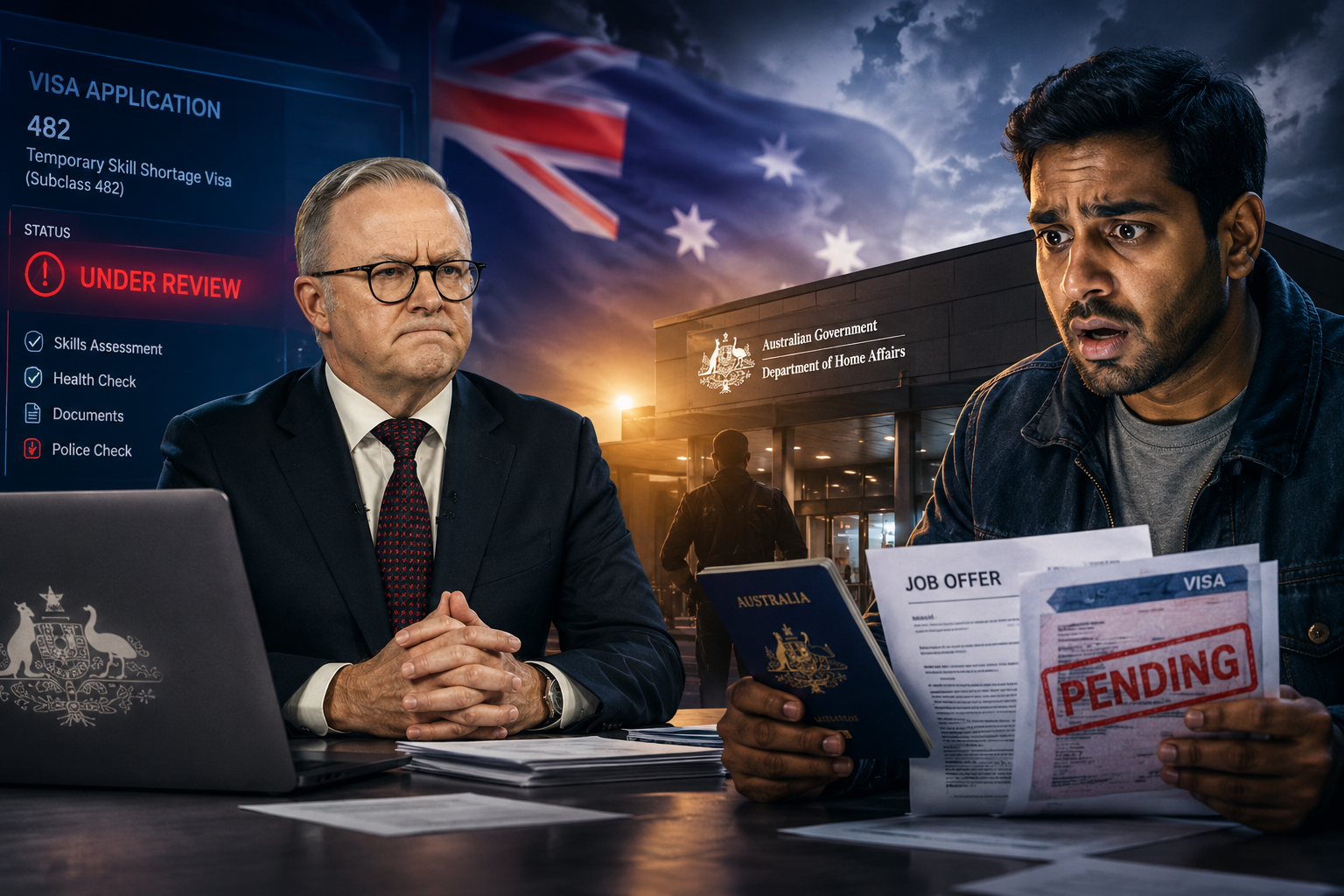
If a visa is refused while the applicant is inside Australia and no substantive visa is held, Section 48 restricts which visas they can apply for onshore. This is not new legislation — but its practical impact is intensifying.
Permissible visa applications under Section 48 include:
- Skilled Regional (Provisional) 491
- Skilled Employer Sponsored Regional 494
- Skilled Nominated 190
- Partner visas (select streams)
- Medical treatment visas
- Protection visas
All other visas may require offshore reapplication, often disrupting study, work or migration timelines.
2. Bridging Visa A → Bridging Visa B Workaround
One lawful pathway to bypass Section 48 is:
- Hold Bridging Visa A
- Apply for Bridging Visa B
- Exit Australia temporarily
- Lodge application offshore
- Re-enter using bridging visa B
This option is widely used in practice by migrants who require re-submission without remaining stuck. However — it requires strategy, documentation, travel ability and financial cost.
3. Increasing Emphasis on Genuine Temporary Entrant (GTE)
Student & visitor visas are now more heavily scrutinized based on intention. Previous refusal directly affects credibility in future GTE assessments.
4. PIC 4020 & Character-Based Refusal Expansion
PIC 4020 violations (fraudulent documents, misleading information) can trigger bans of three to ten years depending on severity. Character-related refusals similarly result in exclusion windows.
5. Permanent Residency (PR) Applications Less Impacted
PR streams like Skilled, Partner or Employer-Sponsored applications do not automatically suffer because of prior temporary visa refusal — unless linked to character or fraud findings.
Data, Stats, and Trends
What the Numbers Show
To fully understand the issue, we must view refusal in statistical context. Although the transcript does not contain figures, Australian immigration data indicates key patterns:
- Australia processed over 8.5 million temporary visa applications in recent years, with refusal ratios rising in student and visitor visas particularly.
- Visitor visa refusals jumped significantly post-pandemic as “genuine intention risk markers” increased.
- Over 25–35% of GTE refusals cite “insufficient evidence of intent”.
- Character refusals, while a minority, lead to long-term bans disproportionate to numerical size.
Why does data matter? Because trends reflect policy direction. If refusal rates increase, the expectation is no longer approval-first but suspicion-first. This changes applicant behaviour, legal planning, and documentation standards.
In comparison:
| Country | Primary Risk-Marker | Core Test | Refusal Effect |
| Australia | Intent + Evidence | GTE | Section 48 limits onshore reapplication |
| UK | Overstay risk | CAS/Genuine Student | Heavier document checks |
| Canada | Funds + Program Validity | Study Permit Eligibility | Reapply anytime, similar to Australia offshore |
| USA | 214(b) presumption of immigrant intent | Consular Interview | One refusal weakens future interviews |
Australia sits between Canada’s openness and the U.S. strict intent-test culture. A refusal today matters tomorrow.
Impact Assessment
Social, Economic, and Human Consequences
Visa refusal is not merely administrative — its impact is human and economic.
Individual Consequences
- Delayed study/work/PR plans
- Loss of legal status
- Financial loss (fees, travel, documentation)
- Stress, uncertainty, mental burden
- Reputation risks in immigration records
Economic implications
- Decline in temporary entrants affects universities, regional labour and tourism markets
- Skilled shortages may deepen if skilled migrants fear refusal risk
- Compliance systems require funding and workload capacity
Social outcomes
- Families separated longer
- Applicants forced to exit and reapply offshore
- Increased legal consultation market demand
- Growing fear among first-time applicants
A visa refusal does not end a journey — but it reshapes it. Those with strong documentation recover. Those without strategy repeat cycles of refusal.
Political Background & Stakeholder Reactions
Government, Opposition & Expert Opinions
Australian migration policy is, historically, a political battleground.
Government narrative leans on:
- Protecting system integrity
- Prioritizing genuine applicants
- Screening misuse
- Managing migration volume
Opposition voices argue:
- Over-bureaucratization pushes talent to Canada & UK
- Regional Australia suffers when skilled pathways clog
- International education revenue risks decline
Migration lawyers and agents often report:
- Increase in Section 48-affected clients
- Rising GTE refusal queries
- More appeals at AAT & Federal Circuit Court
Humanitarian stakeholders, including bodies like UNHCR, caution against refusal-based deterrence models that ignore legitimate applicants.
The academic perspective from the Migration Observatory highlights global migration tightening as a reaction to populist pressure and infrastructure strain.
Australia stands in a governance crossroads — balancing economic growth needs with border integrity sentiment.
Global Comparisons
Where This Stands Internationally
Australia’s refusal approach mirrors a worldwide pivot.
United Kingdom
The UKVI system uses CAS and credibility interviews to assess student intent. Prior refusal heavily influences later decisions.
Canada
More flexible on reapplications — similar to Australia offshore — but funding proof and program alignment are critical.
United States
Immigration form DS-160 interview model is strict. One poor interview can shape future outcomes for years.
New Zealand
Increasingly selective toward post-study work rights after tightening education sector rules.
Australia is increasingly closer to UK/US-style credibility evaluation than it was five years ago. Migrants must adapt accordingly.
Critical Analysis
Will It Work?
The intention of refusal-based deterrence and GTE tightening is system protection — but does the approach produce desirable outcomes?
Strengths
- Reduces misuse of temporary visas
- Encourages stronger documentation quality
- Discourages repetitive speculative applications
- Protects labour market integrity
Weaknesses
- Over-scrutiny may deter genuine skilled migrants
- Offshore reapplication disrupts lives & education
- Section 48 complexity confuses newcomers
- Risk of unequal decisions across case officers
The real determinant of success will be balance. If refusal pressure rises without parallel skilled risk-facilitated pathways, Australia may lose global competitiveness for talent.
Migration must be both orderly and inviting.
Conclusion
Visa refusal in Australia is no longer just a temporary barrier; it is a long-term record that shapes credibility, eligibility and future opportunity. Section 48 adds strategic complexity for onshore applicants, forcing them to consider offshore applications or targeted visa categories. GTE assessment, document accuracy, health and character standards have become critical pillars of success.
Applicants who treat the process casually face consequences. Those who prepare strategically, upgrade evidence and respond to refusal reasons thoughtfully remain capable of success — even after multiple denials. When bans or PIC 4020 apply, time, legal advice, and compliance rehabilitation become necessary.
The global immigration landscape is shifting, and Australia is aligning. The future belongs to well-prepared applicants.
If your visa has been refused, do not panic — rebuild, strengthen, and plan your comeback wisely.