Synopsis: Australia has launched a major visa fraud crackdown with the UK and Canada to combat global scams targeting migrants. The initiative strengthens intelligence sharing, raises fraud awareness, and reinforces immigration integrity. This article breaks down why the campaign was created, how it works, and what it means for applicants in 2025.
Visa fraud has rapidly evolved into one of the most complex challenges facing modern immigration systems. Criminal networks are exploiting hopeful applicants through fake job offers, guaranteed visas, and fast-track promises—scams that lead to financial devastation, refusal decisions, and even trafficking risks. Recognising the urgency, Australia has joined forces with the United Kingdom and Canada to launch an unprecedented global initiative—the #FightingVisaFraud campaign. The campaign was announced during International Fraud Awareness Week and signals a collaborative effort to safeguard migrants worldwide. According to the Migration Observatory, cross-border fraud linked to migration is rising sharply, demanding coordinated and evidence-driven enforcement.
This article offers a detailed, critical, and Australia-focused analysis of the policy initiative, exploring why it was launched, what it changes, how it fits into global migration trends, and whether it can effectively protect legitimate applicants and strengthen border integrity.

Understanding the Policy/Event
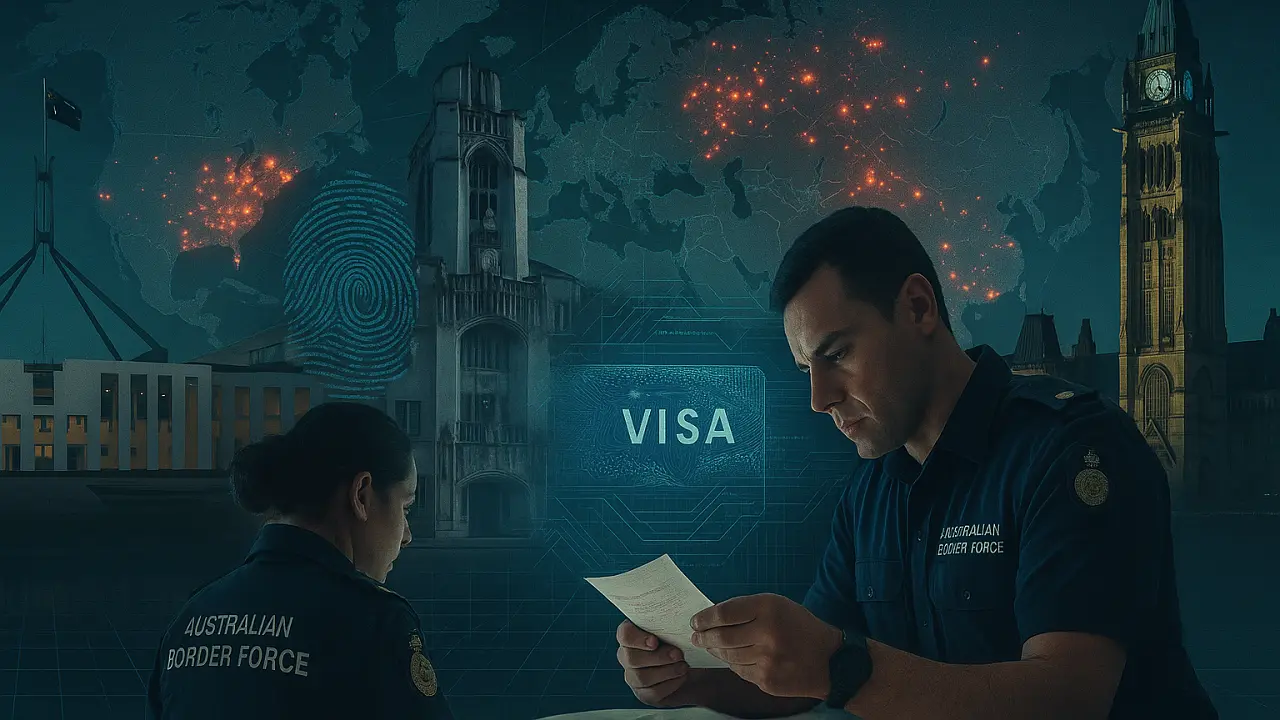
The launch of the #FightingVisaFraud campaign marks a major shift in how Australia approaches immigration risks—moving from isolated national enforcement to collective, intelligence-sharing, multi-country action. The diplomatic missions of Australia, the UK, and Canada jointly announced the initiative, describing it as an unprecedented level of cooperation aligned with security outcomes of the Five Country Ministerial (FCM) meeting held on 8–9 September.
The emphasis on collaboration reflects a growing acknowledgement among immigration regulators: fraud is now transnational. Agents based in one country often target applicants seeking visas for multiple destinations at once. Fake job offers may appear region-specific, but the crime networks behind them frequently operate across borders.
The joint campaign responds directly to these realities—and positions Australia as an active leader in safeguarding global mobility routes.
Why It Is Happening
Why now? Why are Australia, the UK, and Canada acting together rather than individually?
Several factors explain the urgency:
1. Explosive Rise in Fraud Cases
According to multiple mission statements, visa fraud is costing victims millions every year. The scams have become more sophisticated, involving coordinated networks rather than isolated rogue agents.
2. Increasing International Movement
Australia’s migration program remains one of the world’s most desirable for skilled professionals, students, and permanent residents. Demand invites exploitation—especially in regions where regulated migration advice is less accessible.
3. Similar Fraud “Patterns” Across Countries
The missions explicitly stated they have identified common patterns of visa fraud across their systems. This means scammers often recycle the same tactics for Australian, British, and Canadian visas—making joint action more effective.
4. Human Trafficking and Exploitation Risks
Fraud is no longer limited to financial loss. Criminal facilitators have been linked to trafficking networks, making this a humanitarian emergency aligned with concerns raised by international agencies such as UNHCR.
5. Pressure to Protect Border Integrity
In the Australian context, integrity issues undermine public trust in immigration—particularly at a time when the government is reshaping its skilled migration pathways, student visa policies, and compliance frameworks.
6. Need for Stronger Deterrence Mechanisms
Individual penalties—such as visa refusals and 10-year bans—have proven insufficient when criminals operate transnationally. Coordinated intelligence sharing increases the likelihood of detection and prosecution.
Key Reforms or Changes
The #FightingVisaFraud campaign is not a legislative reform by itself but rather a coordinated enforcement and public-awareness initiative with meaningful policy implications.
Below are the central components identified from diplomatic statements and contextual analysis.
Detailed Breakdown
1. Three-Country Joint Intelligence Sharing
Australia, the UK, and Canada will now collaborate more closely to identify patterns, track fraudulent agents, and share warnings. This has implications for:
- Monitoring of job-offer verification
- Identification of forged documentation
- Tracking of repeat offenders
- Cross-referencing fraud rings
For Australia, this aligns with growing Department of Home Affairs efforts to strengthen compliance checks.
2. Global Public Awareness Campaign (#FightingVisaFraud)
Targeting millions of potential migrants, the campaign uses social media, embassy alerts, and government websites to highlight:
- Warning signs of fraud
- Registered migration adviser requirements
- Official application pathways
- Consequences for fraud involvement
This includes explicit messaging: “No one can guarantee visa approval.”
3. Stronger Fraud Penalties Emphasized
The missions reiterate severe consequences:
- Visa refusals
- 10-year travel bans
- Criminal charges
- Loss of all paid fees with no refund
- Risk of trafficking or exploitation
For Australia, such penalties reflect existing migration legislation but gain stronger enforcement visibility.
4. Referral to Official Channels Only
Applicants are advised to use:
- Australia’s official immigration portal (immi.homeaffairs.gov.au)
- Registered migration agents (MARA-approved)
- Embassy or High Commission sites
This mirrors instructions by the UK Home Office and the UKVI, both referenced frequently in campaign materials.
5. Increased Investigations and Prosecutions
The missions stated that immigration and law enforcement authorities are committed to continue:
- Investigating fraudulent facilitators
- Prosecuting offenders
- Disrupting cross-border criminal networks
Australia’s enforcement bodies—such as the Australian Border Force (ABF)—are expected to expand compliance operations.
Data, Stats, and Trends
While the statement itself does not include numeric data, wider research and government reporting help contextualize the scale of visa fraud in Australia and comparable countries.
What the Numbers Show
1. Global Losses Running into Millions
According to mission statements, victims worldwide lose millions annually through fraud—often with no possibility of recovery.
2. High-Risk Regions Identified
Australia reports a significant percentage of fraud cases originating from:
- Unregistered migration advisers
- Overseas “consultants”
- Fake employers offering sponsorship
- Individuals promising student visa shortcuts
For example, Australian authorities routinely report hundreds of fraudulent job-sponsorship claims per year.
3. Student Visa Scams on the Rise
Fraud within international education is a major concern. Fake admission letters, fraudulent financial documents, and unregistered agents are increasingly flagged.
4. UK Fraud Trends Mirroring Australia
The UK Parliament has repeatedly documented cases where fraudulent advisers charged applicants for guaranteed visas—similar to scams affecting Australia.
5. Growing Threat of Labour Exploitation
Research from global bodies indicates that visa fraud often leads to sectors vulnerable to exploitation, including agriculture, caregiving, and hospitality.
6. Increased Dependency on Online Services
COVID-19 accelerated digital migration processes, inadvertently creating pathways for new types of online fraud, including:
- Fake websites mimicking immigration portals
- Email impersonation of visa officers
- Scam “pre-assessment” services
Impact Assessment
Understanding the consequences of visa fraud is essential to evaluating the campaign’s long-term value. Visa fraud has social, economic, and humanitarian impacts that extend far beyond individual victims.
Social, Economic, and Human Consequences
1. Devastation for Victims
Victims often face:
- Financial ruin
- Psychological distress
- Family hardship
- Immigration bans
- Vulnerability to exploitation
As British High Commissioner Dr Richard Montgomery said: “Visa fraud destroys dreams and devastates families.”
2. Damage to Australia’s Immigration System
Fraud undermines:
- Public confidence
- Program credibility
- Labour-market integrity
- Compliance capacity
This is especially relevant as Australia restructures migration settings around workforce shortages and higher skill needs.
3. Economic Consequences for the Country
Fraudulent migration leads to:
- Misallocated program places
- Overburdened verification systems
- Reduced employer trust
- Higher compliance costs for visa processing
4. Links to Human Trafficking
Criminal networks promising fake jobs or visas often feed into trafficking rings—placing vulnerable migrants in exploitative conditions.
This aligns with global concerns raised repeatedly by UNHCR.
5. Reputational Impact on Australian Education & Work Pathways
Australia’s brand as a safe, transparent immigration destination is at risk if scams continue to proliferate.
Political Background & Stakeholder Reactions
Visa fraud has become a major political discussion point in Australia, particularly as migration levels, student numbers, and housing pressures remain widely debated.
Government, Opposition & Expert Opinions
Australian Government Position
The government supports the campaign as part of a broader integrity strategy. Officials emphasise that:
- Only registered advisers should be trusted
- Fake job offers remain an ongoing threat
- Cross-country cooperation is essential
The campaign aligns with other Australian reforms, including strengthened student visa checks and employer-sponsorship audits.
Opposition Party Views
The Opposition frequently criticises the government for not doing enough to address migration crime networks—so joint action with trusted partners strengthens credibility.
Expert Analysis
Migration academics have long argued that fraud thrives where:
- Information is scarce
- Advisers are unregulated
- Applicants misunderstand eligibility rules
Reports by the Migration Observatory highlight similar risk factors globally.
Public Reaction
Public sentiment generally supports stronger border security, but concerns remain about:
- Application delays
- Increased scrutiny for genuine applicants
- Potential over-use of refusals on suspicion of fraud
Global Comparisons
How does Australia’s participation in the campaign compare to similar efforts worldwide?
Where This Stands Internationally
1. UK Enforcement as a Model
The UK has a long-established fraud-reporting system (via Action Fraud) and extensive UKVI compliance structures. Australia’s engagement with these institutions strengthens cross-border verification.
2. Canada’s Strong Anti-Exploitation Framework
Canada already works closely with overseas law enforcement to disrupt immigration scams. Its involvement adds credibility and operational strength to the campaign.
3. Australia’s Regional Context
In Southeast Asia and South Asia—major source regions for applicants—fraud is widespread. Australia’s participation signals stronger oversight for student, skilled, and visitor visa pipelines.
4. Five Country Ministerial Collaboration
The campaign builds on the long-standing intelligence partnership between:
- Australia
- United Kingdom
- Canada
- New Zealand
- United States
The FCM remains one of the world’s most robust migration-security alliances.
5. A Global Trend Toward Multilateral Enforcement
Countries increasingly recognise that immigration fraud is globalised, requiring:
- Shared databases
- Cross governmental verification
- Joint intelligence operations
The #FightingVisaFraud campaign reflects this shift.
Critical Analysis
High-impact policy initiatives deserve critical examination. Is the campaign a symbolic gesture, or a meaningful shift in how countries address visa fraud?
Will It Work?
Strengths
- Global visibility: Millions of applicants will receive warnings.
- Joint intelligence: Increased detection of coordinated criminal networks.
- Clearer public messaging: Better awareness reduces vulnerability.
- Aligned with broader reforms: Reinforces existing Australian compliance efforts.
Weaknesses
- Awareness does not always stop desperation.
Applicants facing economic hardship may still fall for too-good-to-be-true promises. - Countries have uneven regulation of migration advisers.
Some regions lack formal accreditation systems, allowing fake “consultancies” to flourish. - Prosecution difficulties.
Many scammers operate outside the jurisdiction of Australian law enforcement. - Potential delays.
Additional scrutiny may slow down legitimate visa processing.
Risks
- Over-reliance on the campaign without strengthening domestic legislation
- Increased costs for applicants if verification becomes more extensive
- Reduced trust in legitimate advisers due to generalised warnings
Opportunities
- Stronger role for MARA-registered advisers
- Better digital verification systems
- Enhanced cooperation with universities and employers
- Stronger border integrity frameworks
Conclusion
Australia’s participation in the #FightingVisaFraud campaign represents a major step forward in global immigration security. By collaborating with the UK and Canada, the country acknowledges that visa fraud is a shared international challenge, not a localised issue. The initiative offers practical benefits—stronger enforcement, better intelligence sharing, public awareness, and reinforced border integrity.
But success will depend on complementary measures: stronger regulation of migration advisers, improved digital verification tools, and deeper community engagement. Genuine migrants deserve transparent pathways and protection from exploitation. By prioritising integrity, fairness, and partnership, Australia can ensure that its immigration system remains one of the most trusted and respected in the world.
If implemented strategically and supported by robust domestic reforms, the #FightingVisaFraud campaign has the potential to significantly reduce exploitation and strengthen the future of Australia’s migration program.