Synopsis: This blog examines the surge in Australian student visa refusals 2025, focusing on nearly 90% rejections among Indian applicants. It dissects misleading promotional claims, Level 2 misinterpretation, the institutional risk of low-tier colleges, financial and academic gaps, and offers practical guidance for genuine applicants seeking safer pathways and stronger documentation. Urgently.
Massive Visa Refusals in Australia: The Reality Behind the 90% Rejection Wave
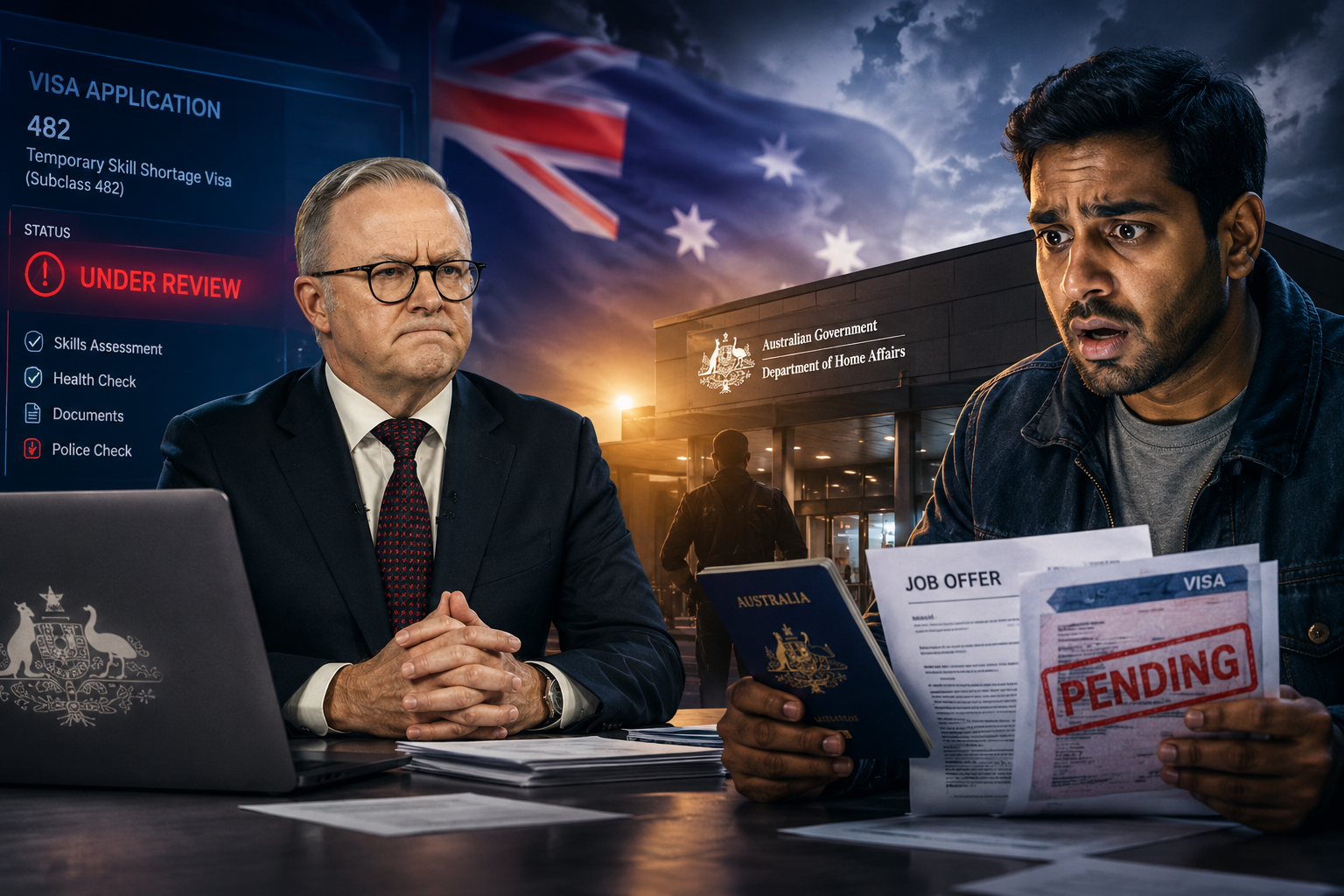
For many aspiring international students, Australia has long represented a path toward high-quality education and future migration opportunities. However, the past few months have revealed a very different reality. Despite aggressive promotional claims suggesting that “any profile can now get an Australian visa” after India was moved to Level 2 assessment status, the outcomes have shown otherwise. According to recent data trends and updates from the Australian Department of Home Affairs (see official policy information:), nearly 90% of Indian student visa applications submitted in this period have been refused.
Why did this happen?
Why did advertisements promote easy visas, no IELTS, no funds, and acceptance of wide academic gaps?
Why did thousands of students invest 2–2.5 lakh INR only to face rejection within weeks?
This long-form analysis explains the complete picture—the policy shift, misleading promotional narratives, institutional-level risks, and what genuine applicants must know before making life-changing decisions.

Why This Update Matters Now
The scale of recent visa refusals is not just another routine trend. It signals a strategic tightening of Australian immigration controls, a recalibration of education-sector integrity, and a direct response to the surge of high-risk profiles applying for student visas without adequate justification, funds, or academic alignment.
Australia’s education sector heavily relies on international students, particularly from India, Nepal, China, and Sri Lanka. Yet, the rapid increase in low-quality, poorly prepared applications from India—especially post-pandemic—triggered deeper scrutiny.
In short, the dream was reopened too quickly, and students walked in unprepared.
Recent Visa Refusal Trends
The Role of Level 2 Reclassification
When India shifted to Level 2, many assumed:
- Fewer documents required
- Less financial scrutiny
- Easier admissions in colleges
- High acceptance for diverse profiles
However, the Level 2 status changed institution assessment, not applicant credibility standards.
Embassy officers still evaluate students on intent, academic consistency, financial transparency, and future planning.
The misunderstanding of this shift allowed misleading marketing narratives to spread rapidly.
Misleading Promotions and Level 2 Expectations
In the past two months, social media was filled with ads claiming:
- “No IELTS required”
- “No proof of funds needed”
- “Any academic background accepted”
- “Gaps don’t matter”
- “Arts, low scorers, backlogs — all welcome”
These ads targeted:
- Students with limited academic performance
- Students without financial capacity
- Students with long academic or career gaps
- Students denied visas previously from Canada or the UK
Influencers, local agents, and private consultants capitalized on a wave of unrealistic hope, encouraging mass application submissions.
The result?
A flood of weak, unprepared, unstructured student profiles were sent to the Embassy simultaneously.
When those files were processed, the outcome was 90% rejections.
Key Reasons Behind the 90% Visa Rejections
Australia didn’t reject students randomly.
There were clear, predictable reasons.
Financial Documentation Issues
Funds remain the single most critical factor in the Australian student visa process.
Unlike what advertisements claimed, financial stability must be:
- Authentic
- Traceable
- At least 3–6 months old
- Consistent with family income
Many applicants:
- Borrowed last-minute funds
- Used temporary bank transfers
- Could not justify sponsor income
- Tried to rely on agent-managed “dummy accounts”
Such profiles are instantly flagged as high risk.
Academic Background and Gap Problems
A genuine student visa requires an academic story that makes sense.
Embassy officers assess:
- Past qualifications
- Gap years and their justification
- Relevance of chosen course to prior studies
- Clarity of future career plans
Profiles like:
- 5+ year unexplained study gaps
- Switching from Arts to IT or Nursing without justification
- Poor scores without remedial explanation
…were rejected immediately.
Choice of Institution (Level 1 vs Level 3 Colleges)
Not all Australian colleges are evaluated equally.
- Level 1 – Top universities with strong visa acceptance
- Level 2 – Mid-level public and private institutions
- Level 3 – Risk-category private colleges with historically poor visa outcomes
Most Indian applicants chose Level 3 private colleges because:
- Fees are lower
- Admission is easier
- English requirements are relaxed
However, according to regulatory guidance from TEQSA (Tertiary Education Quality and Standards Agency), Level 3 institutions carry higher institutional risk, leading to deeper Embassy scrutiny and a high chance of refusal.
In short:
Cheap admission = High visa risk.
Impact on Indian Students
This shock has been felt most strongly in:
- Punjab
- Haryana
- Gujarat
Students from these regions traditionally pursue international education as a family investment strategy. When refusal rates spike:
- Families lose 2–2.5 lakh INR per attempt
- Future visa chances weaken
- Confidence collapses
Worse, a refusal in Australia affects your chances in New Zealand, UK, and Ireland due to cross-referencing of immigration history.
So the loss is not only financial — it is strategic and long-term.
What Students Should Do Next
Genuine Profile Requirements
To be considered genuine (per Genuine Student and Genuine Temporary Entrant criteria under Australian student visa policy), students must show:
|
Requirement |
Minimum Expectation |
|
Education Continuity |
No unexplained gaps |
|
Academic Performance |
Reasonably consistent scores |
|
Financial Proof |
3–6 months bank statements, authentic source |
|
English Proficiency |
IELTS/PTE with stable performance |
|
Course Relevance |
Direct link to past academics or work experience |
|
Intent |
Clear, career-aligned statement of purpose |
A well-prepared GTE/SOP with documentation support is non-negotiable.
Alternatives to Consider
Based on current visa policy stability, students with blocked Australia plans can consider:
|
Country |
Best For |
Requirements Trend |
|
UK |
Skilled worker transition pathways |
tightening but still accessible |
|
Canada |
PR-linked education streams |
now more competitive, careful profile selection needed |
|
Germany |
Technical and vocational programs |
strong job outcomes, language requirements apply |
|
UAE / Gulf |
Skill-based employment tracks |
salary-based residence paths emerging |
To avoid repeating mistakes, students should consult regulated advisors such as members of the Migration Institute of Australia rather than commission-based admission agents.
Conclusion
The promise that “any profile can get into Australia now” was never real.
It was a marketing wave, and thousands were caught in it.
The 90% visa refusal outcome is not surprising for those who understood:
- The actual meaning of Level 2
- The difference between universities and low-tier colleges
- The strict assessment of financial authenticity
- The importance of academic continuity and purpose
For students with genuine profiles, proper funds, justified study plans, and strong documentation, Australia remains open.
But for students looking for shortcuts — Australia has closed its doors.
This moment is a lesson to the entire study abroad ecosystem:
- Never rely on advertisements.
- Never chase unreal “easy visa” claims.
- Never submit a file without clarity, purpose, and proof.
Your future is not a gamble.
Treat it responsibly.
Your education deserves strategy, not luck.