Synopsis: Australia’s immigration system is under strain. Partner visa backlogs near 100,000, skilled migrants face tougher partner points rules, and state nomination programs are tightening. This in-depth analysis examines why these changes are happening, what the data shows, how politics and law intersect, and what it means for families, workers, and policymakers globally.
Australia’s Immigration Pressure Point: Partner Visa Backlogs, Skilled Points Tightening, and State Nomination Shifts in 2026
Australia’s migration system has reached a critical juncture. Families are separated for years, skilled migrants face unexpected refusals, and state governments are rationing nomination places under increasing federal constraints. What was once promoted as a predictable, rules-based system is now characterised by uncertainty, delay, and legal controversy. According to the Australian Department of Home Affairs, nearly 100,000 partner visa applications are sitting unfinalised, while skilled migration rules are being interpreted more strictly than at any point in the past decade, placing thousands of applicants at risk of refusal (see official policy framework at Immigration And Citizenship).
This blog unpacks the partner visa backlog, the revised partner points policy affecting skilled visas, and the latest state nomination invitation rounds. It critically examines the legal basis of current settings, the political decisions behind them, and the real human cost. For applicants, employers, and policymakers alike, the implications of 2026’s immigration settings are impossible to ignore.

Understanding the Policy/Event
Australia’s migration program is built around three interconnected streams: family migration, skilled migration, and humanitarian intake. The issues dominating current debate sit squarely in the family and skilled streams, with state nomination acting as a pressure valve that is itself under strain.
At the centre of the controversy is the partner visa program. By law, partner visas are meant to be demand-driven. Unlike skilled visas, they are not supposed to be capped annually. Yet current planning levels and processing practices suggest an effective cap is being applied through administrative control rather than legislation.
Alongside this, skilled migration applicants under points-tested visas are encountering a stricter interpretation of partner points rules. These rules were always complex, but recent departmental guidance has shifted how and when points can be claimed, particularly for applicants who form relationships after receiving an invitation.
Finally, state and territory governments are navigating reduced allocations while attempting to address local labour shortages, leading to highly selective invitation rounds and growing competition among applicants.
Why It Is Happening
Several structural and political factors explain why these pressures have converged:
- Post-pandemic system fatigue: COVID-era shutdowns created processing backlogs that have never been fully cleared.
- Policy re-prioritisation: Federal governments have increasingly prioritised temporary migration controls and headline migration numbers over processing efficiency.
- Budgetary incentives: Visa application charges are collected upfront, reducing urgency to process applications quickly.
- Political optics: Migration has become a sensitive political issue, with governments seeking to appear “tough” without formally changing the law.
These factors have combined to create a system where delay functions as a policy tool, even when legislation suggests otherwise.
Key Reforms or Changes
The most consequential changes in 2025–2026 are not headline legislative reforms but shifts in interpretation, allocation, and administrative practice.
Partner visas, once processed within 6–12 months, now routinely take two to three years. Skilled applicants face reassessment of points they believed were secure. States are issuing fewer invitations despite clear labour market needs.
Detailed Breakdown
1. Partner visa processing practices
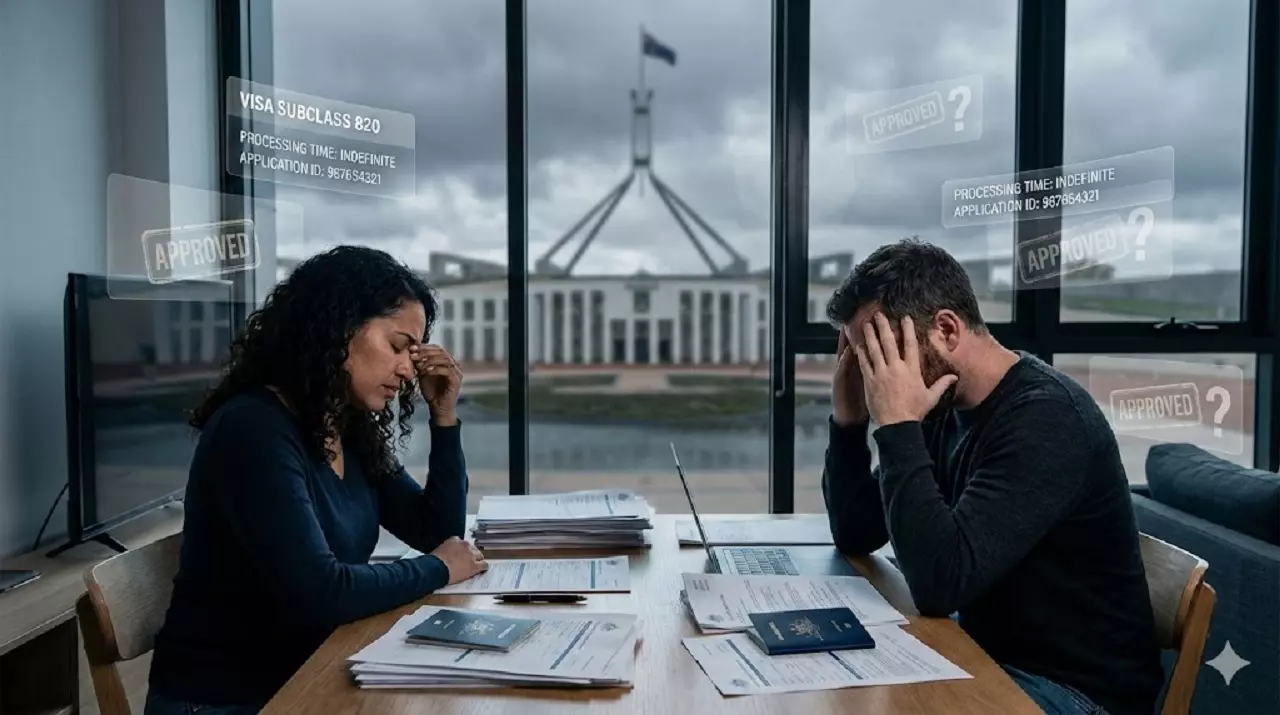
- Backlog has risen from approximately 56,000 in 2022 to 96,839 applications.
- Annual grants are being planned at around 40,500, far below genuine demand.
- Delays are occurring despite high application charges of close to AUD 10,000 per case.
2. Skilled partner points tightening
- Partner points are assessed at case officer stage, not invitation stage.
- Applicants who add a non-citizen or non-permanent resident partner after invitation may lose points.
- Even where the partner holds a valid skills assessment, points may be refused if the partner was not declared at invitation.
- This interpretation is based on item 611D of the points test framework.
3. State nomination recalibration
- South Australia issued 235 subclass 190 and 109 subclass 491 invitations in January 2026.
- Tasmania has already used most of its allocation, leaving limited opportunities for the remainder of the program year.
- States are prioritising applicants with immediate employability and local work history.
These shifts collectively increase risk for applicants who assumed stability once invited or lodged.
Data, Stats, and Trends
Data reveals the scale of the problem more clearly than rhetoric. Backlogs, invitation numbers, and processing times all point to systemic stress rather than temporary disruption.
What the Numbers Show
- Partner visa backlog: 96,839 unfinalised applications.
- Increase since 2022: Approximately 73 percent growth in pending cases.
- Indicative processing times:
- Partner visas: 24–36 months
- Skilled points-tested visas: often exceeding 18 months post-lodgement
- Revenue implications: Nearly AUD 1 billion already collected in application fees from pending partner visas alone.
Independent demographic experts have long argued that restricting partner visas undermines population planning and social cohesion. Analysis of Australia’s migration balance by the Australian Bureau of Statistics shows that family migration contributes significantly to long-term settlement stability and labour force participation.
State data also highlights mismatches between labour demand and nomination availability, particularly in healthcare, construction, and regional services.
Impact Assessment
Behind every statistic is a human story. The current settings are not abstract policy debates; they shape lives, careers, and families in irreversible ways.
Social, Economic, and Human Consequences
For families
- Prolonged separation between spouses and partners.
- Children growing up without one parent physically present.
- Delayed family planning, particularly affecting women in their late 30s and early 40s.
For skilled migrants
- Refusals based on technical points changes rather than merit.
- Pressure to delay marriage or de facto relationships to protect visa prospects.
- Financial strain from prolonged bridging visa periods.
For employers and the economy
- Skilled workers unable to settle securely, reducing retention.
- Regional employers losing candidates due to nomination uncertainty.
- Productivity losses from underutilised migrant skills.
Research from the Organisation for Economic Co-operation and Development consistently shows that stable family pathways improve migrant integration and economic contribution over time. Australia’s current trajectory runs counter to this evidence.
Political Background & Stakeholder Reactions
Immigration policy does not exist in a vacuum. Political incentives, ministerial discretion, and bureaucratic culture all shape outcomes.
Government, Opposition & Expert Opinions
Government representatives argue that stricter interpretations are necessary to protect program integrity and prevent misuse. The rationale is that applicants should not be able to “manufacture points” after invitation.
However, migration law experts counter that:
- Partner visas are explicitly excluded from caps under Section 87 of the Migration Act.
- Processing delays are administrative failures, not applicant misconduct.
- Penalising relationship formation contradicts the purpose of family migration.
The Migration Institute of Australia has publicly raised concerns that current partner points interpretations are excessively harsh and inconsistent with the intent of the points-tested system.
Opposition voices argue that effective caps imposed through planning levels are legally questionable and morally indefensible, particularly given the revenue collected upfront from applicants.
Global Comparisons
Australia is not alone in facing migration pressures, but its policy responses differ markedly from comparable countries.
Where This Stands Internationally
Canada
- Family reunification is prioritised with published service standards.
- Spousal sponsorship backlogs exist but are subject to transparent targets and regular reporting.
United Kingdom
- Family visas face income thresholds and processing delays, but caps are explicit and legislated.
- Legal challenges have forced greater accountability and judicial oversight.
New Zealand
- Operates a smaller but clearer family migration framework with less reliance on delay as a control mechanism.
Comparative policy analysis from the Migration Policy Institute shows that jurisdictions relying on administrative delay rather than clear legislative limits face higher litigation risk and lower public trust. Australia’s approach increasingly aligns with this risk profile.
Critical Analysis
At its core, the current system raises fundamental questions about legality, fairness, and policy coherence.
Is it acceptable to collect full application fees while allowing processing times to blow out indefinitely?
Should skilled migrants be effectively punished for forming genuine relationships?
Does administrative convenience justify outcomes that contradict the stated intent of the law?
Will It Work?
From a policy effectiveness standpoint, the answer is doubtful.
- Backlogs continue to grow, suggesting current measures do not resolve demand.
- Legal risk is increasing, as affected applicants explore judicial review.
- Human costs are escalating, with long-term social consequences.
- Economic objectives are undermined, as skilled migrants face uncertainty.
A demand-driven partner visa model, consistent with the Migration Act, combined with transparent skilled migration rules, would better align outcomes with Australia’s long-term interests.
Conclusion
Australia’s immigration system in 2026 reflects a widening gap between legislative intent and administrative reality. Record partner visa backlogs, stricter skilled partner points interpretations, and constrained state nominations have created a climate of uncertainty that affects families, workers, and employers alike.
Without structural reform, clearer legal compliance, and a renewed commitment to timely processing, these pressures will only intensify. For applicants, the stakes are deeply personal. For policymakers, the challenge is restoring trust, legality, and coherence to a system that has drifted far from its original purpose.
Understanding these dynamics is no longer optional. It is essential for anyone navigating, advising on, or shaping the future of Australian migration.