Synopsis: From July 1, 2025, Australia will implement sweeping immigration reforms. Key changes include raised income thresholds for skilled visas, a new Core Skills Occupation List, student visa caps, increased fees, and a shift to multi-year migration planning. These policies aim to balance economic growth with infrastructure and housing capacity.
Australia is tightening the reins on immigration. In a bid to align migration with national priorities—particularly housing availability, wage integrity, and infrastructure readiness—the government will roll out a comprehensive set of reforms starting July 1, 2025. These changes will reshape the skilled visa landscape, student migration, and policy planning models across the board.
Whether you’re a skilled worker, an international student, or an employer seeking overseas talent, these updates could dramatically affect your eligibility and strategy.
Topics Discussed
- Raised Income Thresholds for Skilled Visas
- Launch of the Core Skills Occupation List (CSOL)
- Major Reforms to the Temporary Graduate Visa
- Caps on New International Student Enrolments
- Higher Student Visa Fees and Financial/Language Requirements
- Multi-Year Migration Planning Model Introduced

Raised Income Thresholds for Skilled Visas
New Baselines for Wages in High-Demand Occupations
To prevent wage undercutting and promote fair labour market standards, Australia is raising income thresholds for key skilled visa pathways:
- Core Skills Income Threshold (CSIT): Now AUD 76,515 (up from AUD 73,150)
- Specialist Skills Income Threshold (SSIT): Rises to AUD 141,210 (from AUD 135,000)
- Temporary Skilled Migration Income Threshold (TSMIT): Also adjusted to AUD 76,515
These new thresholds apply to:
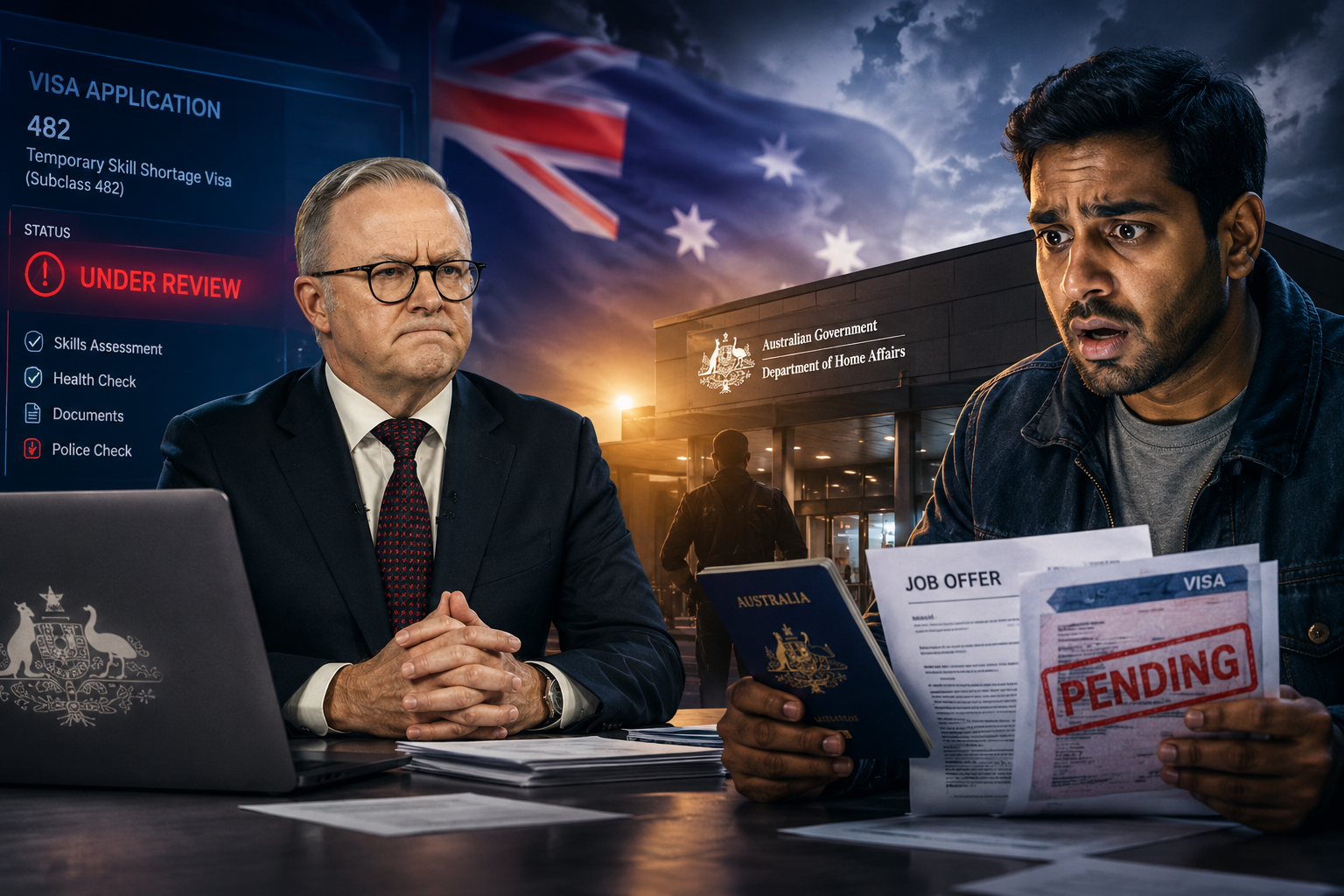
- Skills in Demand Visa (Subclass 482)
- Employer Nomination Scheme (Subclass 186)
Read the Erickson Immigration Group update for legal insights on these income revisions.
Note: These changes only apply to applications lodged on or after July 1, 2025. Existing visa holders and pending applications are exempt.
Launch of the Core Skills Occupation List (CSOL)
Matching Skills to Australia’s Labour Needs
To better target migration, the Core Skills Occupation List (CSOL) will divide skilled occupations into three distinct streams:
- Specialist Skills Pathway: For high-income, high-demand sectors
- Core Skills Pathway: For roles critical to the economy
- Labour Agreement – Essential Skills Pathway: For sector-specific agreements
The CSOL will directly influence eligibility for:
- Subclass 482 (Skills in Demand visa)
- Subclass 186 (Employer Nomination Scheme)
See the draft rollout on Australia Migrate.
This tailored system is designed to ensure labour demand, not volume politics, drives immigration.
Major Reforms to the Temporary Graduate Visa
Younger Age Limit, Shorter Stay, Sharper Focus
Australia’s Temporary Graduate Visa (TGV) is being recalibrated to reflect employment realities and migration sustainability:
- Age cap lowered to 35 (from 50) for most applicants
- Stay duration revised:
- Bachelor’s graduates: 2 years
- Master’s (Coursework): 2 years
- Master’s (Research) & PhD: 3 years
Explore the implications via Think Visa.
These reforms are aimed at streamlining the study-to-work transition, focusing on those more likely to contribute long-term to the economy.
Caps on New International Student Enrolments
Limiting Volume to Ease Housing and Policy Pressure
In response to overcrowded rental markets and strained infrastructure, the government will cap new student visa approvals at 270,000 for 2025, broken down as:
- 145,000 university enrolments
- 95,000 vocational and other training enrolments
Reuters reports on the policy’s goals here.
While designed to protect housing supply and maintain public trust in migration, critics warn this may:
- Harm international education revenues
- Trigger a rise in asylum claims from former students
The Australian explores these risks in this report.
Higher Student Visa Fees and Financial/Language Requirements
Doubling Fees, Raising Standards
From July 1, 2025:
- Student visa fee increases to AUD 1,600 (from AUD 710)
- Applicants must demonstrate access to 75% of the national minimum wage in financial support
- English language requirements will be raised across the board
Temporary visa holders will also face new restrictions when applying for student visas—targeting what the government calls “visa hopping.”
Learn more on the Australian Government’s official page.
These measures aim to ensure students are financially and academically prepared, while curbing pathways used for backdoor migration.
Multi-Year Migration Planning Model Introduced
Long-Term Planning to Avoid Policy Whiplash
Australia will move from annual migration targets to a multi-year model, beginning in the 2025–26 financial year. This model will:
- Extend migration planning to a four-year horizon
- Coordinate more closely with infrastructure, housing, and service delivery
View planning updates via Home Affairs.
The shift is expected to improve:
- Transparency
- State and territory coordination
- Economic alignment across migration streams
It also reflects the government’s desire for sustainable migration, not political peaks and troughs.
Conclusion: A Strategic Migration Reset for 2025 and Beyond
Australia’s 2025 immigration reforms are not about closing the door, but refining who gets in, how, and why. By tightening income thresholds, narrowing student visa pipelines, and targeting economic impact over volume, the government is charting a path toward skills-focused, infrastructure-sensitive migration.
Key takeaways:
- Skilled workers must meet higher salary benchmarks
- International students face caps, higher fees, and stricter rules
- Employers must align hiring with the new Core Skills Occupation List
- Policy will now be shaped over multi-year timelines—not just budget cycles
For serious migrants and businesses, the message is clear: strategy, compliance, and economic relevance will define migration success in the years ahead.