Synopsis: The Air India plane crash en route to London has triggered an international response, with the UK dispatching its air safety experts to assist in the investigation. With 53 British citizens aboard, UK leaders, royals, and aviation authorities are engaged in relief, investigation, and emergency support coordination.
The Tragic Event That Shook Two Nations
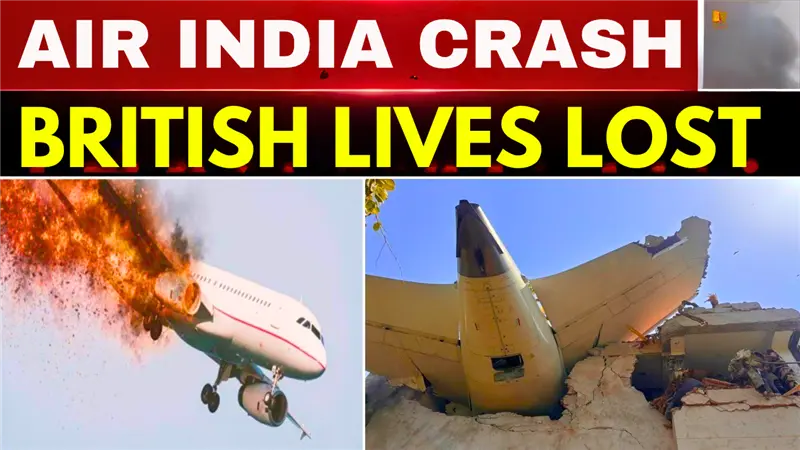
When news broke that a London-bound Air India aircraft had crashed in Ahmedabad, the ripple effects were immediate and far-reaching. The incident, which involved 53 British nationals among the passengers, has galvanized both Indian and UK authorities into swift action. As the shock reverberates across continents, families await answers and nations coordinate efforts to uncover the causes and deliver support.
This article outlines the UK’s involvement in the crash investigation, emergency responses, and the political and royal reactions—offering an informed analysis of the global cooperation under crisis.
Topics Discussed
- The Crash and UK Citizens on Board
- UK Air Accidents Investigation Branch (AAIB) Support
- Role of International Aviation Law: ICAO Annex 13
- Emergency Response for Affected Families
- Indian and UK Diplomatic Actions
- King Charles and UK Prime Minister React
- Implications for Air India and Future Aviation Oversight

The Crash and UK Citizens on Board
The flight, which had departed from Ahmedabad and was en route to London, crashed shortly after takeoff under still-unconfirmed conditions. While the exact death toll remains under scrutiny, 53 British citizens were confirmed to be among the passengers. The crash has ignited concerns about aircraft maintenance, international travel safety, and emergency response protocols.
In an age where air travel is more interconnected than ever, such incidents pose not only logistical challenges but also diplomatic and legal implications. The presence of UK nationals onboard propelled the British government into immediate action.
According to India’s Directorate General of Civil Aviation, preliminary assessments are underway, with black box data retrieval and crew background checks forming the foundation of the initial probe.
UK Air Accidents Investigation Branch (AAIB) Support
In a move that underscores the seriousness of the incident, the UK’s Air Accidents Investigation Branch (AAIB) has dispatched a multidisciplinary team of experts to India to collaborate on the crash investigation.
The AAIB issued a formal statement:
“We are deploying a multidisciplinary investigation team to India to support the Indian-led investigation. Our thoughts are with all those affected by this tragic accident.”
This decision falls under the scope of ICAO Annex 13, which dictates that if a crash involves aircraft manufactured by one country or affects citizens of another, those countries may be invited to participate in the investigation. Given the UK nationals involved and potential UK-manufactured aircraft components, this international collaboration was inevitable and critical.
The AAIB will maintain “expert status” during the Indian-led investigation, meaning they can observe, advise, and submit safety recommendations, but not direct proceedings.
Role of International Aviation Law: ICAO Annex 13
The legal foundation for this international cooperation lies in Annex 13 of the International Civil Aviation Organization (ICAO), which defines responsibilities when aircraft accidents occur across jurisdictions.
Key provisions include:
- The State of Occurrence (India) leads the investigation.
- The State of Registry or the Operator (India) provides operational support.
- States with fatalities or significant interest (UK) may participate under observer or expert status.
This framework ensures transparency, neutrality, and thoroughness—particularly vital when multiple governments and international carriers are involved. The ICAO’s role here is not just bureaucratic but essential for global aviation safety standards, particularly after tragedies that have international impact.
Emergency Response for Affected Families
Beyond the mechanics of the investigation lies a more human concern: families of the victims.
In London, Gatwick Airport authorities have established a reception center for relatives of the passengers onboard. Here, support is being provided in the form of:
- Emergency psychological services
- Continuous updates about the investigation
- Coordination for repatriation or travel to India
In parallel, the High Commission of India in London has activated an emergency hotline to facilitate emergency visa issuance for the immediate families of victims wishing to travel to India.
Additionally, a scheduled event to welcome the Indian Women’s Hockey Team was formally canceled as a mark of respect and to redirect logistical efforts toward the tragedy.
Such bilateral coordination reflects a rare level of diplomatic efficiency in times of human loss—emphasizing compassion alongside logistical resolve.
Indian and UK Diplomatic Actions
The tragedy has not only sparked logistical responses but also heightened political diplomacy. The swift collaboration between UK’s Foreign, Commonwealth and Development Office (FCDO) and India’s Ministry of External Affairs illustrates the robustness of Indo-UK diplomatic ties.
UK Foreign Secretary David Lammy stated:
“We are working closely with our Indian counterparts to ensure every support is extended to families affected by this disaster.”
Additionally, UK-based consular staff have been embedded within the Indian investigation team to ensure information flow to British relatives remains timely and accurate.
The incident also comes at a time when both countries are negotiating a Free Trade Agreement (FTA)—and observers note that the crisis cooperation could accelerate goodwill on both sides. UK Parliament research shows that India-UK trade already exceeds £36 billion annually, underlining the stakes in bilateral engagement.
King Charles and UK Prime Minister React
The tragedy prompted statements from the highest offices of the United Kingdom.
King Charles III, joined by Queen Camilla, issued a heartfelt message:
“Our special prayers and deepest possible sympathy are with the families and friends of all those affected by this appalling incident across so many nations.”
This royal response highlights the multinational nature of modern aviation tragedies and reflects the Crown’s commitment to international solidarity.
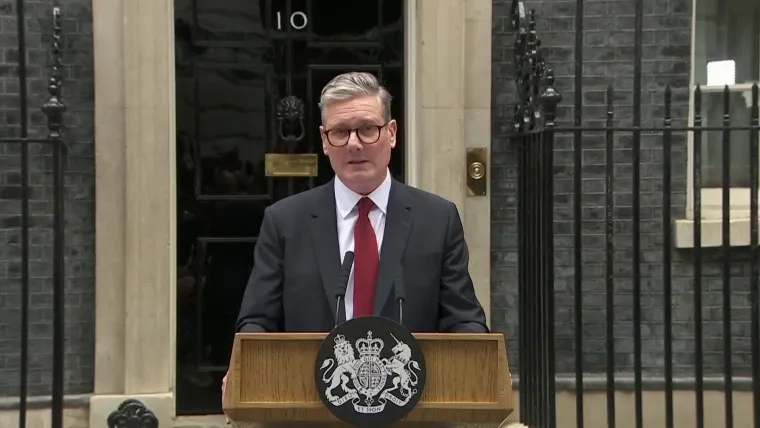
Prime Minister Keir Starmer followed swiftly, stating:
“Scenes emerging of a London-bound plane carrying British nationals crashing in India are devastating. My thoughts are with passengers and their families at this distressing time.”
In a polarized world, such unified political and royal messaging often plays a vital psychological role for grieving families and international observers.
Implications for Air India and Future Aviation Oversight
The crash will likely prompt renewed scrutiny into Air India’s safety protocols. As India’s flagship carrier and a member of the Star Alliance, Air India operates hundreds of international routes and is often the preferred airline for diaspora travel between the UK and India.
The airline is currently undergoing a massive transformation after its acquisition by the Tata Group, including aircraft upgrades and staff re-training. However, the crash may necessitate:
- New safety audits by India’s Directorate General of Civil Aviation (DGCA)
- Fleet-wide inspections of similarly aged aircraft
- Increased pressure from international safety watchdogs, including the European Union Aviation Safety Agency (EASA)
Air India will also likely face lawsuits in UK and Indian courts as victims’ families seek compensation. Under the Montreal Convention, airlines can be held liable for damages up to ~113,100 SDRs (~USD 150,000) per passenger, unless negligence can be proved—opening the possibility of mass litigation and reputational fallout.
Conclusion: A Global Tragedy Demanding Global Solutions
This tragic Air India crash has not only shaken the families of those lost but also tested international systems for aviation safety, crisis diplomacy, and emergency support.
With 53 British nationals involved, the UK’s rapid mobilization—via AAIB experts, emergency visas, and political statements—has highlighted how essential global cooperation is in such times. The tragedy reinforces the urgency of harmonized aviation regulations and faster response systems across borders.
As investigations progress and the full facts are unearthed, this event may become a catalyst for stronger bilateral ties, improved airline accountability, and deeper reform across international aviation sectors.
For now, the world watches and mourns—awaiting not just answers, but also justice and renewed safety.
FAQs: On The Air India Ahmedabad Crash And The Role Of UK Expert
- What caused the Air India plane crash in Ahmedabad?
The exact cause of the crash is still under investigation. According to preliminary reports, the pilots made a Mayday call shortly after takeoff, citing technical issues. Investigators from the Indian Directorate General of Civil Aviation (DGCA), along with the UK’s Air Accidents Investigation Branch (AAIB), are analyzing recovered black boxes to determine the cause.
- How many people died in the crash?
As reported by The Times of India, 241 out of 242 passengers on board died, along with at least 28 people on the ground. The total confirmed death toll stands at 269, making it India’s worst aviation disaster since 1996.
- Were there any survivors from the crash?
Yes, there was one survivor, a British-Indian man named Vishwash Kumar Ramesh. As per The Guardian, he escaped through the emergency exit moments before the aircraft impacted the ground. He is currently recovering in an Ahmedabad hospital.
- Why is the UK involved in the investigation?
The UK is participating in the investigation because 53 British citizens were aboard the flight. Under ICAO Annex 13, nations whose citizens are significantly affected may be granted “expert status” in investigations. The UK’s AAIB has sent a team to assist the Indian authorities.
- What support is being provided to the victims’ families?
Support services have been set up at London Gatwick Airport, where the flight was due to land. The Indian High Commission in London is issuing emergency visas and has established a 24/7 hotline for affected families. Psychological counseling and legal assistance are also being offered.
- What kind of aircraft was involved in the crash?
The aircraft was a Boeing 787-8 Dreamliner, part of Air India’s long-haul fleet. This crash marks the first fatal accident involving a 787, prompting heightened scrutiny by global regulators, including the European Union Aviation Safety Agency (EASA) and the U.S. Federal Aviation Administration (FAA).
- What legal compensation might be available to the families?
Under the Montreal Convention, victims’ families may claim compensation of up to approximately USD 150,000 per passenger, without the need to prove fault. Additional claims may be pursued if negligence by the airline or manufacturer is proven.
- How are authorities ensuring transparency in the investigation?
The investigation is being led by India’s Aircraft Accident Investigation Bureau (AAIB), with participation from UK, US, and Boeing representatives. According to ICAO protocols, interim reports and final findings must be published and shared with involved states to ensure full transparency.
- Has Air India issued a formal statement?
Yes, Air India and its parent company, the Tata Group, have expressed condolences and confirmed their full cooperation with the investigation. They have also pledged financial assistance to victims’ families. Details can be monitored via the airline’s official Air India newsroom.
- Could this crash impact future Air India operations or policies?
Yes. The crash is expected to trigger fleet-wide safety inspections, reviews of maintenance protocols, and increased international oversight. Regulators like the DGCA and EASA may recommend or mandate additional safety audits, especially for aging long-haul fleets operating in high-density zones.