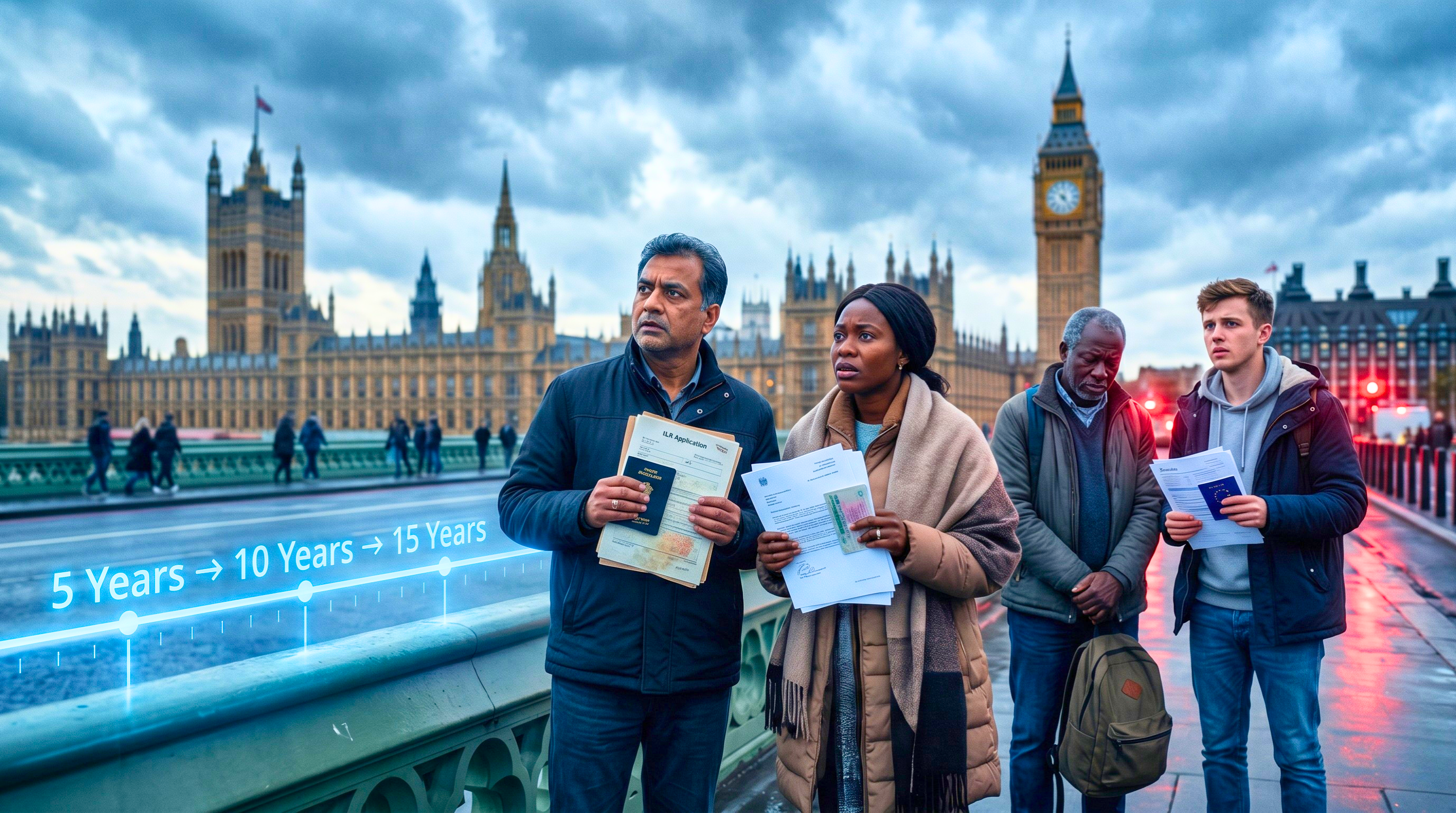
Synopsis: The UK government’s latest immigration plan introduces stricter student visa rules, higher salary thresholds, increased employer costs, and the closure of key work routes. This long-form analysis examines why these changes are happening, who is affected, how migration numbers are shifting, and whether the policy can realistically deliver its goals.
UK Government’s New Immigration Plan: A Turning Point for Students, Workers, and Migrants
The United Kingdom has entered one of the most restrictive immigration phases seen since Brexit, fundamentally reshaping how students, skilled workers, families, and asylum seekers access the country. With net migration falling sharply and public pressure mounting, the government has responded with a sweeping reset of visa rules, sponsorship costs, and settlement thresholds. According to the UK Home Office, these reforms are designed to reduce dependency on overseas labour while prioritising high-skilled migration and domestic workforce development. Yet the consequences extend far beyond headline numbers, affecting universities, employers, migrants, and the UK economy itself

Understanding the Policy/Event
The UK government’s immigration plan represents a coordinated tightening across nearly every major visa route. Unlike earlier piecemeal reforms, the current approach simultaneously targets student migration, post-study work, employer-sponsored visas, family migration, and social care pathways.
At its core, the policy aims to reduce overall migration volumes, raise economic contribution thresholds, and deter what policymakers describe as “low-wage dependency migration.” However, critics argue that the speed and scale of the changes risk destabilising key sectors.
Why It Is Happening
Several overlapping factors explain why the UK has adopted such an aggressive immigration stance:
- Net migration reached politically sensitive levels after the pandemic
- Public concern intensified over housing shortages and wage stagnation
- Employers became heavily reliant on overseas labour in care, hospitality, and construction
- Political pressure increased to demonstrate control after Brexit
Between 2022 and 2024, migration numbers surged, creating a perception that previous controls had failed. The government now seeks to demonstrate firmness ahead of future elections, even at the cost of short-term economic disruption.
Key Reforms or Changes
The new immigration framework introduces structural changes across multiple visa categories. These are not minor administrative updates; they redefine eligibility, affordability, and long-term settlement prospects.
Detailed Breakdown
Student Visa Restrictions
UK universities have significantly tightened student admissions, particularly for applicants from Pakistan and Bangladesh. Institutions now require original academic documents before issuing a Confirmation of Acceptance for Studies (CAS). In several cases, universities have temporarily suspended recruitment from high-risk regions to control visa refusal rates and compliance exposure.
This shift directly impacts international education pipelines and reduces the number of applicants able to secure UK study visas.
Post-Study Work Visa Reduction
The Graduate Route, which previously offered longer post-study employment flexibility, has been restricted to 18 months for both bachelor’s and master’s graduates. This rule remains in force until 18 January 2027.
While still offering a pathway to gain UK work experience, the shorter duration increases pressure on graduates to secure skilled employment quickly or exit the country.
Skilled Worker Visa Salary Thresholds
Salary thresholds for work visas have increased substantially, making sponsorship more difficult for mid-level roles. At the same time, employers must absorb sharply higher compliance costs.
One of the most significant changes is the 32% increase in the Immigration Skills Charge, which employers pay to sponsor overseas workers. For many small and medium-sized businesses, this cost escalation discourages sponsorship altogether.
Closure of Care Worker Routes
From July 2025, the UK will close new entry routes for care workers and senior care workers. This represents a major departure from recent years, when social care relied heavily on migrant labour.
The closure is intended to force domestic recruitment but raises serious concerns about staffing shortages in elderly and disability care services.
Family Visa Income Requirement
British citizens and settled residents sponsoring partners must now meet a £29,000 annual income threshold. This change places family reunification out of reach for many working-class households and disproportionately affects younger sponsors and single-income families.
Data, Stats, and Trends
The policy shift is already visible in migration statistics, labour flows, and visa application patterns.
What the Numbers Show
- Net migration has fallen to its lowest level since 2021
- Entry numbers dropped from approximately 649,000 to around 200,000 by June 2025
- Nearly 900,000 people entered the UK last year
- Around 693,000 people left during the same period
This sharp correction suggests the policies are working in numerical terms. However, the composition of migration is also changing.
Job Market Reality
Despite restrictions, job opportunities remain available in specific sectors:
- Construction: bricklayers, labourers, kitchen fitters
- Skilled trades: plumbers, electricians
- Hospitality: restaurant managers, supervisors
- Early years and nurseries
- Hotels and service industries
These roles are visible on official UK job portals and employer career pages, yet fewer employers are willing to sponsor visas under the new cost regime.
Rise in Asylum Applications
A striking unintended consequence has been a surge in asylum applications. Applications increased by 11%, with approximately 36,000 people filing claims.
Many applicants appear motivated by reduced legal migration routes, high salary thresholds, and stricter English-language requirements for work visas. According to the UNHCR, restrictive migration policies often correlate with increased asylum claims when legal pathways narrow.
Impact Assessment
The effects of the new immigration plan ripple across society, the economy, and individual migrant lives.
Social, Economic, and Human Consequences
Students
International students face higher scrutiny, fewer university options, and shorter post-study work periods. While 18 months remains valuable, the pressure to secure skilled employment early has intensified.
Workers
Skilled workers must now meet higher salary benchmarks and stricter English requirements. Many mid-skilled professionals find themselves priced out, even when jobs exist.
Employers
Businesses face higher sponsorship costs, longer recruitment timelines, and compliance risks. Some sectors, especially construction and hospitality, continue to rely on migrant labour but struggle to afford sponsorship.
Families
Family migration has become more financially exclusive. The £29,000 income threshold creates long-term separation risks and emotional strain for families unable to meet the requirement.
Care Sector
The closure of care worker visas threatens staffing stability. Without rapid domestic recruitment solutions, service quality and availability may decline.
Political Background & Stakeholder Reactions
The immigration overhaul has triggered strong reactions across political, academic, and business communities.
Government, Opposition & Expert Opinions
The government frames the reforms as necessary to restore control and protect public services. Parliamentary debates documented by the UK Parliament emphasise fairness, sustainability, and reduced dependency on overseas labour.
Opposition voices argue the policy risks damaging economic growth, universities, and care services. Academic analysts from the Migration Observatory warn that headline reductions may mask deeper structural labour shortages.
Meanwhile, employers express concern that rising sponsorship costs undermine competitiveness, particularly when domestic labour supply cannot meet demand.
Global Comparisons
The UK’s approach stands out when compared to other major migration destinations.
Where This Stands Internationally
- Canada continues to recalibrate migration targets but maintains clearer permanent residence pathways
- Australia tightens student visas yet expands skilled migration in targeted sectors
- New Zealand balances wage thresholds with regional workforce needs
The UK’s model is more restrictive on family reunification and lower-skilled migration than most comparable economies, placing it at the tougher end of the global spectrum.
Critical Analysis
The central question remains whether the policy can achieve long-term stability without damaging economic fundamentals.
Will It Work?
In the short term, the numbers suggest success. Migration has fallen, and political pressure has eased. Yet unresolved risks remain:
- Labour shortages in construction and care
- Reduced international student revenue for universities
- Growth in irregular migration and asylum claims
- Employer disengagement from sponsorship
Without parallel investment in domestic training, wage reform, and housing supply, the policy may simply shift problems rather than solve them.
Conclusion
The UK government’s immigration plan marks a decisive shift toward restriction, higher thresholds, and selective migration. Students, workers, families, and employers must now navigate a system that prioritises income, skills, and compliance above accessibility. While migration numbers are falling, the broader economic and human costs are still unfolding. For migrants considering the UK, preparation, skills development, and realistic planning are no longer optional but essential.